Biotech and pharmaceuticals
Take a program from target to lead
Predict target structures, dock and rank compounds, and screen leads and biologics for liabilities.
Trusted by 16,500+ researchers and published in
Model the target and its complexes
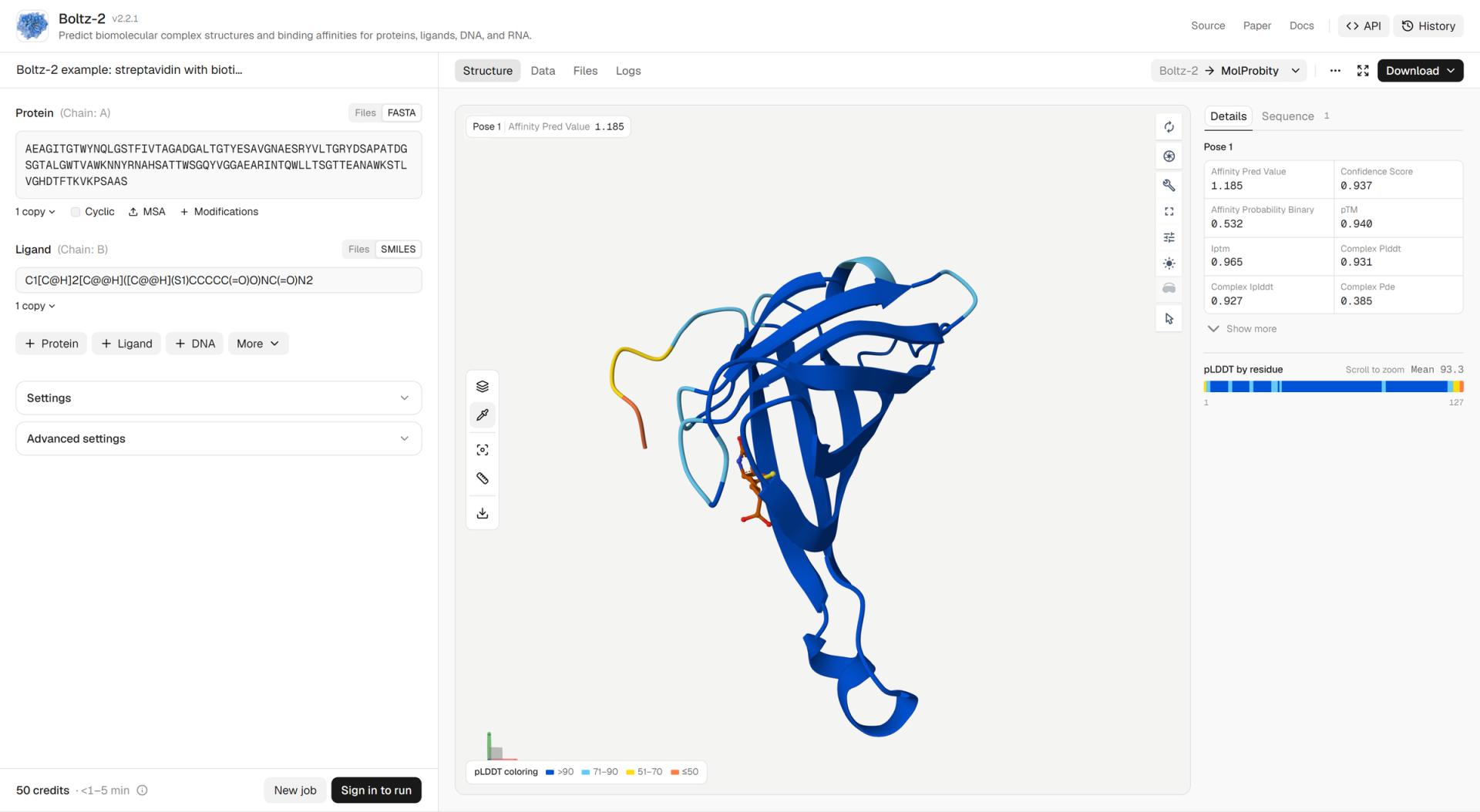
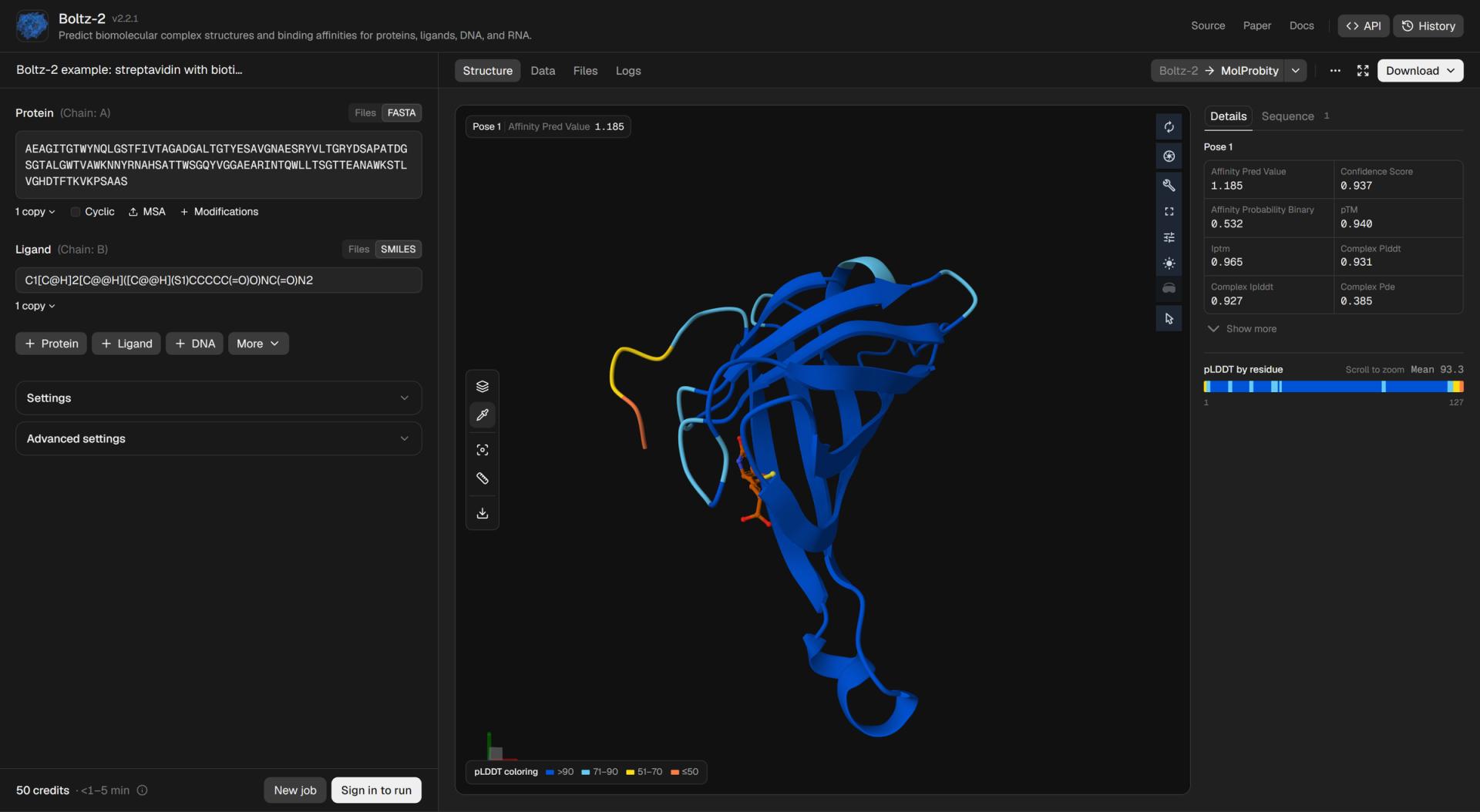
Get a structure of the target, find the pocket, and predict how a ligand fits with an affinity estimate to compare compounds.
Find hits by docking
Generate poses with physics-based and learned methods, and rank a library against one target. Read where the methods agree.
Check poses and refine
A good score can sit on an impossible pose. Check geometry, read the contacts, and estimate binding free energy for the compounds that survive.
Triage leads on properties
Predict absorption, metabolism and toxicity endpoints early, and screen against drug-likeness rules so a number has context.


Related use cases and research areas
Small molecule
Prepare targets, dock ligands, triage ADMET and follow up with MD or free energy.
Antibody engineering
Numbering, developability, language models and complex modeling.
Peptide discovery
Peptide design, property screening and structure workflows.
RNA discovery
RNA folds, three-dimensional models and RNA small-molecule screens.
Enzyme engineering
Enzyme annotation, activity prediction and mutation design.
Protein engineering
Stability, sequence design and variant ranking.
Virtual screening
Rank a compound library and export a shortlist.
Binding free energy
Estimate relative binding energies for a short list of compounds.
Antibody developability
Check antibody candidates for hydrophobicity, charge and viscosity risk.
Background for drug discovery work
Background guides on the methods, scores, and numbers behind these workflows.
Drugs · 13 min
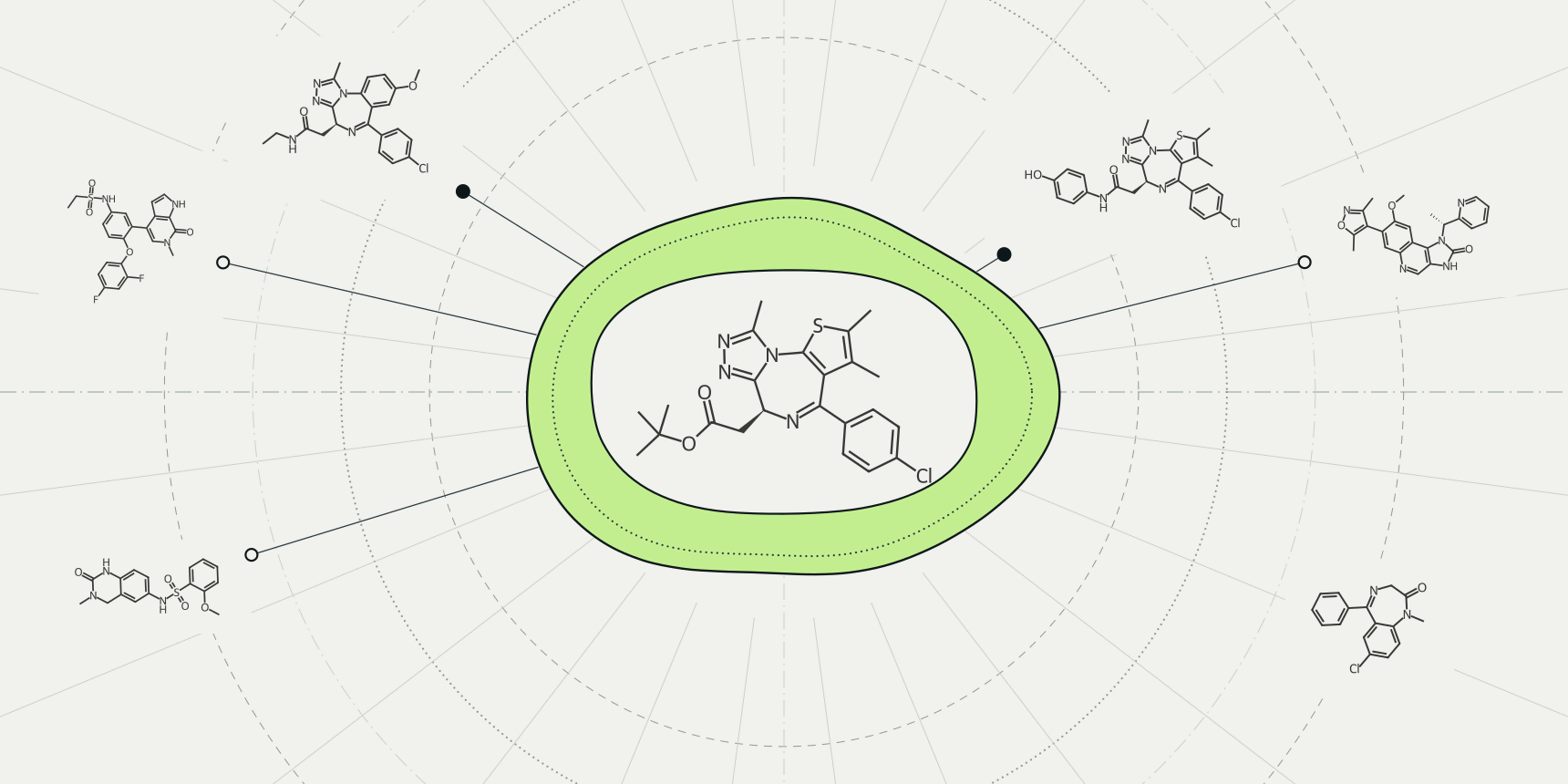
Computer-aided drug design: structure-based vs ligand-based
Computer-aided drug design finds drug candidates either from a target's 3D structure or from molecules already known to work. Each approach fails where the other succeeds. Learn what each one needs, what benchmarks really show, and how to combine them.
Drugs · 11 min
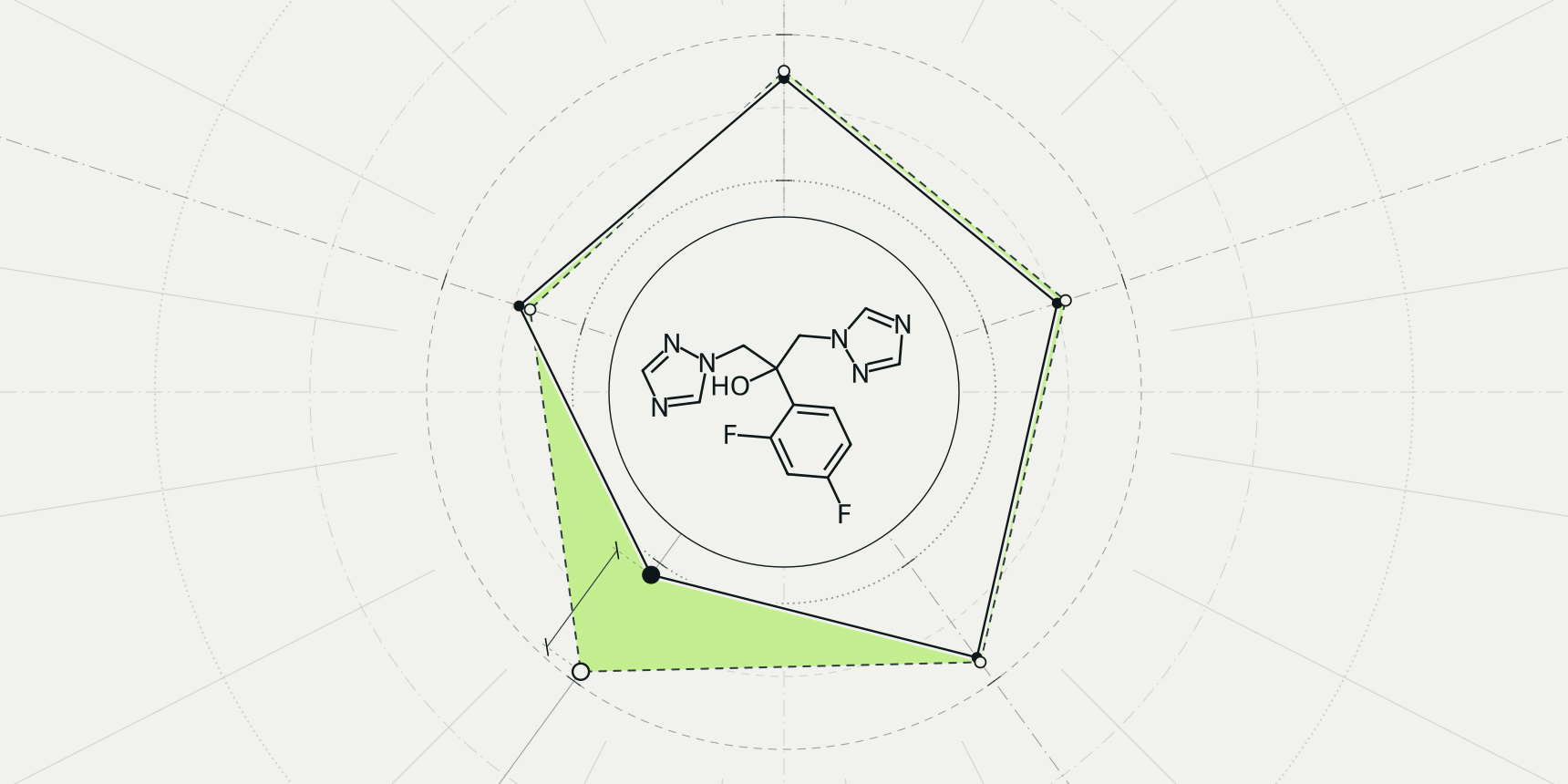
What is ADMET, and how is it predicted?
ADMET stands for absorption, distribution, metabolism, excretion and toxicity, the five things that decide whether a potent molecule can become a drug. Learn how graph neural networks predict each one from a SMILES string, and why two good models can disagree on the same drug.
Drugs · 13 min
How many drug targets are there?
ProteinIQ counted 809 molecular targets behind 2,205 approved drugs in ChEMBL 37: 611 in humans and 179 in pathogens. GPCRs carry 22% of those drugs; the often quoted 34% uses a smaller FDA list.
FAQs
Match it to the molecule you work on. Small molecules go to the small molecule workflow, antibodies to antibody engineering, short binders to peptide discovery, RNA targets to RNA discovery, and engineered proteins and enzymes to protein or enzyme engineering. The table above lists each one.
No. Docking, affinity estimates and ADMET models rank candidates and remove poor ones early, so a smaller set reaches the lab. Each model has known error, and a promising prediction still has to be confirmed by a binding assay and the studies after it.
It looks at properties that decide whether a binding antibody can become a product: surface hydrophobicity, charge patches and viscosity at high concentration. TAP2, DeepSP and DeepViscosity each report different measures, so use them as a screen before expression and formulation work.
AI answers from our docs. No sign-in needed.
Focus on research, not infrastructure
Start free with 200 credits a month and no installs. Upgrade when your project needs more compute.