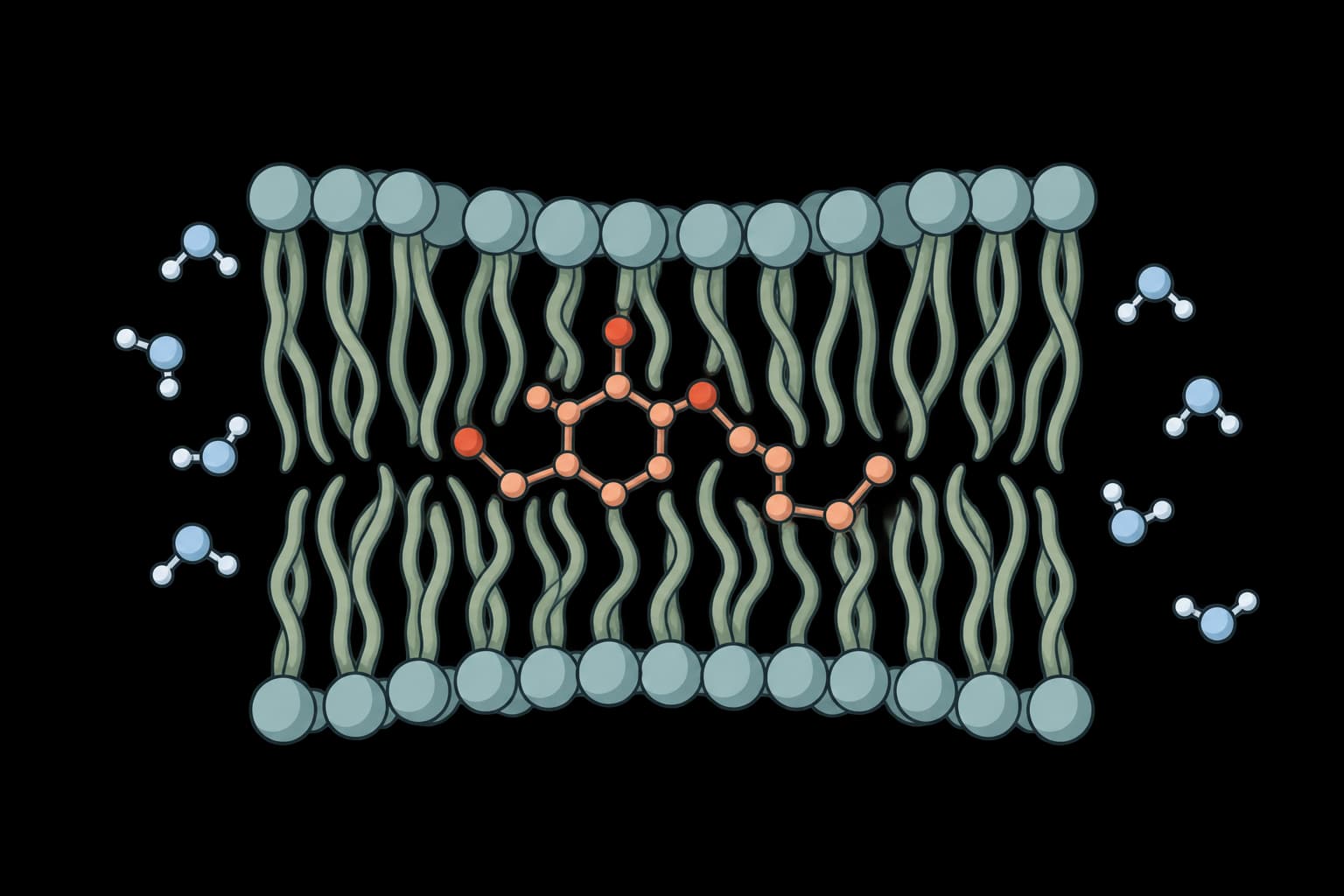
Boltz ADME
LogD, permeability and solubility predictions for small molecules.
Input
Boltz ADME webserver overview
Boltz ADME predicts three ADME properties for small molecules from SMILES: lipophilicity (LogD), permeability and solubility. A job takes up to 1,000 molecules and returns one table row per molecule.
ProteinIQ sends the molecules to Boltz's hosted ADME model (adme-v1) through the Boltz API, in groups of up to 128, and combines the answers into one table. For an open-source ADMET panel with more endpoints, see ADMET-AI.
Pricing
Boltz ADME costs a flat rate per molecule submitted. The total is rounded once for the whole job.
| Molecules | Credits |
|---|---|
| 1 | 21 |
| 10 | 203 |
| 100 | 2,026 |
| 500 | 10,127 |
| 1,000 | 20,254 |
Molecule size does not affect the price. The exact quote is calculated before submission. If Boltz estimates a noticeably higher cost when the job starts, the run is not started and the credits are refunded.
Inputs
| Input | Accepted formats | Limits and behavior |
|---|---|---|
SMILES | Pasted text, or a .csv, .tsv, .smi, .smiles or .txt file | One list per job, up to 1,000 molecules and 50 MB. Lines starting with # are ignored. |
The list can take any of these forms:
- One SMILES per line. Molecules are named
mol_1,mol_2and so on. name<TAB>SMILESorname,SMILESon each line.- A CSV or TSV table whose header has a
smilescolumn. Theidornamecolumn, when present, supplies the molecule IDs.
Repeated names get a numeric suffix such as _2 so each row stays traceable. Job name is an optional label for the saved run.
Settings
Boltz ADME has no model settings.
Outputs
Results lists one row per molecule. Files holds the downloads.
| Download | Contents |
|---|---|
boltz_adme_adme.csv | id, smiles, status, lipophilicity, permeability, solubility and error for every molecule. |
boltz_adme_predictions.json | Boltz's full prediction records for each group of molecules. |
The scored molecules and the CSV table can be passed to other tools in workflows.
Understanding results
| Column | Meaning |
|---|---|
Status | Whether Boltz scored the molecule. |
Lipophilicity (LogD) | Predicted distribution coefficient, as returned by Boltz. |
Permeability | Boltz's permeability prediction. |
Solubility | Boltz's solubility flag. |
Error | Boltz's message for a molecule it could not score. |
The values are model predictions for prioritizing compounds, not measured properties. The JSON record keeps Boltz's original fields for anything the table summarizes.
Related tools
ADMET-AI
Predict absorption, distribution, metabolism, excretion, and toxicity properties for compound libraries.
Admetica
Profile small-molecule ADMET properties across 22 Chemprop-based prediction models.
Boltz Small Molecule Explore
Budgeted search of a large SMILES library against a protein target.
Boltz Small Molecule Screen
Rank your SMILES library against a protein target.
Brenk filter
Identify toxic and reactive fragments using Brenk structural alert filter.
eToxPred
Estimate toxicity risk and synthetic accessibility scores from SMILES for compound prioritization.
Lead-likeness filter
Screen for lead-like compounds using stricter molecular descriptor criteria for early optimization.
Lipinski's rule of 5
Screen compounds for oral bioavailability using molecular weight, LogP, hydrogen bond donor, and acceptor limits.
PAINS filter
Screen compounds for Pan-Assay Interference patterns using PAINS_A, PAINS_B, and PAINS_C filters.
QEPPI
Evaluate PPI inhibitor potential and drug-likeness from molecular descriptors and SMILES inputs.