Profile small-molecule ADMET properties across 22 Chemprop-based prediction models. Learn more
Input
What is Admetica?
Admetica is Datagrok's open-source ADMET prediction toolkit for small molecules. In ProteinIQ, the current tool follows the active published runtime surface available in the published admetica==1.4.1 package and the published web runtime: you can predict 22 pharmacokinetic and toxicity properties from SMILES strings.
Admetica uses Chemprop graph neural networks trained per endpoint. Each model predicts one experimentally grounded ADMET property, so the tool is useful for early compound triage, lead optimization, and comparing candidates before synthesis or assay work.
How to use Admetica online
Paste one SMILES per line, upload an .sdf, .csv, .smi, .smiles, or .txt file, or fetch structures from PubChem. Tab-delimited name<TAB>SMILES input is supported if you want to preserve your own identifiers.
Input formats
| Format | Description |
|---|---|
| Plain SMILES | One compound per line; generated row identifiers remain unique |
| Tab-delimited | compound_name<TAB>SMILES |
| SMI | Standard SMILES name records |
| SDF | Multiple structures from a structure-data file |
| CSV | Table containing a required smiles column and optional ids, id, name, compound_id, or compound identifier column |
| PubChem fetch | Resolve a compound name or CID to SMILES |
Each run supports up to 1,000 molecules. Split larger libraries into separate jobs so prediction results and the native CSV remain within the safe delivery budget.
Property selection
ProteinIQ supports the native property subset selector. By default, all 22 available models are selected. You can deselect endpoints you do not need to reduce result columns and run only the models relevant to your screen.
Available properties
| Group | Property |
|---|---|
| Absorption | Caco2 |
| Absorption | Lipophilicity |
| Absorption | Solubility |
| Absorption | PGP-Inhibitor |
| Absorption | PGP-Substrate |
| Distribution | PPBR |
| Distribution | VDss |
| Metabolism | CYP1A2-Inhibitor |
| Metabolism | CYP2C9-Inhibitor |
| Metabolism | CYP2C19-Inhibitor |
| Metabolism | CYP2D6-Inhibitor |
| Metabolism | CYP3A4-Inhibitor |
| Metabolism | CYP1A2-Substrate |
| Metabolism | CYP2C9-Substrate |
| Metabolism | CYP2C19-Substrate |
| Metabolism | CYP2D6-Substrate |
| Metabolism | CYP3A4-Substrate |
| Excretion | CL-Hepa |
| Excretion | CL-Micro |
| Excretion | Half-Life |
| Toxicity | hERG |
| Toxicity | LD50 |
Output columns
Results are returned as a spreadsheet with one row per molecule. The published runtime lowercases its prediction column keys; ProteinIQ preserves those keys, their requested order, and the source endpoint definitions.
| Column | Task | Unit or scale |
|---|---|---|
ids | Transport identifier | Submitted row |
smiles | Submitted structure | SMILES |
caco2 | Regression | log₁₀ apparent permeability in cm/s |
lipophilicity | Regression | log-ratio |
solubility | Regression | log mol/L |
pgp-inhibitor | Binary classification | Positive-class probability (0–1) |
pgp-substrate | Binary classification | Positive-class probability (0–1) |
ppbr | Regression | % bound to human plasma proteins |
vdss | Regression | L/kg |
cyp1a2-inhibitor | Binary classification | Positive-class probability (0–1) |
cyp2c9-inhibitor | Binary classification | Positive-class probability (0–1) |
cyp2c19-inhibitor | Binary classification | Positive-class probability (0–1) |
cyp2d6-inhibitor | Binary classification | Positive-class probability (0–1) |
cyp3a4-inhibitor | Binary classification | Positive-class probability (0–1) |
cyp1a2-substrate | Binary classification | Positive-class probability (0–1) |
cyp2c9-substrate | Binary classification | Positive-class probability (0–1) |
cyp2c19-substrate | Binary classification | Positive-class probability (0–1) |
cyp2d6-substrate | Binary classification | Positive-class probability (0–1) |
cyp3a4-substrate | Binary classification | Positive-class probability (0–1) |
cl-hepa | Regression | µL·min⁻¹ per 10⁶ cells |
cl-micro | Regression | mL·min⁻¹·g⁻¹ |
half-life | Regression | hr |
herg | Binary classification | Positive-class probability (0–1) |
ld50 | Regression | log(1/(mol/kg)) |
If you run only a subset of models, the output contains only ids, smiles, and the selected native property columns in the order you requested them.
The Files tab includes the exact CSV written by admetica_predict and a provenance JSON file containing the verified package version, source-distribution hash, checkpoint-bundle hash, and scientific runtime versions. The native CSV contains only the selected prediction columns; ids and smiles remain in the ProteinIQ spreadsheet for tracking.
Interpreting results
Admetica mixes regression and classification endpoints. Continuous outputs such as caco2, solubility, cl-hepa, cl-micro, half-life, and ld50 should be interpreted in the context of the published training data and endpoint definitions. Classification outputs such as the CYP, P-gp, and herg endpoints are probabilities for the model's positive class, not measured assay values.
Invalid SMILES remain in their submitted row with blank predictions, matching the source behavior. ProteinIQ reports the affected compound identifiers in a job warning instead of silently dropping them.
Use the predictions as triage signals rather than hard acceptance rules. Compounds outside the model training domain, including unusual chemotypes and larger non-drug-like structures, can produce less reliable estimates.
Native surface in ProteinIQ
This tool intentionally stays thin. ProteinIQ preserves the native runtime predictions and returns the currently available 22-model surface. The tool keeps ids and smiles for workflow tracking, but it does not add ProteinIQ-only descriptor columns to the native prediction CSV.
Limitations
- The tool reflects the published
admetica==1.4.1runtime surface rather than every asset present in the original repository. - Only the 22 endpoints currently available by the native runtime are selectable here.
- Predictions are best suited to small-molecule chemical space similar to the published training data.
- This page does not add uncertainty estimates or re-score the native outputs.
Related tools
ADMET-AI
Predict ADMET (Absorption, Distribution, Metabolism, Excretion, Toxicity) properties from SMILES strings using machine learning models trained on Therapeutics Data Commons datasets.
eToxPred
Predict toxicity and synthetic accessibility of small molecules using machine learning. eToxPred combines toxicity risk assessment with synthetic accessibility scoring to help prioritize drug candidates.
Brenk filter
Identify toxic, reactive, and pharmacokinetically problematic molecular fragments using structural alert patterns
Lead-likeness filter
Screen for lead-like compounds using stricter molecular descriptor criteria than Lipinski or Veber rules for early-stage drug discovery
PAINS filter
Screen compounds for Pan-Assay Interference patterns that cause false positives in biological assays
QEPPI
Quantitative estimate for protein-protein interaction inhibitor potential. Evaluates drug-likeness for compounds targeting PPIs.
Structural alert screening
Screen compounds for structural toxicity alerts using PAINS, Brenk, and NIH filters. For focused screening, see PAINS Filter, Brenk Filter, or Veber's Rule.
Veber's rule
Screen molecular flexibility and polarity using Veber's rotatable-bond and topological polar surface area criteria.
Lipinski's rule of 5
Lipinski's Rule of Five predicts whether compounds will be orally bioavailable by evaluating molecular weight, LogP, hydrogen bond donors, and acceptors.
AF2BIND
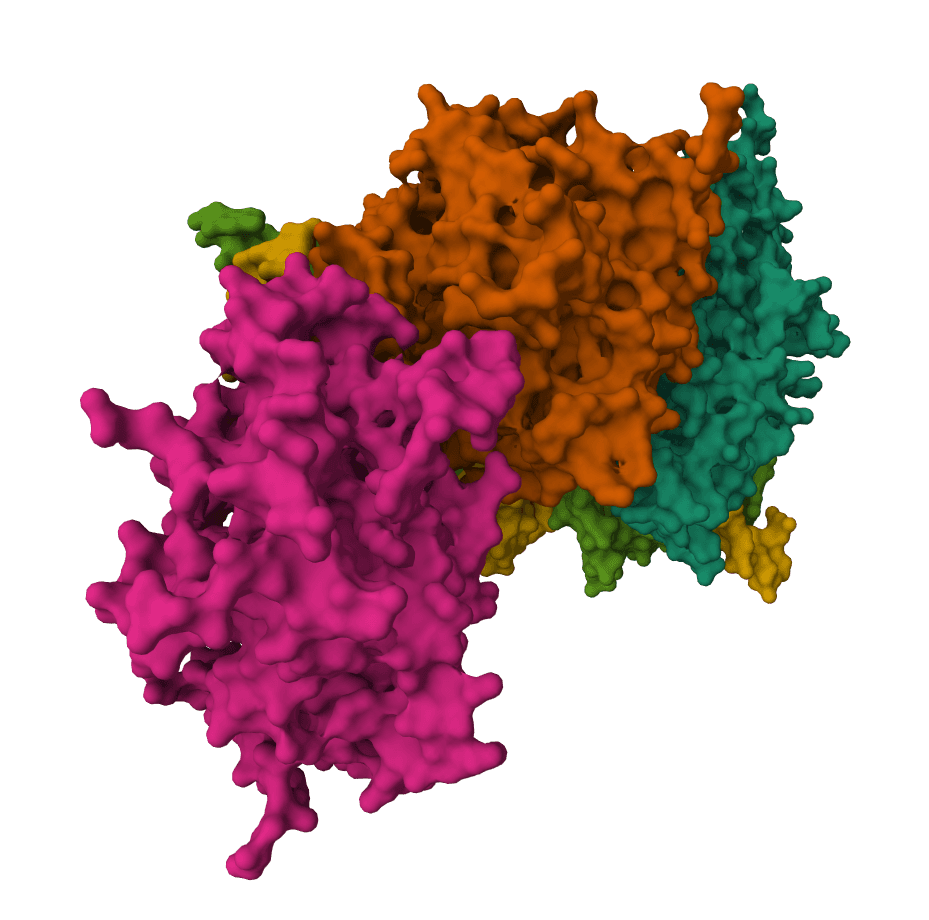
AF2BIND predicts ligand-binding residues from a protein structure using AlphaFold2 pair representations and a 20-residue bait sequence.