Bioinformatics
in your browser
Run 270+ published tools, from Boltz-2 to AutoDock Vina, on hosted GPUs. No code and nothing to install.
14,700+ researchers · 125,000+ analyses run · 40+ institutions
14,700+ researchers. Published in
270+ tools. One platform.
Find any published method by name, task, or discipline, and run it in your browser.
Built for scientific use cases
270+ published methods, running on GPUs with no setup. Every example is a real run you can open.
Predict protein structures and complexes with ligands, nucleic acids, and other proteins, with per-residue confidence for every model.
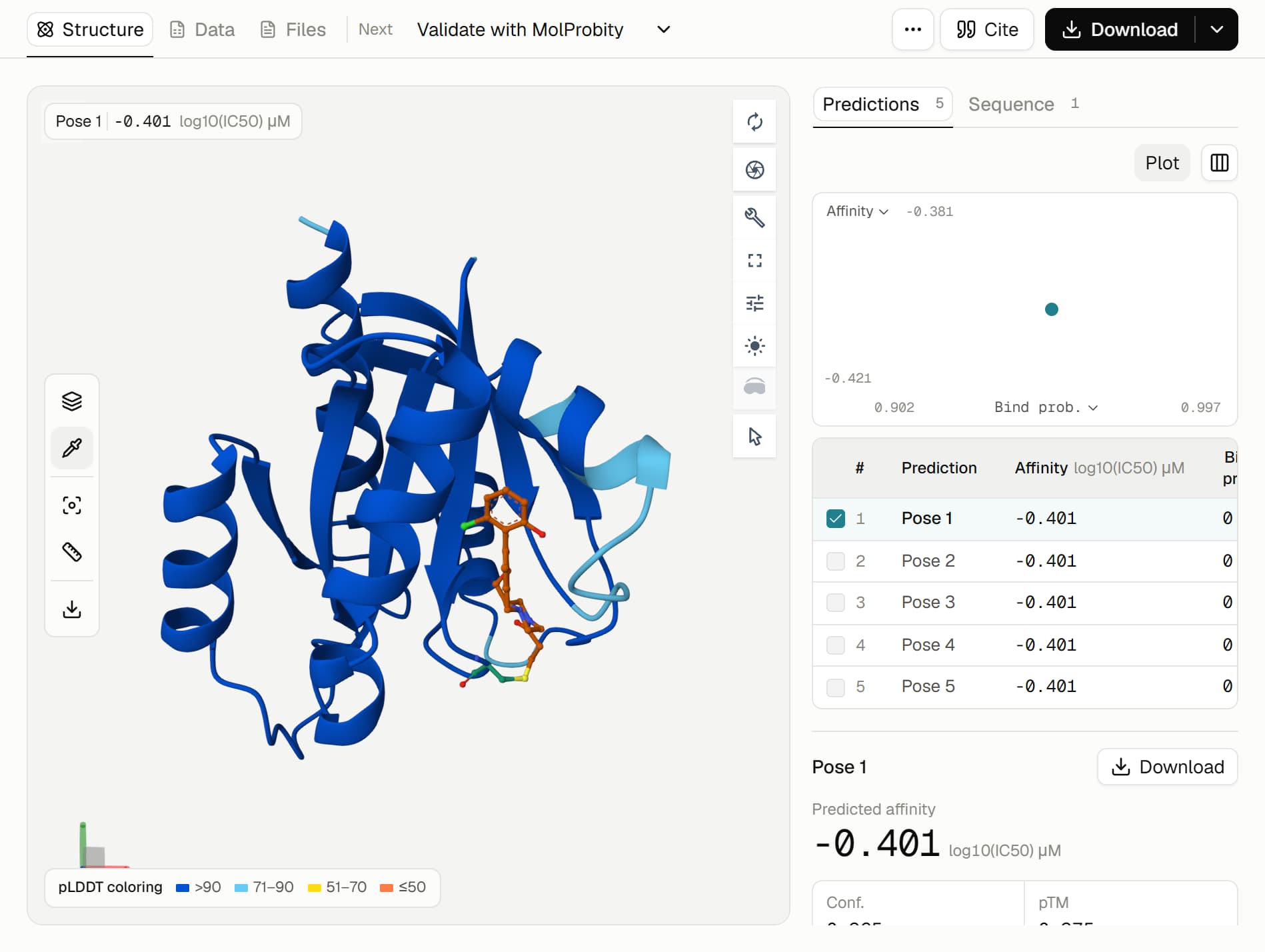
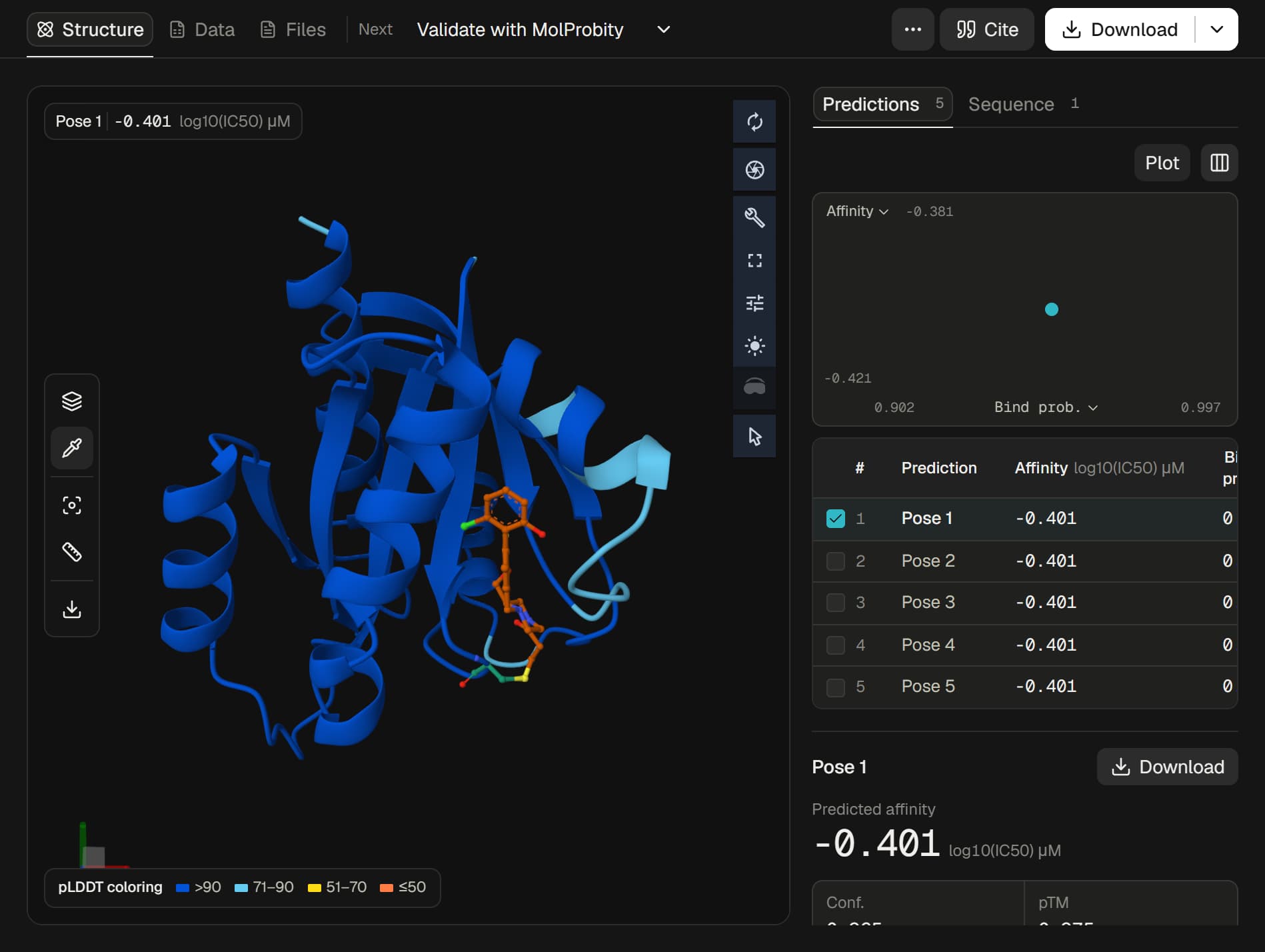
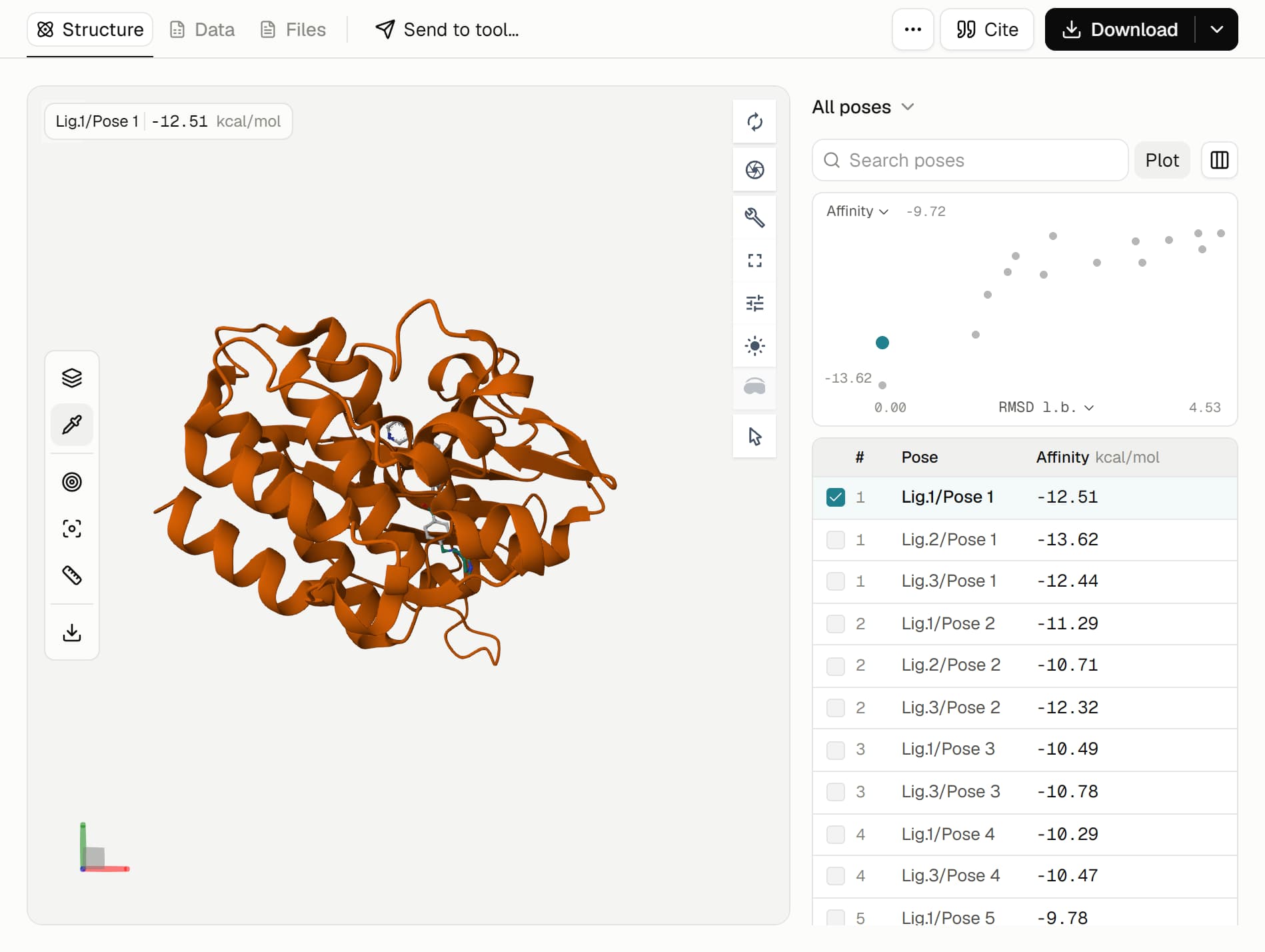
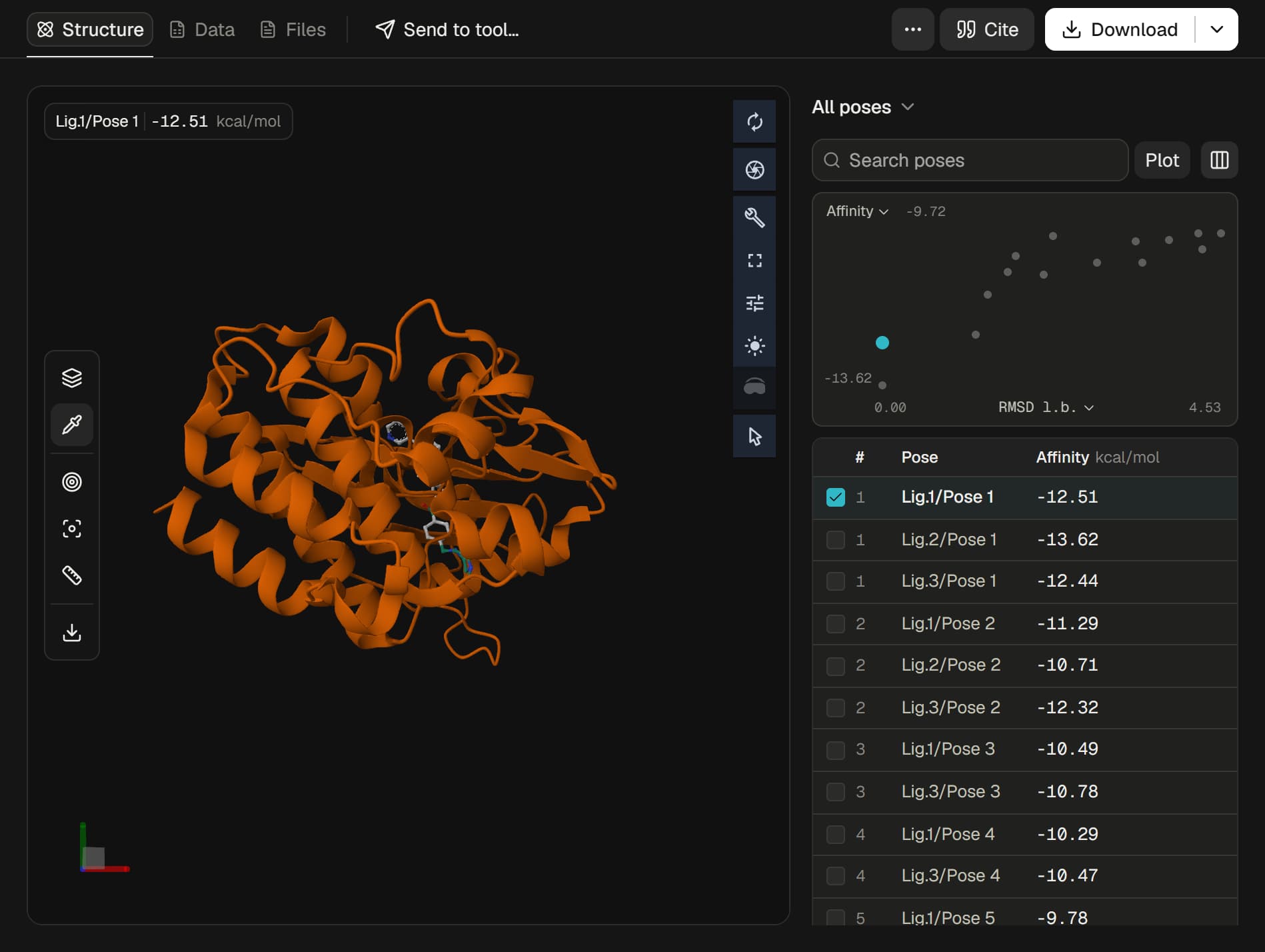
Place small molecules in a binding site and rank the poses, from classical scoring to AI docking and protein-protein docking.
Design binders, antibodies, and new sequences for a target, then check each design with structure prediction.
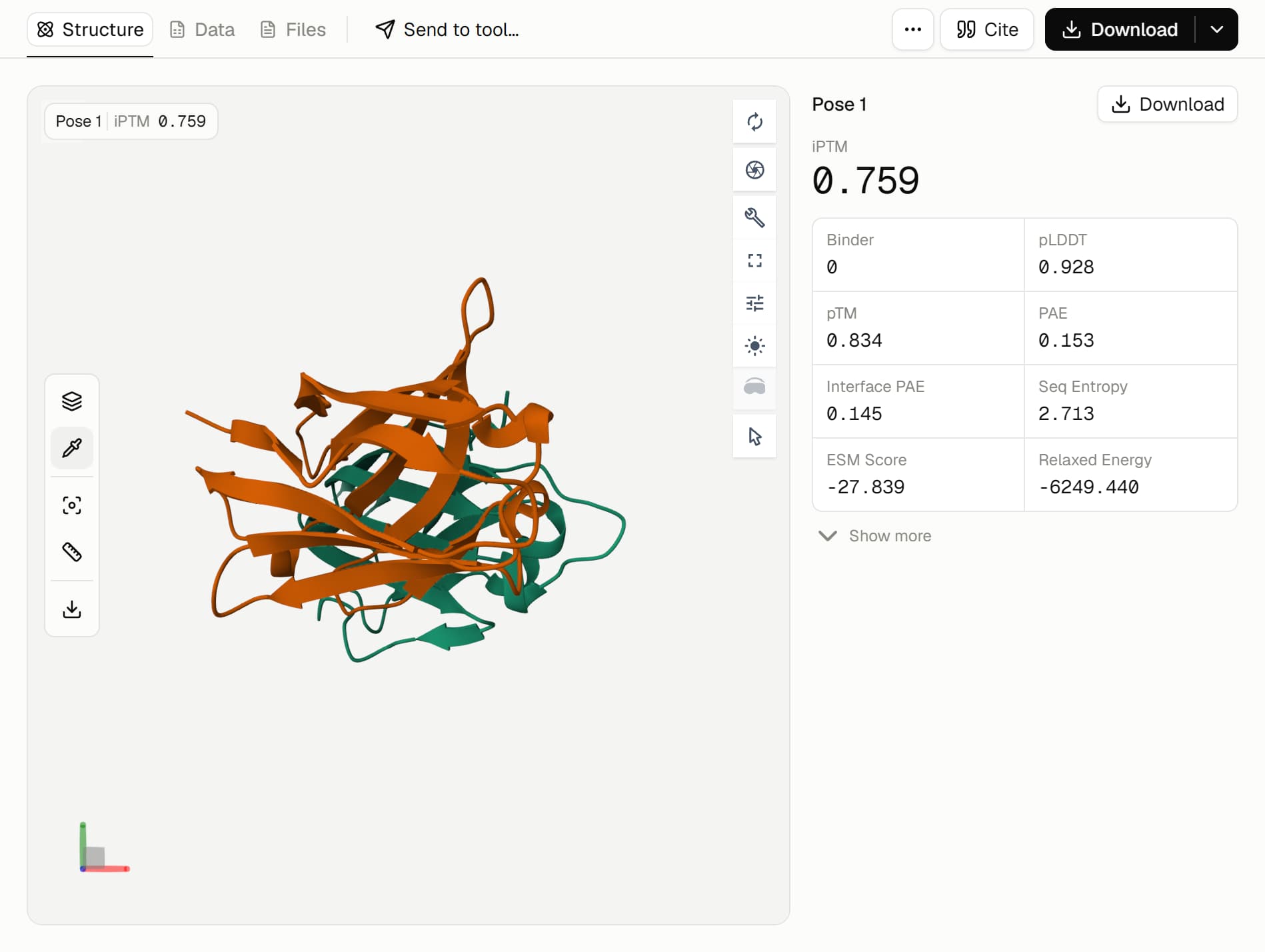
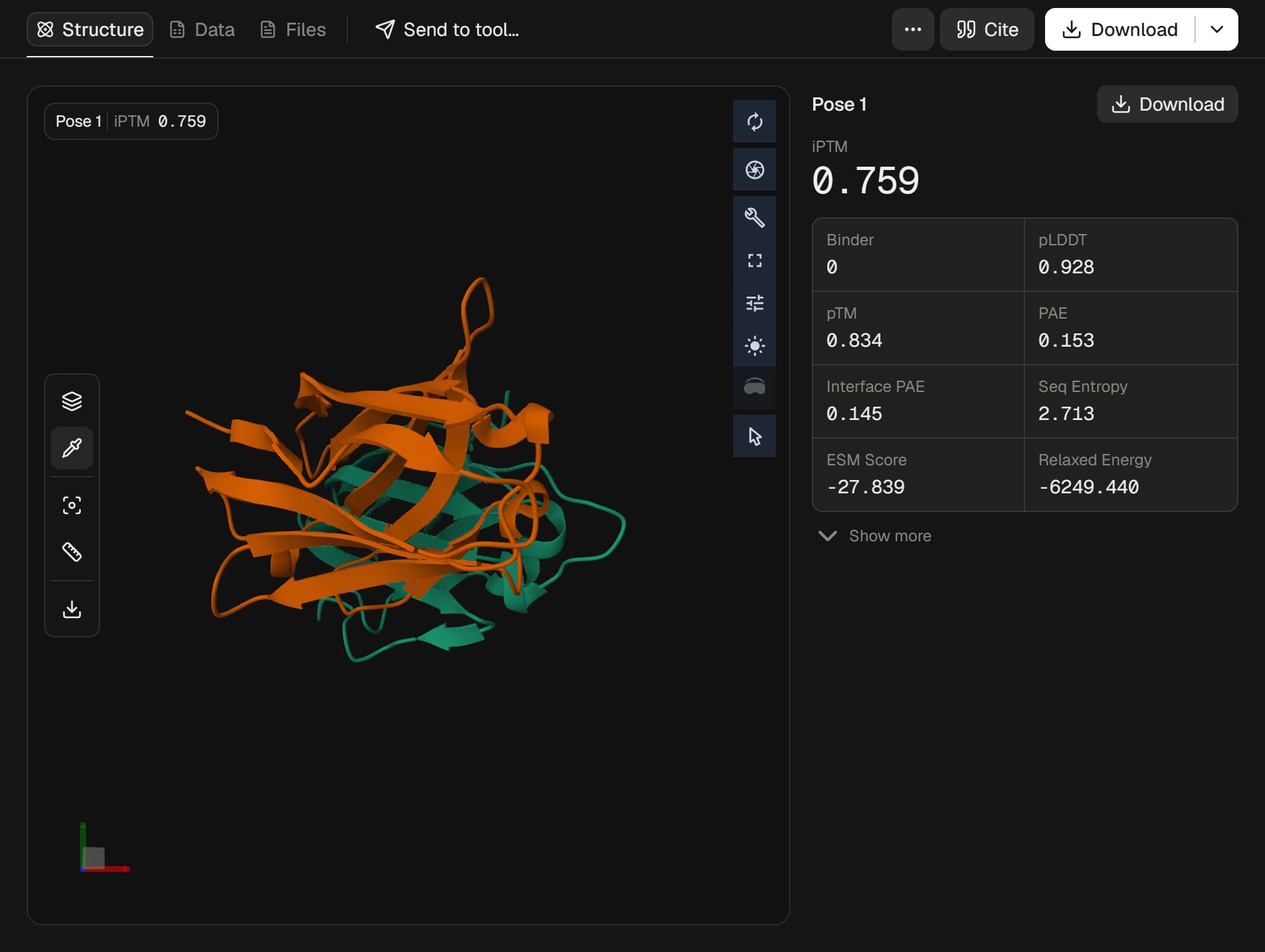
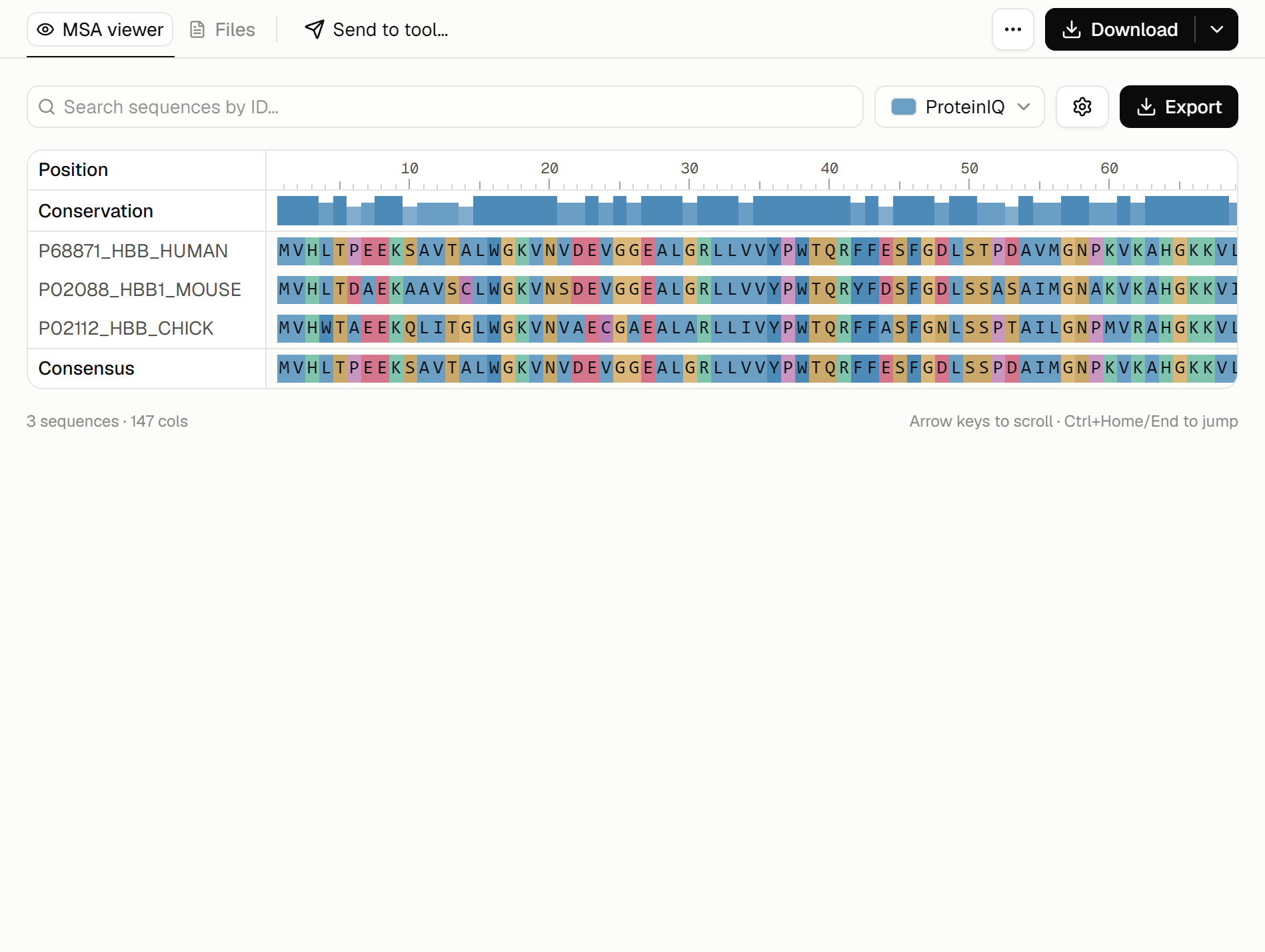
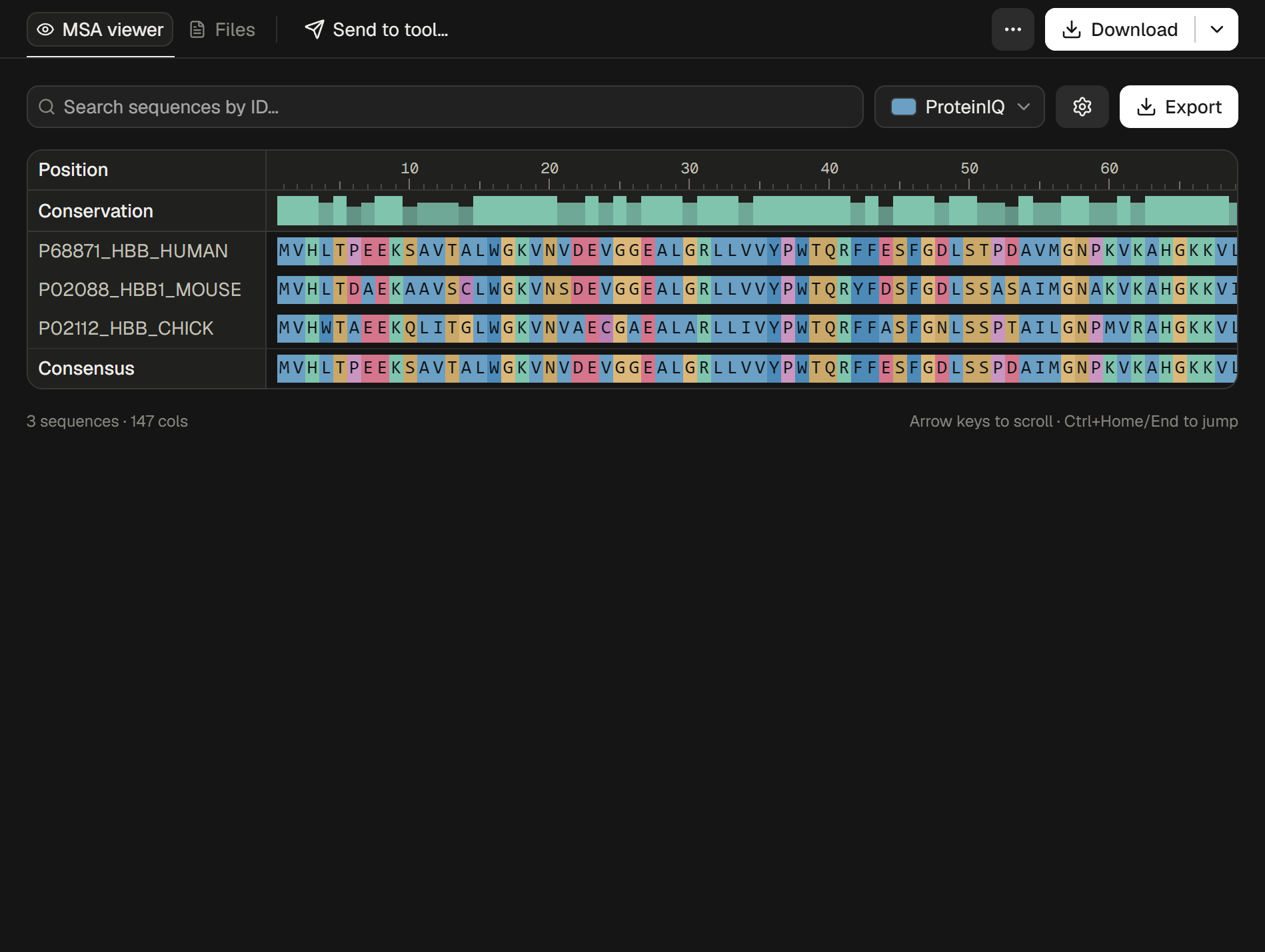
Align sequences and structures, search databases for homologs, and build phylogenetic trees.
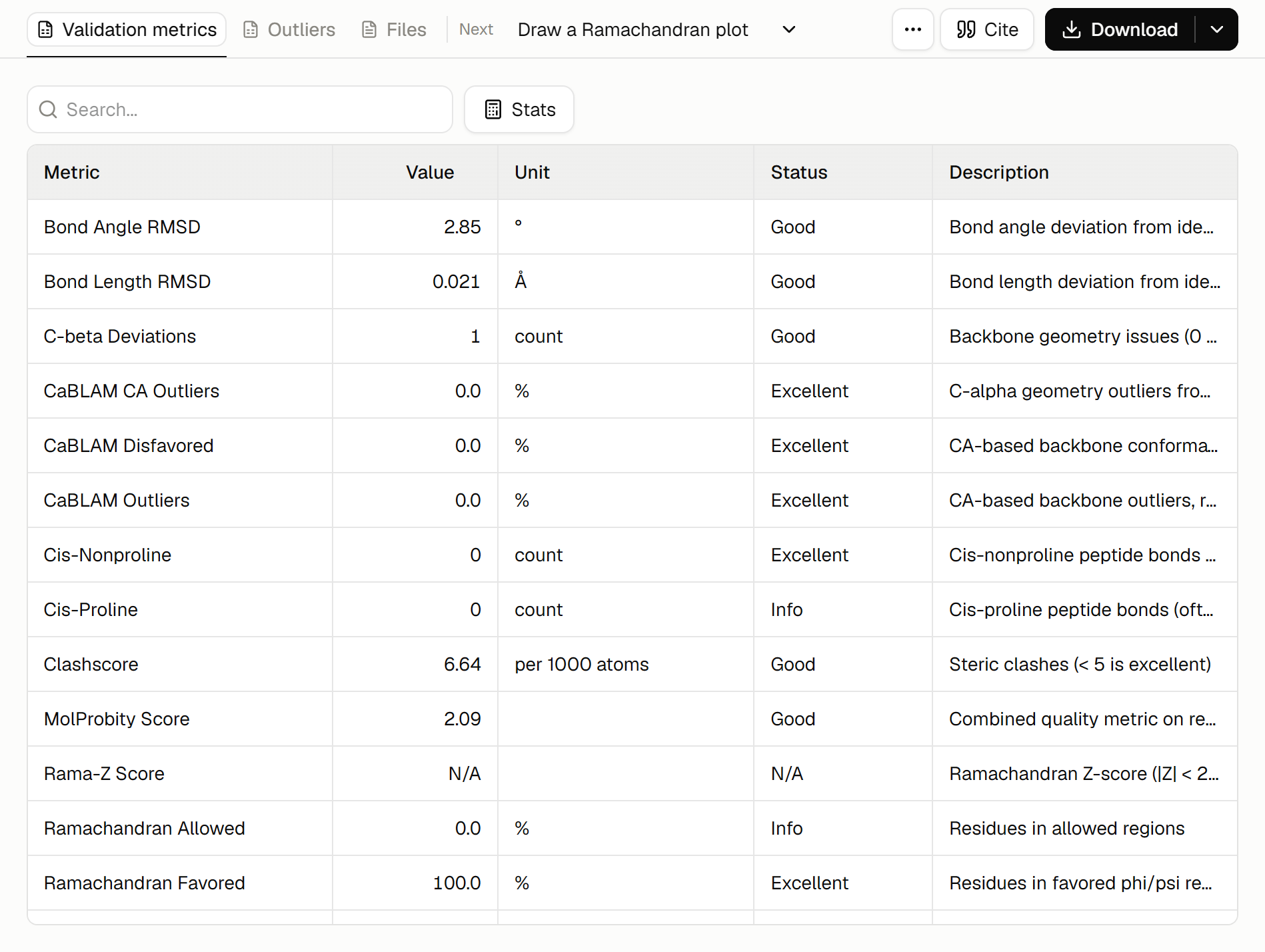
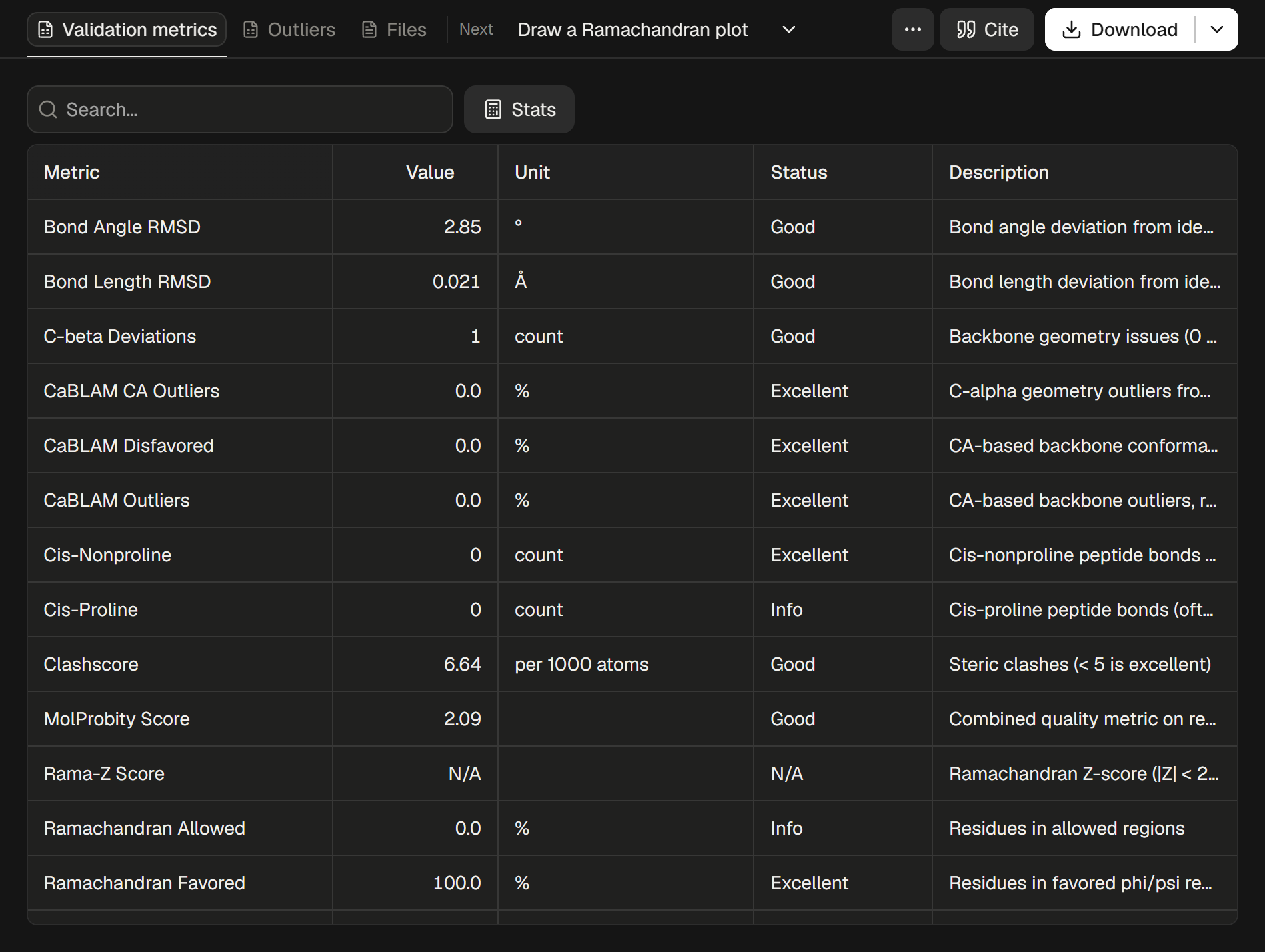
Check structures and poses for geometry problems, clashes, and outliers before you rely on them.
One workspace from first
run to full pipeline
Chain tools, run them at scale, script them, and keep every file and result organized.
Workflows
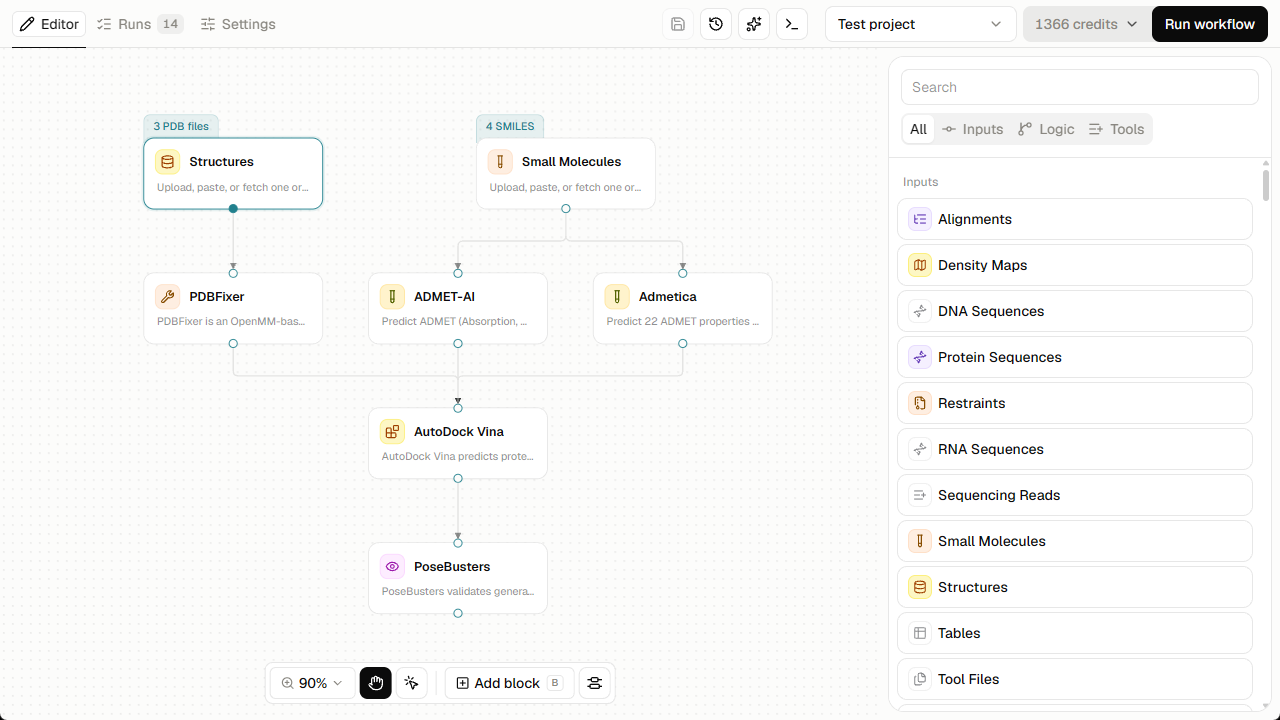
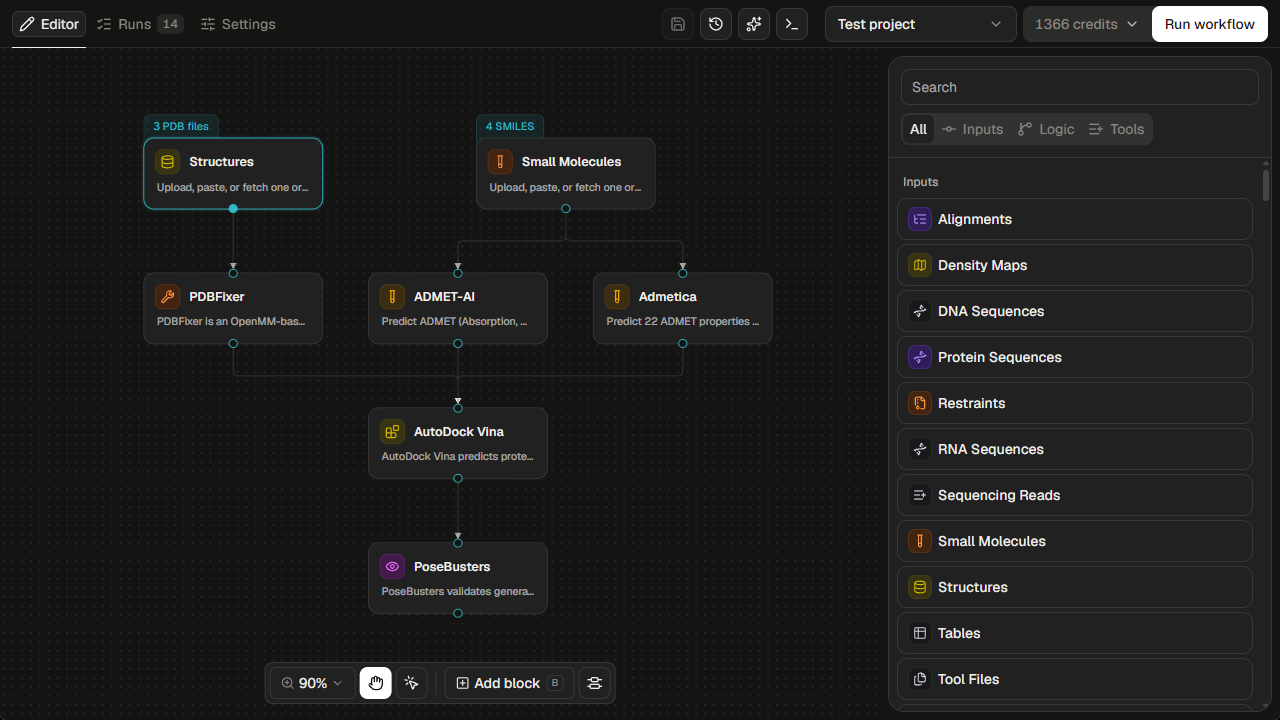
Chain preparation, docking, and validation. Results pass between steps, and you see the total cost before anything runs.
Batches
Run one tool across hundreds of sequences or molecules and keep the results together.
API and Python SDK
Discover tools, estimate costs, submit jobs, and fetch results from notebooks, pipelines, or AI agents over MCP.
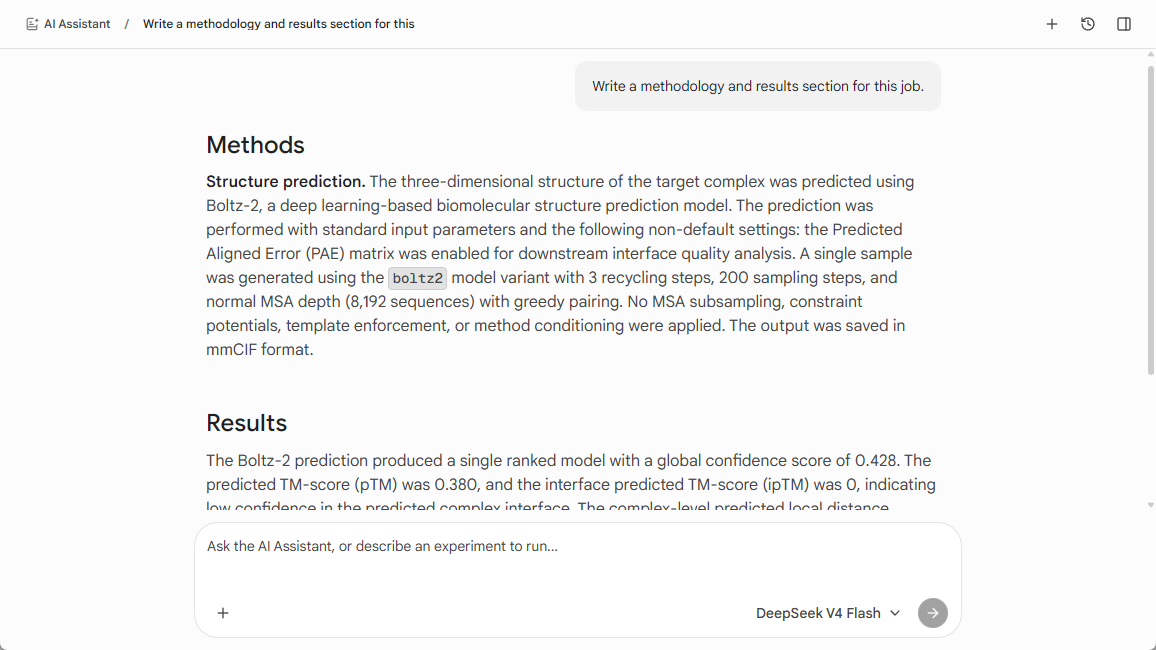
AI assistant
Interpret results, troubleshoot runs, and draft methods sections. Follow-up jobs wait for your approval.
Files and collections
Uploads and outputs land in one library. Send any file to the next tool or group sets for your team.
Projects
Keep related results, files, and workflows together so a study stays in one place.
Used in published research
Peer-reviewed studies that ran their analysis on ProteinIQ.
- Antibiotics · Oct 2026
Anti-MRSA bacteriocin models checked with Ramachandran plots
Walailak UniversityRamachandran plot - Microbial Biotechnology · Aug 2026
Comparing PET-active lipase surfaces with the SASA calculator
Barcelona Supercomputing Center and ICP-CSICSASA calculator - Journal of Medicinal Chemistry · Aug 2026
How PepGate narrowed 30 peptides to one lead
Zhejiang UniversityProtein stability prediction - Antibiotics · Jul 2026
Insect antimicrobial peptide structures predicted with Chou-Fasman
Jiangsu Academy of Agricultural SciencesChou-Fasman - BMC Plant Biology · Jun 2026
Testing chloroplast DNA patterns with DNAGenIQ controls
Institute of Biophysics of the Czech Academy of SciencesDNAGenIQ - Translational Neurodegeneration · Apr 2026
Coa6-CoQ10 binding site modeled with Protenix
The Fourth Military Medical UniversityProtenix
“Having separate tools integrated into one single dashboard made it incredibly straightforward to manage the entire workflow.”

“The docking interface is easy and trustworthy.”

Also mentioned by BiopharmaTrend, ParaSurf on GitHub, and HTGAA. Share your experience.
- RFD4-Proteina arrives in beta for designing binders, enzymes and ligand pockets, and BioEmu2 samples equilibrium ensembles of proteins, nucleic acids and ligands
- ANARCI now renumbers antibody and TCR structures, and MD trajectory analysis results read as one report with publication-ready figures
- Eight new chemistry and sequence tools arrive, along with NuCaliby for designing coding DNA from protein backbones and task-based tool search
- SMINA adds flexible side-chain docking, and many hosted tools now expose more of their native settings and outputs
Frequently asked questions
Something else on your mind? Get in touch.
ProteinIQ is a browser workspace for running 270+ bioinformatics tools, including structure prediction, protein design, molecular docking, molecular dynamics, and sequence analysis. Your files, jobs, and results live in one place, and tools can be chained into workflows or run in batches.
No. Lightweight tools run directly in your browser, and heavier models run on cloud GPUs that we manage. You only need a web browser.
The Free plan includes 200 credits and up to 3 jobs per day on cloud tools. Tools that run in your browser are free and unlimited: they cost 0 credits and do not count toward the daily job limit. Paid plans add monthly credits, batches, and higher limits.
See pricing for plan details.
Yes. Your sequences, structures, and results are never used to train AI models, and we do not sell them or share them beyond the infrastructure providers that run the service. Each job runs in its own isolated container, and data is encrypted in transit and at rest.
Some tools send inputs to an outside service as part of how they work. Structure predictors that build MSAs, such as Boltz-2, Chai-1, OpenFold3, and AlphaFold2, send protein sequences to the public ColabFold server. Several do this by default, and BioEmu always does for sequence input. PDBsum analysis runs on EBI's PDBsum service, and the AI Assistant passes what you give it to a language model through OpenRouter. The security page explains each case, including how to keep your sequences off the public MSA server.
Commercial use requires a Pro or Enterprise plan. For team procurement, security reviews, or custom compute, talk to sales.
Credits for jobs that end in Failed or Timeout are refunded automatically.
Yes. The ProteinIQ API lets you discover tools, estimate costs, submit jobs, and retrieve results from scripts, notebooks, and pipelines.
Run your first analysis today
Start with 200 free credits and no installs. Upgrade when your project needs more compute.