Design protein, peptide, and nanobody binders against protein or small-molecule targets. Learn more
Input
BoltzGen webserver overview
BoltzGen v0.3.2 designs peptide, protein, nanobody, and Fab binders against protein structures, redesigns selected regions of protein complexes, and designs proteins around small-molecule targets. ProteinIQ runs the complete native pipeline and returns ranked complexes, native metrics, binder-only refolds when available, sequence files, reports, and run provenance.
The BoltzGen guide explains the method, workflow, result interpretation, validation, and common mistakes. This reference lists the accepted inputs, settings, pricing behavior, and output files.
Pricing
BoltzGen temporarily reserves an estimated number of credits before submission, with a minimum reservation of 500 credits. This reservation is calculated from the uploaded target and selected settings, and it limits the maximum runtime available to the job. It is not the final charge. Completed jobs are charged 45 credits per minute of actual metered runtime, up to the reserved amount, and unused reserved credits are returned. Metered runtime is capped at 12 hours, equivalent to 32,400 credits at the current rate. The table below shows example reservation amounts, not final charges.
The examples below use one 200-residue protein target, a uniform binder length, one sequence per backbone, inverse folding enabled, and native sampling and filtering defaults.
| Protocol | Binder assumption | 1 design | 10 designs | 30 designs | 100 designs |
|---|---|---|---|---|---|
Peptide binder | 12 residues | 500 | 500 | 545 | 1,352 |
Protein binder | 100 residues | 500 | 500 | 989 | 2,832 |
Nanobody (~130 residues) | Bundled scaffold | 500 | 500 | 748 | 1,961 |
Antibody / Fab CDR (~450 residues) | All bundled scaffolds | 500 | 609 | 1,537 | 4,785 |
The quote can increase with target size, binder length, candidate count, Sequences per backbone, variable binder length, and protocol-specific folding or affinity stages. Budget changes how many candidates are retained but does not currently increase the runtime estimate independently of Number of designs. Binding-site and structure constraints, checkpoint choice, filters, metric weights, and size buckets do not currently change the reservation. Skipping inverse folding lowers the estimate.
Inputs
| Input | Accepted value | Limit | Used by |
|---|---|---|---|
Target protein | .pdb, .ent, .cif, or .mmcif upload, or RCSB PDB ID | One structure, 50 MB, protein atoms required | Peptide, protein, redesign, nanobody, and Fab protocols |
Nanobody framework | .pdb, .ent, .cif, or .mmcif upload | One structure, 10 MB, protein atoms required | Custom nanobody framework only |
Target ligand | SMILES, CCD code, or PubChem result | One ligand | Protein-small molecule protocol |
For mmCIF inputs, chain and residue controls use label_asym_id and 1-based label_seq_id, not author numbering.
Settings
Protocol and campaign
| Parameter | Type | Default | Description |
|---|---|---|---|
Protocol | enum | Peptide binder | Selects peptide, protein, protein redesign, nanobody, Fab, or protein-small molecule design. |
Antibody scaffold | enum | All scaffolds (diverse sampling) | Selects all bundled Fab scaffolds or one named therapeutic scaffold; Fab protocol only. |
Nanobody framework | enum | BoltzGen scaffold library | Uses bundled scaffolds or an uploaded VHH framework; nanobody protocol only. |
Framework chain | string | conditional | Required for a custom nanobody framework; accepts an alphanumeric chain ID. |
CDR design regions | string | conditional | Required for a custom framework; comma-separated 1-based canonical residues or closed ranges such as 26..34,52..59,98..118. |
Sample CDR lengths | boolean | false | Allows selected custom CDR segments to be replaced by sampled-length insertions. |
Variable CDR segments | string | conditional | Required when CDR length sampling is enabled; uses removed_range:replacement_range, such as 26..28:1..5. |
Number of designs | integer | 30 | Generates 1 to 100 candidates before filtering. |
Budget | integer | 30 | Retains 1 to 100 candidates after quality and diversity selection and cannot exceed the generated count. |
Binder geometry and target selection
| Parameter | Type | Default | Description |
|---|---|---|---|
Uniform binder size | boolean | true | Uses one exact binder length for direct peptide, protein, and protein-small molecule design. |
Binder length | integer | 12 | Exact direct-binder length from 5 to 500 residues. |
Minimum length | integer | 10 | Minimum sampled direct-binder length from 8 to 150 when uniform size is off. |
Maximum length | integer | 14 | Maximum sampled direct-binder length from 8 to 150 and must not be below the minimum. |
Binding site (optional) | string | optional | Target residues in chain:residue_spec form, such as A:12,14,61; empty allows automatic site selection. |
Cyclic peptide | boolean | false | Enables backbone cyclization for the peptide protocol. |
Target chains (optional) | string | optional | Comma-separated chains such as A,B; empty includes all target chains. |
Redesign regions | string | conditional | Required for protein redesign; one chain per line using A:10, A:10..20, A:..30, or A:55... |
Sequence generation and final selection
| Parameter | Type | Default | Description |
|---|---|---|---|
Skip inverse folding | boolean | false | Skips sequence redesign and its runtime stage. |
Sequences per backbone | integer | 1 | Generates 1 to 10 inverse-folded sequence variants for each backbone. |
Avoid amino acids | string | optional | Excludes supplied one-letter amino-acid codes; empty preserves the protocol policy. |
Quality vs diversity (alpha) | number | native | Optional value from 0 to 1; empty preserves 0.01 for peptide design and 0.001 for other protocols. |
Filter biased compositions | boolean | true | Applies the native amino-acid composition filter. |
Refolding RMSD threshold (Å) | number | native | Optional value from 0.5 to 5.0 Å; empty preserves 2.0 Å for peptides and 2.5 Å for other protocols. |
Custom filters | string | optional | One strict metric<value or metric>value expression per line. |
Metrics weights | string | optional | One metric=value override per line; metric=none removes a metric from ranking. |
Size buckets | string | optional | One min-max:count cap per line for the final selected set. |
Diffusion and structural constraints
| Parameter | Type | Default | Description |
|---|---|---|---|
Step scale | number | native | Optional value from 0 to 3; empty preserves the native per-stage schedule. |
Noise scale | number | native | Optional value from 0 to 1; empty preserves the native per-stage schedule. |
Model checkpoint | enum | Both (diverse + adherence) | Uses both native checkpoints or only the diverse or adherence checkpoint. |
Secondary structure | string | optional | One chain:start-end:HELIX, SHEET, or LOOP constraint per line for direct binders. |
Disulfide bonds | string | optional | One chain:residue,chain:residue pair per line for direct binders. |
Staple bonds | string | optional | One chain:residue:atom,chain:residue:atom pair per line for direct binders. |
Fixed sequence regions | string | optional | One chain:start-end:sequence region per line; requires a uniform direct-binder length and non-overlapping ranges. |
Binding residues | string | optional | Binder positions that must contact the target in chain:residue1,residue2 form. |
Non-binding residues | string | optional | Binder positions that must not contact the target in chain:residue1,residue2 form. |
Design insertions | string | optional | Protein-redesign insertions in chain:position:min..max[:secondary_structure] form. |
Residue constraints | string | optional | Inverse-folding rules in chain:position:allowed|disallowed:amino_acids form. |
Direct binder constraints use chain B for peptide and protein targets and chain A for small-molecule targets. Malformed or protocol-inapplicable constraints are rejected before compute starts.
Outputs
| Output | Format | Description |
|---|---|---|
| Ranked binder-target complex | .cif | Native final refold for each retained design in final-rank order. |
| Binder-only refold | .cif | Native isolated-binder refold when the selected protocol produces it. |
| Designed chain sequence | .fasta | One additive per-design FASTA projected from native full-chain sequence columns. Fab runs use source-proven heavy_chain and light_chain roles; other modes retain neutral native asym labels. |
| Final and all-design metrics | .csv | Native final-set and all-design tables without renamed columns. |
| Aggregate and per-target analysis | .csv | Native analysis tables when produced. |
| Results overview | .pdf | Native BoltzGen plots when produced. |
| Run provenance | .yaml | Native steps.yaml and generated configuration files. |
| Run log | .log | Curated protocol, campaign, scientific phase, resolved Fab scaffold, result metric, warning, and failure summary. |
| Reference inputs | Original format | Uploaded target and custom framework structures, or ligand reference. |
Completed runs omit high-volume intermediate CIF and NPZ families. If a campaign reaches its reserved runtime limit, completed designs and native artifacts produced before execution stops are returned when available.
Understanding results
| Field | Meaning |
|---|---|
Binder pTM | Native design_ptm, a predicted quality score for the designed component; higher is better. |
Binder-target iPTM | Native design_to_target_iptm, confidence for interactions between designed residues and the target; higher is better. |
Minimum binder-target PAE (Å) | Native min_design_to_target_pae, the most confident predicted design-target contact; lower is better. |
Delta SASA (Ų) | Native delta_sasa_refolded, the change in solvent-accessible surface area after complex formation; larger values indicate more buried surface. |
Normalized rank score | Native quality_score used by final ranking; compare it only within the same run and settings. |
Sequence | Native designed residue sequence for the retained candidate. |
No single confidence or interface score proves binding, affinity, specificity, expression, solubility, or biological activity. Inspect the complete native metrics, structures, sequence diversity, and independent experimental evidence before selecting candidates.
Related tools
PepMimic
PepMimic designs short peptides that mimic the binding interface of a known protein binder on its target. From a reference protein complex, a latent diffusion model generates peptide candidates constrained to the target interface, and each candidate is scored by interface-mimicry against the reference binder.
PepMLM
Design linear peptide binders for target proteins using a target sequence-conditioned masked language model. PepMLM generates peptide sequences optimized to bind specific protein targets based on ESM-2 protein language modeling.
PocketXMol
PocketXMol is a pocket-interacting generative foundation model for small-molecule or peptide docking and design in protein binding pockets.
RFantibody
Structure-based de novo antibody and nanobody design pipeline combining antibody-tuned RFdiffusion, ProteinMPNN sequence design, and antibody-tuned RoseTTAFold2 filtering.
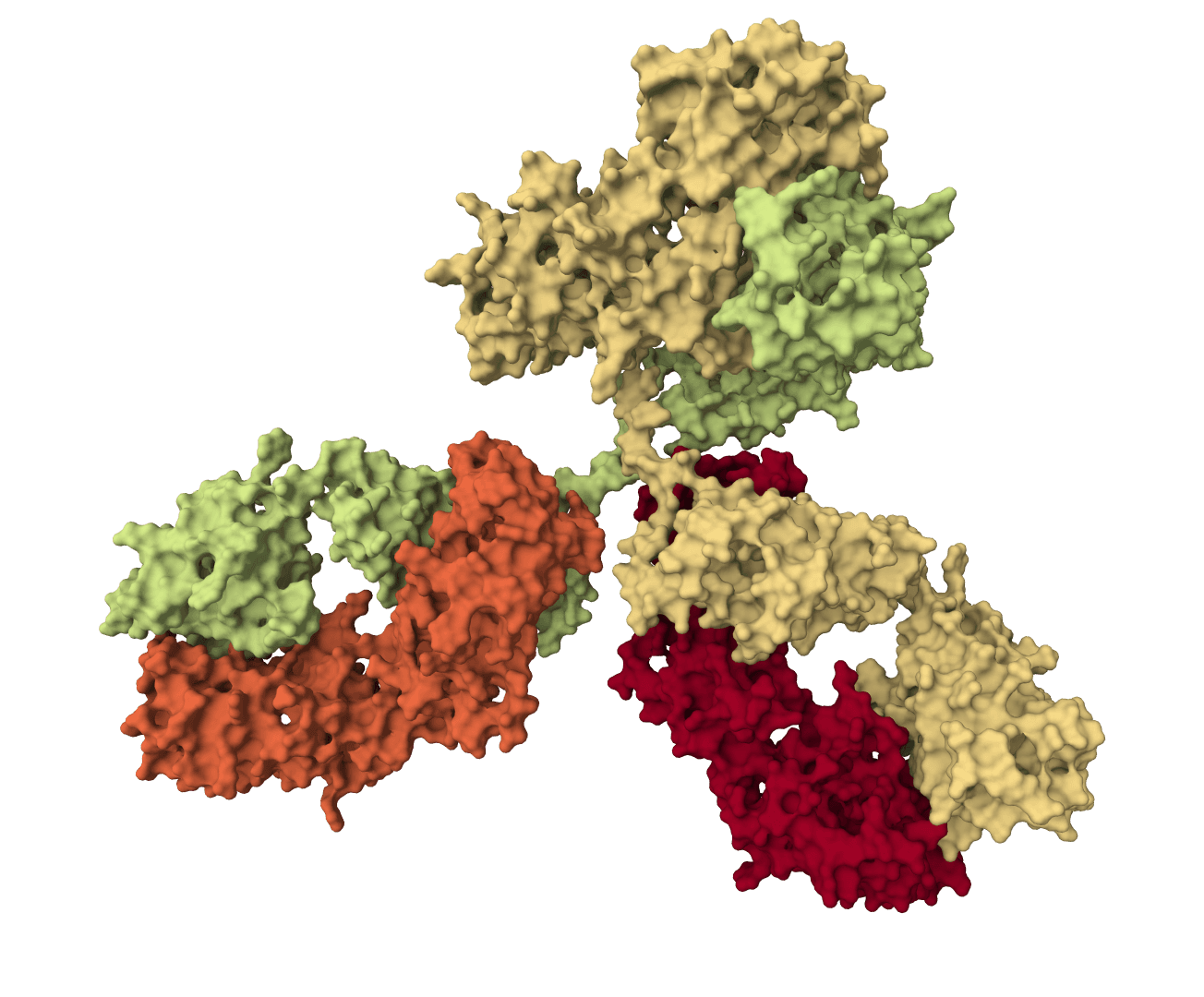
Proteo-R1
Exploratory antibody CDR co-design for antibody-antigen complexes using Proteo-R1 reasoning and raw diffusion. The standard online workflow does not include the framework structure-inpainting assets required for the published-quality target.
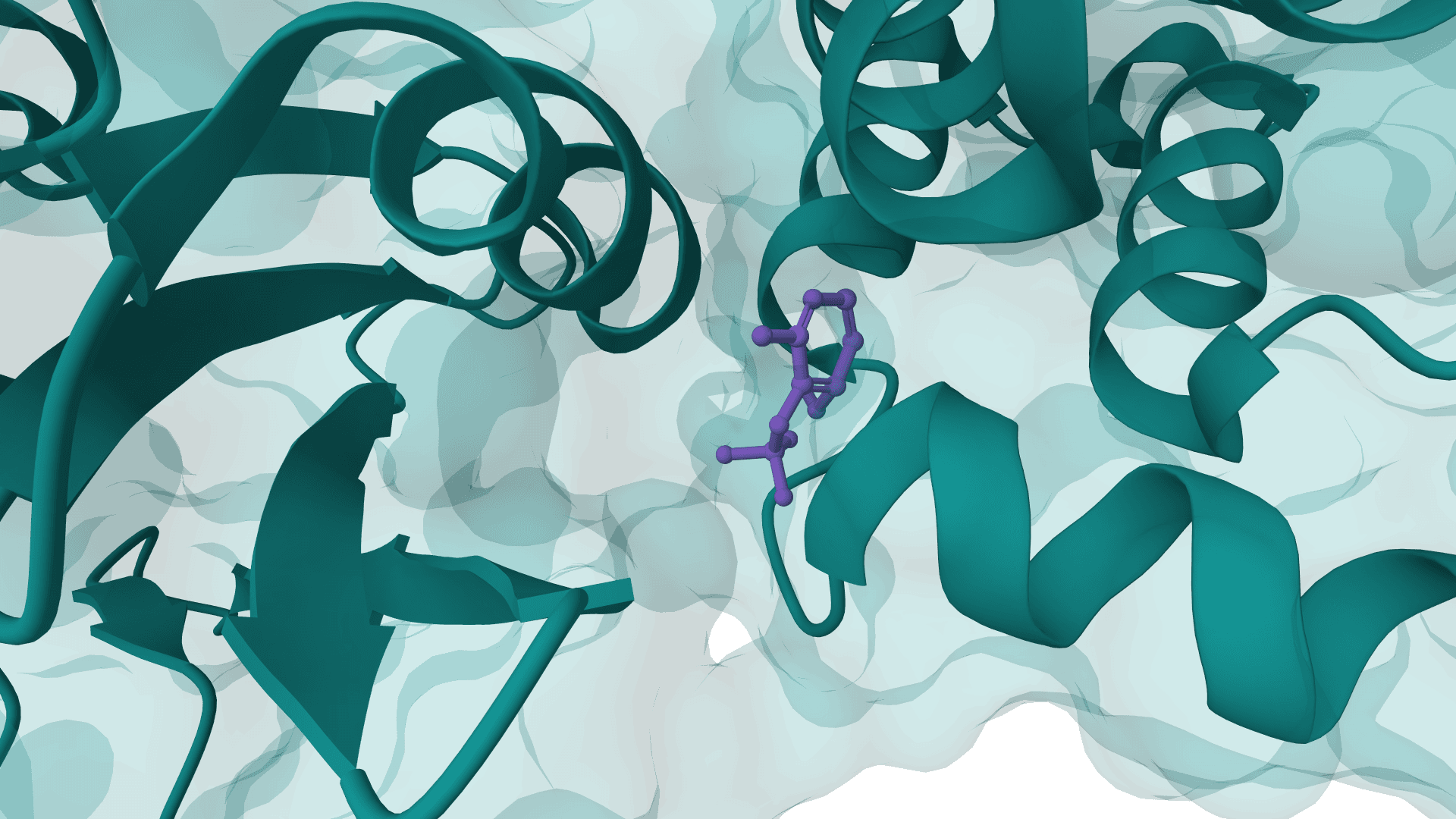
PocketFlow
PocketFlow is a structure-based molecular generative model that designs novel drug-like molecules within protein binding pockets. It uses autoregressive flow modeling with chemical knowledge to generate 100% chemically valid, highly drug-like compounds.
Proteina-Complexa
Design protein binders against a target structure with NVIDIA BioNeMo's Proteina-Complexa generative pipeline.
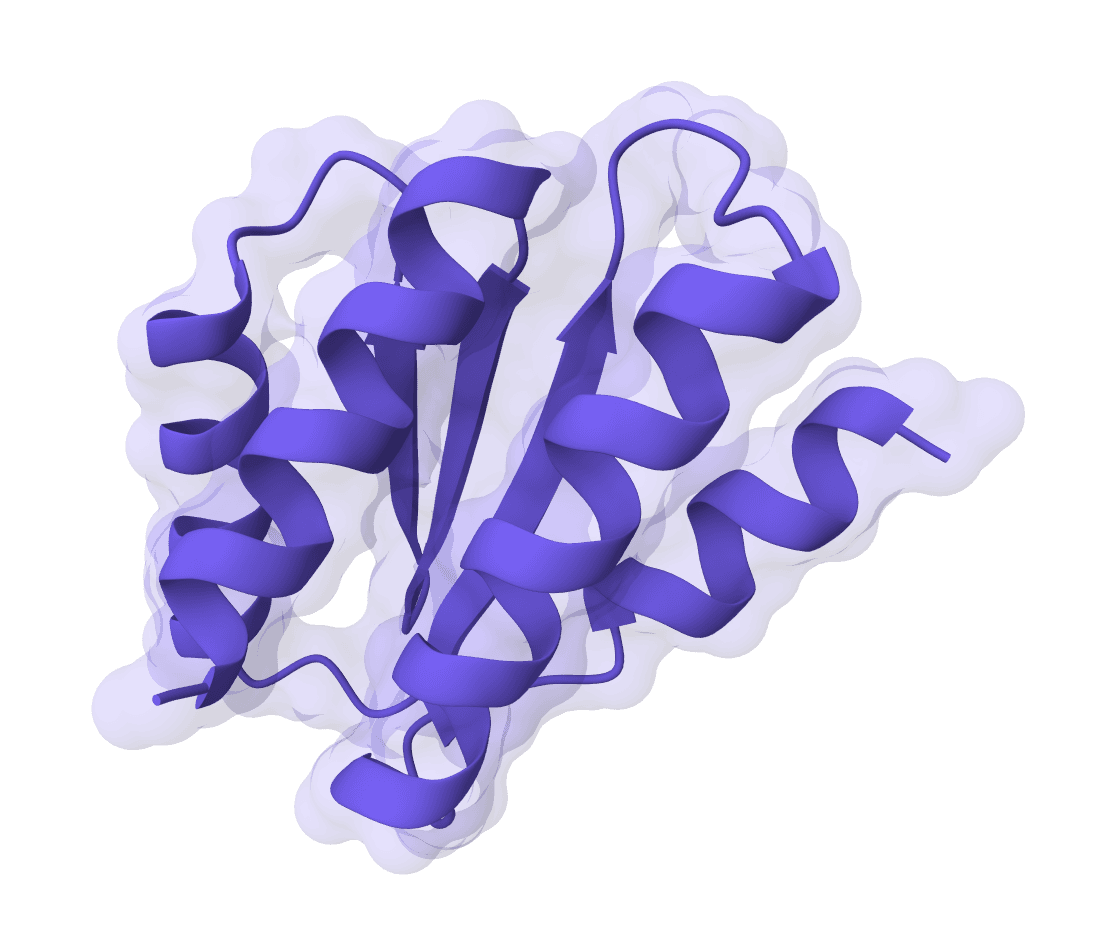
EvoDiff
EvoDiff is a diffusion-based protein sequence generation framework from Microsoft Research. ProteinIQ currently runs the EvoDiff-Seq OA_DM_38M model for unconditional protein generation, motif scaffolding, and user-sequence inpainting.
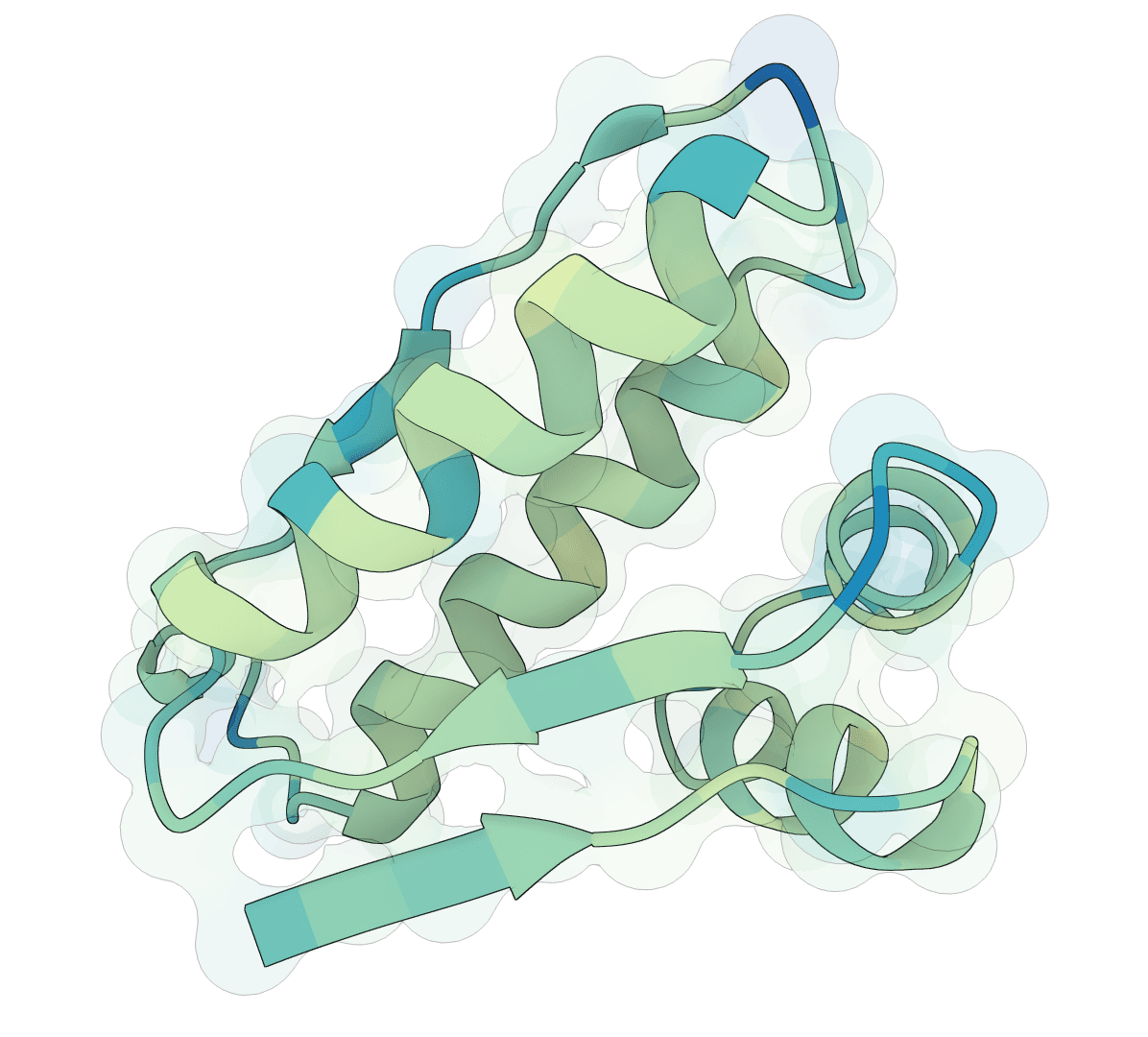
Genie 3
Generate protein structures and scaffolds with Genie 3, an all-atom SE(3)-equivariant diffusion model. Genie 3 supports unconditional protein generation, motif scaffolding, and hotspot-targeted binder design.
ODesign
All-atom generative AI for designing protein binders. Specify target binding sites and generate diverse binding proteins with fine-grained control over interaction parameters.