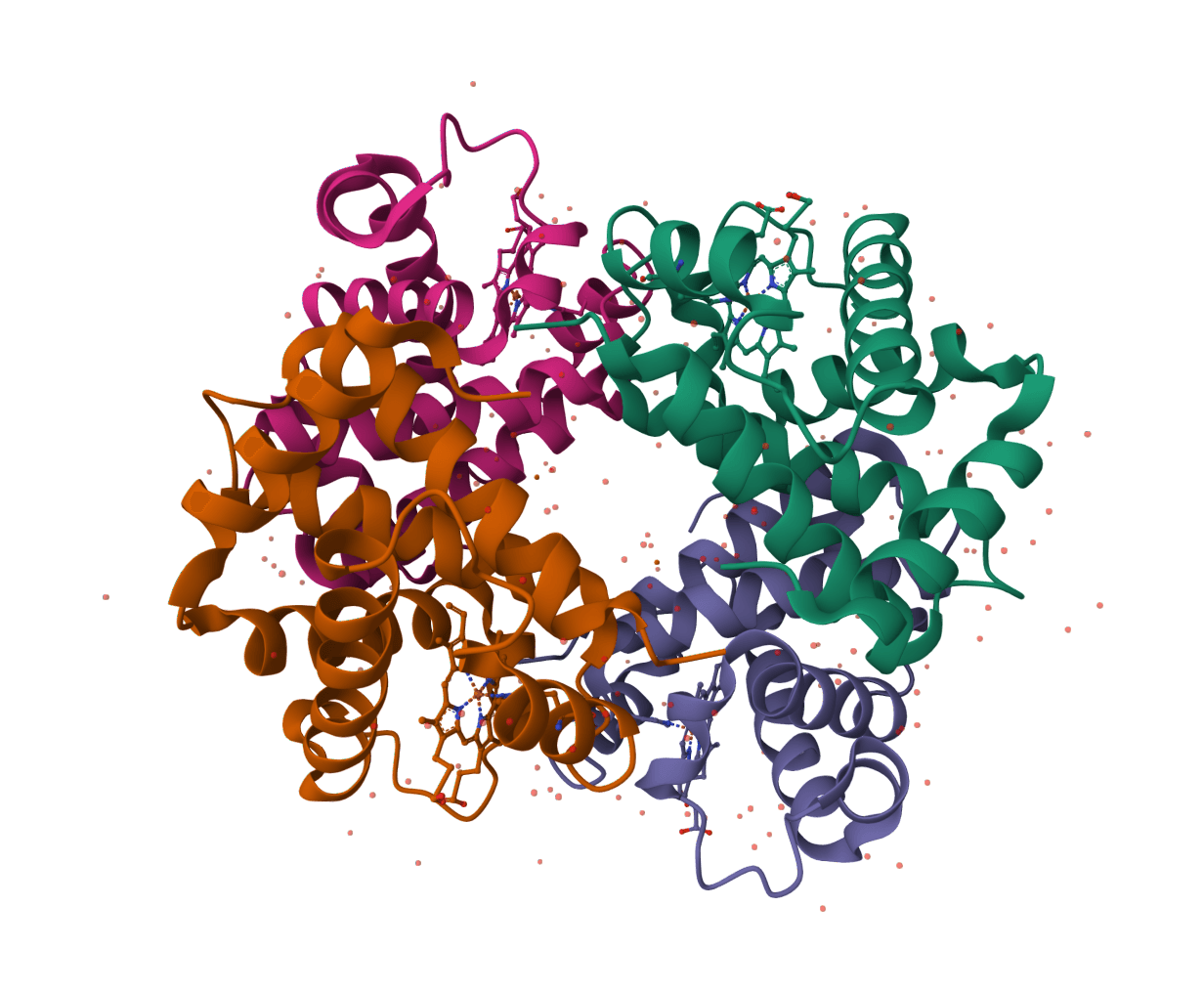
Convert PDB structures to CIF or mmCIF while preserving annotations and multi-model assemblies. Learn more
Input
What is PDB to CIF Converter?
PDB to CIF Converter transforms protein structure files from the legacy PDB format into PDBx/mmCIF (macromolecular Crystallographic Information File) format. The PDB format, introduced in the 1970s, uses fixed-width columns inherited from punched-card computing, which imposes hard limits: a maximum of 99,999 atoms and 62 chains per file. The mmCIF format removes these constraints entirely, supporting unlimited atoms, residues, and chains in a single file.
The worldwide Protein Data Bank (wwPDB) has designated PDBx/mmCIF as the standard format for deposition, annotation, and archiving. As the PDB archive approaches the exhaustion of its four-character accession codes (expected before 2028), new entries with extended 12-character PDB IDs will only be available in mmCIF format. Software tools and pipelines that still depend on the legacy PDB format will need to transition to mmCIF by 2029.
Beyond removing size constraints, mmCIF offers several practical advantages. Its tabular, tag-value structure is easier to parse programmatically than the PDB positional column format. It carries richer metadata, including detailed experimental conditions, refinement statistics, and chemical component descriptions that the legacy format cannot represent. These properties make mmCIF the preferred input for modern structural biology software, molecular dynamics packages, and deposition workflows.
How to use PDB to CIF Converter online
ProteinIQ provides browser-based PDB to CIF conversion with no software installation or account required. The conversion runs entirely client-side, so structure data never leaves the browser.
Input
| Input | Description |
|---|---|
input | A protein structure in PDB format. Accepts pasted PDB content, uploaded .pdb or .ent files (up to 50 MB), or a PDB ID fetched directly from RCSB (e.g., 1CRN). |
Settings
All settings are found under Conversion options.
| Setting | Type | Default | Description |
|---|---|---|---|
Preserve secondary structure | Toggle | On | Includes secondary structure annotations (helices, sheets) in the CIF output. |
Include HETATM records | Toggle | On | Retains heteroatom records such as ligands, water molecules, and ions. |
Preserve temperature factors | Toggle | On | Carries over B-factor (temperature factor) values for each atom. |
Include all models | Toggle | Off | Converts all models in multi-model PDB files (e.g., NMR ensembles). When off, only the first model is converted. |
Output
The converter produces a single mmCIF-formatted text output that can be copied to the clipboard or downloaded as a file.
Limitations
- The converter handles standard PDB records (ATOM, HETATM, HEADER, secondary structure annotations). Custom or non-standard PDB records may not have direct mmCIF equivalents and could be omitted during conversion.
- PDB files that already exceed the format nominal limits through non-standard extensions (hybrid numbering, multi-character chain IDs) may not convert correctly.
Related tools
PDB to FASTA converter
Convert Protein Data Bank files to FASTA sequence format
PDB to MOL2 Converter
Convert PDB structures up to 20,000 atoms to Tripos MOL2 with Open Babel in the browser
CSV to FASTA
Convert CSV and TSV files containing sequence data to FASTA format with flexible column mapping and automatic delimiter detection
DNA to Protein Converter
Translate DNA sequences to protein sequences using genetic code
One-to-Three Converter
Convert single-letter amino acid codes to three-letter codes
Protein to DNA converter
Reverse translate protein sequences to possible DNA sequences
Three-to-one converter
Convert three-letter amino acid codes to single-letter codes
TXT to FASTA converter
Convert TXT or pasted DNA, RNA, and protein sequences to FASTA locally in your browser, with cleanup, validation, and downloads.
GenBank Feature Extractor
Extract sequence features (CDS, mRNA, gene, etc.) from GenBank files in FASTA format with support for spliced features

Open Babel
Run Open Babel in the browser to convert chemical and structure files, with coordinate, hydrogen, and pH options where the WASM runtime supports them.