ADMET prediction
Compare predicted absorption, metabolism and toxicity
Send a small-molecule shortlist to ADMET-AI, Admetica, eToxPred, and structural alert screening, then compare predicted absorption, metabolism, and toxicity side by side.
Trusted by 16,500+ researchers and published in
Prepare the compounds
The predictors read SMILES, so convert docked or aligned SDF records first. Then calculate RDKit properties, QED and rule violations to see what each compound looks like before any model scores it.
Predict ADMET endpoints
ADMET-AI returns 41 endpoints with DrugBank percentiles. Admetica adds 22 Chemprop endpoints, including hERG and clearance, and Boltz ADME predicts lipophilicity, permeability and solubility. Where the models disagree, look before you order.
Screen for toxicity and alerts
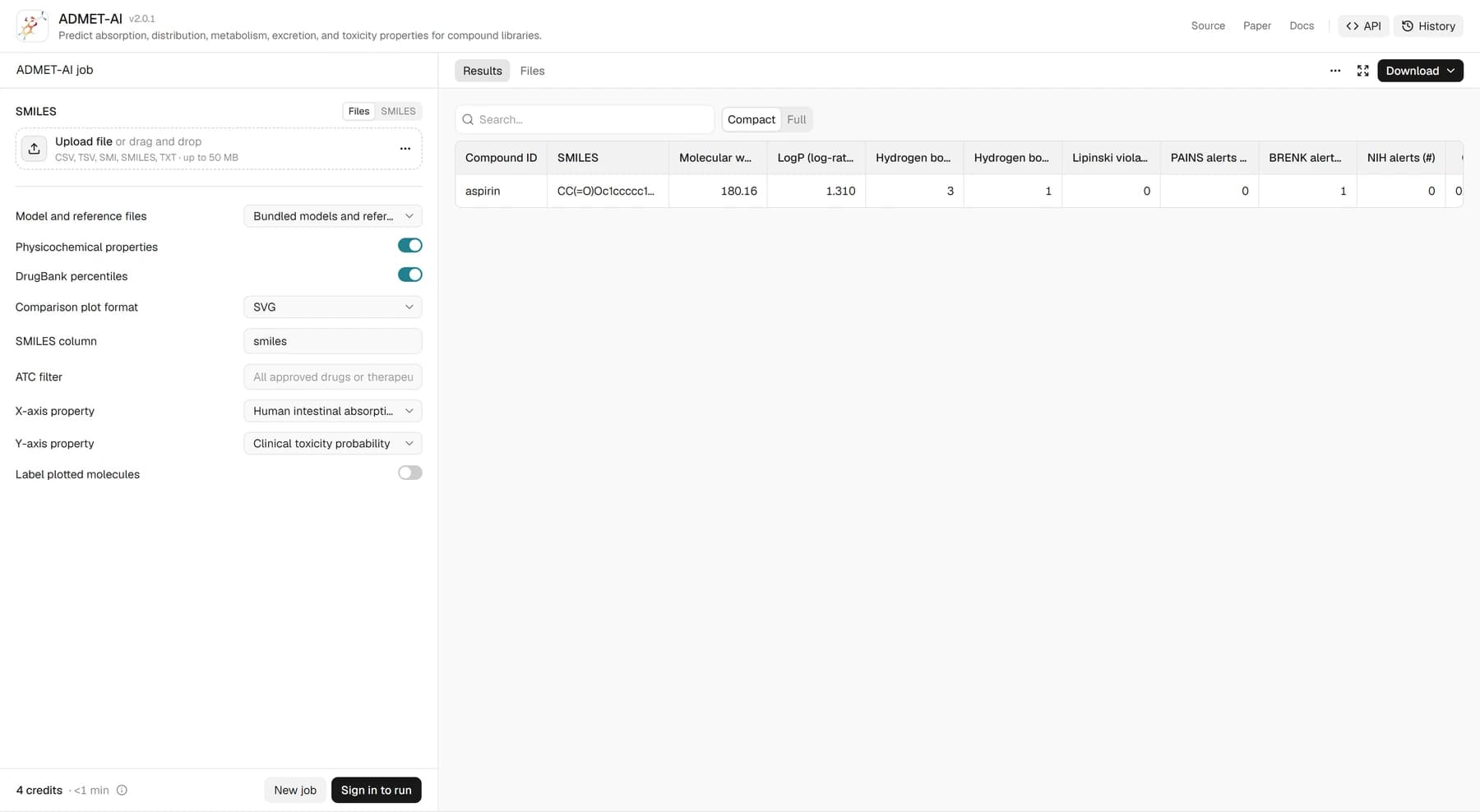
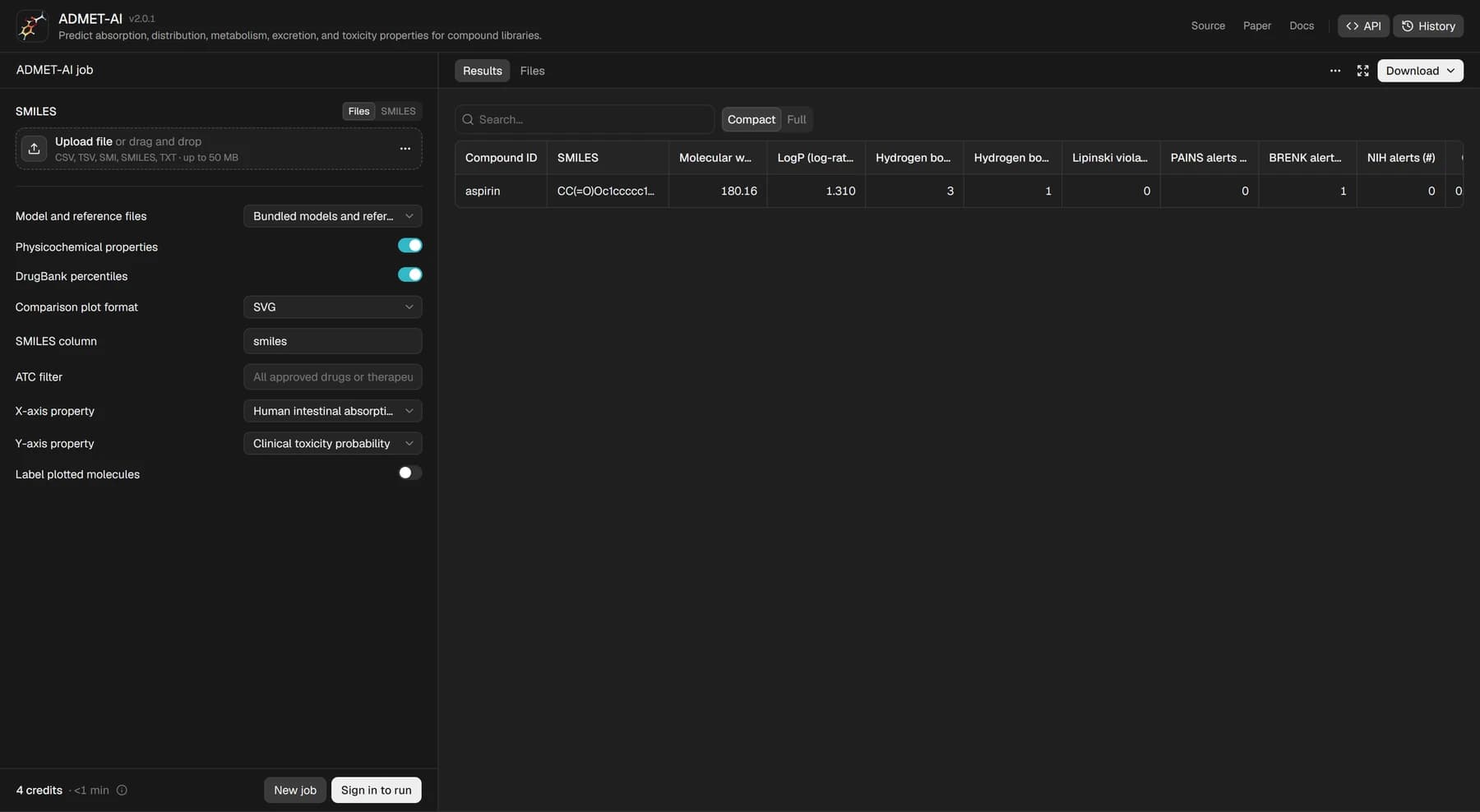
eToxPred scores general toxicity and synthetic accessibility, while structural alerts catch assay-interference and reactive fragments by pattern. Alerts depend on context: aspirin, an approved drug, still flags one Brenk pattern.
Apply property rules
Molecular weight, logP, hydrogen bond counts, rotatable bonds and polar surface area make quick filters. Lipinski and Veber limits suit oral drugs, and the lead-likeness filter is stricter for compounds you plan to optimize.


More small-molecule discovery workflows
Read the flags before you act on them
Background guides on the methods, scores, and numbers behind these workflows.
Drugs · 14 min
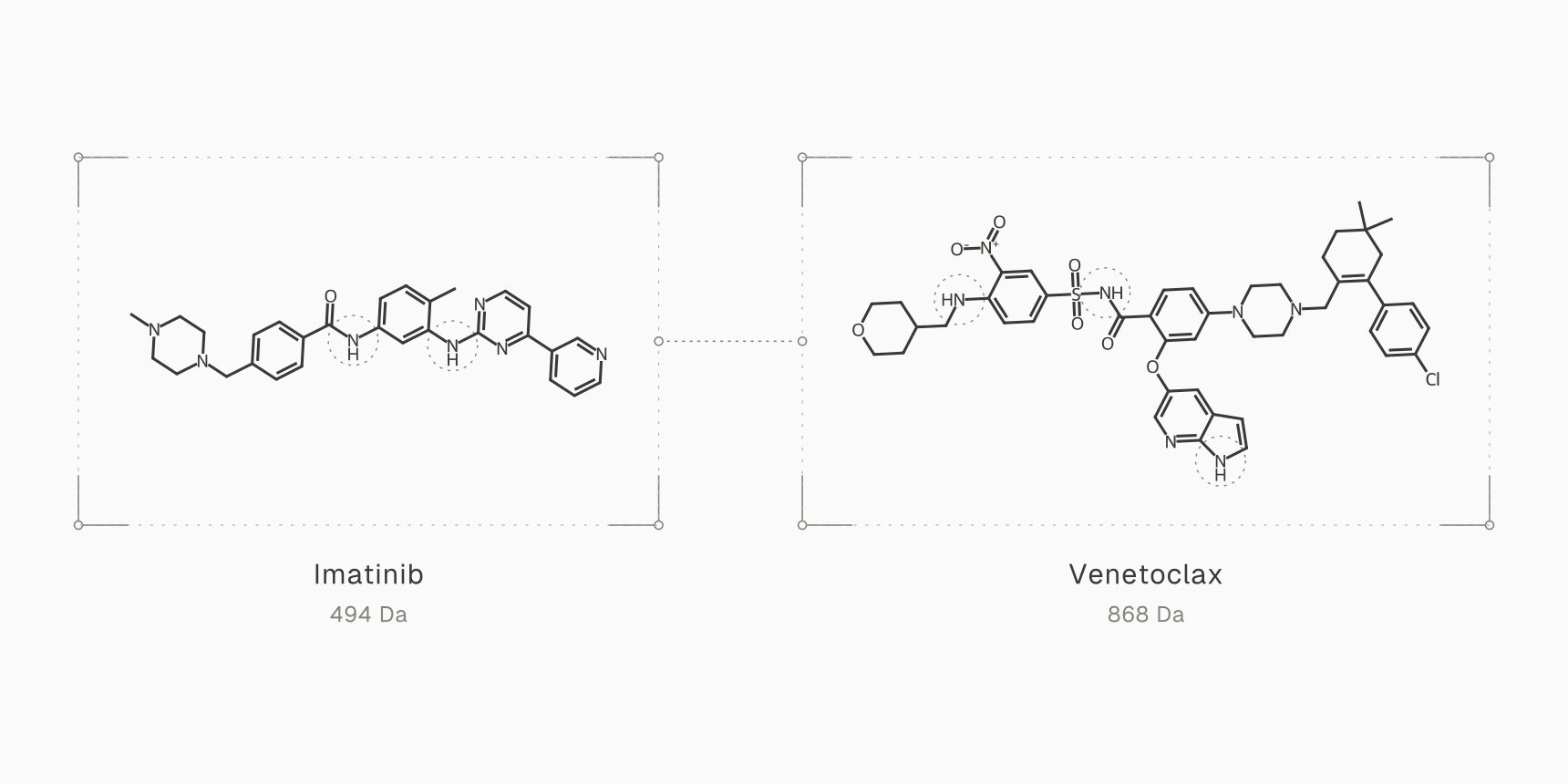
Lipinski's rule of five
Lipinski's rule of five warns that oral absorption is less likely when a molecule breaks two or more of four limits: molecular weight above 500 Da, cLogP above 5, more than 5 hydrogen-bond donors and more than 10 acceptors. ProteinIQ found that 13% of 2,104 approved small-molecule drugs in ChEMBL 37 break two or more, and 28% break at least one.
Drugs · 14 min
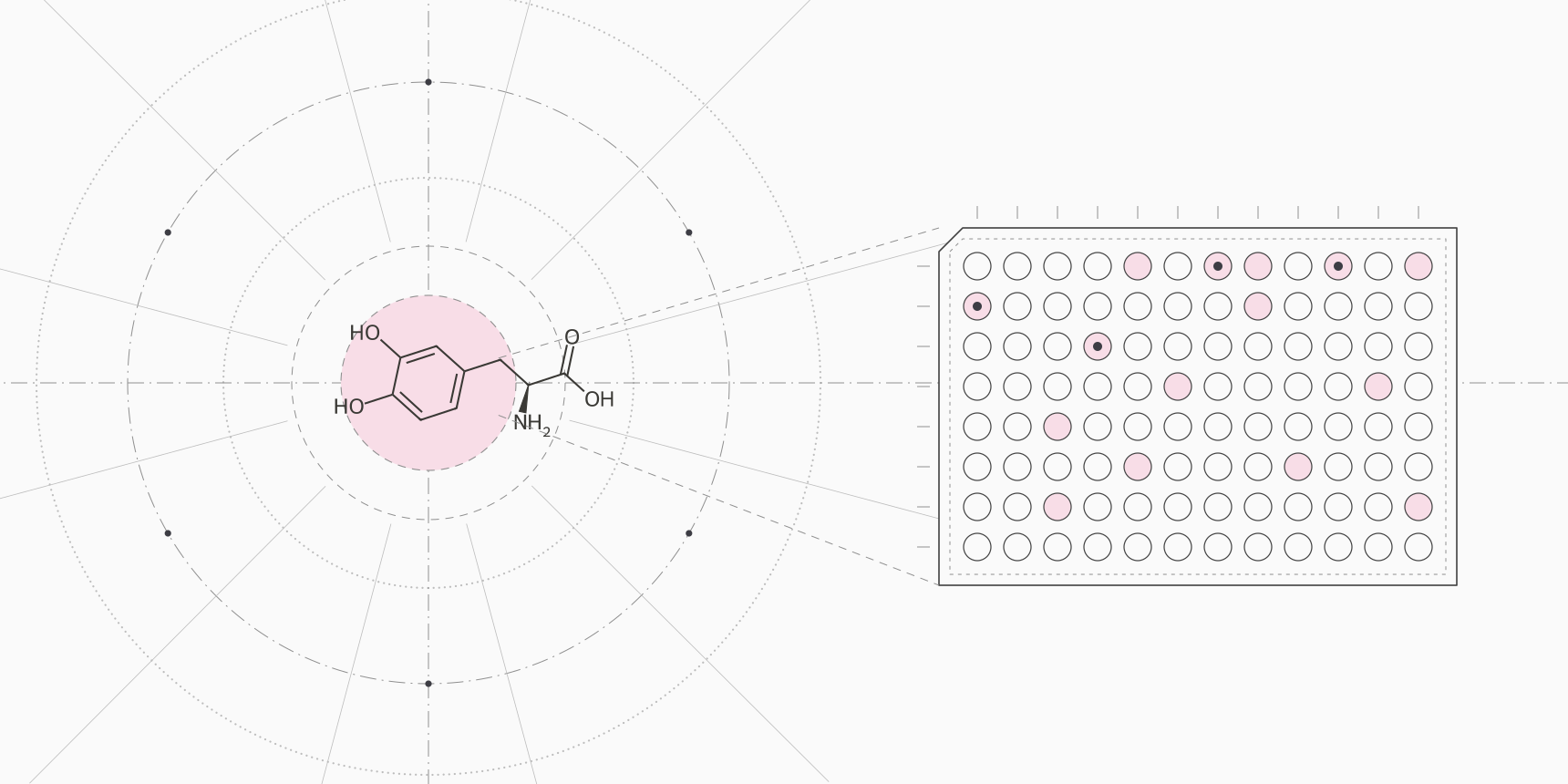
PAINS filters and pan-assay interference compounds
PAINS filters are 480 substructure alerts that Baell and Holloway published in 2010 to flag compounds that often give false hits in screening assays. ProteinIQ ran them on 2,104 approved small-molecule drugs in ChEMBL 37: 122 (5.8%) trigger at least one alert, led by catechols such as levodopa and quinones such as doxorubicin.
FAQs
No provider publishes a fixed price for an in silico ADMET profile; services such as Creative Biolabs describe more than 100 predicted properties and ask for an inquiry, so the work is quote-based. For comparison, one university cancer-center core lists a 2025 non-GLP liver microsome stability assay for internal users at a $2,000 setup fee plus $2,000 per compound, which is why computational triage usually comes before measurement.
The price of a quote depends on the number of compounds, which endpoints and models are included, how much expert interpretation is added, and whether any predictions are confirmed with assays.
ProteinIQ’s Free plan gives 200 credits a month, and paid plans start at $9 per month for Lite, with Plus at $29 and Pro at $99. A one-molecule ADMET-AI job costs 4 credits and 1,000 molecules cost 50, quoted before the run. Done-for-you projects are scoped separately.
For an oral small molecule, a common first pass covers solubility, Caco-2 permeability, CYP3A4 inhibition, microsomal clearance, hERG, and clinical toxicity or DILI. Adjust the list to the program: a CNS target needs the blood-brain barrier call, and a narrow-index drug needs closer attention to interactions.
ADMET-AI, Admetica, and Boltz ADME each accept up to 1,000 molecules per job, and Free plans accept 10 per ADMET-AI job. Split larger libraries into batches, and run the rule-based filters first so the predictive models only see compounds that survive.
ProteinIQ runs ADMET-AI 2.0.1, which uses retrained Chemprop v2 models. The authors’ public server is based on version 1, and its predictions do not exactly match version 2. It also compares molecules with a slightly different DrugBank reference set. Compare scores only within one version.
ADMET-AI jobs are saved with their inputs and results in your job history, which suits repeated triage. Do not submit structures that must never be stored.
Yes. Edit the SMILES, resubmit, and compare the new rows with the earlier job using the same compound identifiers. Keep the model version fixed between runs, because retrained models shift numbers even when the structure does not change.
AI answers from our docs. No sign-in needed.
Focus on research, not infrastructure
Start free with 200 credits a month and no installs. Upgrade when your project needs more compute.