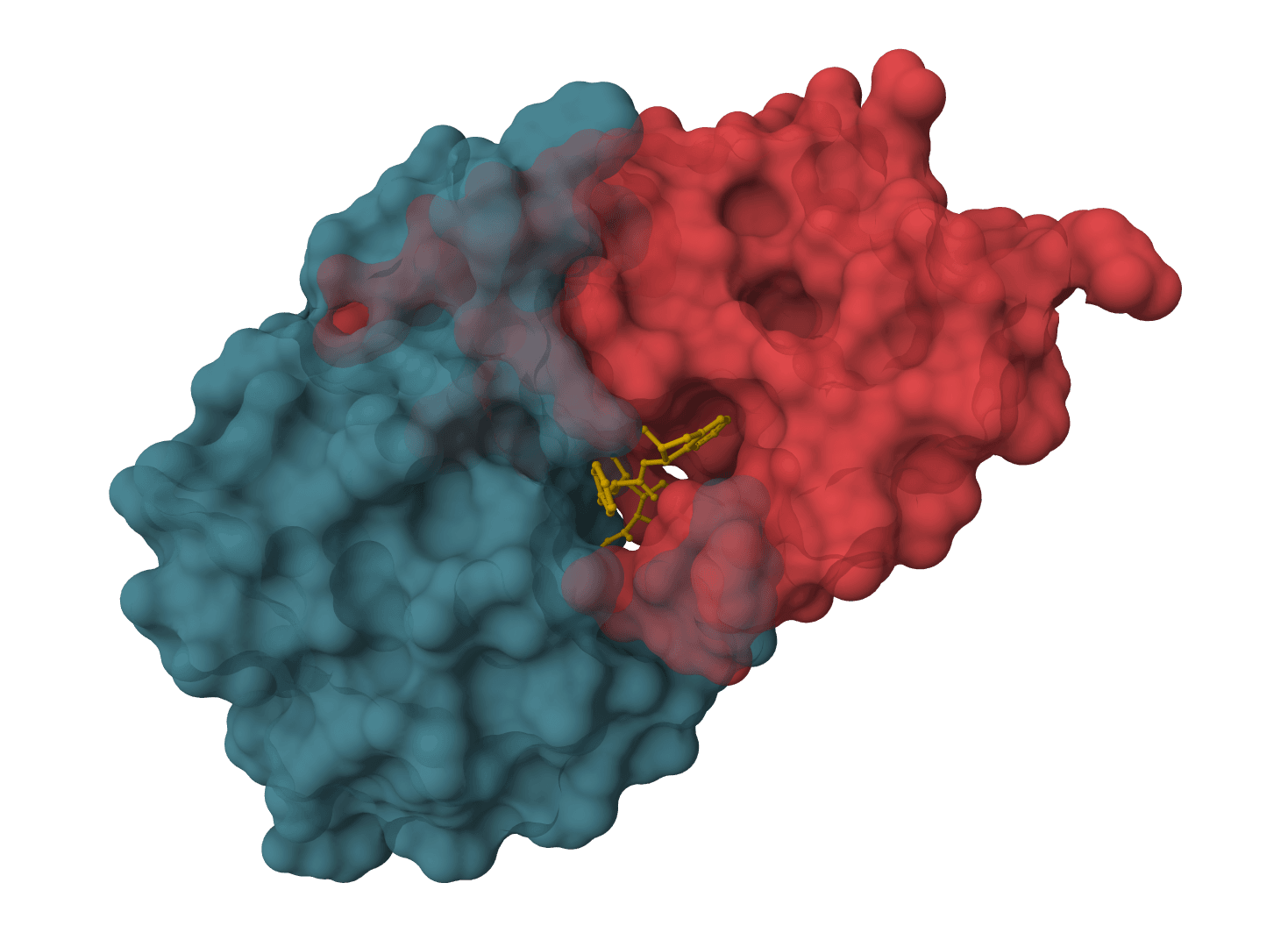
Enhanced molecular docking with custom scoring functions and fast minimization Learn more
Input
What is SMINA?
SMINA is a fork of AutoDock Vina developed by David Koes at the University of Pittsburgh. It extends Vina with comprehensive support for custom scoring functions, dramatically faster minimization, and enhanced workflows for scoring function research.
Published in 2013, SMINA was designed to address limitations in Vina's scoring function development capabilities. The tool enables researchers to define custom scoring functions with user-specified weights, making it valuable for both standard docking and advanced scoring research.
SMINA also includes the Vinardo scoring function, an optimized variant that consistently outperforms Vina's default scoring in pose prediction, ranking, and virtual screening benchmarks.
How does SMINA work?
SMINA inherits Vina's core search algorithm while extending its scoring capabilities. The search uses Iterated Local Search with BFGS quasi-Newton optimization, exploring the conformational space through random mutations of position, orientation, and torsion angles.
Scoring functions
SMINA provides three scoring options:
Default (Vina) uses the original AutoDock Vina scoring function with Gaussian steric terms, hydrogen bonding, hydrophobic interactions, and a rotatable bond penalty. This is well-validated and suitable for most docking applications.
Vinardo removes Vina's problematic second Gaussian term that contributed 58% of binding energy despite creating artifacts. Vinardo uses optimized atomic radii and simplified terms, achieving 89.7% top-1 docking success versus Vina's 80.5% on the CASF-2013 benchmark.
Custom scoring allows researchers to define their own scoring functions using 58 available interaction terms, including electrostatics, desolvation, Lennard-Jones 4-8 potentials, and simple property counts.
Available scoring terms
SMINA's custom scoring supports these term types:
- Steric: Gaussian functions (
gauss), repulsion potentials - Chemical: Hydrogen bonding, hydrophobic contacts, non-hydrophobic contacts
- Electrostatic: Distance-dependent electrostatic terms
- Desolvation: AutoDock 4-style solvation model
- Van der Waals: Lennard-Jones 4-8 formulation
- Property counts: Torsion counts, hydrophobic atom counts
Each term accepts parameters for offset, width, cutoff, and exponent, enabling fine-grained control over the scoring function behavior.
Docking modes
SMINA provides four operational modes:
| Mode | Description | Speed |
|---|---|---|
Full docking | Global search + local optimization | Standard |
Minimize only | Refine existing pose without global search | 10-20x faster |
Score only | Evaluate pose without moving atoms | Fastest |
Local only | Local optimization from starting pose | Fast |
The Minimize only mode is particularly valuable for pose refinement workflows, achieving 10-20x speedup over full docking by skipping global search.
Input requirements
Protein (Receptor)
Upload a PDB file or enter an RCSB PDB ID. The protein should be prepared with hydrogens added and missing residues fixed. Use PDB Fixer for automated preparation.
Ligand
Enter a SMILES string for small molecules, or upload an SDF, MOL, or PDBQT file. SMINA automatically generates 3D coordinates and calculates partial charges via OpenBabel.
For complex ligands (macrocycles, peptides, >150 atoms), pre-prepared PDBQT files are recommended to ensure proper handling.
Docking parameters
Scoring function
- Default (Vina): Standard Vina scoring, well-validated for general docking
- Vinardo: Optimized for pose prediction accuracy, recommended for structure-based drug design
- Custom scoring file: Define your own scoring weights for research applications
Docking mode
- Full docking: Complete global search with local optimization
- Minimize only: Fast pose refinement (10-20x faster than full docking)
- Score only: Evaluate a pose without any optimization
- Local only: Optimize from the input starting pose
Search parameters
- Exhaustiveness: Number of independent docking runs. Higher values (16-32) improve search coverage for difficult targets
- Number of poses: Maximum binding poses to return. SMINA supports up to 50 poses, versus Vina's limit of 20
- Energy range: Maximum energy difference from the best pose for inclusion. Only poses within this range are returned
- RMSD filter: Minimum RMSD between poses to reduce redundancy
Search space
The search box defines where SMINA explores ligand binding:
- Auto: Automatically calculates a box encompassing the entire protein surface
- Autobox: Derives the search box from a reference ligand (useful when binding site is known from a co-crystal structure)
- Manual: Specify exact center coordinates and box dimensions
We recommend using autobox when a reference ligand structure is available, as this focuses the search and improves both speed and accuracy.
Output options
- Per-atom interaction energies: Outputs energy contributions for each atom, useful for analyzing which parts of the ligand contribute most to binding
Understanding the results
Binding affinity
Affinity is reported in kcal/mol. More negative values indicate stronger predicted binding:
| Range | Interpretation |
|---|---|
| -4 to -6 | Weak binding |
| -6 to -8 | Moderate binding |
| -8 to -10 | Strong binding |
| < -10 | Very strong binding |
Vinardo scores may differ slightly from Vina due to the modified scoring function. Both use the same scale and interpretation guidelines.
Pose ranking
SMINA ranks poses by predicted binding affinity. The top-ranked pose represents the most favorable binding mode, but examining multiple poses is recommended. Alternative binding modes within 1-2 kcal/mol of the best score may be biologically relevant.
Validation metrics
On the CASF-2013 benchmark, Vinardo achieves:
- Docking power: 89.7% success rate (pose RMSD < 2Å from crystal structure)
- Screening power: Identifies true binders in top 1% for 80% of proteins
- Scoring correlation:
r = 0.601between predicted and experimental binding affinities
Comparison to other docking tools
| Feature | SMINA | AutoDock Vina | GNINA |
|---|---|---|---|
| Scoring | Vina/Vinardo/Custom | Vina | Vina + CNN |
| Max poses | 50 | 20 | 20 |
| Minimization speed | 10-20x faster | Standard | Standard |
| Custom scoring | Yes | No | No |
| Per-atom energies | Yes | No | No |
SMINA is ideal when you need custom scoring functions, fast minimization, or more than 20 poses. For standard docking with known scoring, Vina or GNINA work equally well. For protein-ligand docking with affinity-oriented pose ranking, compare PandaDock.
Custom scoring function syntax
Custom scoring functions are defined as weighted sums of interaction terms. Each line specifies a weight and term with parameters:
-0.035579 gauss(o=0,_w=0.5,_c=8)
-0.005156 gauss(o=3,_w=2,_c=8)
0.840245 repulsion(o=0,_c=8)
-0.035069 hydrophobic(g=0.5,_b=1.5,_c=8)
-0.587439 non_dir_h_bond(g=-0.7,_b=0,_c=8)
1.923 num_tors_div
Parameters include:
o: Offset from optimal distancew: Gaussian widthc: Distance cutoffg: Good distance thresholdb: Bad distance threshold
Detailed term documentation is available in the SMINA GitHub repository.
Best practices
- Use Vinardo for pose prediction: Vinardo consistently outperforms default Vina scoring in docking benchmarks
- Define search space when possible: Using autobox with a reference ligand improves both speed and accuracy
- Use minimize mode for refinement: When you have a reasonable starting pose, minimize mode is 10-20x faster than full docking
- Increase exhaustiveness for difficult targets: Flexible ligands or large binding sites benefit from exhaustiveness values of 16-32
Related tools
PandaDock
Open-source molecular docking platform using physics-based scoring functions. CPU-optimized algorithms achieve sub-angstrom accuracy (0.014A RMSD) without GPU requirements.
AutoDock-GPU
GPU-accelerated molecular docking using the AutoDock4 force field. Up to 56x faster than serial AutoDock via CUDA parallelization of the Lamarckian Genetic Algorithm.
AutoDock Vina
AutoDock Vina predicts protein-ligand binding modes with Vina, Vinardo, or AutoDock4 scoring and returns ranked poses with energy estimates.
FlowDock
FlowDock predicts protein-ligand complex structures and binding-affinity scores using geometric flow matching.
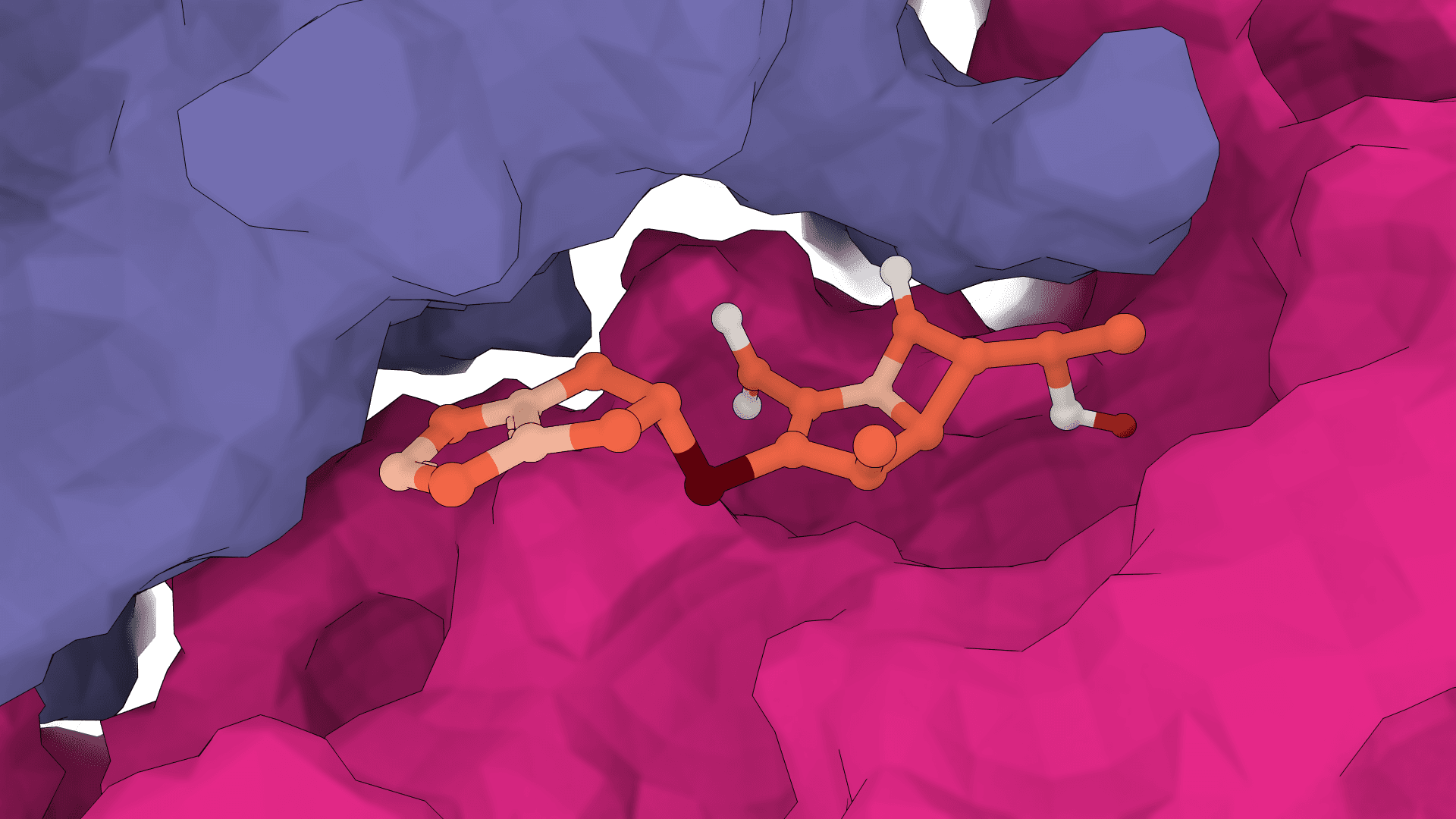
GNINA
GNINA is a molecular docking tool that combines traditional physics-based docking with deep learning CNN scoring for protein-small-molecule complexes. It provides accurate binding predictions with confidence scores, optimized for high-throughput virtual screening.
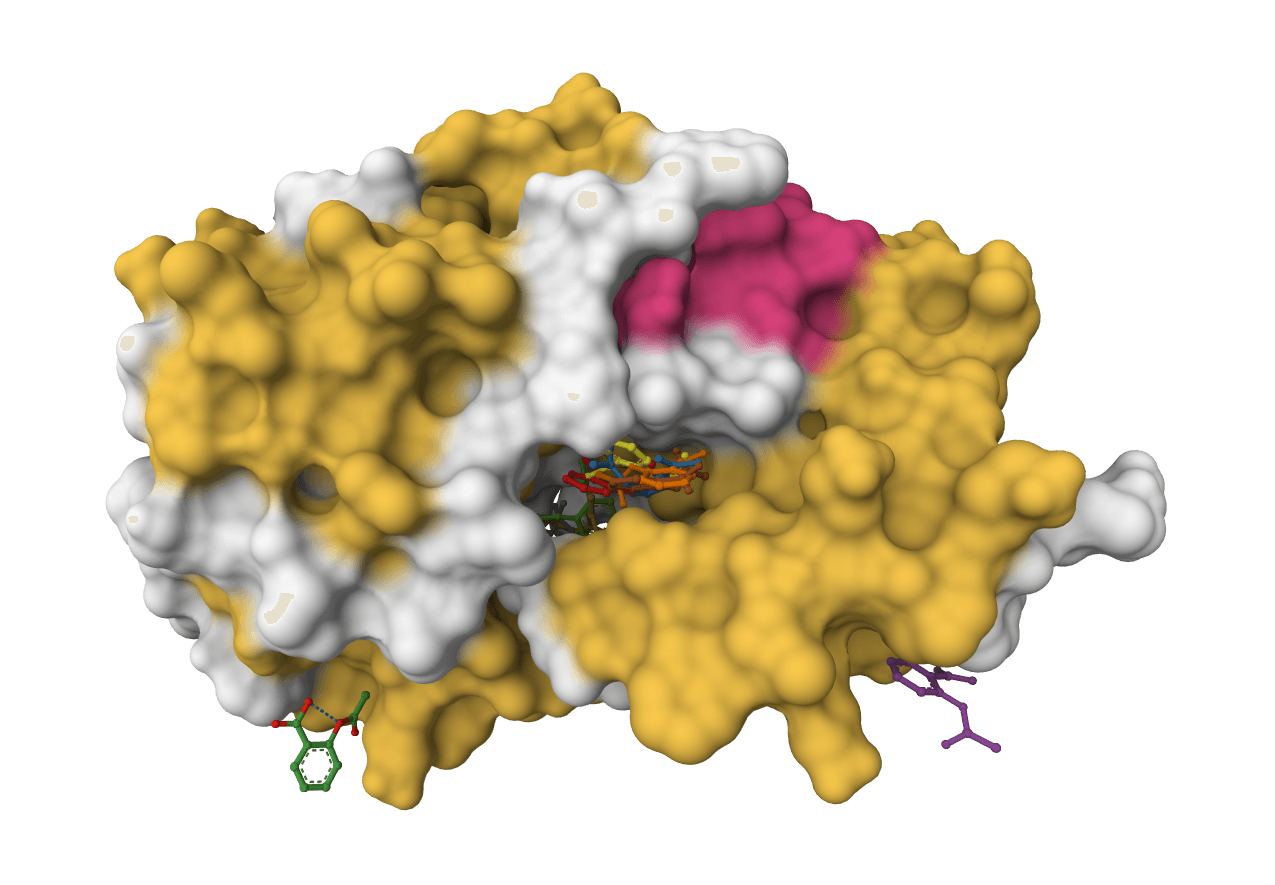
DiffDock-L
DiffDock-L is a state-of-the-art molecular docking tool that uses diffusion models to predict how small molecule ligands bind to protein targets. It generates multiple binding poses with confidence scores.
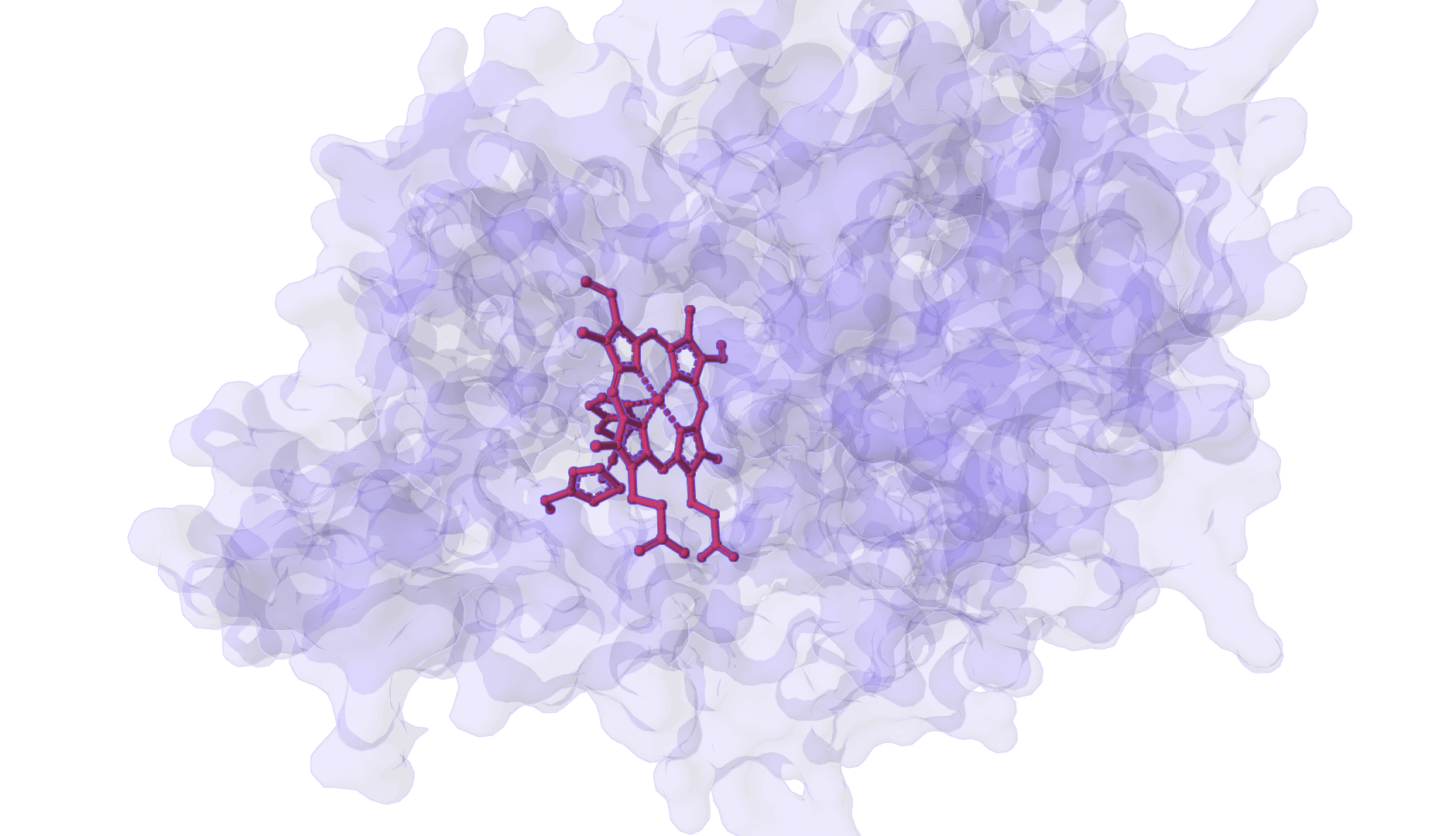
DynamicBind
DynamicBind is an AI-powered protein-ligand binding prediction tool that recovers ligand-induced conformational changes from unbound protein structures. It predicts both ligand binding poses and protein conformational changes.
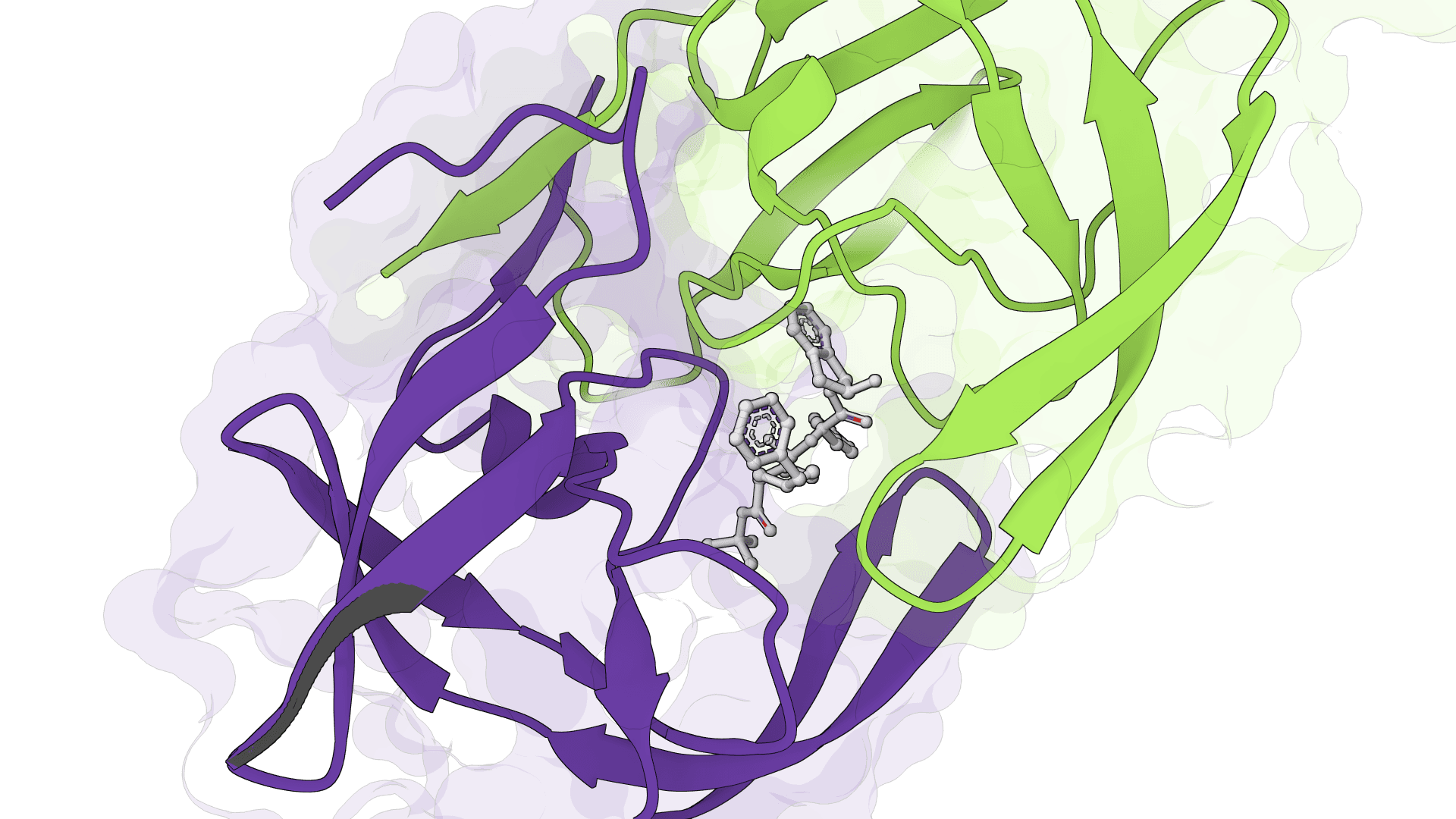
SigmaDock
SigmaDock is a fragment-based molecular docking tool using SE(3) equivariant diffusion models to predict how small molecule ligands bind to protein targets. Presented at ICLR 2026, it generates multiple binding poses with Vinardo scoring.
SurfDock
SurfDock is a surface-informed diffusion generative model for protein-ligand docking, published in Nature Methods 2024. It leverages protein surface geometry to guide a diffusion process for reliable and accurate protein-ligand complex prediction.
TEMPL Pipeline
TEMPL Pipeline predicts protein-ligand poses by finding similar protein templates, aligning template ligands, generating constrained conformers, and ranking poses with shape and pharmacophore scores.