Vaccines and immunology
Score epitopes and annotate antibodies
Rank T cell epitopes, assign germline genes and model antibody binding before you run the assay.
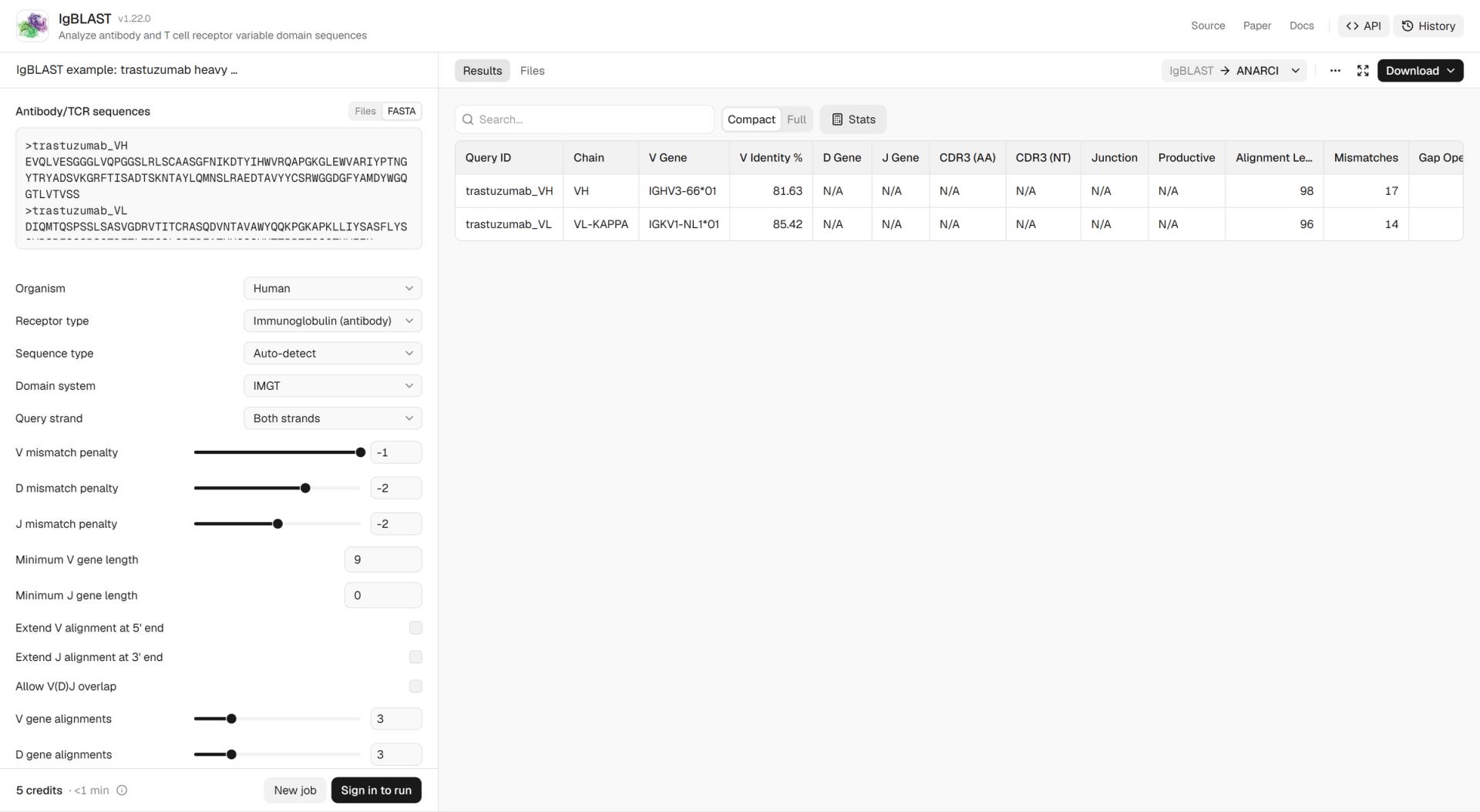
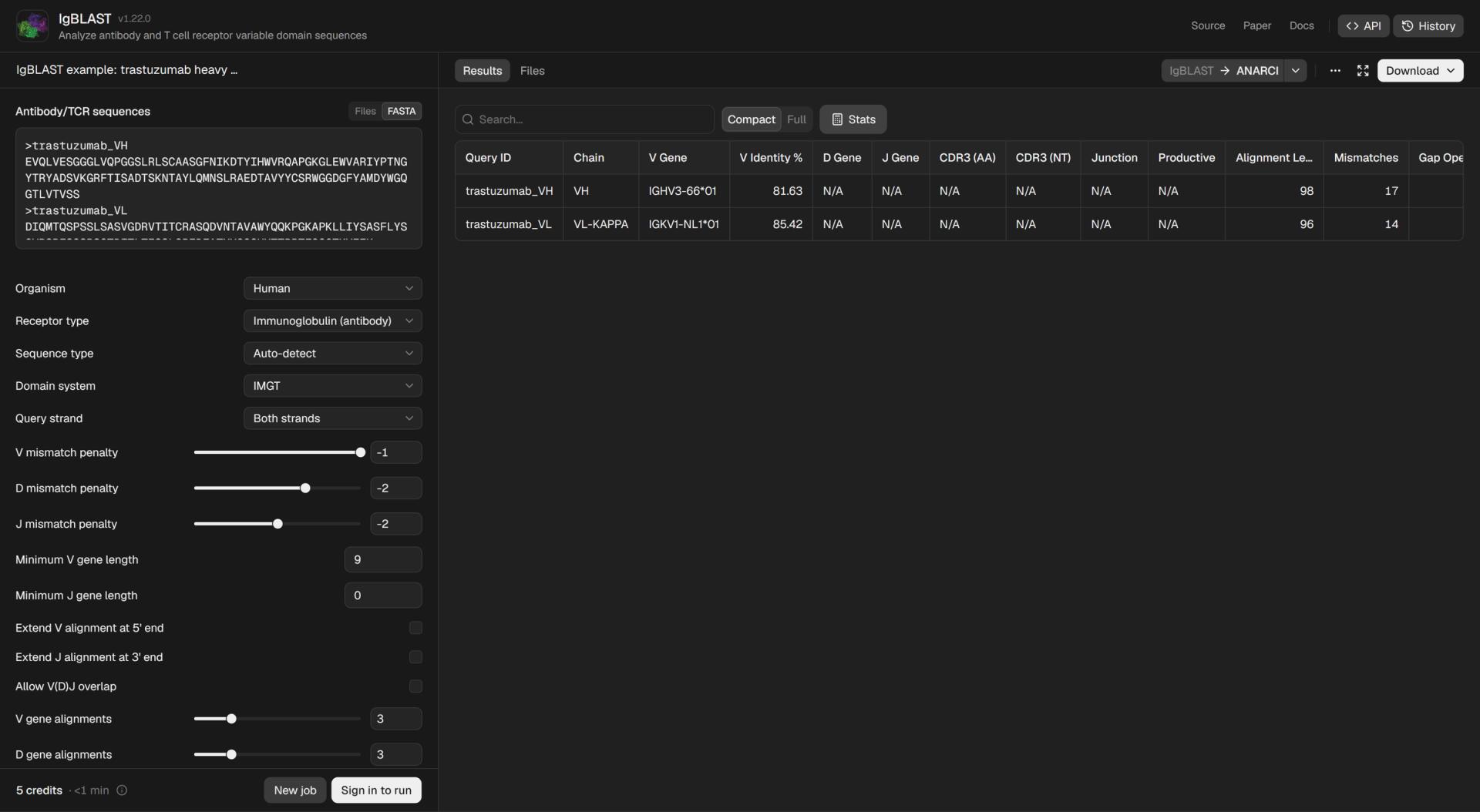
Trusted by 16,500+ researchers and published in
Score peptide immunogenicity
Tile an antigen into overlapping peptides, then score them. DeepImmuno covers peptide-HLA immunogenicity and TLimmuno2 the class II response.
Model the antibody and the complex
Build a variable-domain structure from sequence, or fold the antibody together with its antigen. Several models side by side show how stable the CDR loops are.
Score and compare complexes
Rank candidate complexes with a score built for antibodies and compare them against a reference when one exists.


Related use cases and research areas
Antibody structure prediction
Predict antibody and nanobody structures and compare the CDR loops.
Antibody-antigen docking
Explore how an antibody might bind its antigen and compare poses.
Antibody developability
Check a candidate for hydrophobic patches, charge and viscosity risk.
Antibody engineering
The research-area workflow for numbering, developability and complex modeling.
Peptide discovery
The research-area workflow for peptide properties and structure.
Background for epitope and antibody work
Background guides on the methods, scores, and numbers behind these workflows.
Antibodies · 13 min
Epitope prediction: B-cell vs T-cell
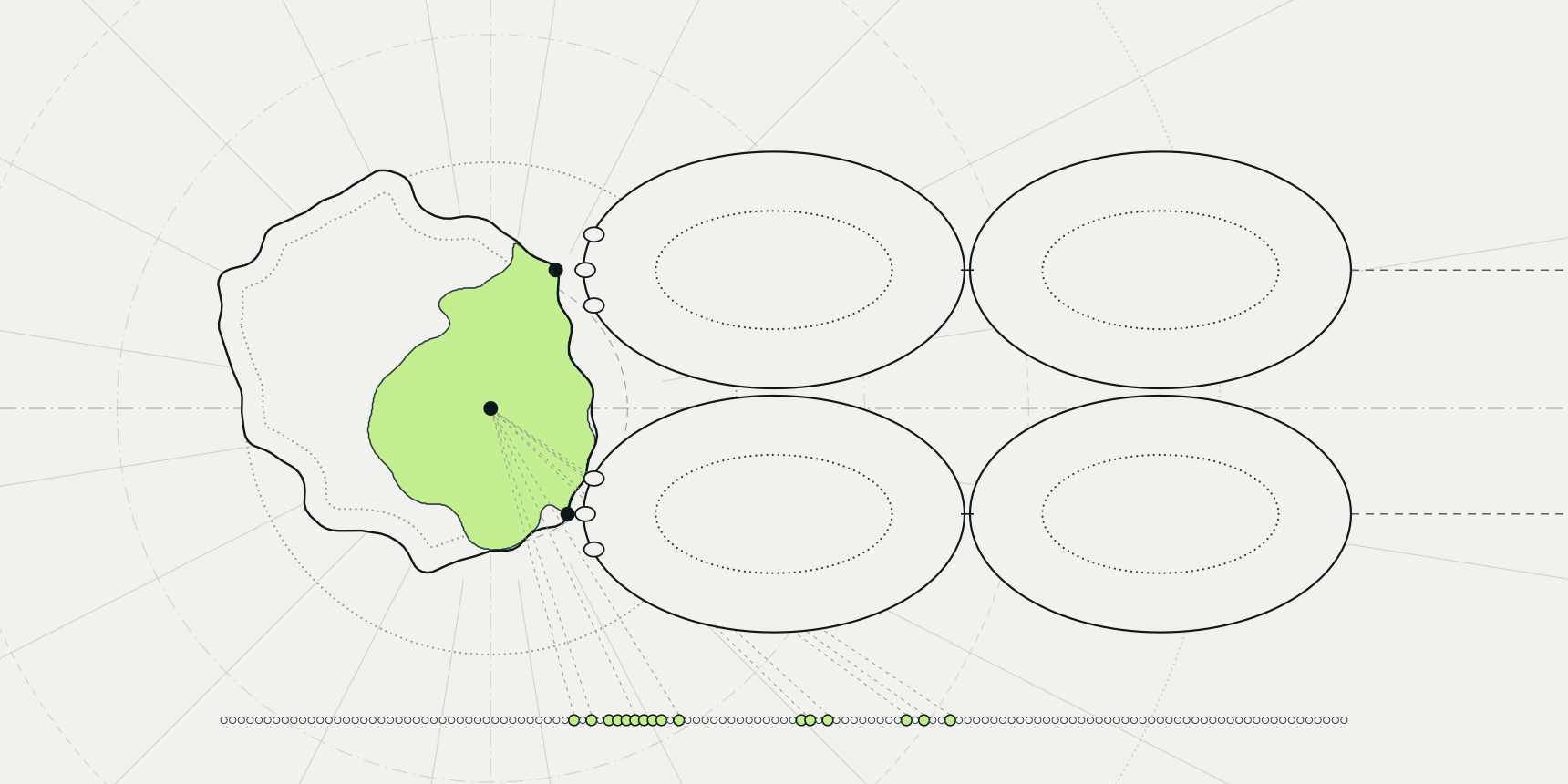
B-cell epitope prediction finds where antibodies bind an antigen; T-cell epitope prediction finds which peptides MHC molecules present. BepiPred-2.0 scored an AUC of 0.52 on a 3,560-antigen linear epitope test, and MHC binding is not immunogenicity.
Cells · 11 min
MHC class I vs class II
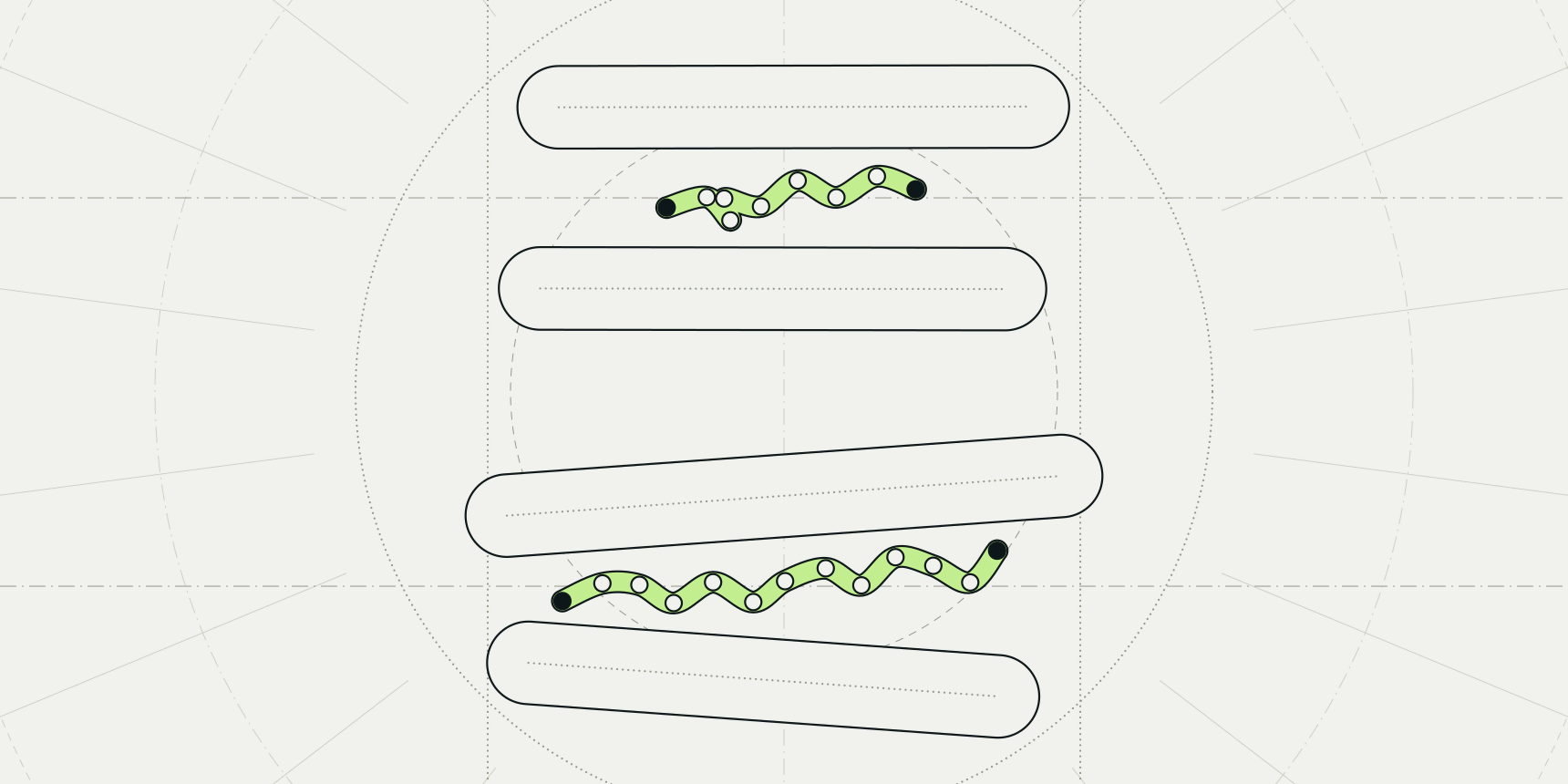
MHC class I shows short peptides from inside the cell to CD8+ T cells; class II shows longer peptides from outside to CD4+ T cells. The difference is easy to state and harder to apply, as HLA typing and the abacavir allele HLA-B*57:01 show.
Antibodies · 13 min
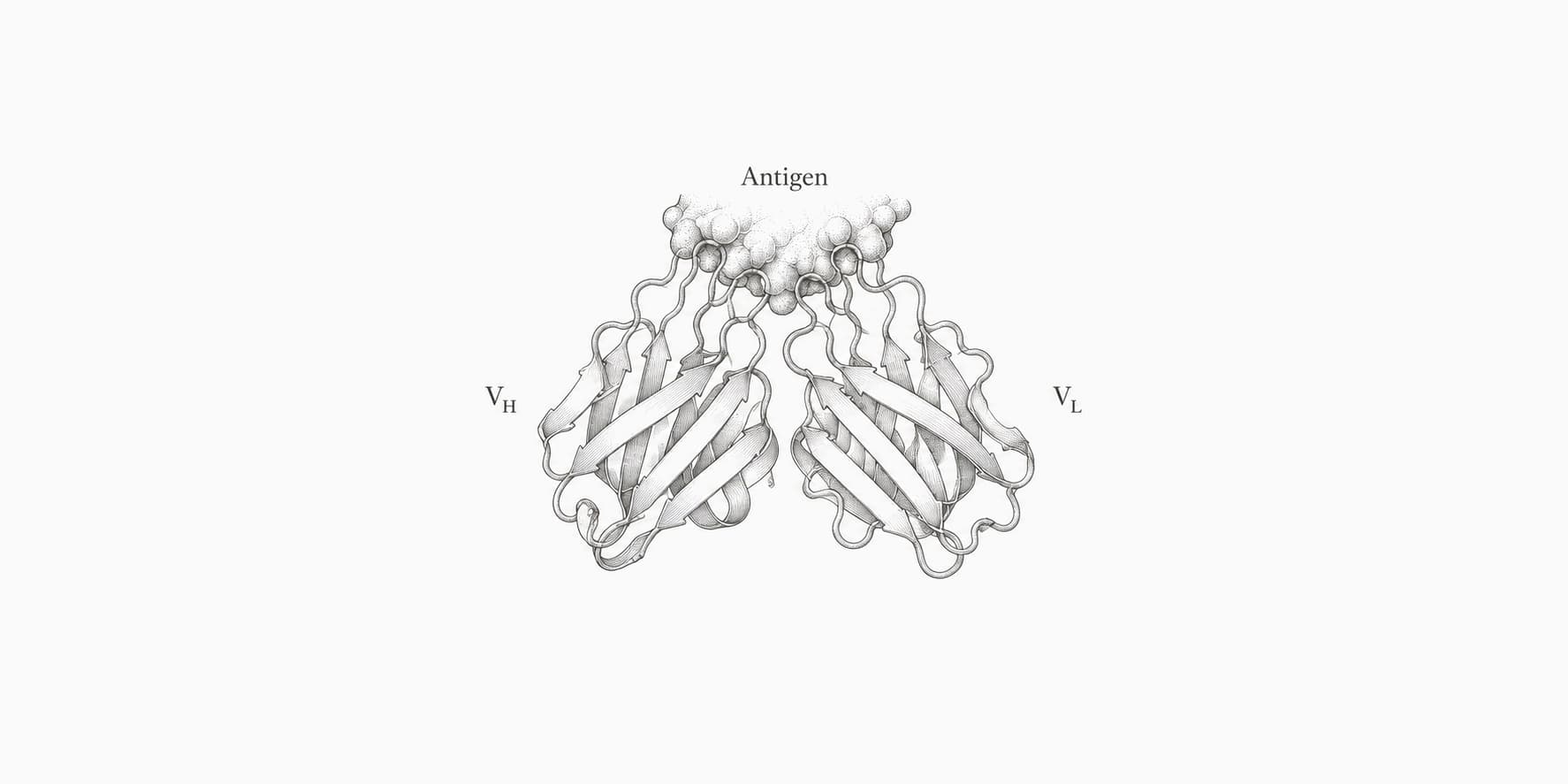
Antibody variable regions: VH, VL, CDRs and frameworks
VH and VL domains, the six CDRs and eight framework regions they contain, how Kabat, Chothia and IMGT draw CDR boundaries, and how V(D)J recombination and somatic hypermutation create variable-region diversity.
FAQs
No. A score predicts whether a peptide presented on a given HLA is likely to trigger a T cell response. It says nothing about processing in the cell, delivery, adjuvant or the person receiving it. Use scores to choose which peptides to test, then test them.
DeepImmuno scores peptide-HLA immunogenicity and ranks the official HLA panel. TLimmuno2 predicts MHC class II immunogenicity, the CD4+ T cell response. The guide on MHC class I and II explains why the two need different models.
Treat it as a way to generate hypotheses. CDR loops are the hardest part of an antibody to model, and docking scores are weaker than structures. Several methods placing the antibody on the same surface is a better sign than any single score, and mutagenesis or a structure confirms it.
AI answers from our docs. No sign-in needed.
Focus on research, not infrastructure
Start free with 200 credits a month and no installs. Upgrade when your project needs more compute.