Personal care and cosmetics
Prepare and screen cosmetic ingredients
Set ingredient charge states at skin pH, enumerate stereoisomers and flag safety alerts early.
Trusted by 16,500+ researchers and published in
Prepare the ingredient structure
Fetch the record, enumerate the charged forms a molecule can adopt at the pH you care about, and expand unassigned stereocenters into the isomers you would need to test.
Describe and compare
Turn each structure into descriptors and fingerprints so a library can be ranked, clustered and compared with known ingredients, or train a model on your own assay data.
Screen for safety flags
Drop candidates that carry reactive or problem substructures, and look at predicted toxicity. These are early alerts, not a safety assessment.
Work with peptide ingredients
Design peptide candidates against a target protein, build a model of the chosen sequence, check where proteases would cut it, and calculate its mass and charge.


Related use cases and research areas
Peptide design
Design and screen peptide sequences against a target.
Peptide structure prediction
Model peptide structures and compare the predictions.
ADMET prediction
Predicted absorption and toxicity endpoints for small molecules. Models are trained on drug data, so read the results as hints for ingredients.
Peptide discovery
The research-area workflow for peptide properties and structure.
Small molecule
The research-area workflow for preparing, screening and triaging compounds.
Background for structures and safety flags
Background guides on the methods, scores, and numbers behind these workflows.
Drugs · 15 min
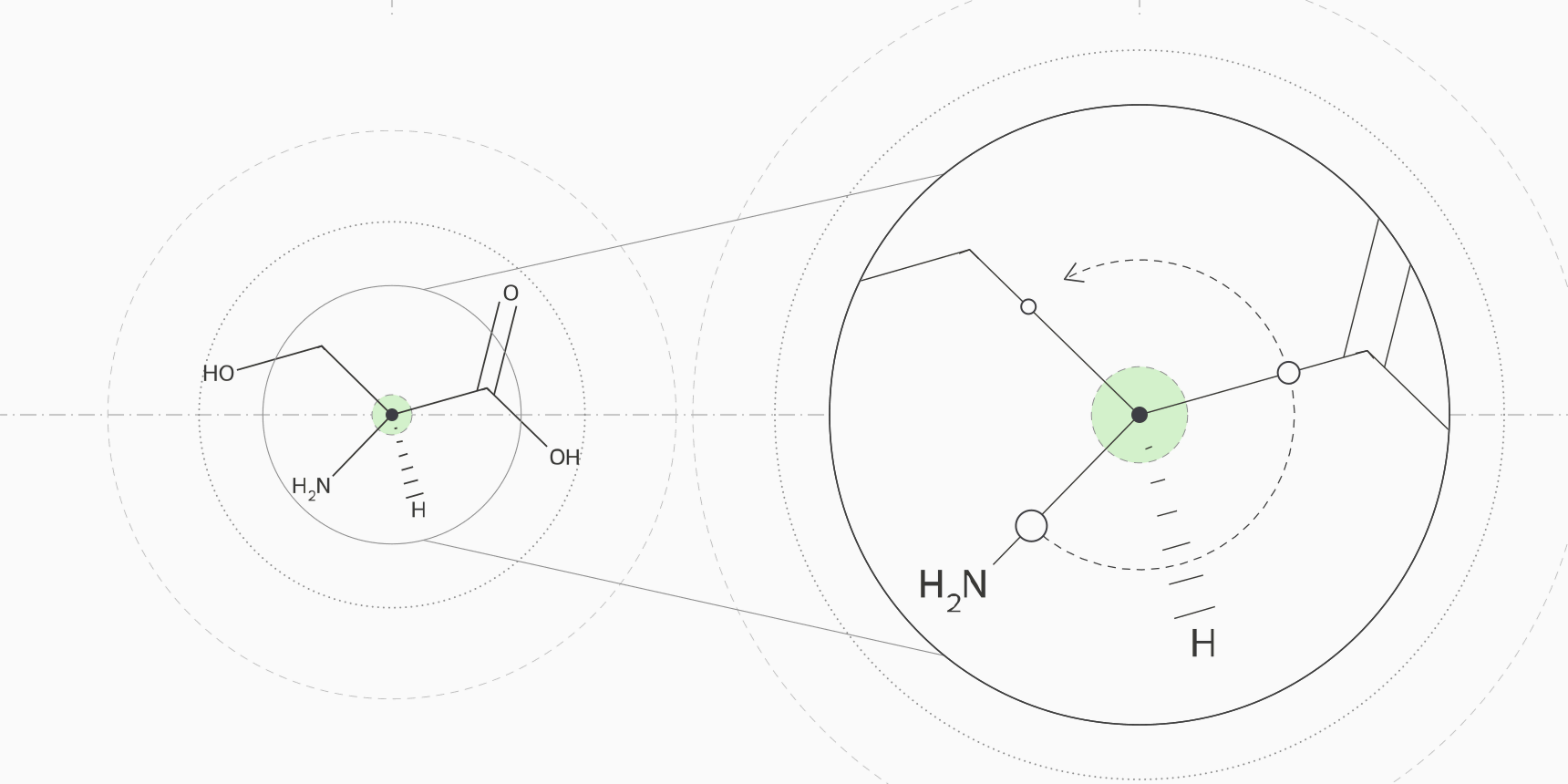
How to draw stereochemistry: wedges, dashes and R/S labels
Use a solid wedge for a bond toward you and a hashed wedge for one pointing away, with the narrow end on the stereocenter, and leave unknown centers plain. We explain where wedges go, how CIP rules turn a drawing into R, S, E or Z, how to mark racemic and relative stereochemistry, and how to check every label in a free drawer.
Drugs · 13 min
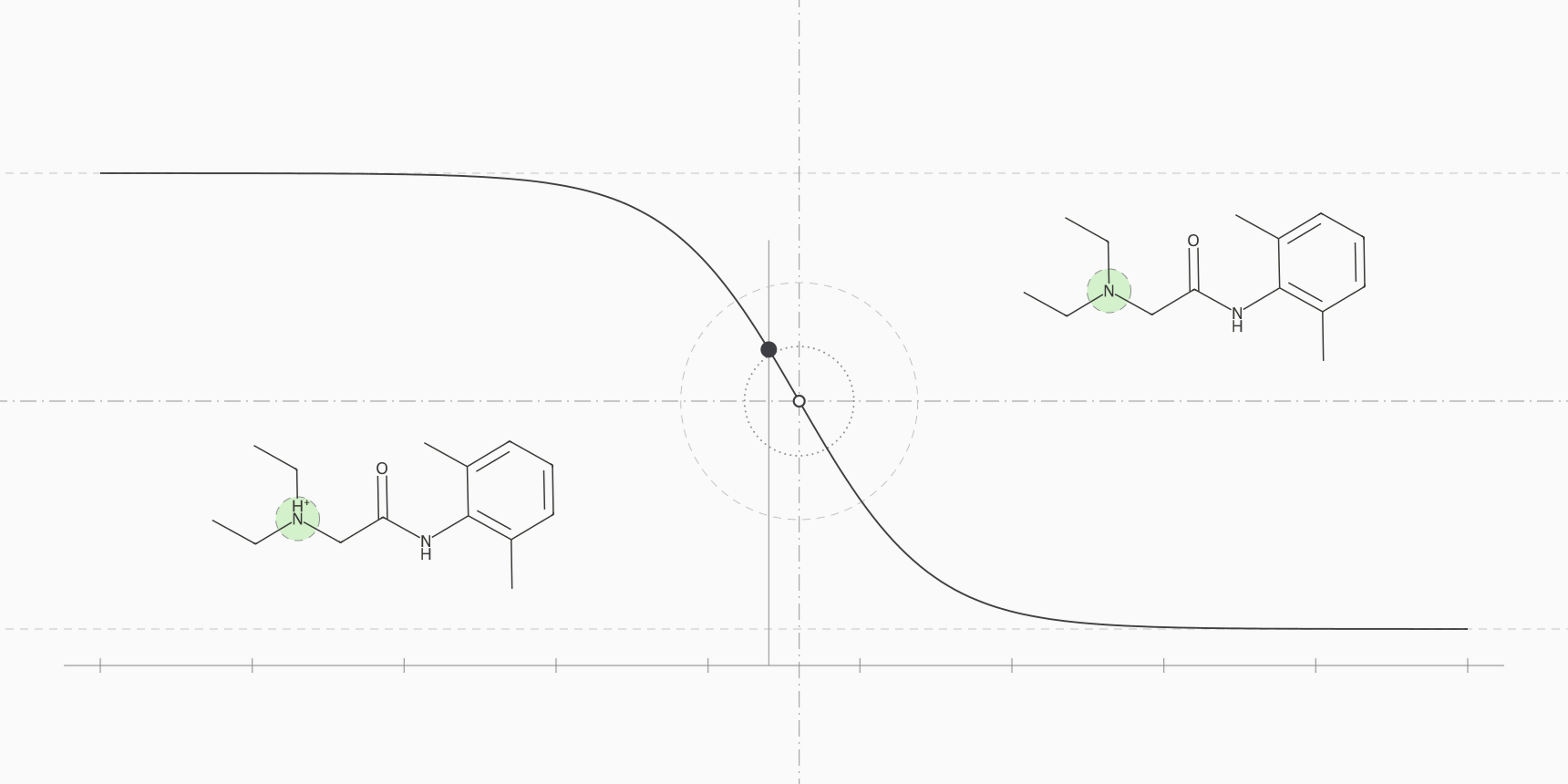
How to predict pKa online for free
Predict pKa for free by drawing a molecule in SketchIQ and clicking Predict pKa: MolGpKa runs in your browser and returns a pKa for each acidic and basic site, the net charge, the major form and logD at any pH. We explain why pKa matters for drugs, how prediction works, and how accurate it is, with 27 drugs tested against measured values.
Drugs · 14 min
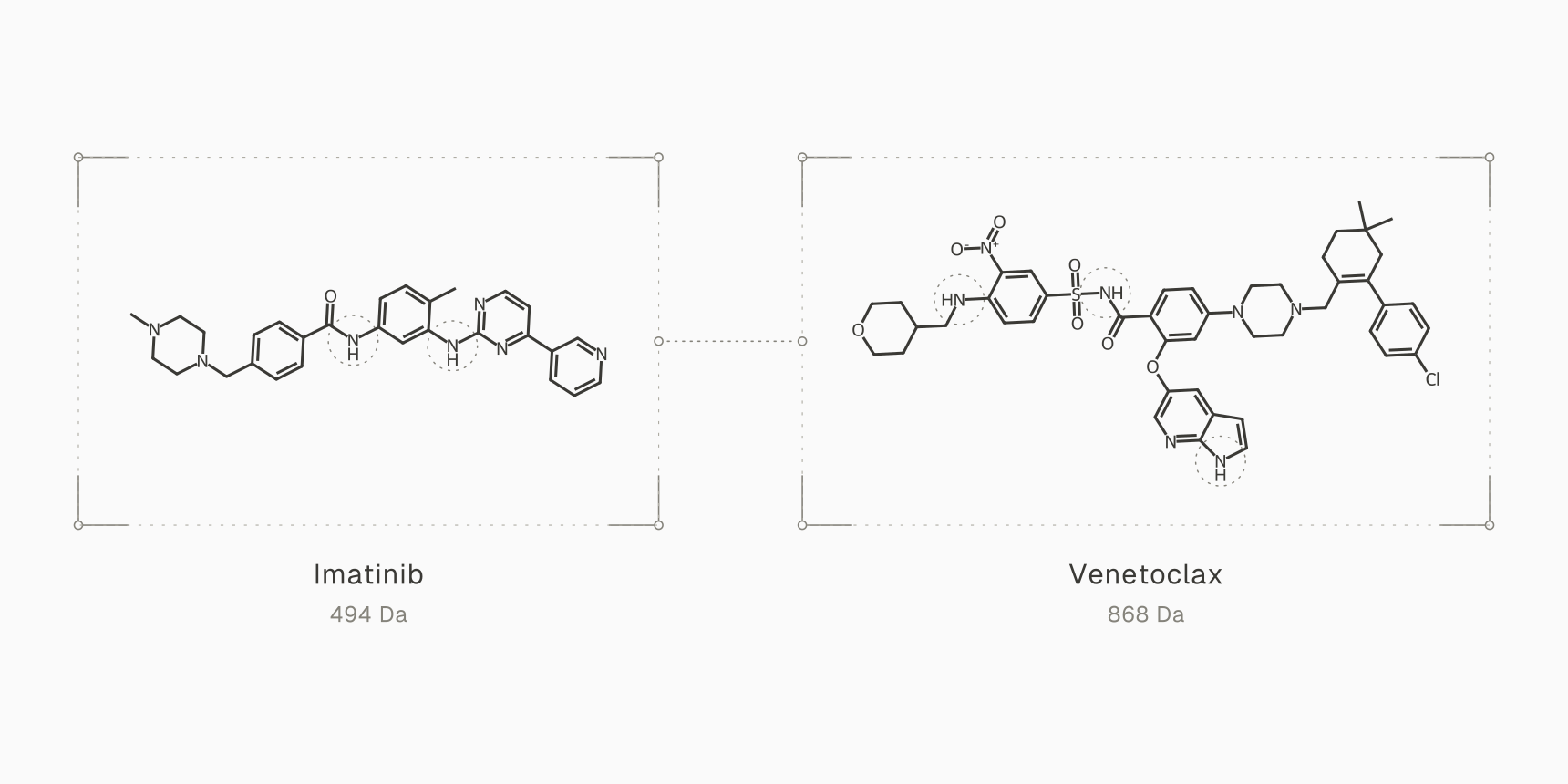
Lipinski's rule of five
Lipinski's rule of five warns that oral absorption is less likely when a molecule breaks two or more of four limits: molecular weight above 500 Da, cLogP above 5, more than 5 hydrogen-bond donors and more than 10 acceptors. ProteinIQ found that 13% of 2,104 approved small-molecule drugs in ChEMBL 37 break two or more, and 28% break at least one.
FAQs
Not directly. Dimorphite-DL enumerates protonation states over a pH range, and the Molecular descriptors tool reports properties such as logP and polar surface area that relate to behavior in a formulation. There is no dedicated small-molecule solubility or pKa predictor.
No. The structural alert filters and eToxPred flag chemistry that resembles known problems, which helps you drop candidates early. Safety claims for a cosmetic ingredient depend on toxicological data and the regulations of the market you sell in.
You can design candidates for a target protein with PepMLM, build a model with PeptideBuilder, and calculate mass, charge and isoelectric point. These describe a sequence. Whether it does anything to skin has to be tested.
AI answers from our docs. No sign-in needed.
Focus on research, not infrastructure
Start free with 200 credits a month and no installs. Upgrade when your project needs more compute.