Generate 3D SDF files from SMILES strings with batch conversion and downloadable combined outputs. Learn more
Input
What is SMILES to SDF?
SMILES to SDF is a small-molecule structure-generation workflow that turns a line notation into an SD file containing calculated three-dimensional coordinates. A SMILES string defines a molecular graph, including connectivity, aromaticity, formal charge, and any stereochemistry written in the input. An SDF record adds coordinates, atom and bond blocks, a molecule title, and a record separator, making it a practical exchange format for cheminformatics and ligand workflows.
The generated structure is a starting conformer, not an experimental structure, a prediction of a bound pose, or a population-weighted conformer ensemble. SDF is generally a better handoff format than PDB for small molecules because it carries bond-order information explicitly and can hold more than one molecule in a single file.
How to use SMILES to SDF online
ProteinIQ converts pasted SMILES, named batches, supported text files, or PubChem records into 3D SDF structures. Submit one molecule per line, choose whether to add hydrogens and relax the geometry, then download an SDF for every successful molecule, a combined batch.sdf when more than one conversion succeeds, and a curated Run log for the full batch.
Inputs
| Input | Accepted form | Details |
|---|---|---|
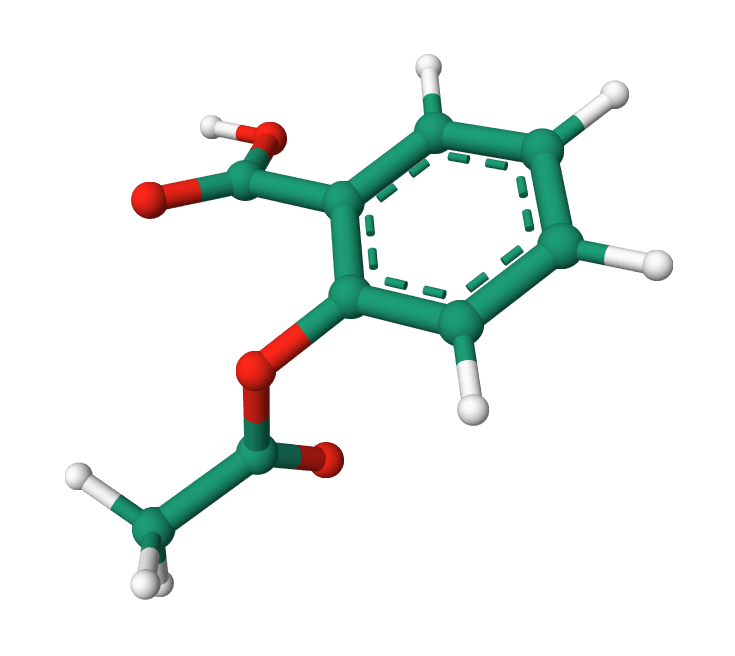
SMILES | One valid SMILES per line | For example, aspirin is CC(=O)Oc1ccccc1C(=O)O. The tool accepts up to 5,000 submitted entries where the workspace plan allows it. Guest and free workspaces can submit up to 3 entries per job. |
| Named SMILES | name<TAB>SMILES | The supplied name becomes the SDF title and is used to make the individual filename. For example, aspirin\tCC(=O)Oc1ccccc1C(=O)O. |
| File upload | .txt, .csv, .tsv, .smi, or .smiles | Upload up to 10 files, each up to 50 MB. Use one record per line. For CSV, write name,SMILES; for TSV, write name<TAB>SMILES. A first line that contains smiles, compound, or name is treated as a header. |
| PubChem fetch | Compound name or PubChem CID | ProteinIQ retrieves a SMILES representation before generating the SDF. |
The submitted SMILES determines the chemical state in the output. It does not select a pH-dependent protonation state, choose a tautomer, remove counterions, or add missing stereochemical information. For example, neutral and protonated amine SMILES describe different molecules and can lead to different generated structures.
Settings
| Setting | Default | Effect |
|---|---|---|
Add hydrogens | On | Adds explicit hydrogens before coordinate generation. Keep this enabled when hydrogen positions or the full molecular formula matter to the next step. |
Optimize geometry | On | Runs up to 500 iterations of Universal Force Field, or UFF, minimization after embedding. Turning it off keeps the initial embedded coordinates. |
Results
| Result | Contents |
|---|---|
Individual .sdf files | One SDF record for every successful input. The molecule title is the supplied name or generated input label. |
batch.sdf | A concatenated multi-record SDF, returned only when at least two structures convert successfully. |
run.log | A curated run record with the input count, selected settings, conversion phases, successful and failed entry counts, and stable failure guidance. |
Batch entries are independent. A malformed SMILES or a structure that cannot be embedded is recorded as failed in the Run log without preventing the remaining molecules from being exported. A successful file means RDKit parsed the submitted graph and generated coordinates. It does not establish that the chemical state is appropriate for an assay, a docking target, or a force field.
How SMILES to SDF generates coordinates
RDKit first parses each SMILES string into a molecular graph. If Add hydrogens is on, explicit hydrogen atoms are added before conformer generation. The workflow then uses RDKit's ETKDGv3 method, a distance-geometry procedure informed by experimental torsion preferences and chemical knowledge. Its primary run uses a fixed random seed so that it is reproducible for the same input and software version. If that embedding fails, it makes a second attempt from random coordinates.
With Optimize geometry enabled, RDKit applies UFF minimization to the generated conformer. That relaxation can improve local bond lengths, angles, torsions, and nonbonded contacts. It is not a quantum-chemical optimization and it does not demonstrate that the result is the lowest-energy conformer. The final molecule is written as an SDF mol block with the selected molecule name and an $$$$ record delimiter.
Reading the SDF output
An SDF output contains one generated conformer per record. Coordinates are Cartesian and can be inspected in a molecular viewer or read by software that accepts SDF. Bond connectivity and bond types are retained in the record, which is important when carrying aromatic systems and functional groups into a later cheminformatics step.
The coordinates should be treated as a geometry proposal. A plausible conformer can still have an unsuitable tautomer, protonation state, stereochemical assignment, or torsion for the intended experiment. Docking programs can also require target-specific partial charges and atom types. For ligand repair and structural preflight before a downstream calculation, use Ligand Fixer. For a binding-pose hypothesis rather than a format conversion, use a docking method such as AutoDock Vina.
When to choose SDF instead of another format
| Need | Best choice |
|---|---|
| Keep bond orders and distribute a multi-molecule ligand batch | SDF from SMILES to SDF |
| Open a coordinate file next to a receptor in a PDB-oriented viewer | SMILES to PDB |
| Supply a workflow that specifically requires Tripos records | SMILES to MOL2 |
| Convert between a wider range of chemistry and structure formats | Open Babel Format Converter |
| Create a compact, canonical structure identifier rather than coordinates | SMILES to InChI |
SDF is usually the safer default for a small-molecule handoff when the next program accepts it. It represents the molecular graph more completely than PDB and, unlike a SMILES string, carries a generated three-dimensional conformer. It still does not replace the preparation steps specific to a docking engine, molecular-dynamics force field, or experimental pH.
Important interpretation notes
- One conformer per molecule: The tool does not sample or rank a conformer ensemble. Flexible ligands, macrocycles, and molecules with many rotatable bonds may need dedicated conformer sampling when the accessible geometry matters.
- Input chemistry is preserved, not corrected: No tautomer enumeration, salt handling, stereoisomer enumeration, or pH-aware protonation is performed. Prepare the SMILES to represent the intended chemical species before submission.
- Embedding can fail: Highly constrained, flexible, or unusual molecular graphs may not satisfy the geometric constraints needed for three-dimensional embedding. The Run log records the failed-entry count while successful structures remain available.
- UFF is a starting-point refinement: UFF minimization is useful for cleaning an embedded geometry, but it is not a binding score, a conformer-ranking calculation, or a substitute for higher-level geometry optimization.
Related tools
SDF to SMILES
Convert SDF ligand files, including multi-record batches, into SMILES strings.
InChI to SMILES
Convert InChI strings into SMILES with batch support and downloadable outputs.
MOL to SMILES
Convert MDL MOL ligand files into canonical SMILES strings for registration, filtering, and downstream analysis.
MOL2 to SMILES
Convert MOL2 ligand files into SMILES strings for registration, filtering, and downstream analysis.
SMILES to InChI
Convert SMILES strings into InChI strings with batch support and downloadable outputs.
SMILES to MOL2
Convert SMILES strings into 3D MOL2 files for docking and molecular modeling workflows.
SMILES to PDB
Convert SMILES strings into 3D PDB files for molecular visualization and downstream docking preparation.

Open Babel
Run Open Babel in the browser to convert chemical and structure files, with coordinate, hydrogen, and pH options where the WASM runtime supports them.
PDB to SDF Converter
Convert Protein Data Bank files to Structure Data Format
SDF to PDB Converter
Convert Structure Data Format files to Protein Data Bank format