Generate model peptide PDB structures from sequences. Learn more
Input
What is PeptideBuilder?
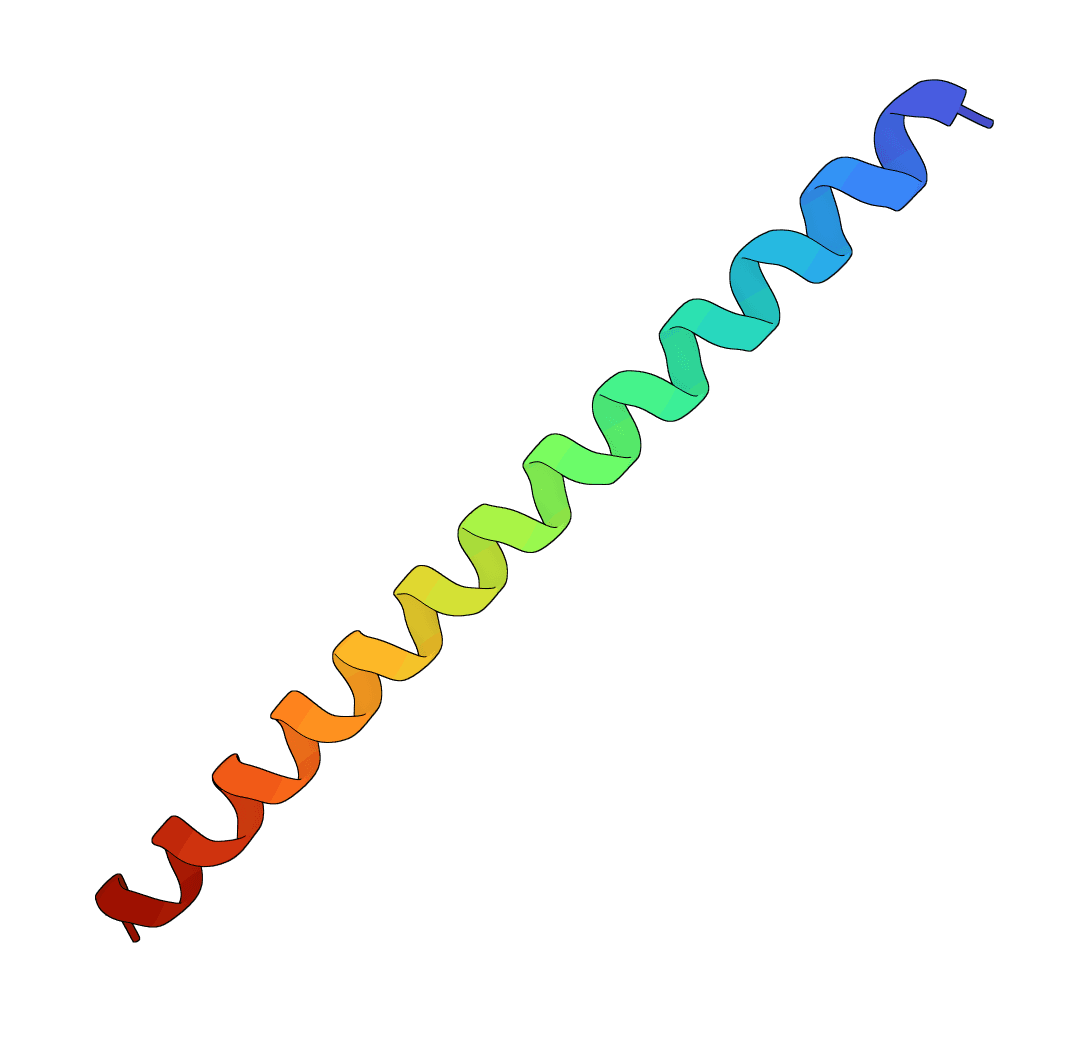
PeptideBuilder creates all-atom peptide structures from one-letter amino acid sequences. It is best understood as a geometry-based coordinate builder, not a protein folding predictor: the input sequence is placed into a chosen backbone conformation and written as a PDB file.
The original PeptideBuilder library was designed for model peptides with known or deliberately chosen backbone angles. It uses residue-specific geometry defaults for the 20 standard amino acids and can build extended chains, helices, beta-strand-like conformations, or custom phi, psi, and omega angle combinations. It does not search conformational space, minimize energy, predict confidence, or pack side-chain rotamers against an environment.
This makes PeptideBuilder useful when a simple, reproducible starting structure is needed: short peptide examples, idealized secondary-structure fragments, control structures for downstream scripts, or inputs that will later be refined with molecular modeling software.
How to use PeptideBuilder online
PeptideBuilder online on ProteinIQ builds a model peptide PDB from a single canonical amino acid sequence. Paste a raw sequence or FASTA record, choose the backbone geometry, optionally add a terminal OXT atom, and run the job. Results include a 3D structure viewer, a downloadable PDB file, and a summary table with angles and atom counts.
Inputs
| Input | Description |
|---|---|
Peptide sequence | One protein or peptide sequence using the 20 canonical one-letter amino acid codes. Raw text and FASTA are accepted. |
FASTA file | .fasta, .fa, or .txt file containing one FASTA record. Multiple records are rejected. |
UniProt fetch | A UniProt sequence can be imported when a known accession is available. The same single-sequence and canonical-residue rules apply. |
ProteinIQ accepts one sequence up to 500 residues. Non-standard symbols such as B, J, O, U, X, and Z are rejected before the job runs. This prevents accidental fallback behavior where an unrecognized residue could be treated like glycine geometry.
Backbone geometry settings
| Setting | Default | Description |
|---|---|---|
Conformation | Extended | Selects native extended geometry, uniform or per-residue backbone angles, or custom residue geometry. |
Phi | -120 | Custom phi angle in degrees for residues after the first. Active when Conformation is set to Custom angles. |
Psi | 140 | Custom psi angle in degrees for the residue before each added residue. Active when Conformation is set to Custom angles. |
Omega | -370 | The -370 sentinel preserves the native 180° omega default. Other custom values are interpreted using PeptideBuilder's native threshold, described below. |
Add terminal OXT | On | Adds the terminal OXT atom after the peptide is complete, matching the standard PeptideBuilder example workflow. |
OXT bond length (Å) | 1.23 | C–OXT bond length used when terminal OXT is enabled. |
Per-residue backbone angles (JSON) | — | In Per-residue angles mode, supply native phi and psi_im1 arrays and an optional omega array. |
Residue geometry (JSON) | — | In Custom residue geometry mode, supply one geometry object per sequence residue. |
Conformation presets
| Preset | Angles used | When it is useful |
|---|---|---|
Extended | PeptideBuilder extended geometry | A neutral starting model for downstream manipulation, testing, or format conversion. |
Alpha helix | phi = -60, psi = -40, native omega = 180 | A simple helical fragment when the expected local conformation is alpha-helical. |
Beta strand | phi = -120, psi = 140, native omega = 180 | A strand-like starting chain or an extended beta conformation. |
Custom angles | User-selected scalar phi, psi, and omega values | Controlled Ramachandran sampling, teaching examples, and systematic geometry tests. |
The custom angle settings use the same scalar value for each eligible residue position. PeptideBuilder is not selecting a different phi or psi for each residue based on sequence context, so the result is intentionally idealized.
Phi, Psi, and Omega controls are shown only for Custom angles. Extended and preset modes use their own construction angles. The Data table reports effective construction angles: the -370 omega sentinel is shown as the native 180° trans-peptide default. A single residue has no inter-residue backbone angles, so those cells are empty. PeptideBuilder 1.1.0 applies an explicit omega only when it is greater than -361; this matters when submitting fractional sentinel values through the API.
Per-residue angles
For a three-residue peptide such as AKG, select Per-residue angles and enter:
{"phi": [-60, -75], "psi_im1": [-40, 125], "omega": [180, 0]}Array values start at residue 2. psi_im1 sets the preceding residue's psi angle. Provide at least sequence length − 1 values in phi and psi_im1; an explicit omega array needs the same coverage. Omitting omega, setting it to null, or using an empty array preserves the native omega defaults. Extra values have the native behavior: they are unused. All numbers are in degrees. API settings accept either the JSON text or the corresponding JSON object.
Custom residue geometry
Select Custom residue geometry to set bond lengths, bond angles, backbone torsions, or side-chain rotamers independently. For AKG:
[
  {},
  {"phi": -60, "psi_im1": -40, "peptide_bond": 1.4, "rotamers": [60, 60, 60, 60]},
  {}
]
Each object corresponds to one residue, including the first. {} retains that residue's native defaults. Field names are the native PeptideBuilder geometry attributes, such as CA_N_length, CA_C_length, N_CA_C_angle, C_O_length, and residue-specific side-chain attributes. Lengths use Å and angles use degrees. Unsupported fields for a residue are rejected; for example, glycine has no CA_CB_length. The sequence supplies residue identities.
Use rotamers to call the residue's native rotamer setter. PeptideBuilder may retain defaults and emit a warning when a rotamer list is too short; that warning is shown with the result. random_rotamers: true invokes native random rotamer generation for E, K, L, M, Q, and R. Choose explicit or random rotamers for each residue. Explicit geometry fields are applied after rotamers and take precedence where they overlap. These choices construct coordinates; they do not optimize side-chain packing.
Custom modes also return peptidebuilder_geometry.json. For custom residue geometry, its residue_geometry array records the resolved native fields, including randomly chosen torsions. Reuse that array with the same sequence and OXT settings to reconstruct the same geometry. For per-residue angles, the file retains the supplied native angle arrays. These are construction parameters, not measured geometry or quality scores.
Results
PeptideBuilder returns one generated structure per job.
| Result | Description |
|---|---|
Viewer | Interactive display of the generated PDB structure. |
peptidebuilder_structure.pdb | Downloadable PDB file containing the model peptide coordinates. |
Data | Summary row with the input label, sequence length, conformation, angle values, terminal OXT setting, and atom count. |
peptidebuilder_geometry.json | Construction parameters for the two per-residue modes. Scalar angle cells in Data are empty because the settings vary by residue. |
The PDB contains model coordinates for chain A. It does not include a model quality score, pLDDT, RMSD, energy, or binding metric because PeptideBuilder constructs geometry directly rather than evaluating an ensemble of candidate structures.
How PeptideBuilder works
PeptideBuilder builds a peptide by assembling residues with internal coordinate geometry. The companion geometry definitions contain bond lengths, bond angles, and dihedral parameters for standard amino acids; the structure-building functions convert those definitions into Cartesian atom coordinates and return a Biopython structure object.
For an extended chain, ProteinIQ calls PeptideBuilder's extended-structure path. For alpha helix, beta strand, and custom angle modes, the selected phi, psi, and omega values are expanded into angle lists of length sequence length - 1, then passed into the PeptideBuilder structure function. After all residues are placed, the optional terminal OXT atom is added and the structure is saved as PDB through Biopython's PDB writer.
The important methodological detail is what PeptideBuilder does not do. The original PeptideBuilder paper states that the library was created for model peptide construction with pre-specified backbone angles, and that it does not include energy minimization or rotamer packing because specialized tools already exist for those steps. In practice, the returned PDB should be treated as a clean coordinate model with idealized geometry, not as a validated native-like fold.
Interpreting PeptideBuilder structures
PeptideBuilder output is deterministic for the same sequence and explicit geometry settings. Native random rotamer generation can produce different coordinates; the returned geometry JSON records the chosen values for reuse.
The most important interpretation question is whether the selected backbone angles make sense for the intended use:
- Extended chains: Good for neutral starting structures, but not evidence that the peptide prefers an extended state in solution.
- Alpha-helix preset: Useful for helical fragments, but short peptides may not remain helical without stabilizing context.
- Beta-strand preset: Useful for strand-like conformations and beta geometry examples, but isolated beta strands are often unstable without hydrogen-bonding partners.
- Custom angles: Useful for controlled tests. Angle combinations outside favored Ramachandran regions can produce strained or unrealistic conformations.
For checking whether a generated model occupies expected backbone regions, run the output through Ramachandran plot. For comparing a refined version against the original generated model, use RMSD calculator.
When to use PeptideBuilder vs structure prediction tools
PeptideBuilder and AI structure predictors answer different questions.
| Tool | Best use | Output style |
|---|---|---|
| PeptideBuilder | Generate an idealized model from specified geometry. | One PDB with user-controlled backbone angles and no confidence score. |
| HighFold | Predict cyclic peptide structures with head-to-tail topology and optional disulfides. | Ranked predictions with AlphaFold/ColabFold-style confidence outputs. |
| PepMLM | Design peptide binder sequences for a target protein context. | Candidate peptide sequences rather than idealized coordinates. |
| AlphaFold 2 | Predict folded protein structures when MSA-based inference is appropriate. | Predicted structures with confidence metrics. |
| ESMFold | Quickly predict protein structures from sequence alone. | Fast single-sequence predictions with pLDDT-style confidence. |
Use PeptideBuilder when the goal is to create a controlled starting geometry. Use a predictor when the goal is to infer a likely biological structure from sequence. For cyclic peptides, disulfide-constrained peptides, or peptides whose conformation depends strongly on sequence and topology, HighFold is usually the better first model. For linear proteins with unknown folds, AlphaFold 2 or ESMFold is more appropriate.
PeptideBuilder output can still fit into prediction and modeling workflows. It can provide an initial coordinate file for visualization, format testing, geometry education, or downstream refinement. If the model needs hydrogens, missing-atom cleanup, or simulation preparation after manual edits, PDB Fixer can prepare the resulting PDB for molecular dynamics workflows.
Related tools
ABodyBuilder3
ABodyBuilder3 predicts antibody variable-domain structures from paired heavy and light chain sequences. It returns a PDB structure and, for the pLDDT checkpoint, per-residue confidence values.
AlphaFlow
Generate protein conformational ensembles with AlphaFlow or ESMFlow from a sequence, optional MSA, and supported reference-structure checkpoints.
AlphaFold2
AlphaFold2 via ColabFold for protein structure prediction. Free runs use single-sequence mode; paid plans add MMseqs2 MSA generation. Supports monomer and multimer prediction.
Boltz-2
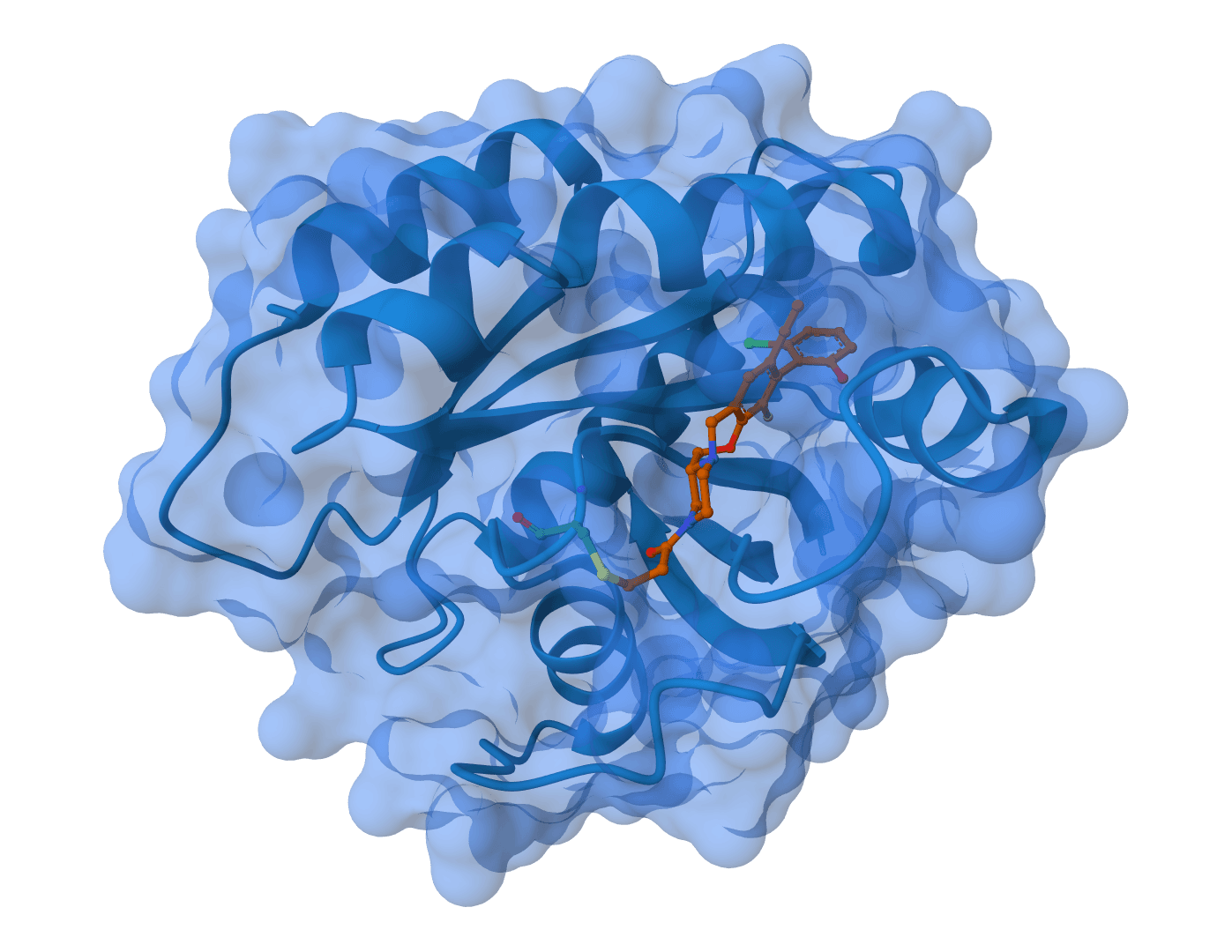
Boltz-2 is a biomolecular foundation model for structure and binding affinity prediction. Supports proteins, ligands, DNA, and RNA in multi-component complexes. Automatically scales GPU resources for large complexes. Predicts binding affinity with near-FEP accuracy at 1000x faster speed.
Chai-1
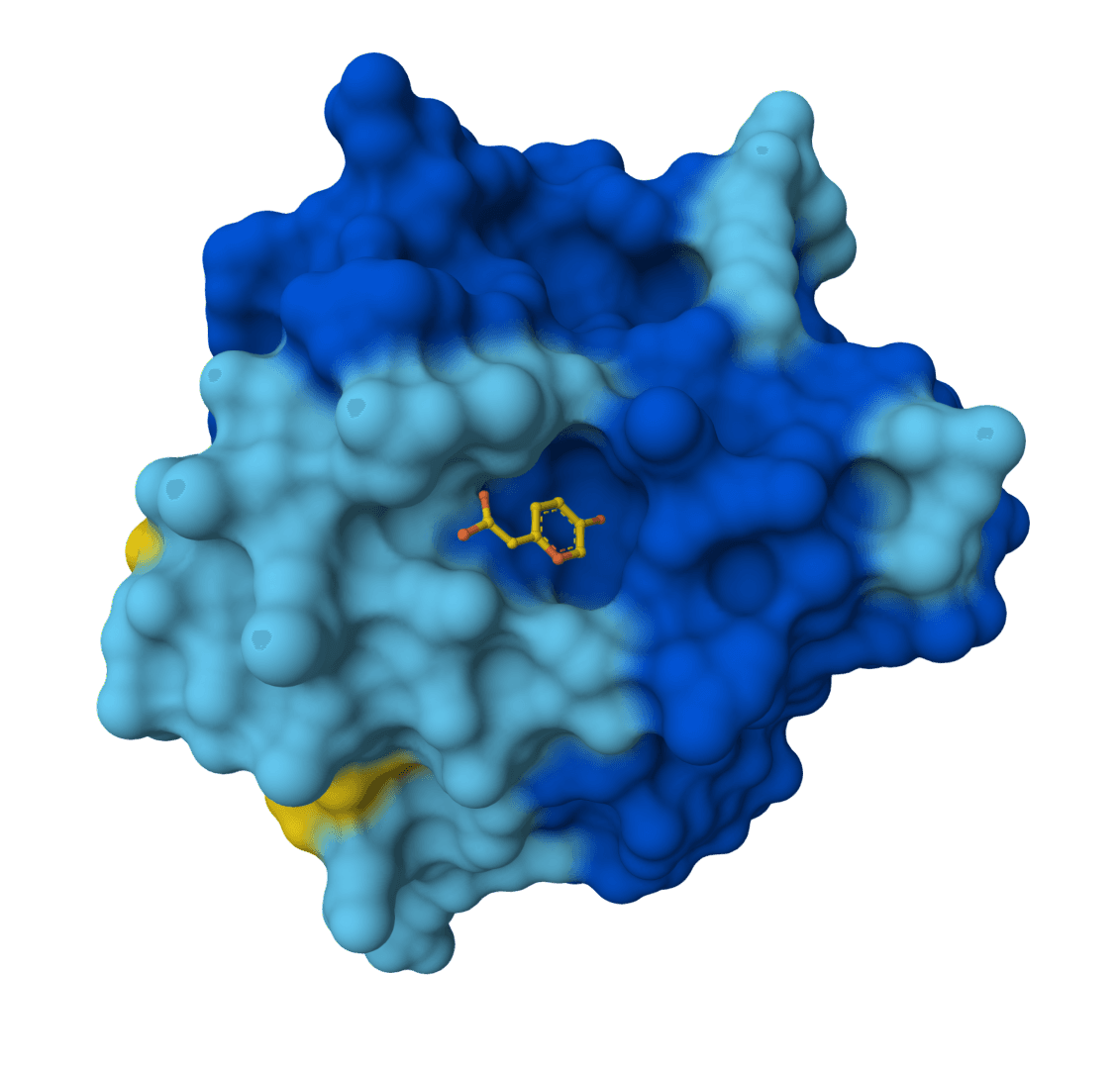
Chai-1 is a multi-modal foundation model for molecular structure prediction. Predicts 3D structures for proteins, ligands, DNA, RNA, and multi-component complexes with high accuracy.
ESMfold
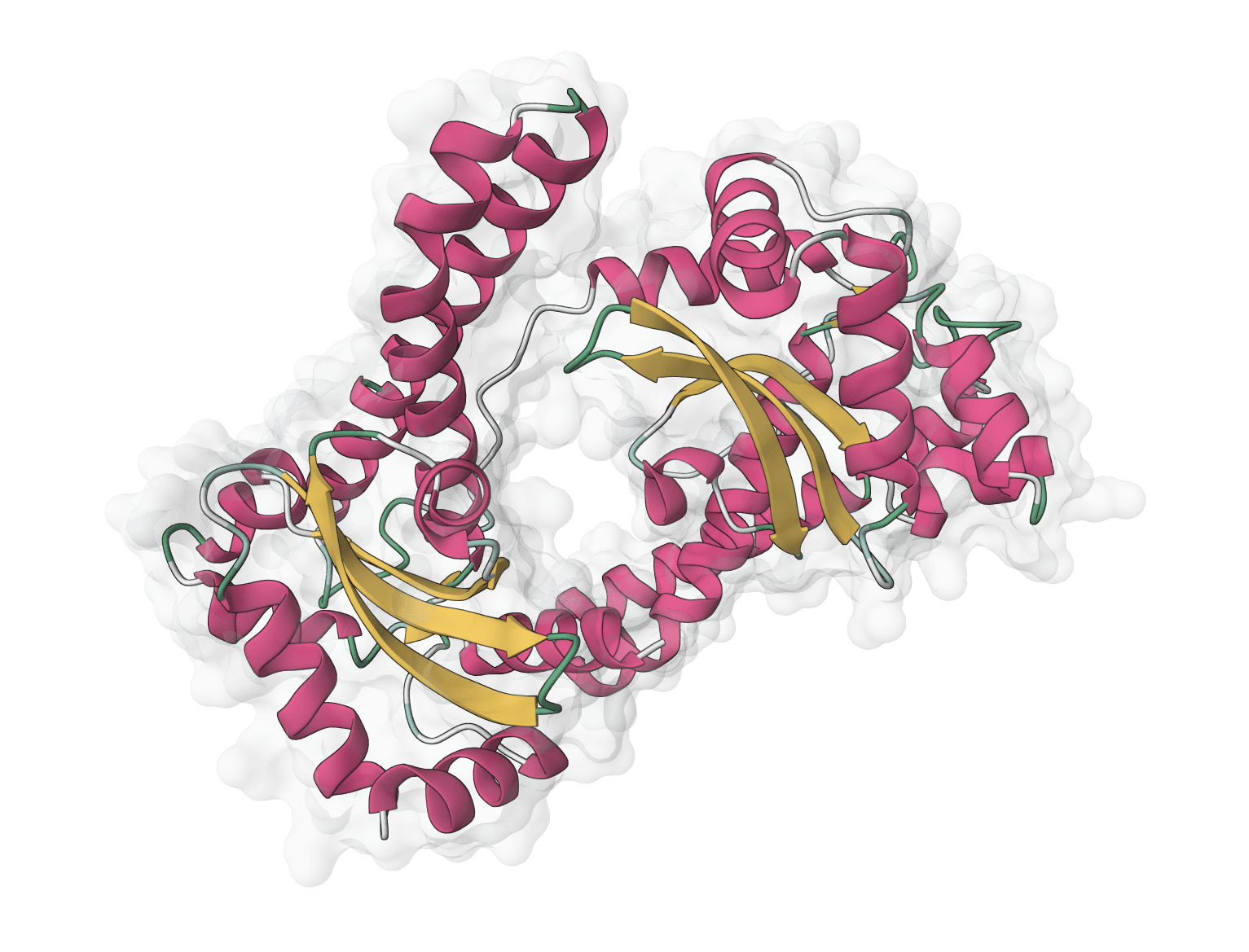
ESMfold is a fast, single-sequence protein structure predictor from Meta AI. Predicts 3D protein structures directly from amino acid sequences without requiring multiple sequence alignments (MSA), making it significantly faster than AlphaFold while automatically scaling GPU resources for larger proteins.
ESMFold2
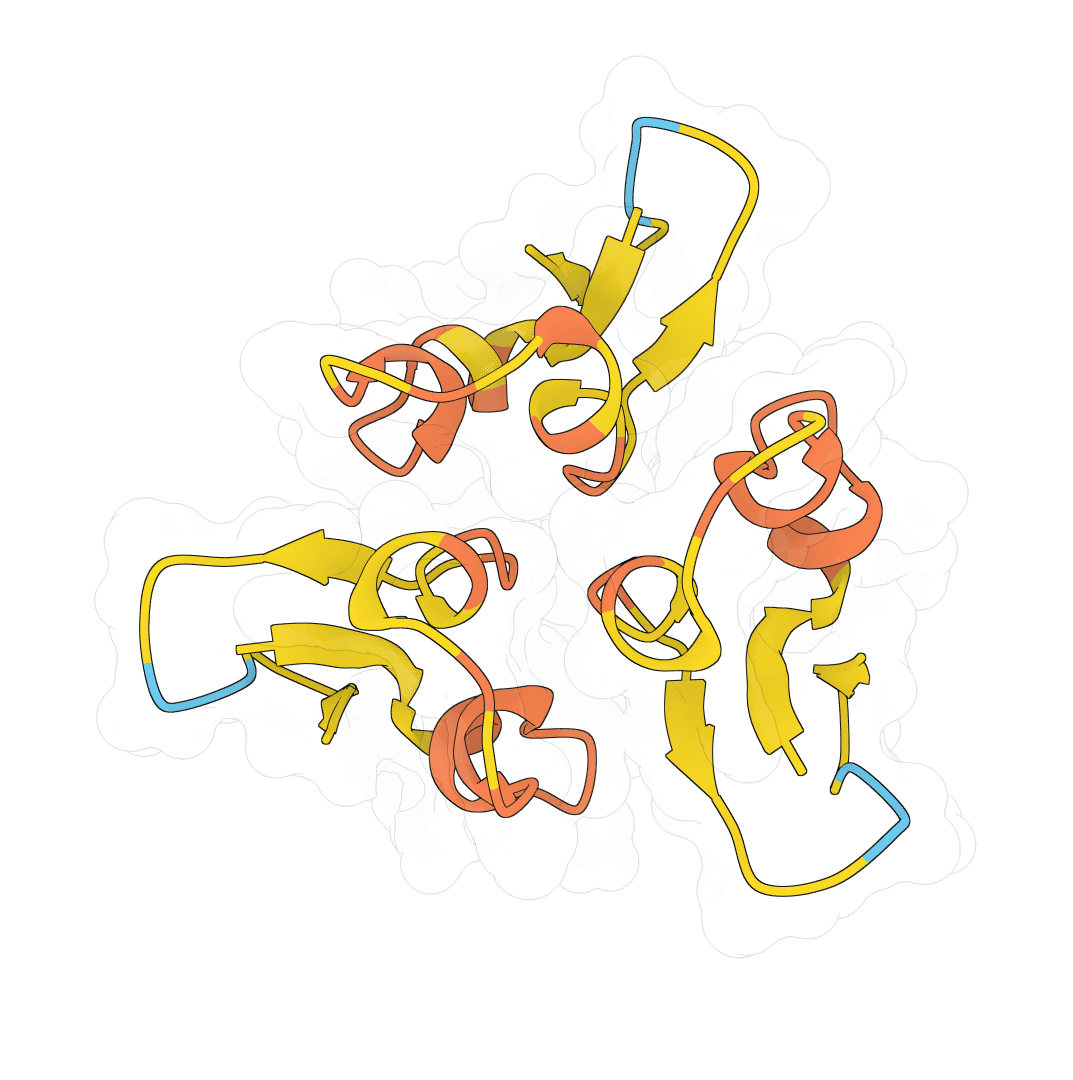
ESMFold2 predicts protein structures and multi-chain protein complexes from amino acid sequences using Biohub protein language models. The first ProteinIQ release focuses on sequence-based protein folding with confidence metrics, native mmCIF structures, and optional PAE and pair-chain iPTM outputs.
HighFold
Cyclic peptide structure prediction using HighFold, a modified ColabFold/AlphaFold2 framework with CycPOEM (Cyclic Position Offset Encoding Matrix) for head-to-tail and disulfide bridge constraints.
ImmuneBuilder
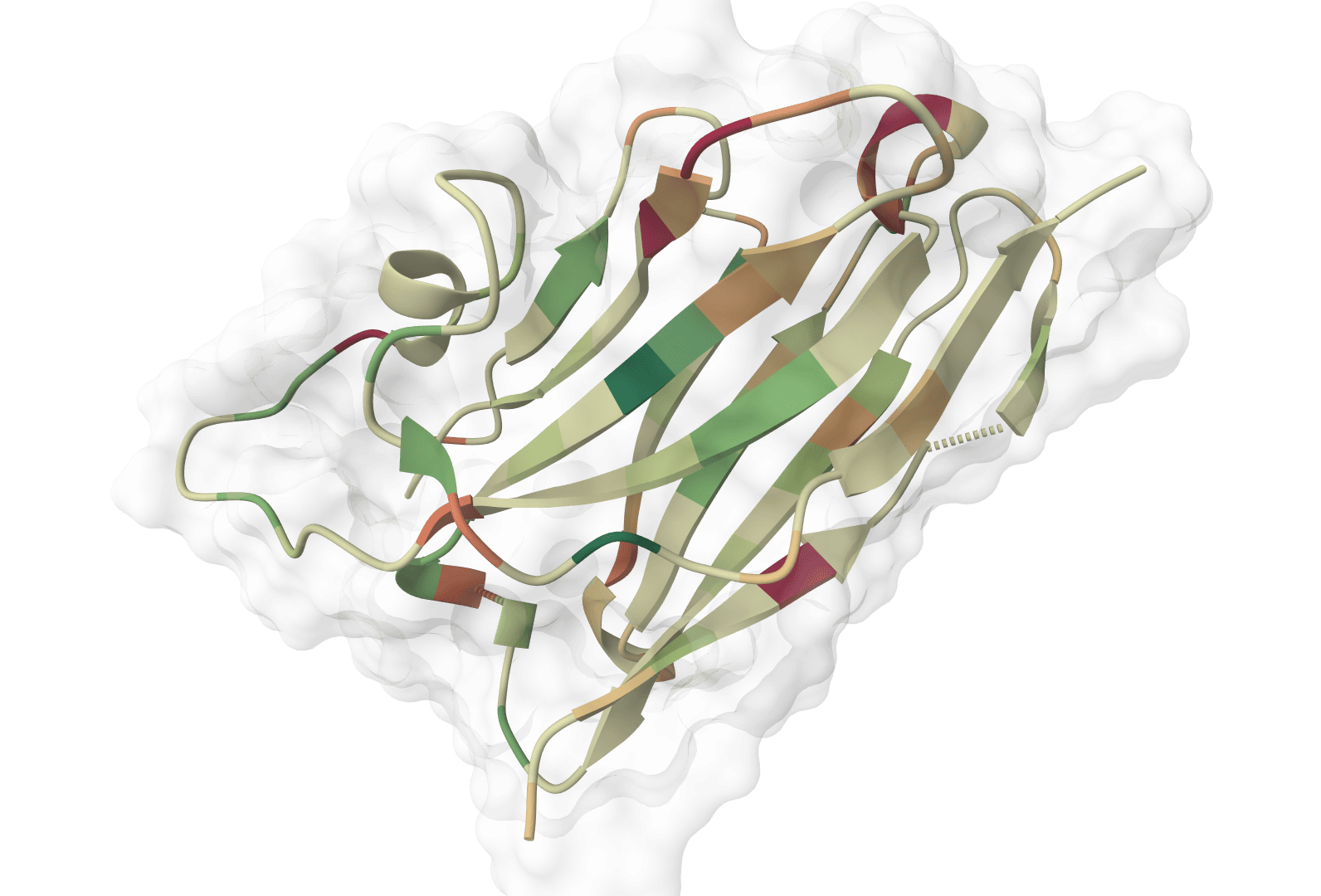
ImmuneBuilder predicts 3D structures of immune receptor proteins including antibodies, nanobodies, and T-cell receptors. It uses ABodyBuilder2, NanoBodyBuilder2, and TCRBuilder2/TCRBuilder2+ to generate structures with per-residue error estimates and optional ensemble artifacts.
IntelliFold 2
Controllable all-atom structure prediction for proteins, ligands, DNA, RNA, and multi-component complexes using IntelliFold 2.0.4 on its AlphaFold 3 JAX engine.