Synthetic biology and genetic engineering
Check constructs, primers and RNA
Find ORFs, optimize codons, design primers and check RNA folding before the order goes in.
Trusted by 16,500+ researchers and published in
Read the sequence
Locate the real reading frame before you design around it, and pull features out of GenBank records without retyping coordinates.
Write the gene for the host
Reverse translate or optimize codons for your organism, build variant libraries, and work out how much insert a ligation needs.
Order primers that work
Design primers around the region you need, then check each oligo for hairpins and dimers before it is synthesized.
Fold and design RNA
Predict how an RNA folds, enumerate the alternatives, or work backwards from a target structure to a sequence that should adopt it.
Ask a model, then compare with data
Score how a mutation shifts a sequence in Evo 2, or how a variant changes predicted expression with AlphaGenome. Compare constructs and genomes, and quantify transcripts from RNA-seq.


Related use cases and research areas
RNA secondary structure prediction
Fold an RNA and read the base pairing and energy.
Sequence alignment
Align DNA or protein sequences to compare constructs and homologs.
RNA discovery
The research-area workflow for RNA folds, structures and interactions.
Protein engineering
The research-area workflow for designing the protein your construct encodes.
Background for construct and RNA work
Background guides on the methods, scores, and numbers behind these workflows.
Genetics · 20 min
Codon optimization: what it changes and when it helps
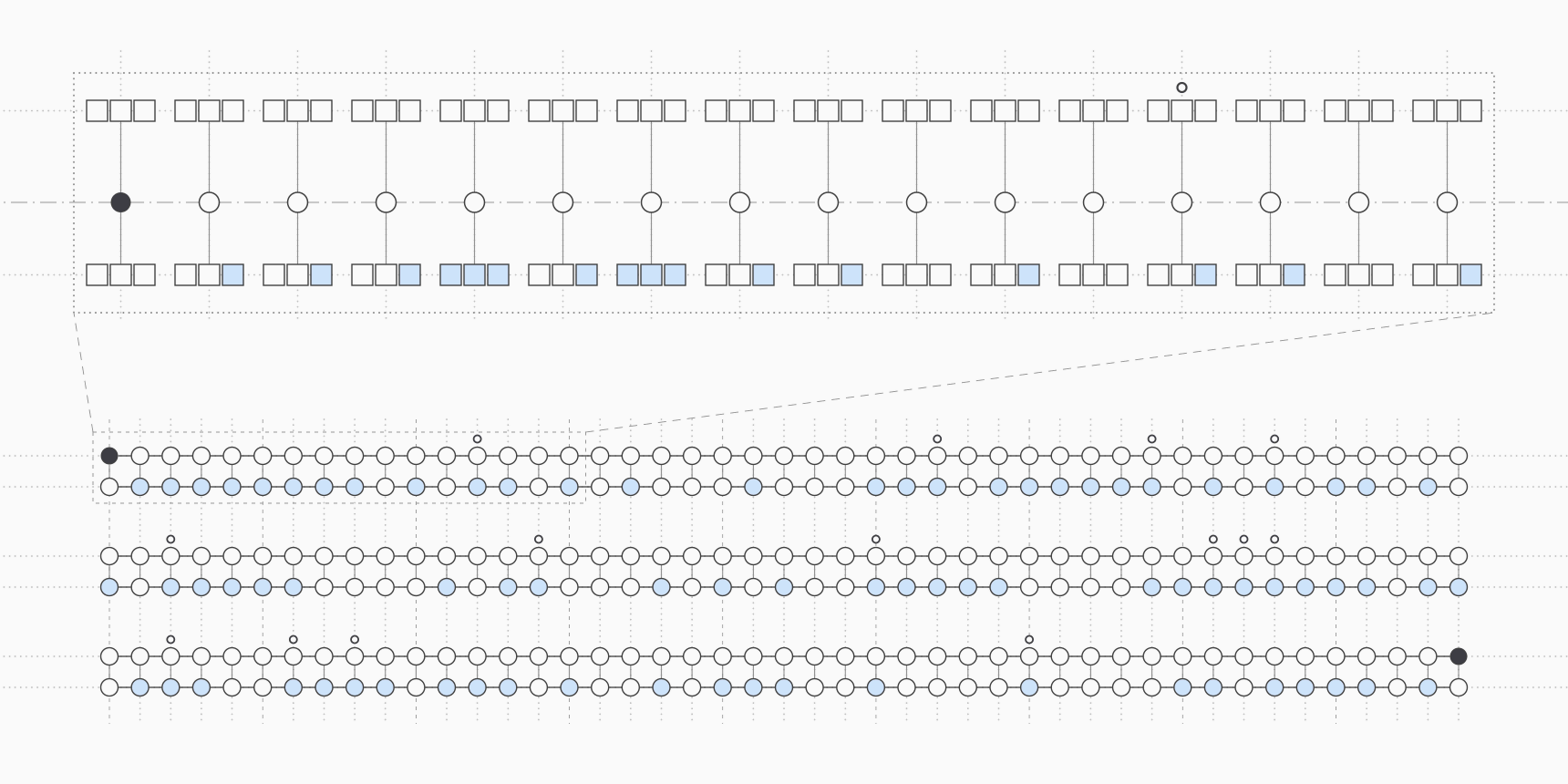
Codon optimization swaps synonymous codons so a gene matches its host, without changing the protein. It changes codon choice, GC content, restriction sites, repeats and mRNA folding near the start codon. It helps most when a gene comes from a distant species, and it can backfire when it tightens the start of the message or speeds up a protein that needs to fold slowly. A worked example rewrites human interleukin-2 for E. coli and scores it before and after.
Genetics · 18 min
Primer dimers: how they form, how to predict them and how to stop them
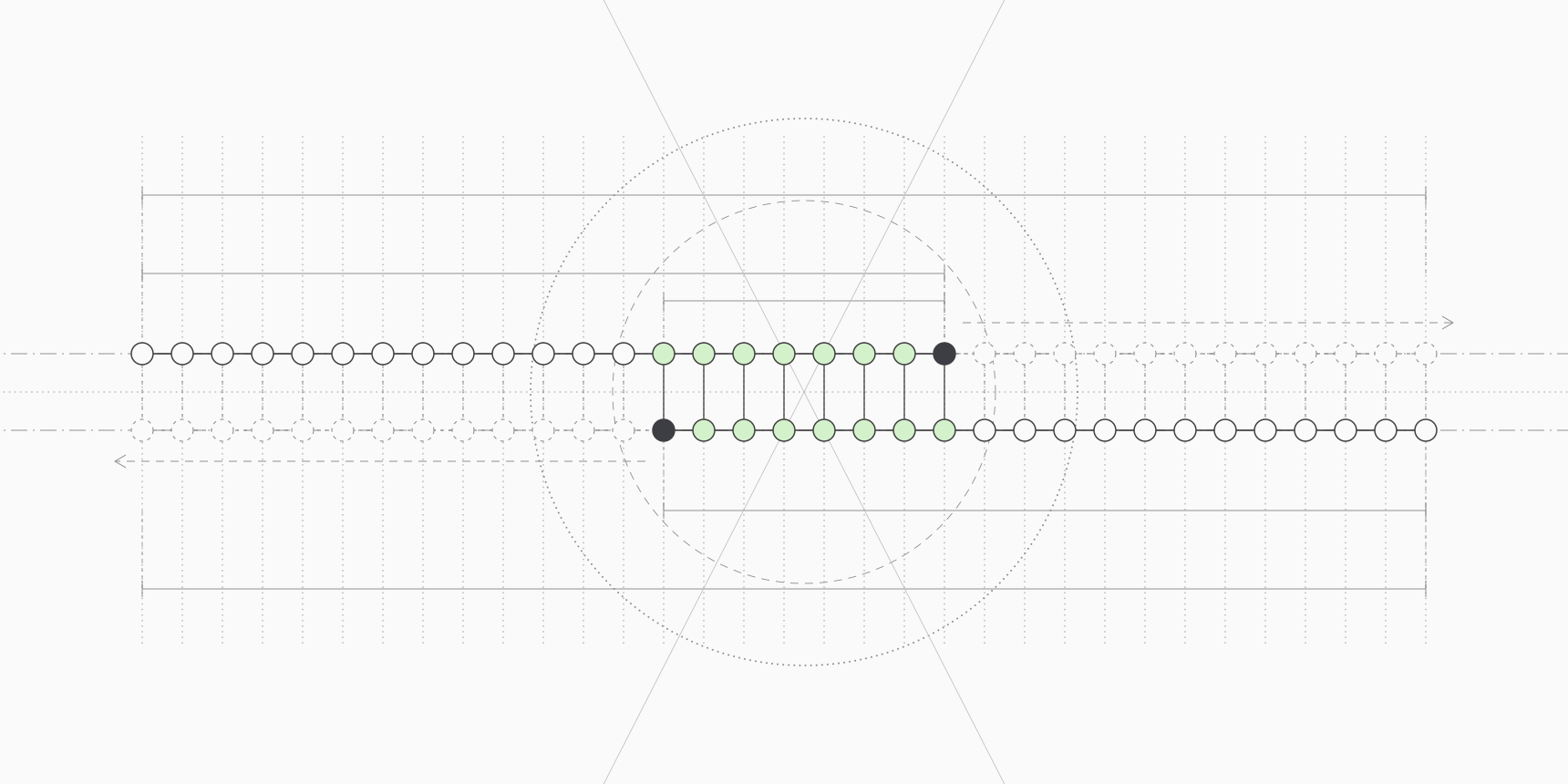
A primer dimer is a short PCR artifact made when two primers anneal to each other and the polymerase extends them. Learn why 3′ complementarity matters most, how dimers show up on gels, melt curves and no-template controls, how ΔG and Primer3's complementarity limits score them, and how to prevent and fix them, with a worked β-actin example.
Genetics · 16 min
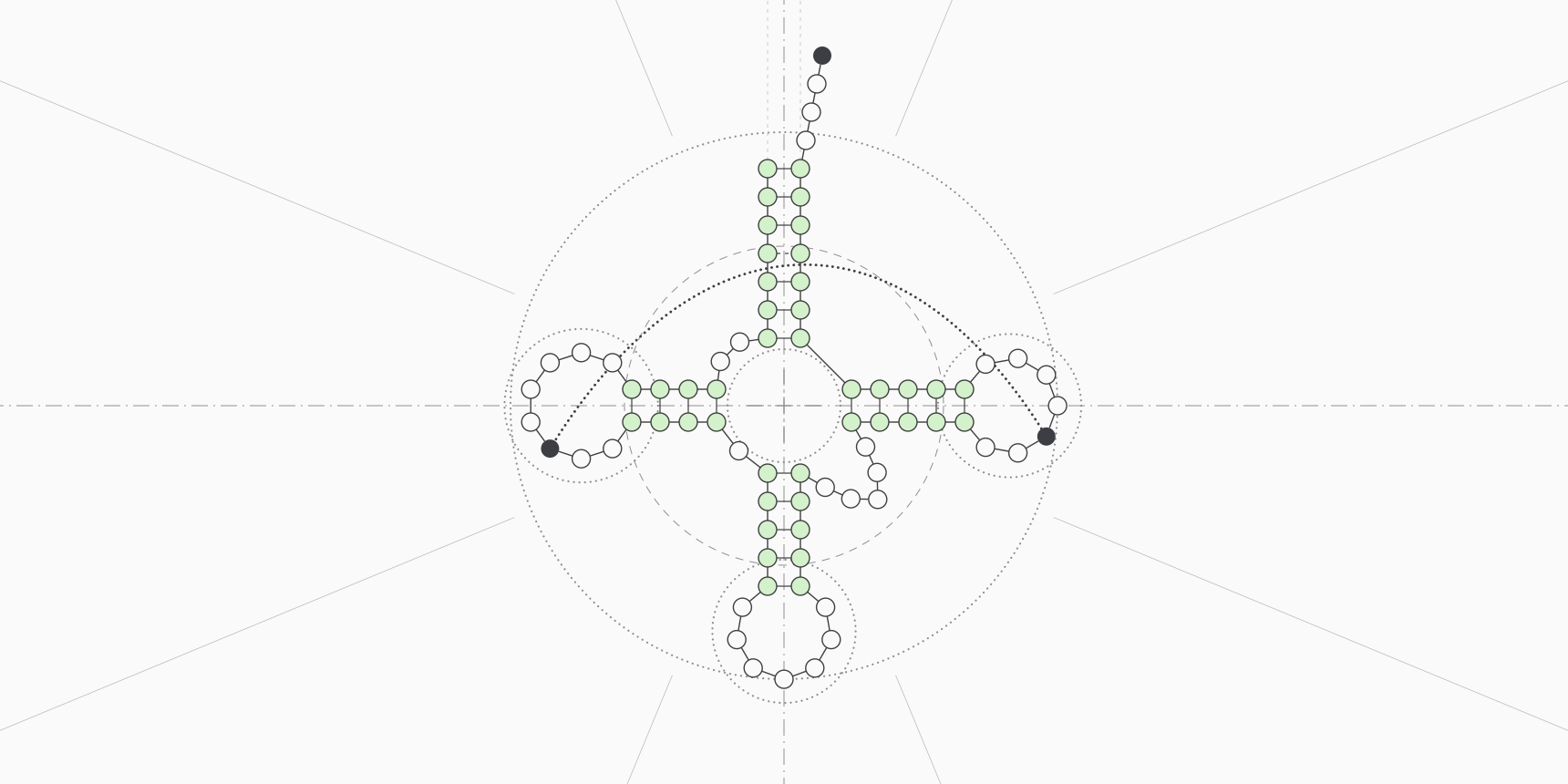
RNA secondary structure: dot-bracket notation and MFE explained
RNA secondary structure is the set of base pairs an RNA strand forms with itself: stems, hairpins, bulges, internal loops and multiloops. Learn how dot-bracket notation encodes it, what the minimum free energy (MFE) means in the nearest-neighbor model, and how accurate thermodynamic prediction is.
FAQs
No. The tool preserves the translation and changes only the synonymous codons, so the protein sequence stays identical. Expression still depends on the host, the vector and the construct, so keep the original gene as a control.
Evo 2 scores the effect of a variant, ranks sequences by likelihood and continues a DNA prompt. AlphaGenome compares reference and alternate alleles to predict effects on expression. Both produce predictions for you to test; they do not design a working circuit on their own.
Yes. Primer3 optimizes melting temperature, product size and quality, and the Oligo analyzer reports hairpins, self-dimers and heterodimers for the oligos you will actually order. Check the pair together, not only each primer alone.
AI answers from our docs. No sign-in needed.
Focus on research, not infrastructure
Start free with 200 credits a month and no installs. Upgrade when your project needs more compute.