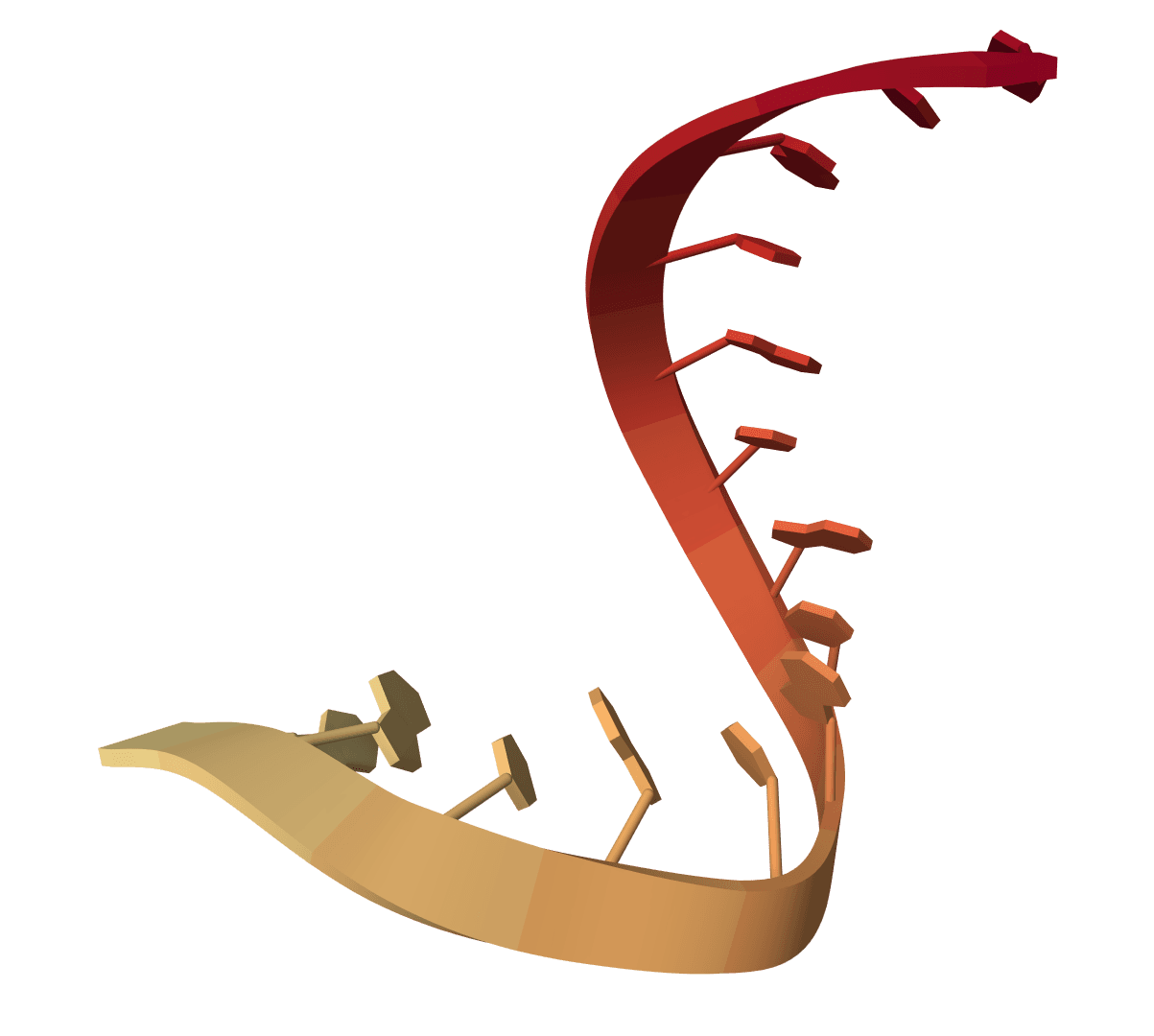
Design RNA sequences that fold into target structures. Learn more
Input
What is RNAinverse?
RNAinverse is the inverse-folding program in the ViennaRNA Package. Instead of predicting a secondary structure from an RNA sequence, it searches for RNA sequences whose predicted fold matches a structure supplied in dot-bracket notation. It is useful when a stem-loop, hairpin, or other intended secondary-structure topology is known first and candidate sequences are needed for subsequent experimental or computational screening.
The program uses ViennaRNA's thermodynamic folding model while it searches. A design is therefore a sequence expected to favor the target under the selected temperature and energy-model settings, not evidence that the RNA will adopt that structure uniquely or in every experimental condition. Folding the resulting candidates again with RNAfold is a sensible first check, and RNAeval can score a specific sequence-structure pair under the same type of energy model.
How to use RNAinverse online
ProteinIQ runs RNAinverse from a target secondary structure and a starting RNA sequence or constraint string. Enter a balanced dot-bracket structure and a same-length starting string, choose how many independent searches to run, then receive candidate sequences with their distance from the start and, when relevant, their residual structure mismatch. The returned sequences can be copied or downloaded for follow-up folding and screening.
Inputs
| Input | Description |
|---|---|
Target Structure | One balanced RNA secondary structure in dot-bracket notation. Its length determines the design length. The form accepts . and balanced (), [], or {} brackets. |
Starting Sequence / Constraints | A starting RNA string or a constraint string. It should correspond to the target length. In RNAinverse semantics, characters outside the active alphabet act as wild cards, while lower-case characters are retained during the search. A string of N characters requests an unconstrained random start. |
For example, (((...))) specifies a nine-nucleotide hairpin topology. A start such as NNNaaNNNN keeps the two lower-case positions fixed and lets the remaining positions vary. Constraint choices should still make structural sense: fixed bases can prevent an exact target from being found.
Design settings
| Setting | Description |
|---|---|
Repeat | Number of independent searches for the same target, from 1 to 20. A larger value returns a broader small set of candidates rather than guaranteeing distinct structures or sequences. Default: 1. |
Alphabet | Optional set of nucleotides allowed in generated positions, passed to RNAinverse as its native alphabet option. Leave blank to use the standard RNA alphabet. This setting does not override lower-case fixed characters in the start string. |
Final scoring mode | Optional native final-score threshold. It is relevant only to RNAinverse partition-function search mode; the standard ProteinIQ run uses minimum-energy folding, so leaving it blank is appropriate for ordinary designs. |
Temperature (°C) | Temperature used to rescale the RNA energy parameters. Default: 37. Match this to the condition being modeled when a different assay temperature is known. |
Dangling ends | Treatment of stabilizing interactions for bases adjacent to helices. 2, double dangles, is the ViennaRNA default. 0 ignores dangling ends; 1 limits an unpaired base to one dangling-end contribution; 3 permits coaxial stacking in applicable minimum-energy calculations. |
Parameter file content | Optional ViennaRNA energy-parameter file that replaces the standard parameter set. Use only with a validated parameter file and record it alongside the designed sequences. |
How RNAinverse works
RNAinverse inverts the usual RNA-folding problem. It begins with the supplied start or wildcard-resolved sequence, changes candidate bases while respecting fixed positions and the chosen alphabet, then evaluates whether the candidate folds toward the requested target. The search uses the ViennaRNA energy model, so temperature, dangling-end treatment, and a supplied parameter file can change which sequences are favored.
The target is a secondary-structure objective. It does not model tertiary contacts, ligand binding, cellular cofactors, transcription kinetics, or competing intermolecular structures. Sequences that work in silico should be assessed in the intended experimental context, especially when the design will be used as a switch, aptamer scaffold, or structured untranslated region.
Understanding RNAinverse results
Each completed search produces one row in the results table.
| Result | Meaning |
|---|---|
Design # | The order of the parsed candidate within the job. |
Target Structure | The structure submitted as the design objective. |
Start Sequence | The supplied start or constraint string. |
Designed Sequence | RNA sequence returned by RNAinverse. |
Hamming Distance | Number of positions reported by RNAinverse as differing from the starting sequence. It helps identify candidates that stay close to a deliberately seeded sequence. |
Structure Distance | A nonzero residual mismatch to the target reported when an exact target fold was not found. An absent value generally means RNAinverse did not print a residual distance for that candidate. |
Target Probability | Equilibrium probability of the target structure when RNAinverse is run in partition-function mode. The standard ProteinIQ settings do not enable that mode, so this field is normally blank. |
An exact design is the most straightforward candidate to carry forward, but it is not automatically the best experimental choice. When several candidates meet the target, compare their sequence constraints, then refold each candidate with the same temperature and energy settings. Candidates with the same target MFE can still differ in alternative structures and ensemble behavior.
When to use RNAinverse vs RNAfold
RNAinverse starts with a structure and proposes sequences. RNAfold starts with a sequence and predicts its minimum-free-energy structure. The two are complementary: RNAinverse is appropriate for constructing candidate sequences around a specified topology, whereas RNAfold is appropriate for testing whether a natural or designed sequence folds as expected. For a known sequence and an already proposed structure, use RNAeval to evaluate that exact sequence-structure pairing rather than designing a new sequence.
Related tools
RNAdos
RNAdos calculates density-of-states summaries for RNA sequences, reporting representative structures and state counts across energy bands.
RNAeval
RNAeval calculates the free energy of an RNA secondary structure for a given sequence. Evaluates if a proposed structure is thermodynamically favorable.
RNAfold
RNAfold predicts RNA secondary structure using minimum free energy (MFE) algorithms and optionally returns partition-function ensemble metrics when explicitly enabled.
RNALfold
RNALfold reports locally stable RNA secondary structures within a sliding window and returns their start and end positions on the input sequence.
RNAplfold
RNAplfold computes local base pair probabilities using a sliding window approach. Useful for analyzing accessibility and identifying binding sites in long RNA sequences.
RNAsubopt
RNAsubopt enumerates all RNA secondary structures within a specified energy range above the minimum free energy (MFE). Useful for exploring the structural ensemble and identifying alternative conformations.
ViennaRNA
ViennaRNA supports a curated set of ViennaRNA 2.7.2 workflows for RNA folding, density-of-states analysis, interaction prediction, local accessibility, plotting, inverse folding, and structure analysis.
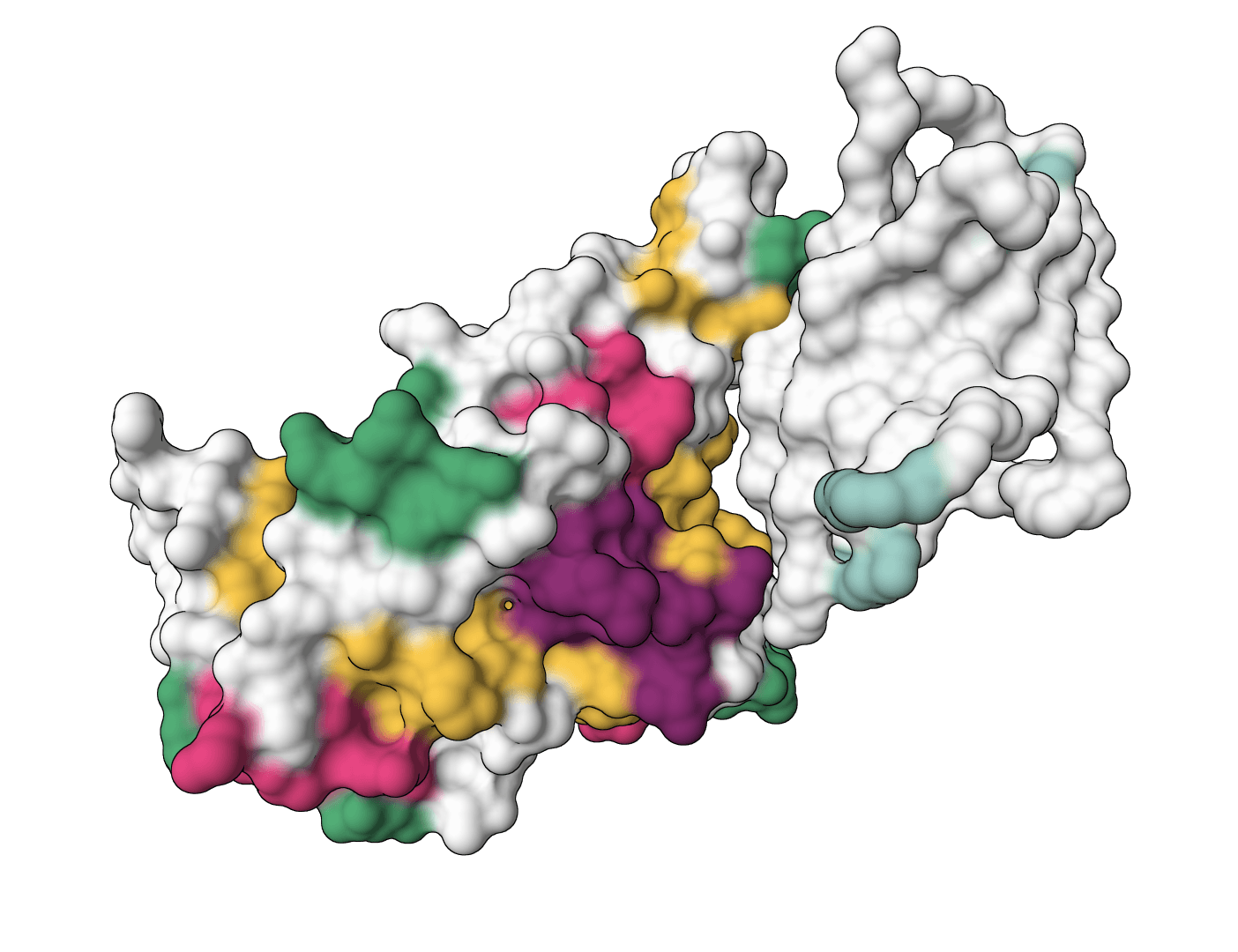
IgGM
IgGM is a generative foundation model for antibody and nanobody design against a target antigen. Supports CDR design, affinity maturation, inverse design, and framework design. Requires an antigen structure (PDB) and antibody sequences with "X" marking positions to design.
RNAalifold
RNAalifold computes consensus RNA secondary structure from a multiple sequence alignment. Uses covariation information to improve prediction accuracy for evolutionarily conserved structures.
RNAcofold
RNAcofold predicts the joint secondary structure of two interacting RNA molecules and optionally reports partition-function and concentration-dependent equilibrium metrics.