Protein guides
Guides on protein types, structure confidence scores, peptide synthesis, and protein numbers in the human body.
Proteins ·
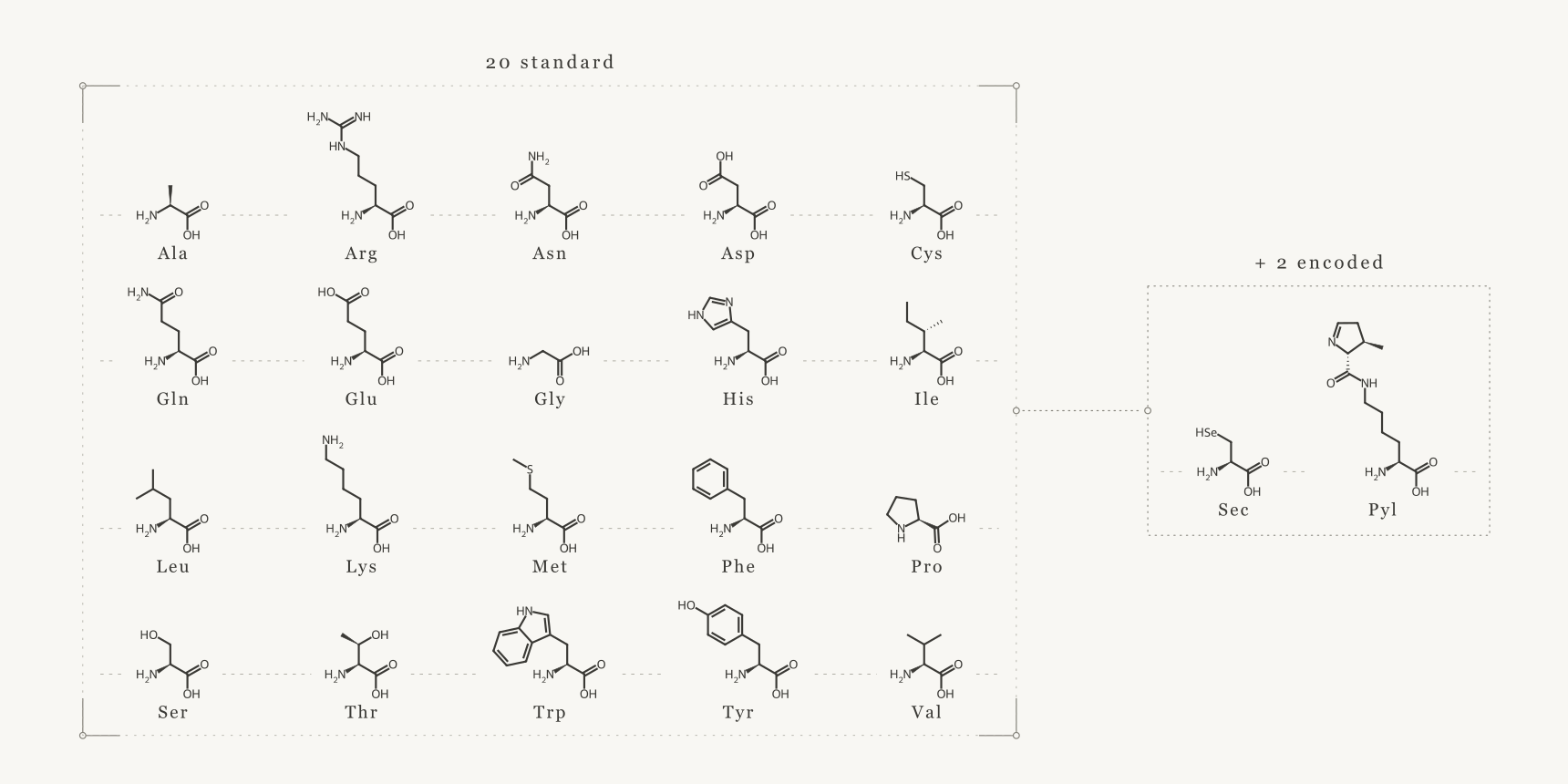
How many amino acids are there?
Proteins use 20 standard amino acids. Selenocysteine and pyrrolysine bring the genetically encoded set across life to 22, nine are essential in the human diet, and about 500 occur in nature.
Proteins ·
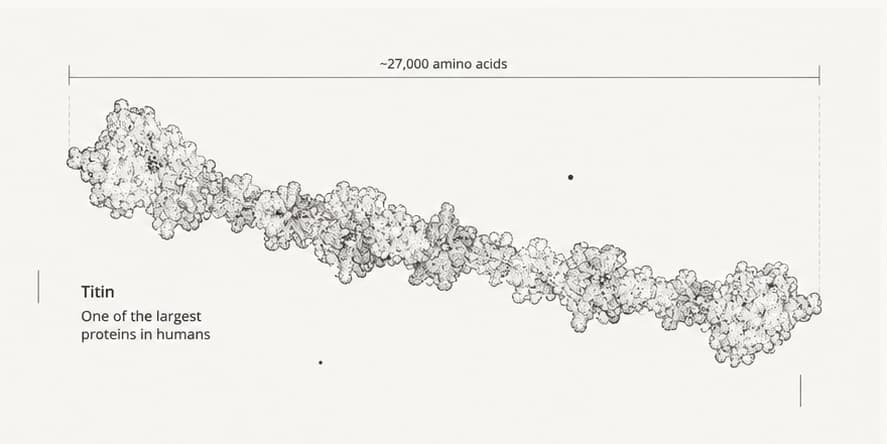
What is the largest protein?
PKZILLA-1 is the largest known protein at 45,212 amino acids. Titin is the largest human protein, and von Willebrand factor the largest in blood plasma.
Proteins ·
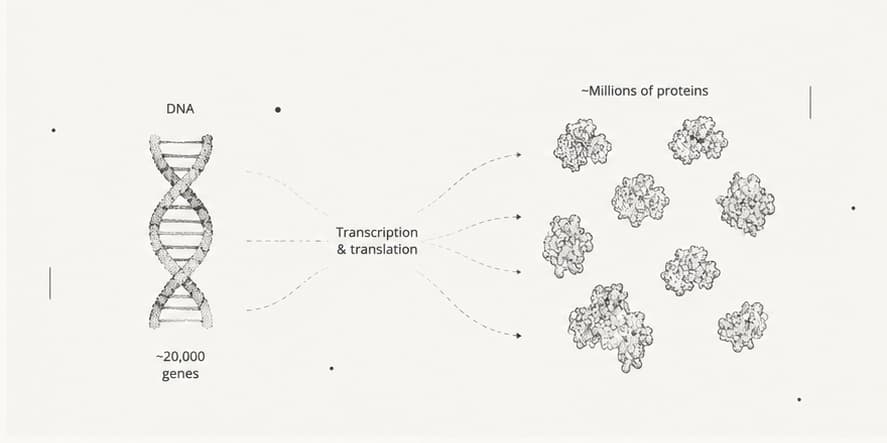
How many proteins are there?
Humans have about 20,000 proteins, one per protein-coding gene. UniProt lists 150 million protein records across all life. See what each count measures.
Proteins ·
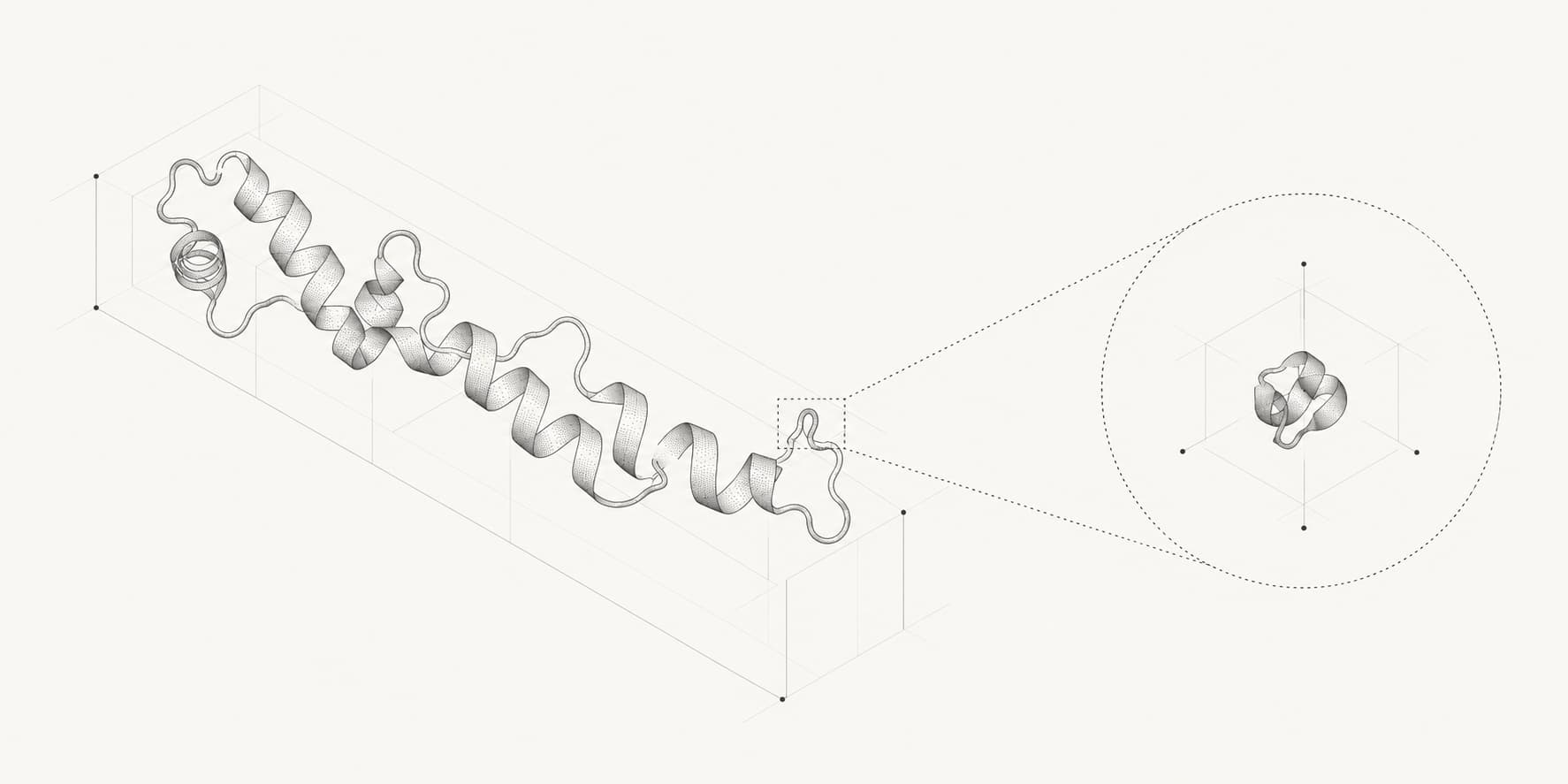
What is the smallest protein?
The smallest natural protein is an 11-amino-acid fruit fly peptide. In humans, MOTS-c has 16 and RPL41 has 25. The smallest unit of a protein is an amino acid.
Structures ·
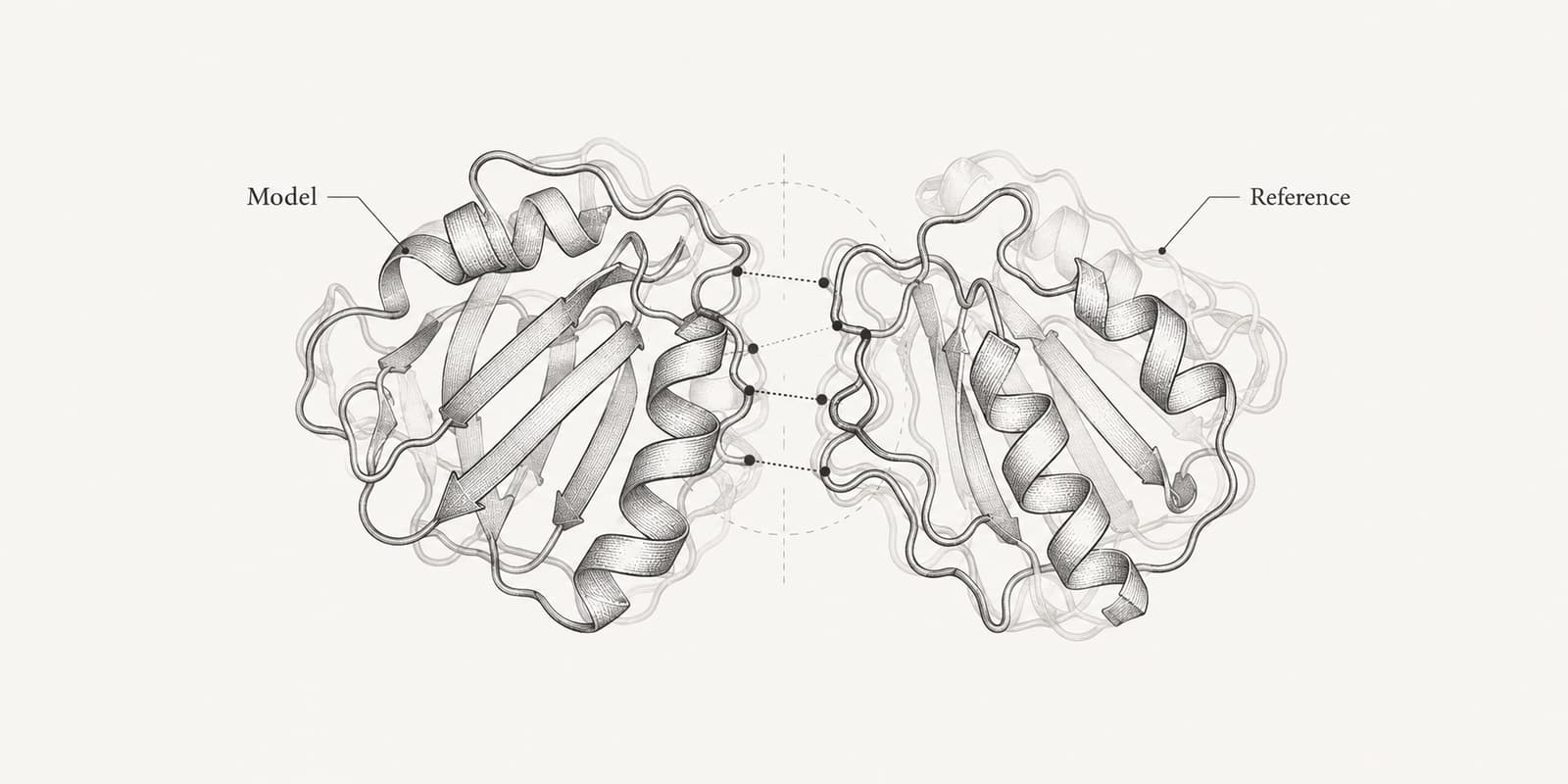
DockQ score explained
DockQ scores how closely a predicted protein complex matches a reference interface, from 0 to 1, with CAPRI cutoffs at 0.23, 0.49 and 0.80. Learn how it combines fnat, iRMSD and LRMSD, and how pDockQ estimates it with no reference.
Structures ·
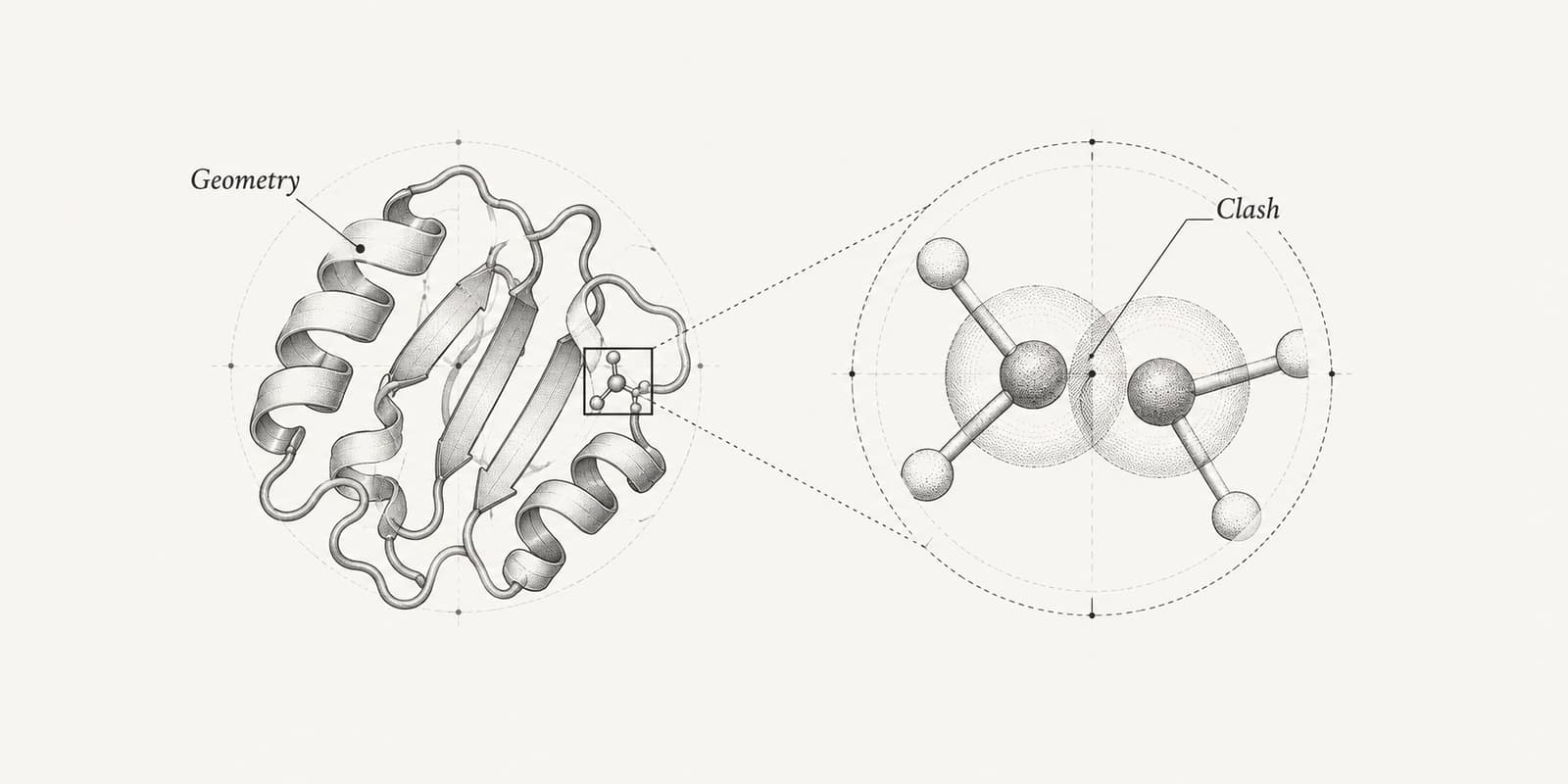
What the MolProbity score and clashscore mean
The MolProbity score combines clashscore, rotamer outliers and Ramachandran favored residues into one number on the scale of crystallographic resolution. Learn what counts as good and how AlphaFold models score.
Structures ·
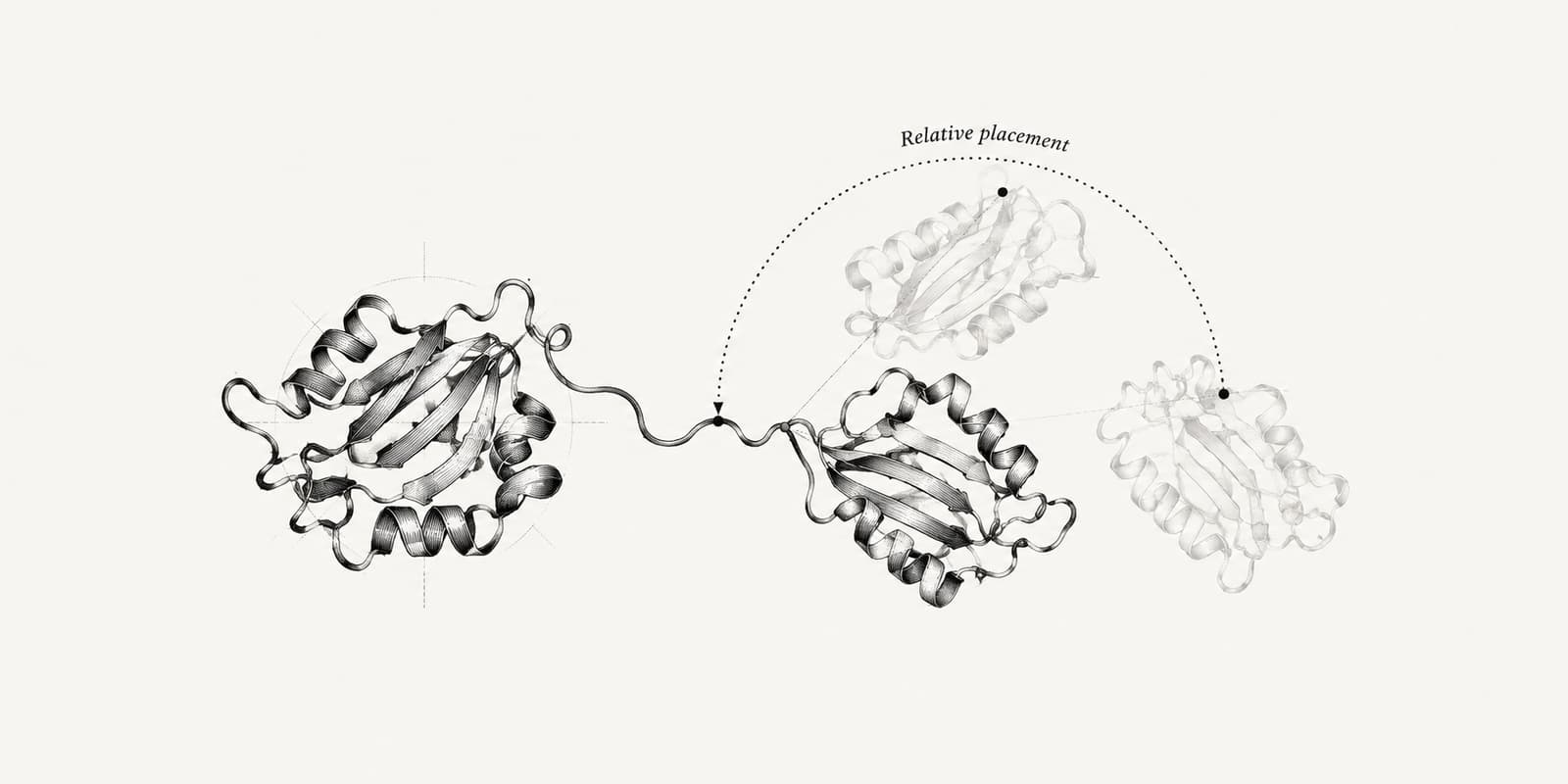
What is PAE, and how to read a PAE plot
PAE (predicted aligned error) is the pairwise confidence matrix that AlphaFold, Boltz and Chai-1 write next to a predicted structure. Learn how to read its blocks and stripes and use it for domains and interfaces.
Structures ·
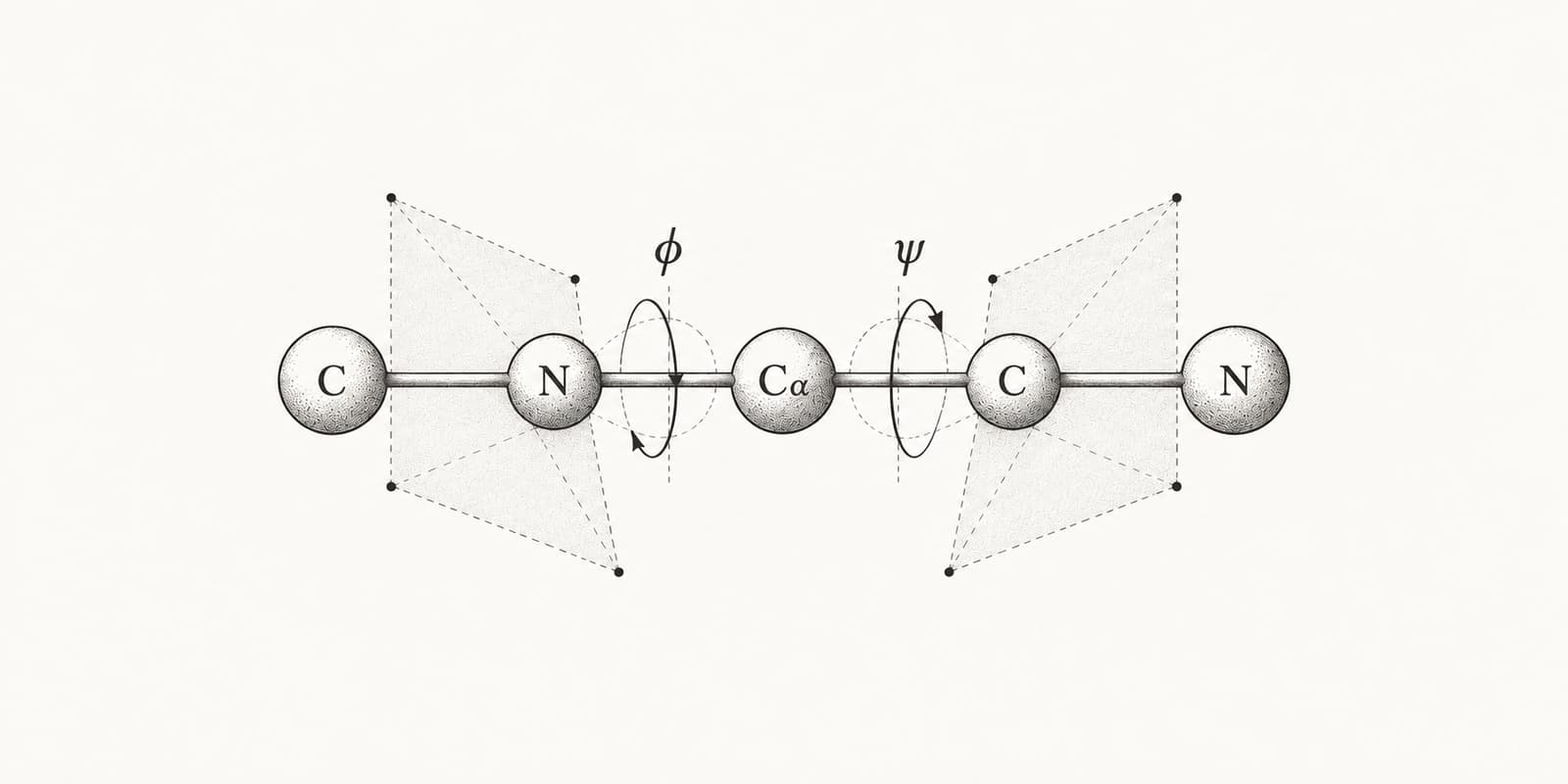
How to read a Ramachandran plot
A Ramachandran plot shows the phi and psi backbone angles of every residue in a protein. Learn what the regions mean, what percentages a good structure has, and how to tell a model error from a strained residue.
Structures ·
What is RMSD, and what counts as a good value
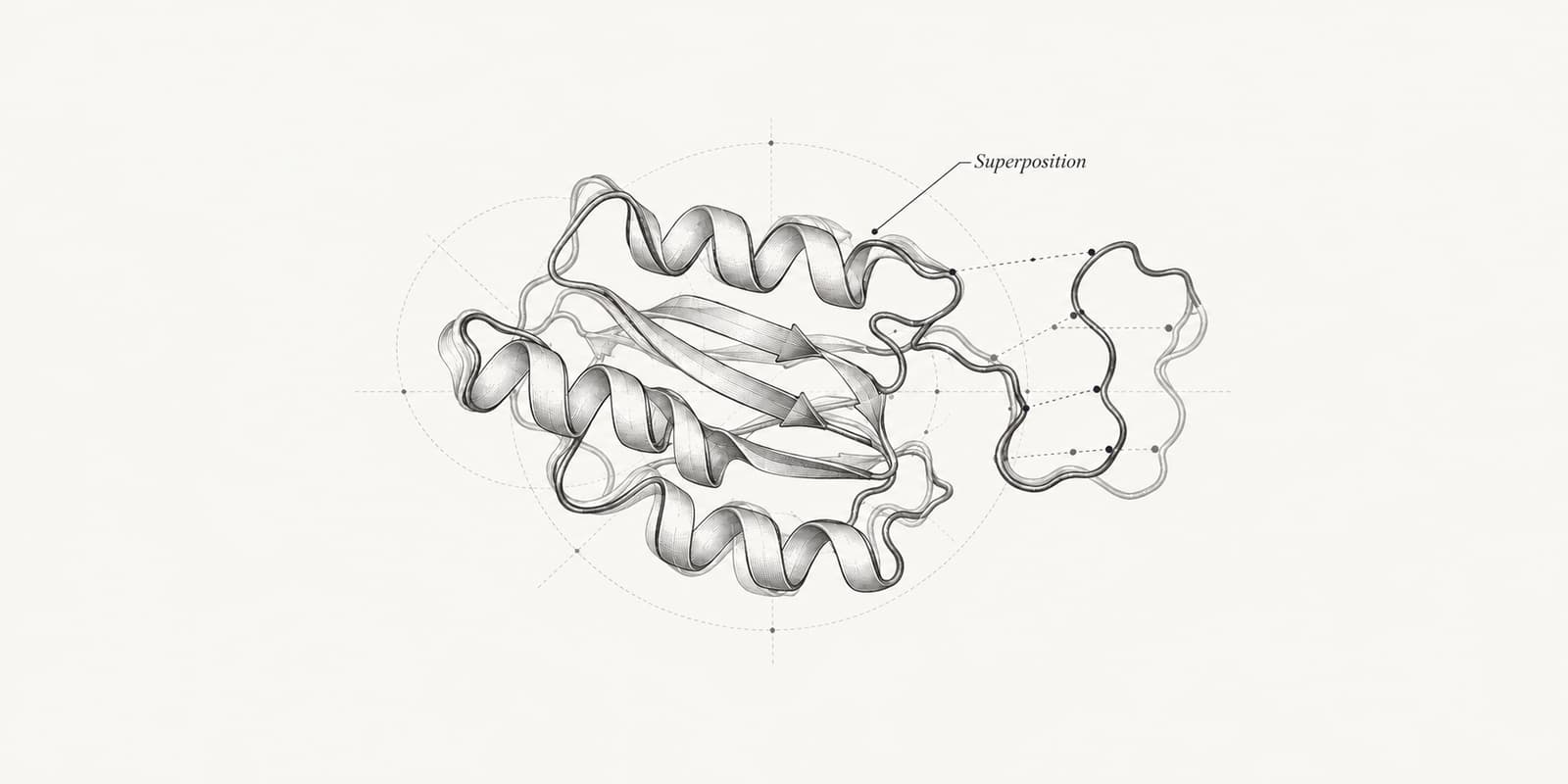
RMSD is the average distance between matched atoms of two structures, in ångströms. Learn the formula, when to superimpose, and what values count as good for proteins, docked poses and molecular dynamics.
Structures ·
How to tell if a predicted protein structure is reliable
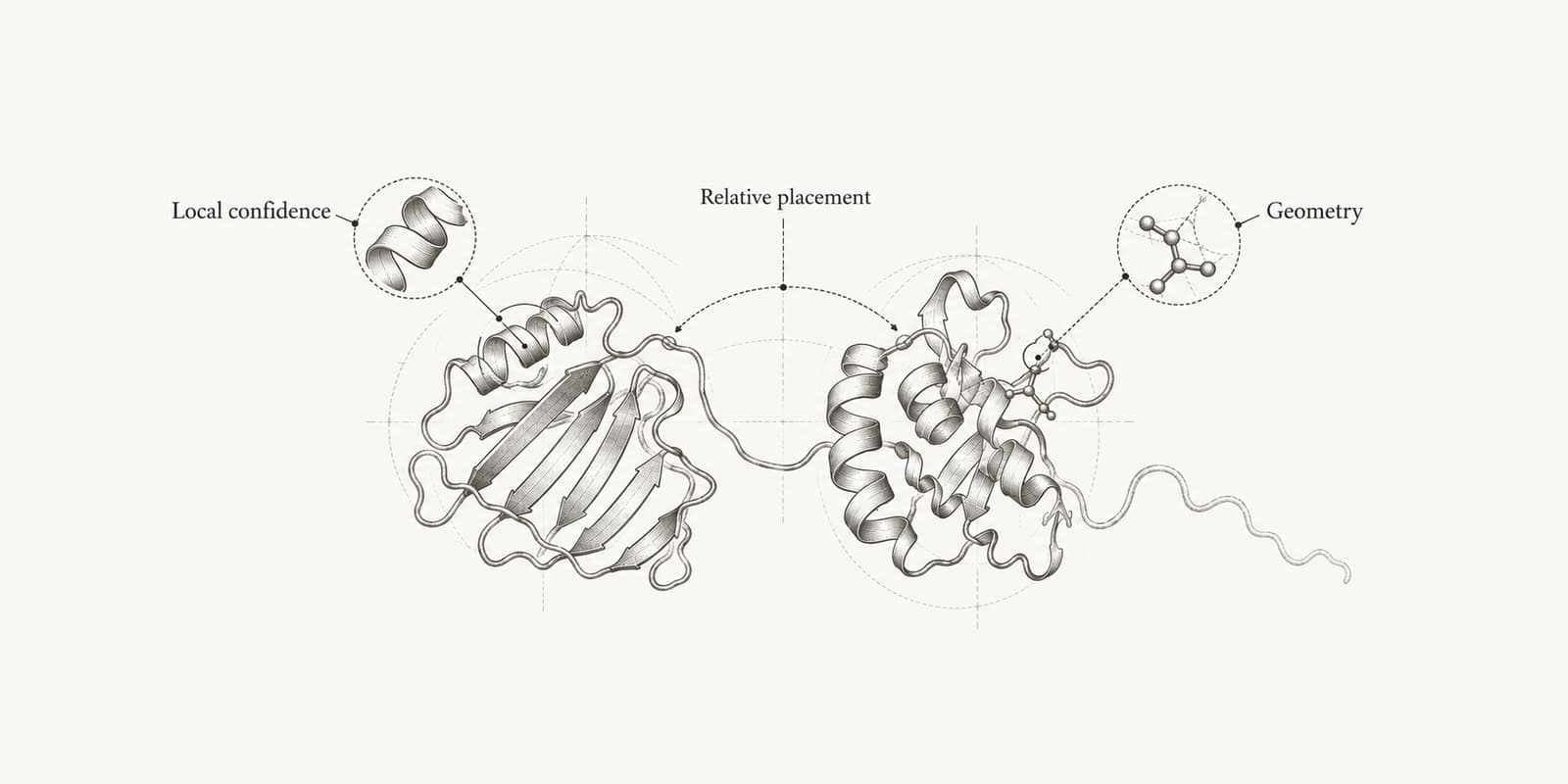
A predicted structure is reliable for a question when the scores that answer that question agree. Read pLDDT, PAE, pTM and ipTM in order, rescore interfaces with ipSAE, then check accuracy and geometry with DockQ and MolProbity.
Proteins ·
How much does peptide synthesis cost?
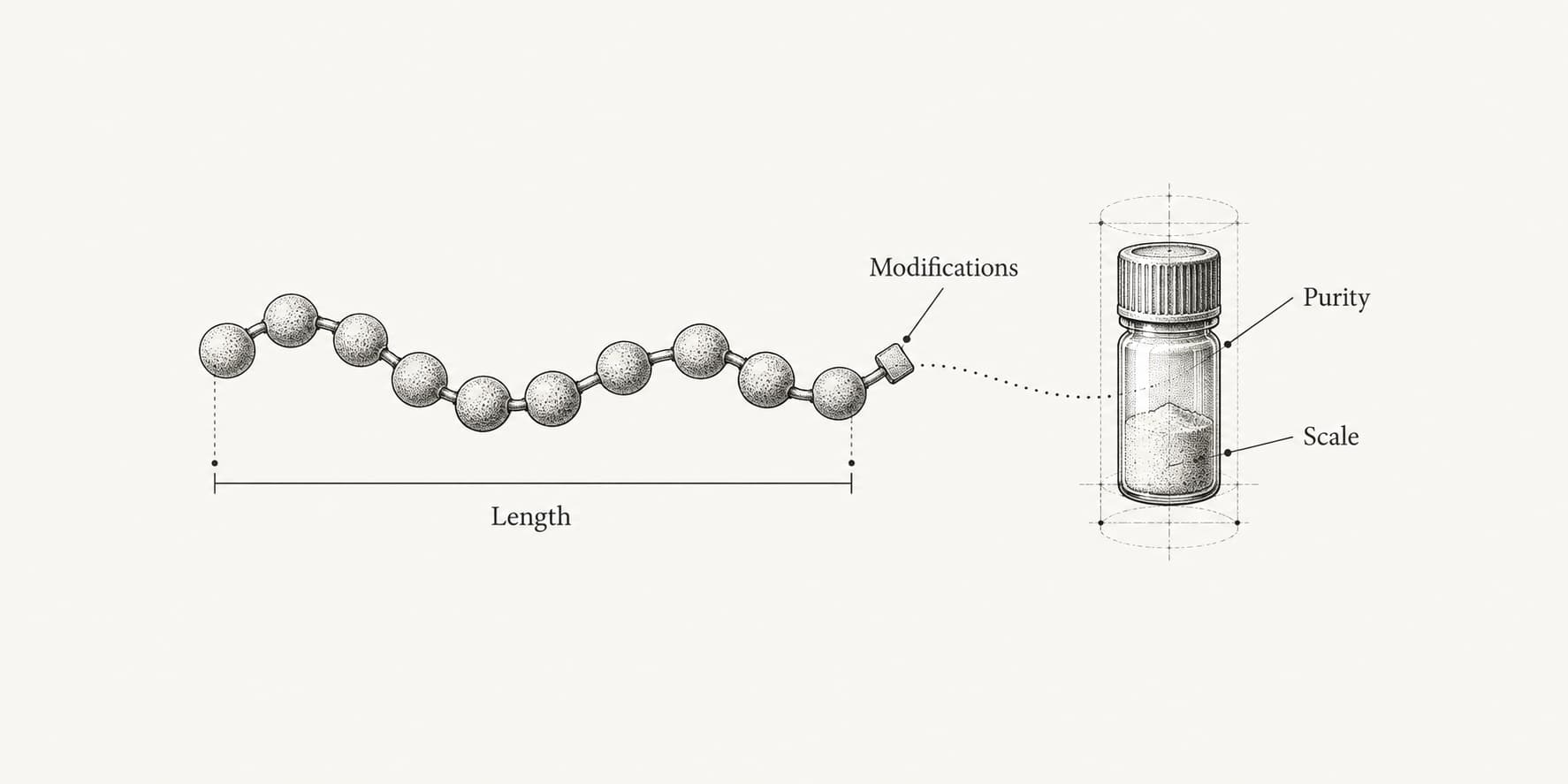
Custom peptides cost about $2 to $4.50 per amino acid crude and about $12 at over 95% purity. See how purity, length, scale and modifications change the price.
Structures ·
ipSAE explained
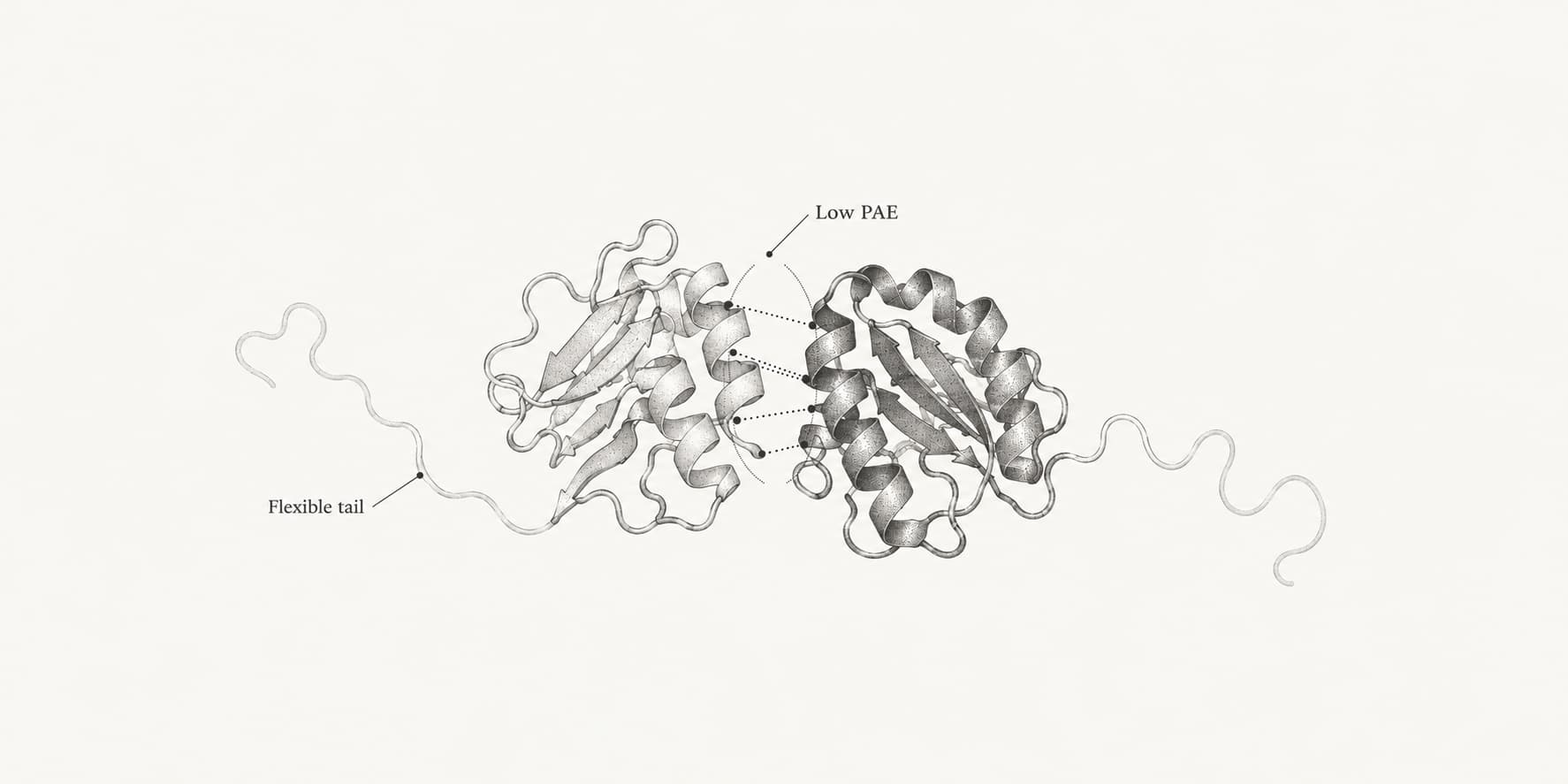
ipSAE is an interface confidence score for AlphaFold2, AlphaFold3 and Boltz that ignores disordered tails. Learn how it is calculated, why it beats ipTM and what 0.6 to 0.8 mean.
Structures ·
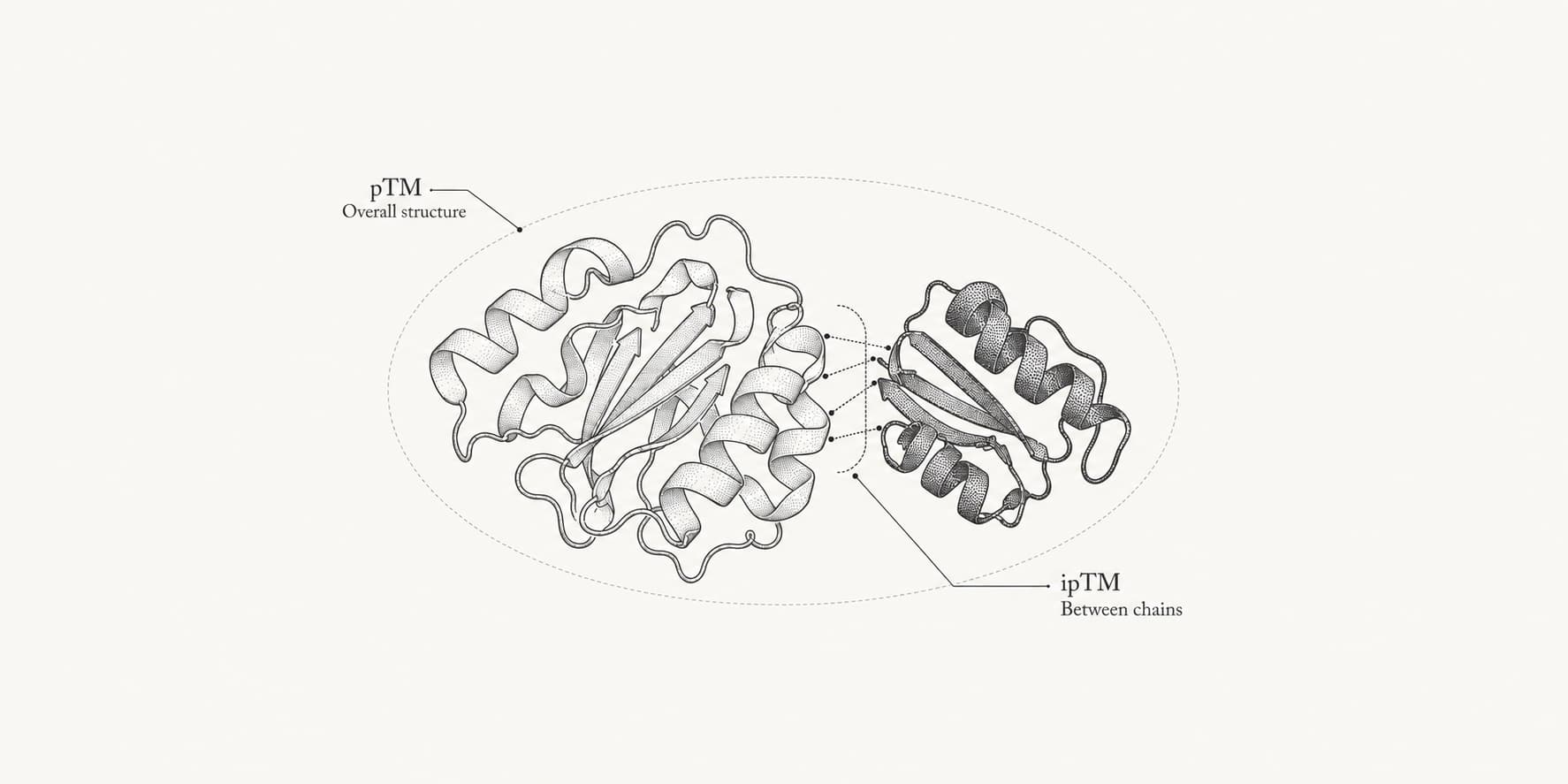
ipTM vs pTM: judging predicted complexes
pTM scores the whole predicted structure, while ipTM scores only how chains sit relative to each other. Learn what the 0.5, 0.6 and 0.8 cutoffs mean and why disordered tails lower ipTM.
Structures ·
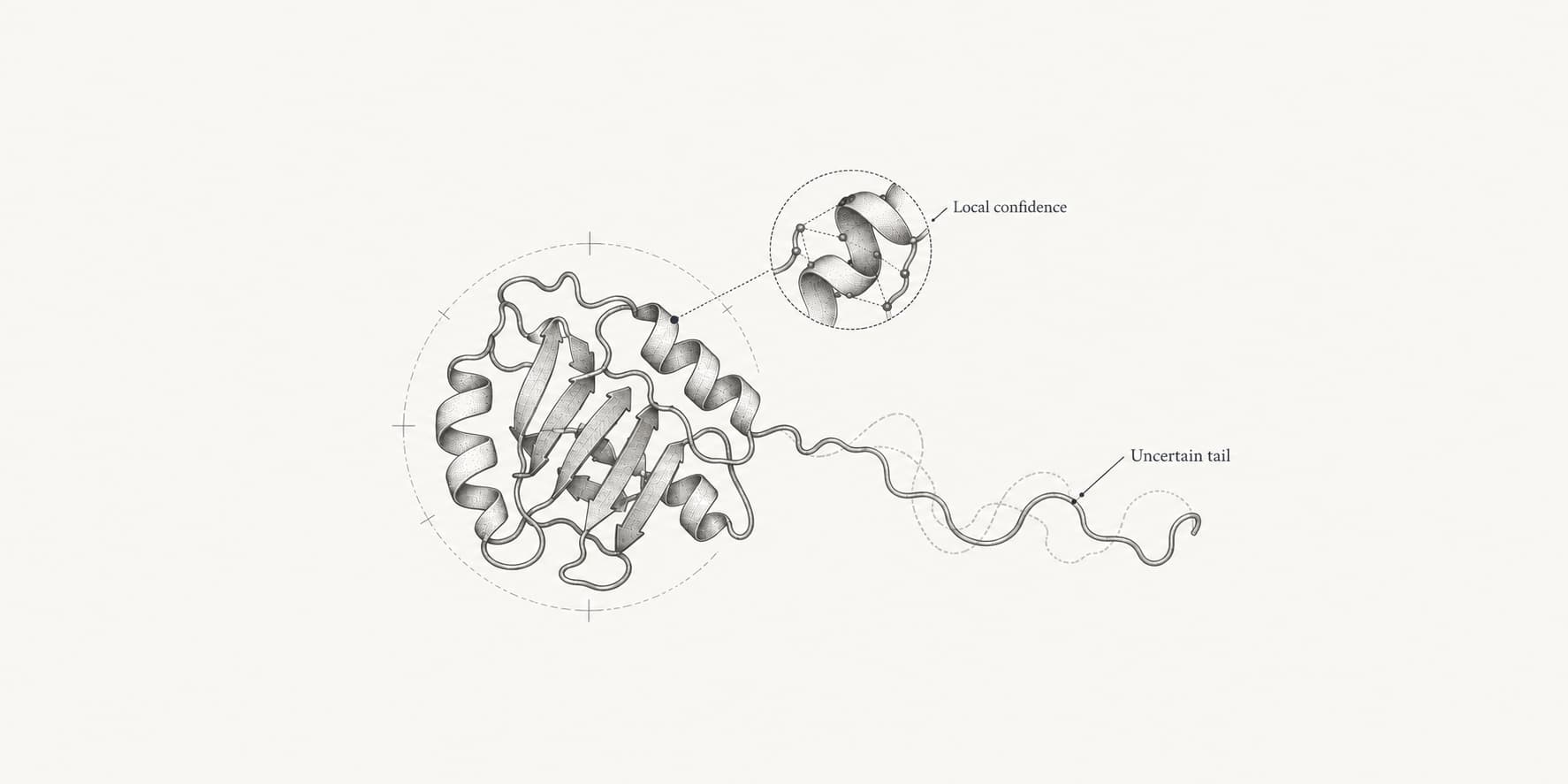
What is pLDDT, and what counts as a good score
pLDDT is the per-residue confidence score that AlphaFold, ESMFold and Boltz attach to predicted structures. Learn what the 90, 70 and 50 cutoffs mean and why a low score is not always a failure.
Structures ·
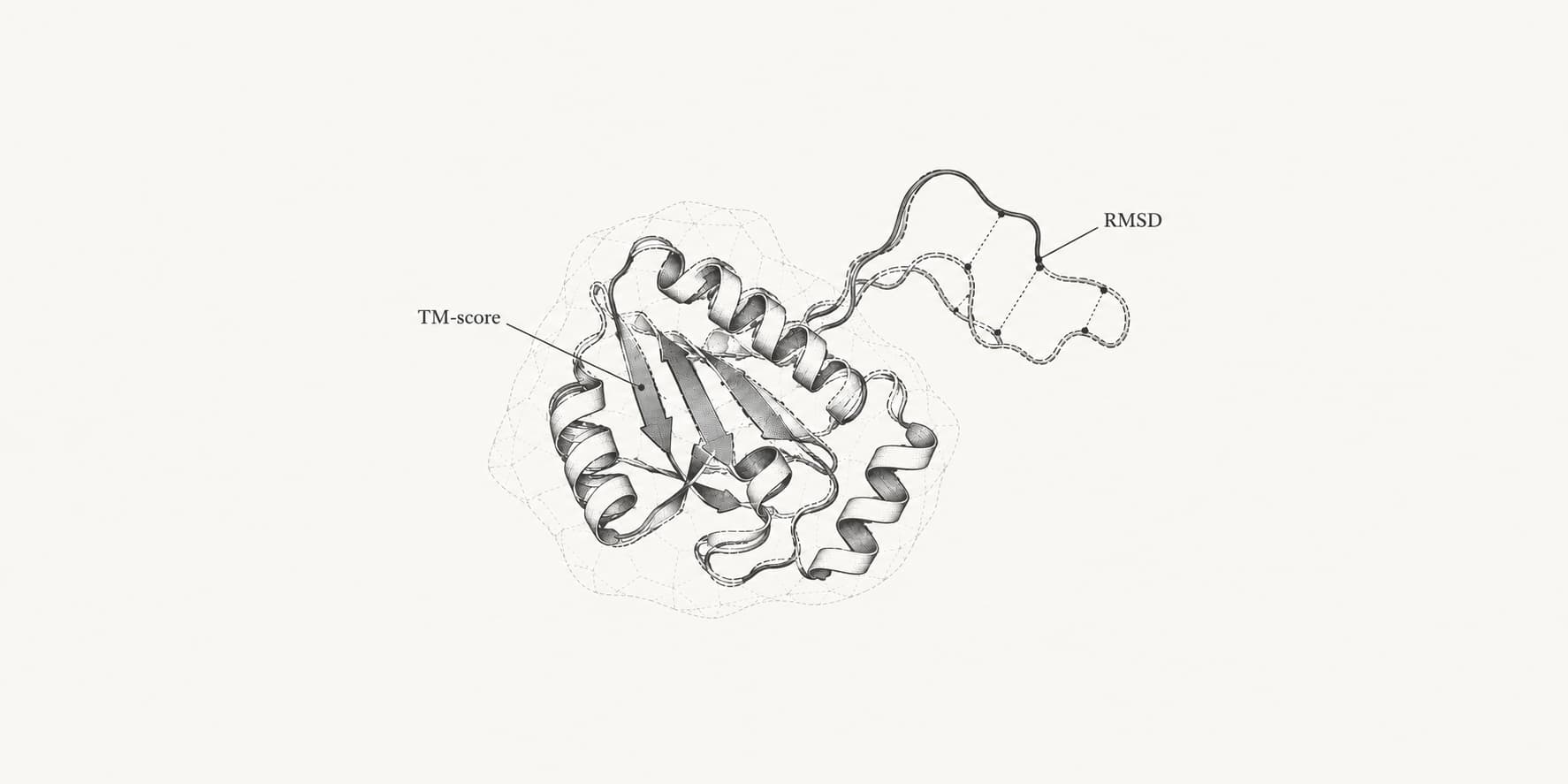
TM-score vs RMSD
RMSD and TM-score both compare two protein structures, but they answer different questions. Learn how each is calculated, what values count as good, and which one to use for prediction, fold search, docking or design.
Drugs ·
Insulin prices and price history in the United States
Trace U.S. insulin price history, the gap between list and net prices, the 2023–2024 price cuts, and what the Medicare insulin cap means in 2026.
Proteins ·
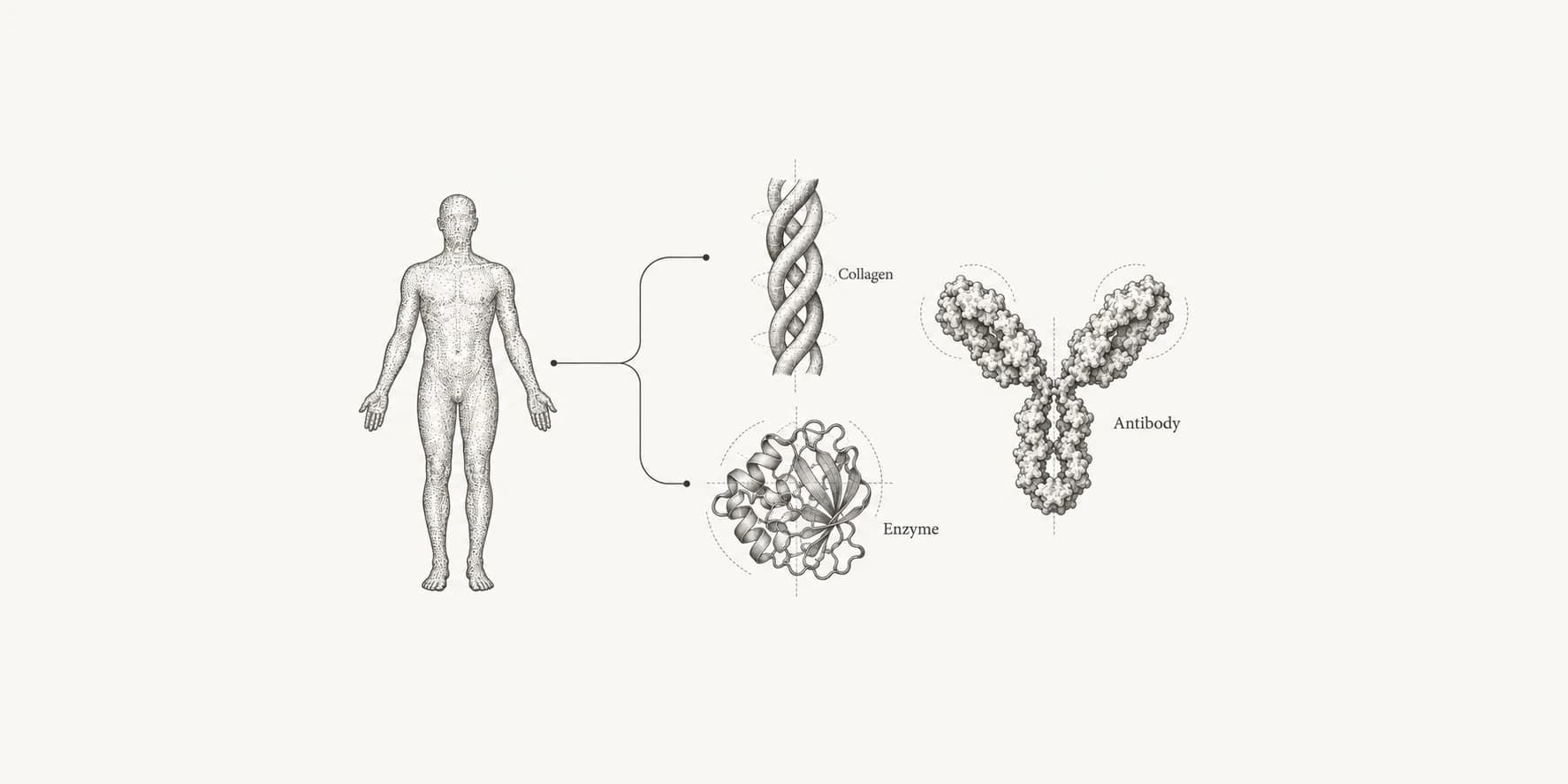
How many types of proteins are in the human body?
The human body makes nearly 20,000 distinct proteins, grouped into about seven functional types. Collagen alone has 28 types, and every protein is built from 20 standard amino acids.
Cells ·
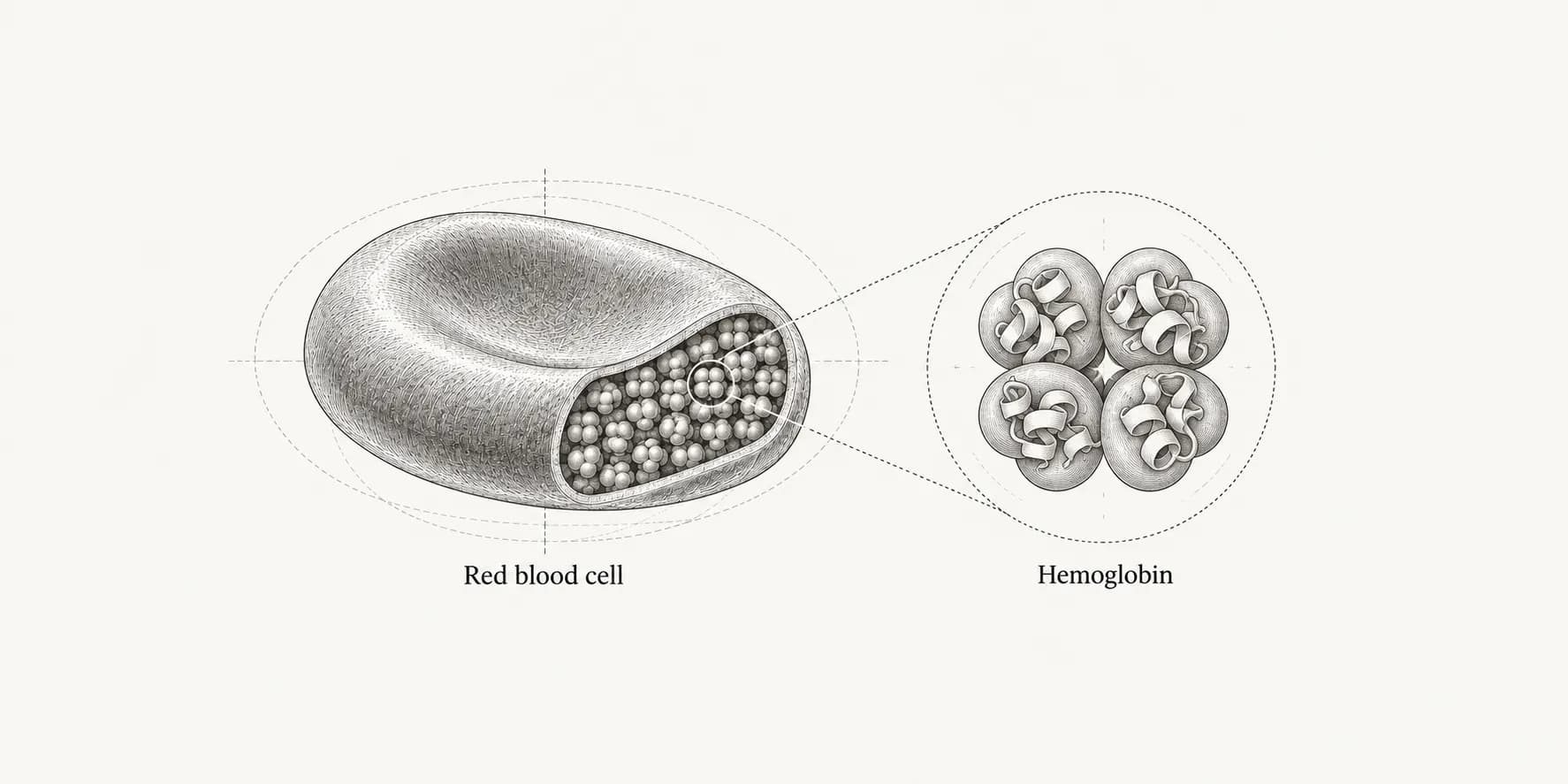
How many hemoglobin molecules are in a red blood cell?
A typical adult red blood cell holds about 270 million hemoglobin molecules, or about 1.1 billion heme groups. See how the count is calculated and why textbooks quote 250 to 300 million.
Proteins ·
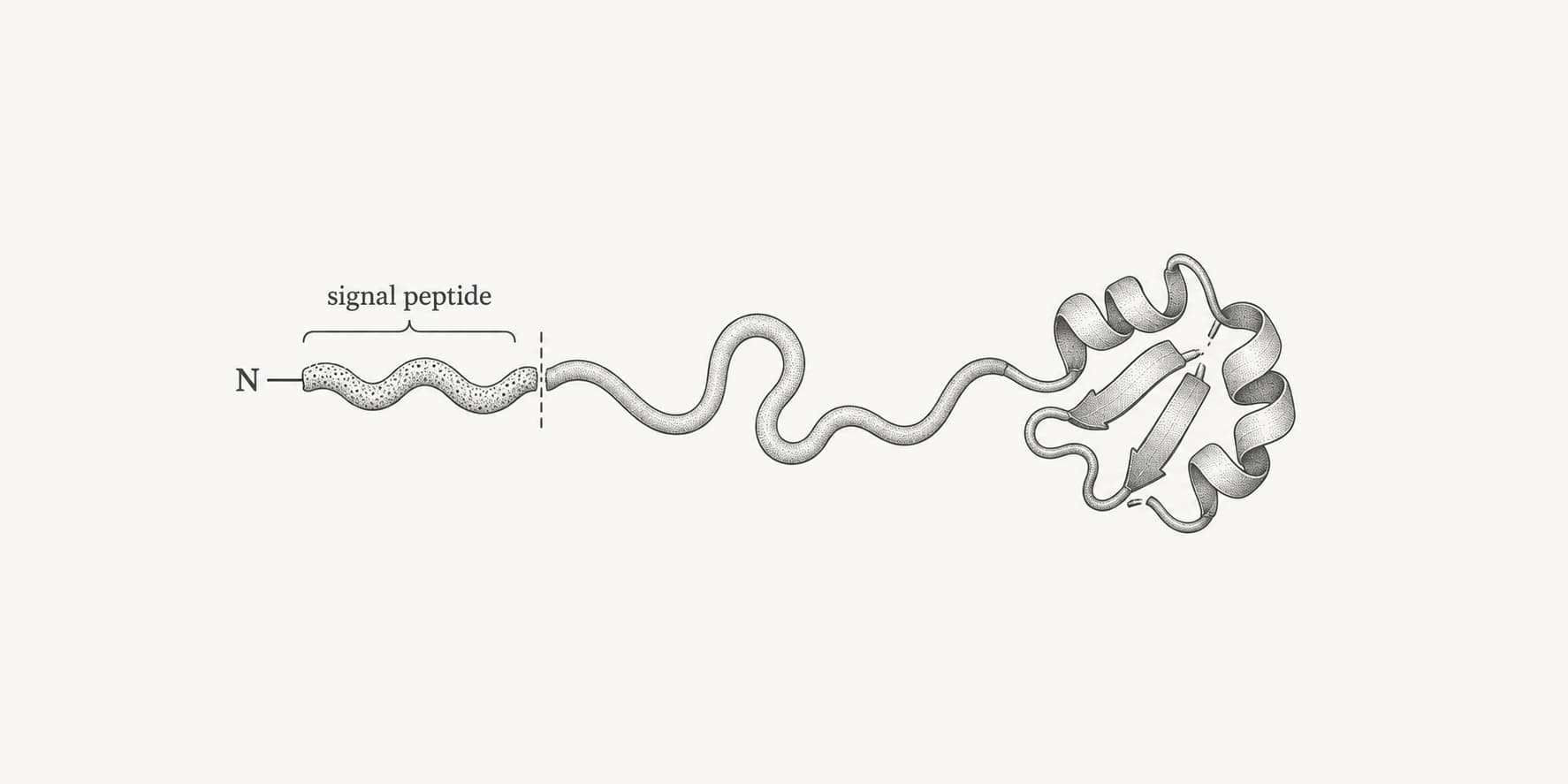
SignalP 6.0: official server, tutorial, and result interpretation
SignalP 6.0 predicts N-terminal signal peptides, their class, biochemical regions, and cleavage sites using a protein language model and conditional random field.
Drugs ·
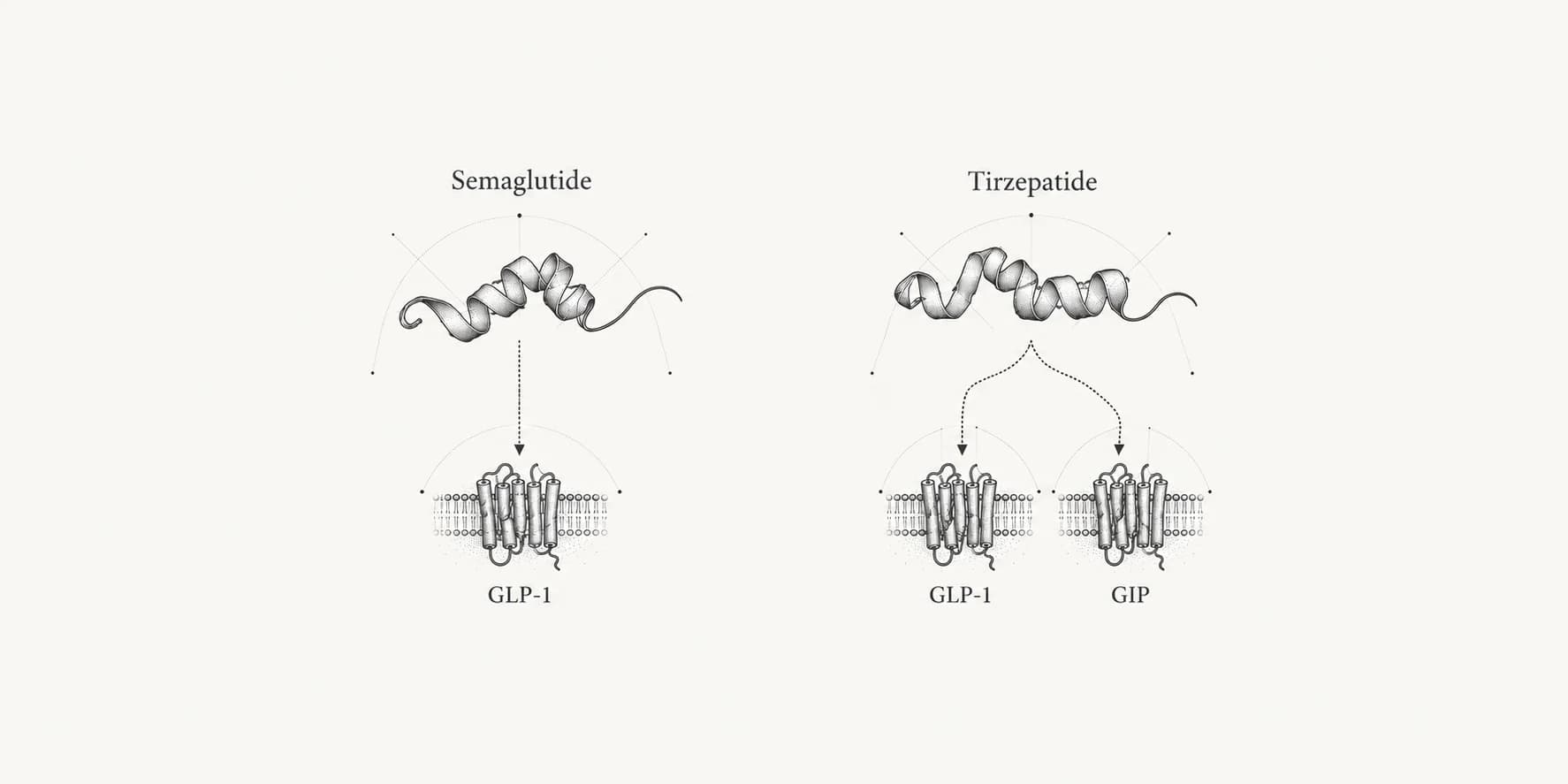
Semaglutide vs tirzepatide
Semaglutide (Ozempic, Wegovy) vs tirzepatide (Mounjaro, Zepbound): head-to-head weight loss and diabetes results, side effects and U.S. prices, with sources.
Drugs ·
What is semaglutide?
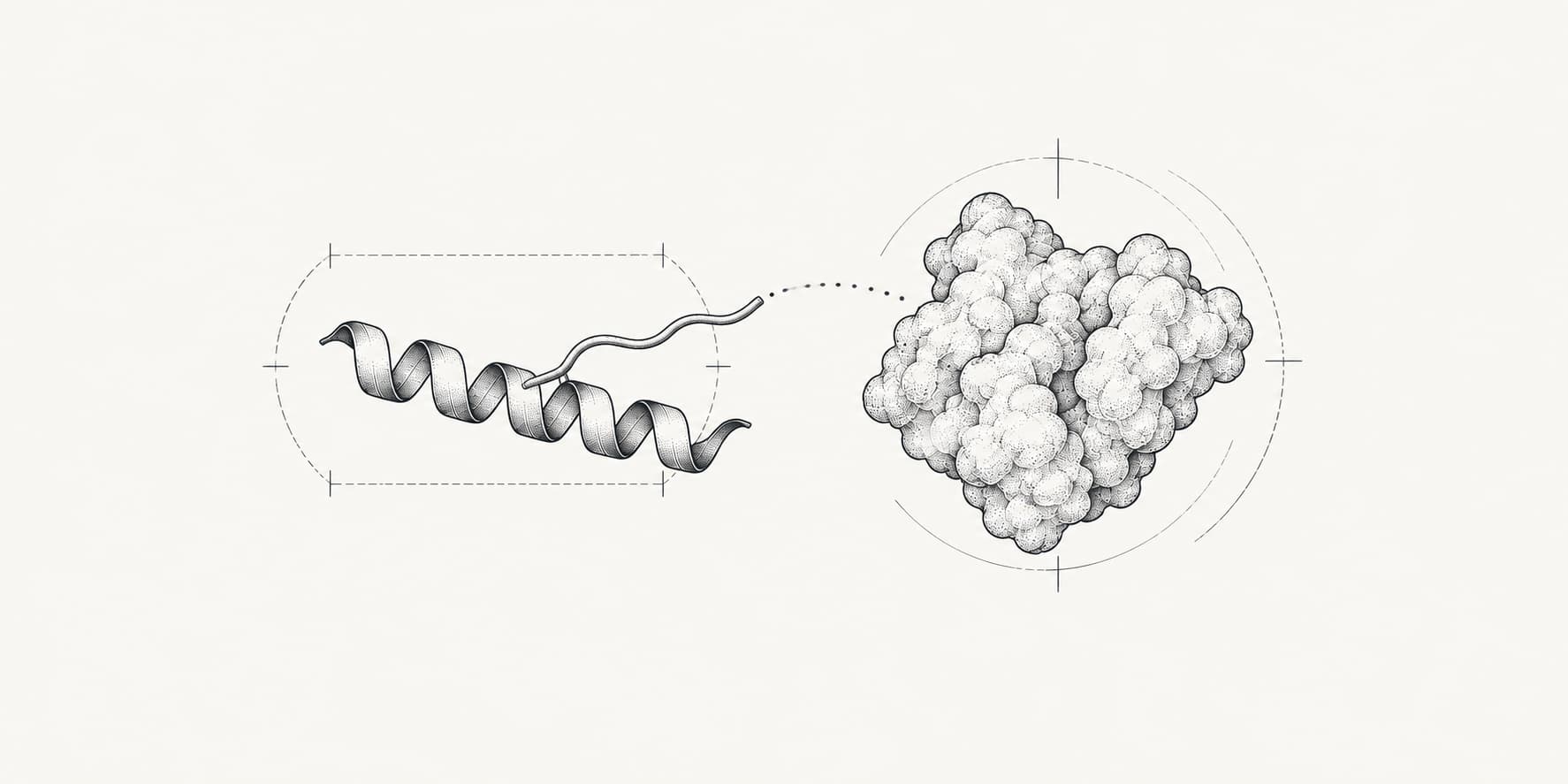
Semaglutide’s amino-acid sequence, molecular weight, GLP-1 mechanism and oral delivery, with our molecular calculations and audit of two PDB structures.
Proteins ·
What is the average size of a protein?
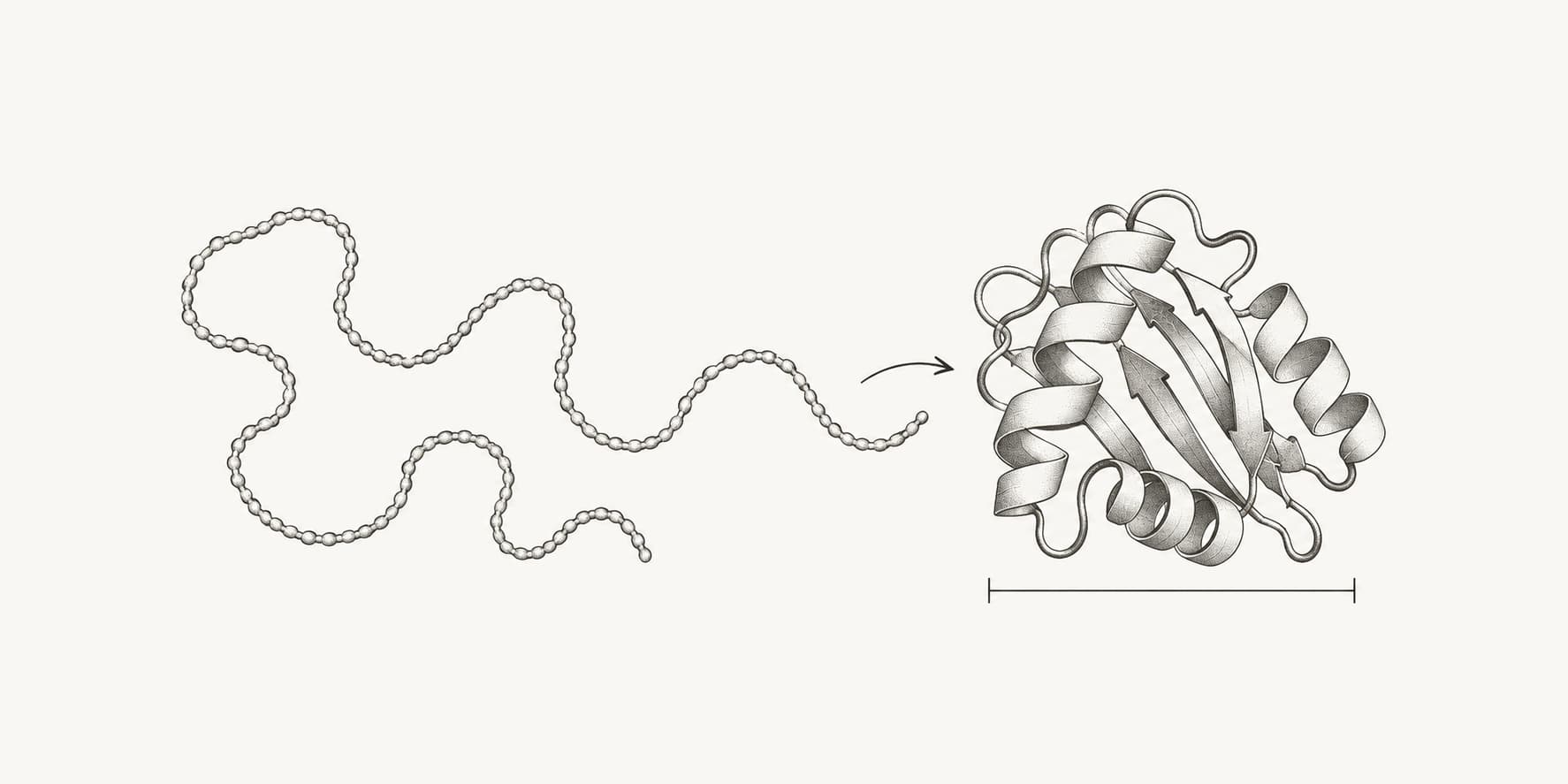
A typical protein is about 300–400 amino acids, 30–50 kDa, and 3–6 nanometers across when folded. See current proteome data and common examples.
Proteins ·
How long do proteins last in the body?
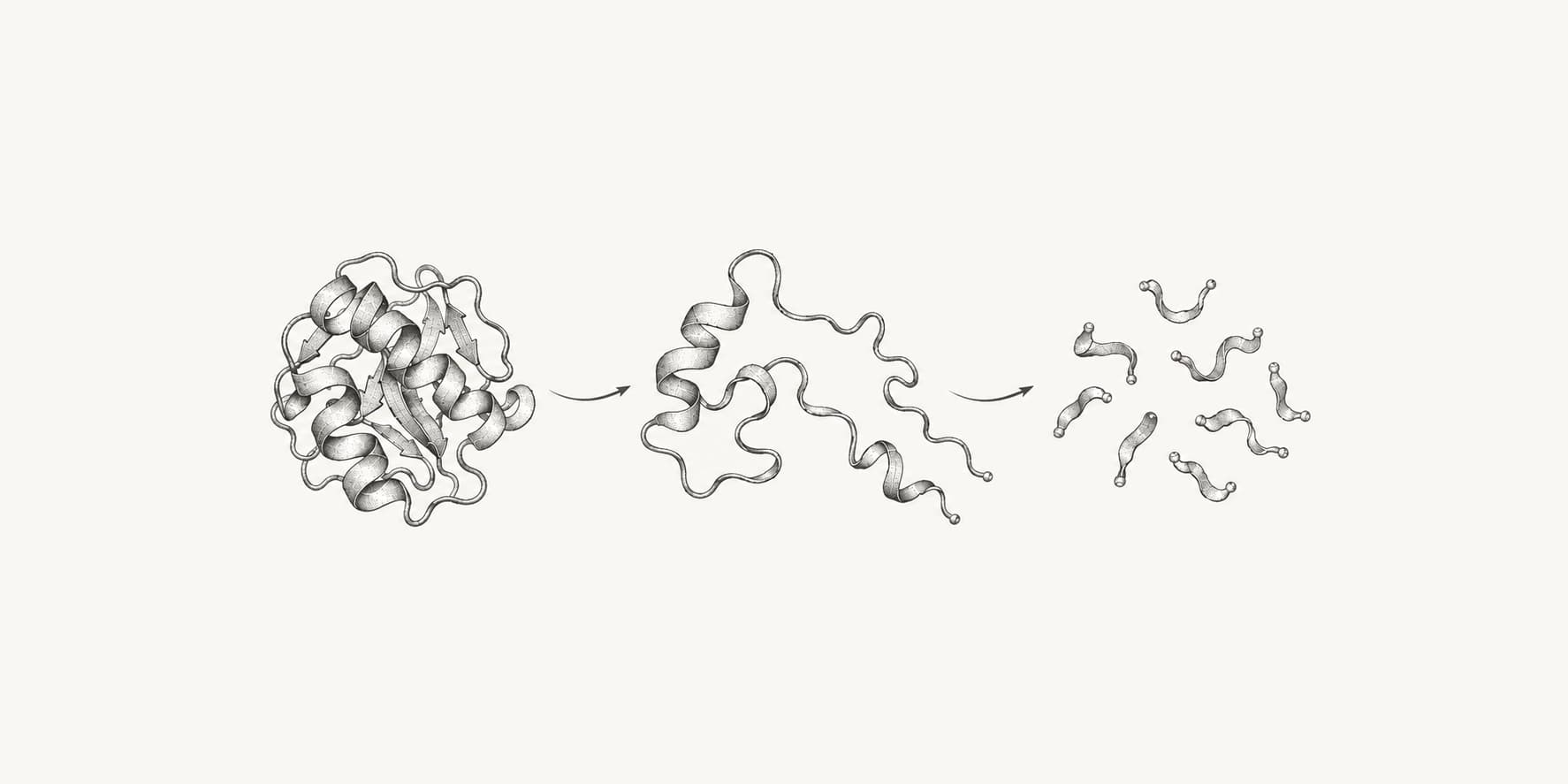
Protein half-lives range from minutes to a lifetime. See measured medians, tissue differences, and why cycloheximide chase and isotope-labeling studies give different results.
Proteins ·
How many enzymes are in the human body?
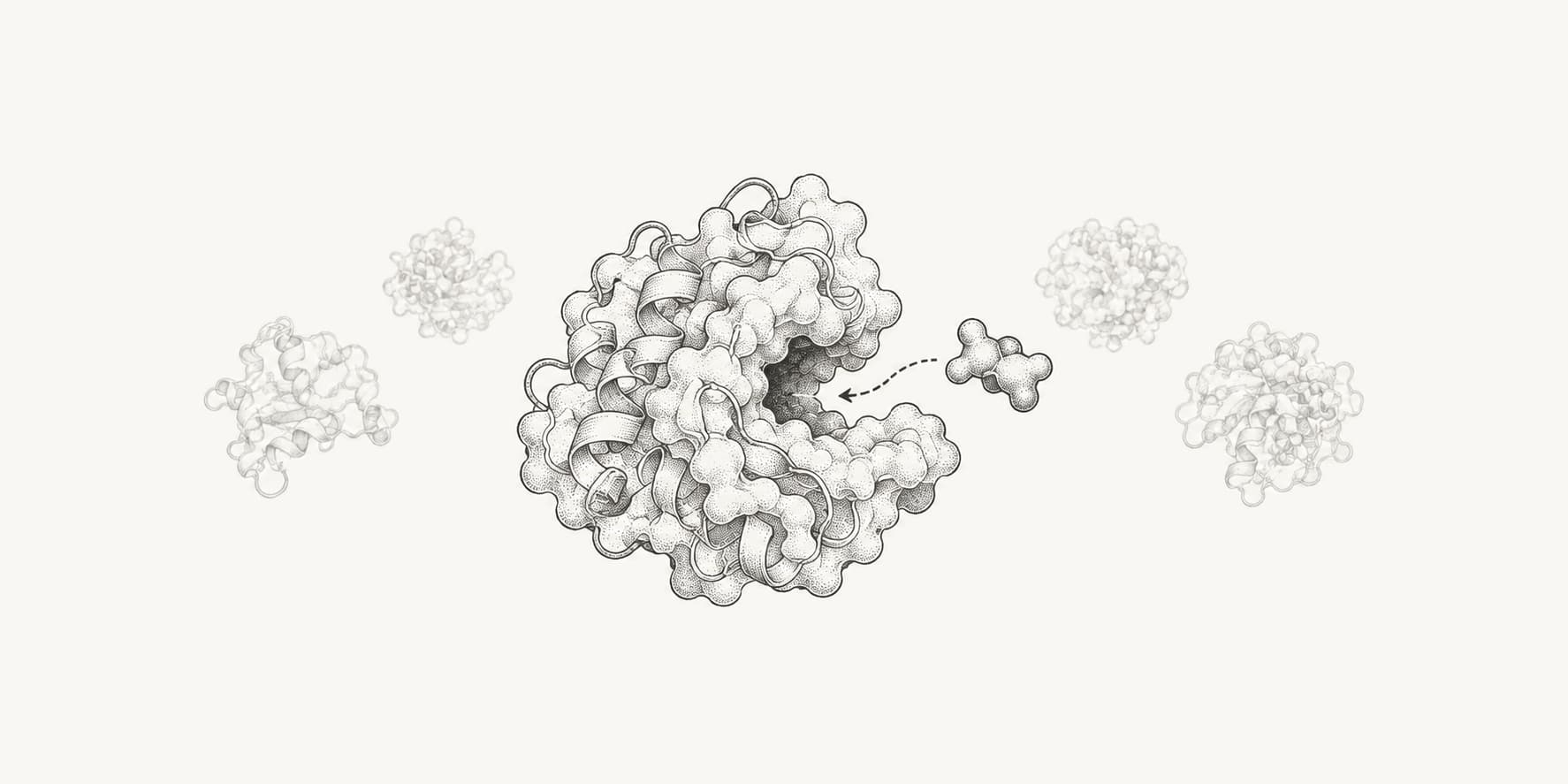
Humans have about 3,800 enzyme-coding genes. Gene counts, reviewed enzyme proteins, EC activities, isoenzymes, and physical molecules give different totals.