TL;DR
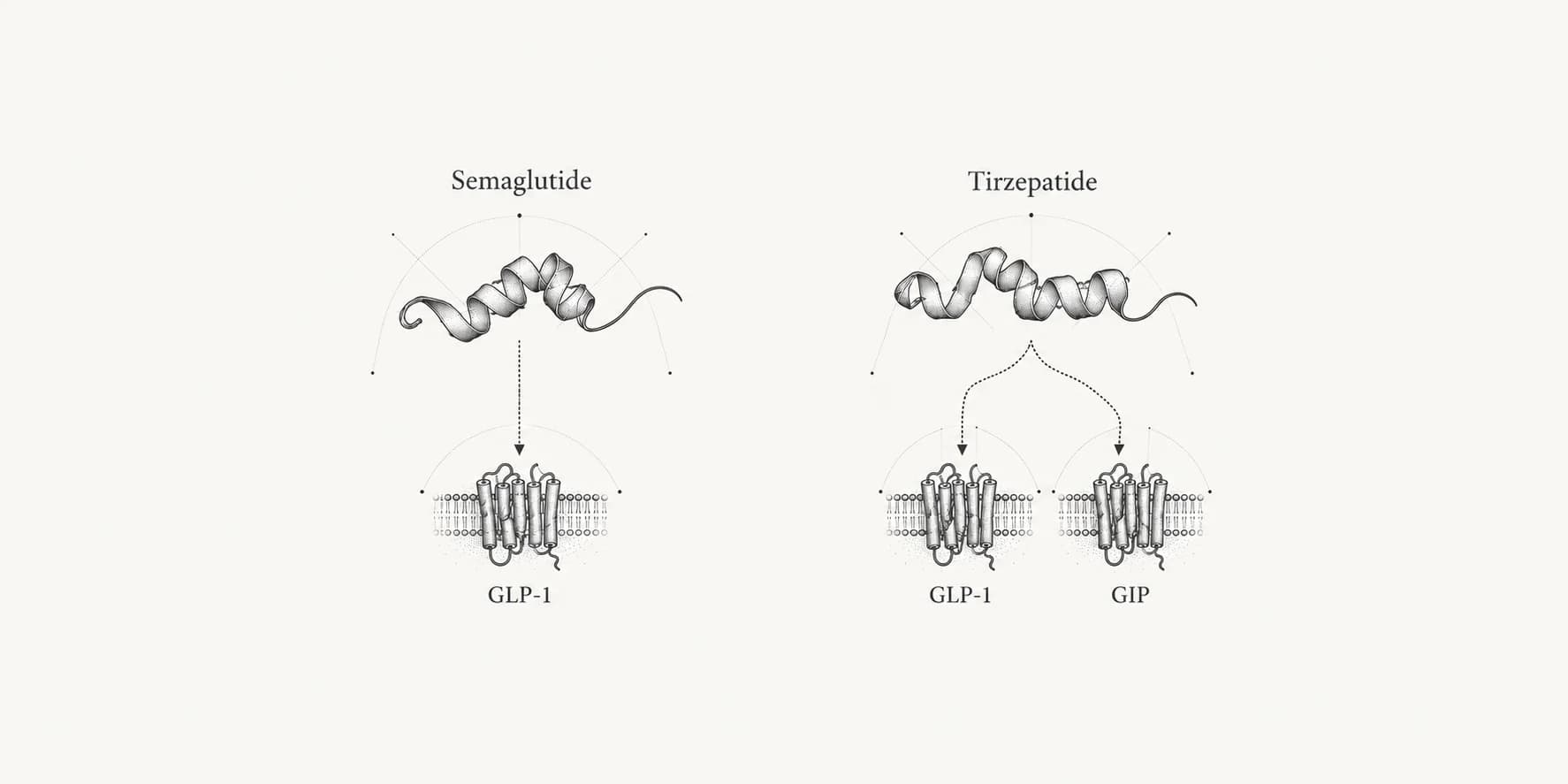
- Tirzepatide is not the same as Ozempic. Ozempic contains semaglutide, which activates the GLP-1 receptor; tirzepatide, sold as Mounjaro and Zepbound, activates both GIP and GLP-1 receptors.
- In SURMOUNT-5, the only head-to-head obesity trial, adults without diabetes lost an average of 20.2% of body weight with tirzepatide and 13.7% with semaglutide over 72 weeks.
- In SURPASS-2, tirzepatide lowered HbA1c by 2.01 to 2.30 percentage points, compared with 1.86 points for the 1 mg Ozempic dose, in adults with type 2 diabetes.
- Side effects were similar in kind. In SURMOUNT-5, about 44% of participants on each drug reported nausea, while vomiting was less common with tirzepatide (15% vs 21%).
- U.S. manufacturer self-pay prices checked in September 2026 ranged from $349 to $499 a month for Ozempic and from $299 to $449 a month for Zepbound, depending on dose and refill timing.
Semaglutide and tirzepatide are two of the most widely discussed medicines for type 2 diabetes and obesity, and they are often treated as if they were interchangeable. They are not. Semaglutide, the active ingredient in Ozempic and Wegovy, mimics a single gut hormone, GLP-1. Tirzepatide, sold as Mounjaro and Zepbound, is one molecule engineered to act on two hormone receptors, GLP-1 and GIP.
The two drugs have now been compared directly. In the head-to-head trials published so far, tirzepatide produced more weight loss and somewhat larger reductions in blood sugar, with a similar pattern of mostly gastrointestinal side effects. Those trials tested particular doses in particular people, however, and some questions that matter to patients, including protection against heart attacks and strokes, have not been settled by a direct comparison. The sections below follow that order: what each drug is, what the trials found, what treatment costs, and what remains open.
Is tirzepatide the same as Ozempic?
No. Ozempic contains semaglutide, whereas Mounjaro and Zepbound contain tirzepatide, a different peptide with a different mechanism.[1][2] Each molecule is sold under more than one name because the brands are approved for different uses: Ozempic and Mounjaro for type 2 diabetes, and Wegovy and Zepbound for chronic weight management.[3][4] "Tirzepatide versus Mounjaro" is therefore not a comparison at all. Mounjaro is tirzepatide, just as Ozempic is semaglutide.
| Feature | Semaglutide | Tirzepatide |
|---|---|---|
| Receptors activated | GLP-1 | GIP and GLP-1 |
| Brands for type 2 diabetes | Ozempic (injection and tablets), Rybelsus | Mounjaro |
| Brands for weight management | Wegovy (injection and tablets) | Zepbound |
| How it is taken | Weekly injection or daily tablet | Weekly injection |
| Approximate elimination half-life | One week | Five days |
Both drugs are incretin-based medicines. Incretins are hormones released by the gut after a meal that prompt the pancreas to release insulin when blood sugar is high; GLP-1 also slows stomach emptying and reduces appetite. GIP, or glucose-dependent insulinotropic polypeptide, is a second incretin hormone with its own receptor. Tirzepatide was designed as a single peptide that activates both receptors, which is why it is described as a dual agonist.[6] Acting on two receptors does not mean the medicine contains two drugs, nor that it is twice as strong. What the design achieves in people is a question for the clinical trials.
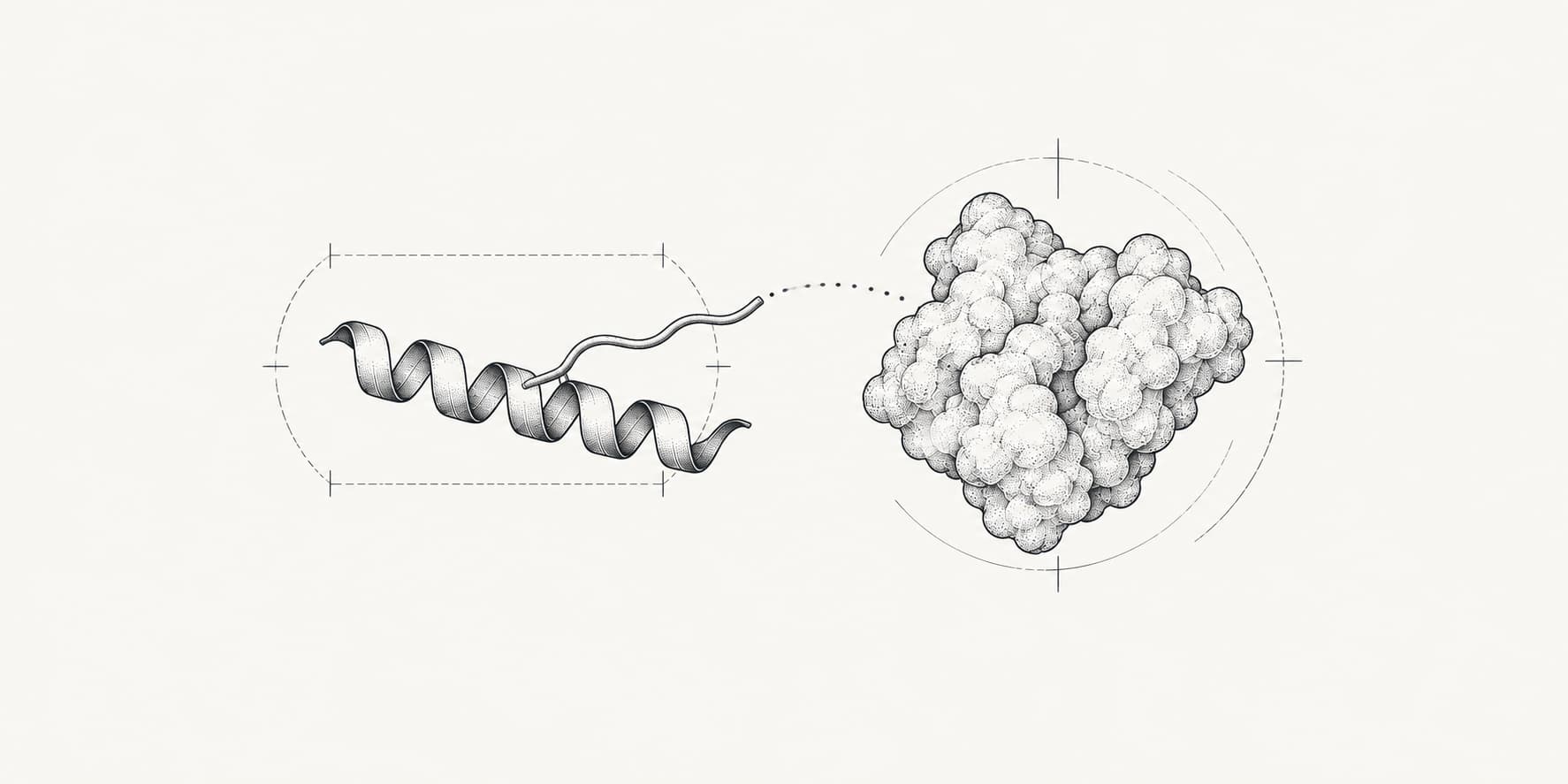
Chemically, the two are close relatives. Each is a modified peptide carrying a fatty side chain that lets it bind albumin, an abundant blood protein, which slows its clearance and allows once-weekly dosing. Semaglutide has a 31-residue backbone with a C18 fatty acid chain, and tirzepatide a 39-residue backbone with a C20 chain.[1][2][6] In our molecular calculations, made with the same descriptor method for both, the complete molecules weigh 4,113.64 and 4,813.53 g/mol, respectively. Size says little about effect, however; only the trials can show which works better.
Is tirzepatide better than semaglutide for weight loss?
In the only head-to-head trial in people with obesity, tirzepatide produced more weight loss at the doses tested. SURMOUNT-5 randomly assigned 751 adults with obesity, or with overweight and a weight-related condition, but without type 2 diabetes, to weekly injections of tirzepatide or semaglutide for 72 weeks. Each participant was escalated to the highest dose they could tolerate: 10 or 15 mg of tirzepatide, or 1.7 or 2.4 mg of semaglutide. Average weight loss was 20.2% with tirzepatide and 13.7% with semaglutide, and waist circumference fell by 18.4 cm and 13.0 cm, respectively.[7] For a person starting at 100 kg, those averages correspond to about 20 kg and 14 kg.
Averages hide a wide spread of individual responses, so the trial also reported how many participants crossed successive thresholds. About half of those taking tirzepatide lost at least a fifth of their body weight, compared with about a quarter of those taking semaglutide.[8]
| Outcome | Tirzepatide | Semaglutide |
|---|---|---|
| Average weight reduction | 20.2% | 13.7% |
| Participants losing at least 10% | 81.6% | 60.5% |
| Participants losing at least 15% | 64.6% | 40.1% |
| Participants losing at least 20% | 48.4% | 27.3% |
| Participants losing at least 25% | 31.6% | 16.1% |
Three features of the trial limit how far this result extends. It was open-label, so participants and investigators knew which drug was being given, and it was funded by Eli Lilly, which makes tirzepatide. Its semaglutide doses were those used for Wegovy, up to 2.4 mg, rather than Ozempic's maximum of 2 mg. It also did not include the newer 7.2 mg semaglutide dose, which produced an average loss of 18.8% over 72 weeks in a separate trial.[7][1][3] Separate trials enrol different people and are not directly comparable, so whether higher semaglutide doses would close the gap has not been tested.
Is Mounjaro better than Ozempic for type 2 diabetes?
For blood-sugar control and weight, the direct evidence favors Mounjaro, although by a smaller margin than in obesity. SURPASS-2 compared three doses of tirzepatide with semaglutide 1 mg, an Ozempic dose, in 1,879 adults with type 2 diabetes over 40 weeks. HbA1c, a blood test reflecting average blood sugar over the previous two to three months, fell by 2.01, 2.24 and 2.30 percentage points with tirzepatide 5, 10 and 15 mg, compared with 1.86 points with semaglutide. Participants taking tirzepatide also lost 1.9 to 5.5 kg more weight, from an average starting weight of 93.7 kg.[9] Like SURMOUNT-5, the trial was open-label and sponsored by Lilly, and it did not include Ozempic's highest, 2 mg dose.
Heart outcomes are a different matter, because no trial has compared the two drugs on heart attacks, strokes or cardiovascular death. Each has instead been tested against a different comparator. In SELECT, semaglutide 2.4 mg lowered the risk of a combined outcome of cardiovascular death, heart attack or stroke by 20% relative to placebo in 17,604 adults with cardiovascular disease and overweight or obesity but no diabetes.[10] In SURPASS-CVOT, tirzepatide was compared with dulaglutide, an older GLP-1 medicine already known to reduce cardiovascular events, in 13,299 adults with type 2 diabetes and cardiovascular disease. The same combined outcome occurred in 12.2% of the tirzepatide group and 13.1% of the dulaglutide group, showing that tirzepatide was at least as protective without proving it superior.[11] Because the comparators and populations differ, these trials cannot rank the two medicines for heart protection.
Tirzepatide vs semaglutide side effects
The two drugs share the same main side effects, which are gastrointestinal and most common while the dose is being increased. In SURMOUNT-5, about 44% of participants in each group reported nausea, and diarrhea and constipation were similarly common with both. Vomiting was less frequent with tirzepatide, whereas reactions at the injection site were more frequent.[12]
| Event | Tirzepatide, n=374 | Semaglutide, n=376 |
|---|---|---|
| Nausea | 163 (43.6%) | 167 (44.4%) |
| Constipation | 101 (27.0%) | 107 (28.5%) |
| Diarrhea | 88 (23.5%) | 88 (23.4%) |
| Vomiting | 56 (15.0%) | 80 (21.3%) |
| Injection-site reaction | 32 (8.6%) | 1 (0.3%) |
| Hair loss | 31 (8.3%) | 23 (6.1%) |
| Any serious adverse event | 18 (4.8%) | 13 (3.5%) |
Fewer participants stopped tirzepatide because of adverse events, 6.1% compared with 8.0% for semaglutide. The trial was not designed to compare safety, however, so these differences describe what happened in this study rather than establishing that one drug is safer.[7][8]
The prescribing information for both medicines carries the same boxed warning about thyroid C-cell tumors seen in rodents, and both warn about pancreatitis, gallbladder disease and severe gastrointestinal reactions.[1][2] One practical difference concerns birth-control pills. Because tirzepatide slows stomach emptying, which can make oral contraceptives less effective, its label advises switching to a non-oral method or adding a barrier method for four weeks after starting treatment and after each dose increase.[4]
Both drugs also reduce lean mass along with fat, which is why muscle loss is a common concern. In a SURMOUNT-1 substudy of 160 participants scanned by DXA, a low-dose X-ray method that separates fat from lean tissue, about three-quarters of the weight lost with tirzepatide was fat.[13] A 140-person STEP 1 substudy likewise found reductions in both fat and lean mass with semaglutide.[14] These separate studies cannot show which drug preserves more muscle. DXA lean mass includes organs and body water as well as skeletal muscle, and neither study measured strength.
Tirzepatide vs Ozempic cost
In the United States, what a patient pays depends far more on insurance and manufacturer programs than on the molecule. List prices, which manufacturers charge wholesalers before rebates, are similar for the two diabetes brands: $997.58 per Ozempic pen, a month's supply, and $1,112.16 per monthly fill of Mounjaro.[15][16] Self-pay prices offered directly by the manufacturers are much lower.
| Medicine and dose | Self-pay price per month |
|---|---|
| Ozempic injection, 0.25, 0.5 or 1 mg | $349 |
| Ozempic injection, 2 mg | $499 |
| Wegovy injection, 0.25 to 2.4 mg | $349 |
| Wegovy HD injection, 7.2 mg | $399 |
| Wegovy tablets, 1.5 to 25 mg | $149 to $299 |
| Zepbound vial or KwikPen, 2.5 mg | $299 |
| Zepbound vial or KwikPen, 5 mg | $399 |
| Zepbound vial or KwikPen, 7.5 to 15 mg | $449 if refilled within 45 days; otherwise $499 (7.5 mg) or $699 (10 to 15 mg) |
At maintenance doses, the gap between the weight-management brands is modest: $349 a month for Wegovy up to 2.4 mg and $449 for Zepbound at 7.5 mg or more, provided refills are on time. Introductory offers lower the first fills further; new NovoCare patients pay $199 for each of their first two months at the lowest Ozempic or Wegovy doses, through December 31, 2026.[17][18] An introductory price is not the continuing monthly cost, and none of these figures describes what an insured patient pays.
So which is better, semaglutide or tirzepatide?
The answer depends on the outcome that matters. For weight loss and blood-sugar control, direct trials favor tirzepatide at the doses compared. For heart and kidney protection, semaglutide has the longer record of placebo-controlled outcome trials, reflected in Ozempic's cardiovascular and kidney indications, while tirzepatide's cardiovascular evidence comes from a comparison with another GLP-1 medicine.[1][11] Side effects look broadly similar, differing in individual symptoms rather than in overall pattern.
| Question | Best direct evidence | Result |
|---|---|---|
| Weight loss without diabetes | SURMOUNT-5: 751 adults, 72 weeks | 20.2% vs 13.7% average loss, favoring tirzepatide |
| Blood sugar in type 2 diabetes | SURPASS-2: 1,879 adults, 40 weeks | HbA1c fell 2.01 to 2.30 points with tirzepatide vs 1.86 with semaglutide 1 mg |
| Heart attacks, strokes and cardiovascular death | No head-to-head trial | Semaglutide beat placebo (SELECT); tirzepatide matched dulaglutide (SURPASS-CVOT) |
| Side effects | SURMOUNT-5 | Similar nausea; less vomiting and more injection-site reactions with tirzepatide |
| Muscle preservation | No head-to-head trial | Separate body-composition studies cannot rank the two |
In practice, the choice often turns on factors the trials do not settle: which drug insurance covers, the dose a person tolerates, and whether they can stay on treatment. The two should not be taken together; Zepbound's label advises against combining it with other tirzepatide products or GLP-1 medicines.[4] The trial results above are best read as evidence about specific regimens in specific people, a starting point for a decision made with a clinician rather than a verdict for every patient.