How many peptide drugs are FDA approved?
A verified list from FDA records, and why published totals disagree

Matic Broz, PhD16 min
Semaglutide and tirzepatide made peptides the most talked-about drugs of the decade, but they joined a long list. Vancomycin, cyclosporine, leuprolide and the oxytocin used to induce labor are peptides too. By our count of FDA records, the FDA has approved 98 peptide drugs, each built on a defined chain of 2 to 50 amino acids, and 77 of them are still marketed in the United States as of October 29, 2026.
The total depends more on the definition than on the data. Leave out the 19 antibiotics, antifungals and immunosuppressants that microbes make, and 79 remain. Add the eight insulins, which sit just above the length cutoff, and the total is 106. The "more than 80" quoted in many reviews is a worldwide count that includes insulin. Below are the full list, the rules behind each number and a downloadable dataset.
How many peptide drugs has the FDA approved?
A peptide drug, as counted here, is an approved active ingredient built on a defined chain of 2 to 50 amino acids joined by peptide bonds. Rings, unusual or mirror-image amino acids, fatty acid tails, PEG chains and attached radioactive metals are all allowed. Each molecule counts once, at its first approval, however many brands, salts or formulations followed.
We read approval dates, application numbers and marketing status from the FDA's Drugs@FDA data files released on October 28, 2026, and the licensing status of the few peptides regulated as biologics from the Purple Book.[1][2] Ninety-eight molecules qualify. Twenty-one are no longer sold in the US, and one of those, the peptide-drug conjugate melphalan flufenamide (Pepaxto), lost its approval in February 2024.[3]
| Count | What it counts |
|---|---|
| 94 | Peptides of 2 to 40 amino acids, the FDA's own line between peptides and proteins |
| 98 | Peptides of 2 to 50 amino acids, the count used in this guide |
| 77 | The 98, limited to drugs still marketed in the United States |
| 79 | The 98 without antibiotics, antifungals and immunosuppressants made by microbes |
| 72 | The 79 without radiolabelled imaging and therapy agents |
| 106 | The 98 plus the eight insulin molecules |
Most published lists also stop before the newest approvals. Between February and August 2026 the FDA approved five new peptide drugs: navepegritide for achondroplasia, icotrokinra for plaque psoriasis, bulevirtide for chronic hepatitis delta, enlicitide for high LDL cholesterol and rusfertide for polycythemia vera.[5] Icotrokinra and enlicitide are tablets, which is still unusual for a peptide.
What counts as a peptide drug?
Chemists usually call chains of up to about 50 amino acids peptides and longer ones proteins, but the line is a convention. The FDA drew its own in 2020. Since then a protein, for regulatory purposes, is an amino acid polymer with a defined sequence longer than 40 amino acids, and chains that pair up as they do in nature are counted together.[4]
That rule moved products. On March 23, 2020, the FDA converted the drug applications of every product above the line into biologics licenses, including all insulins and three peptides of 41 to 44 amino acids: corticorelin (Acthrel), tesamorelin (Egrifta) and lixisenatide (Adlyxin).[6] Bulevirtide (Hepcludex), a 47-amino acid lipopeptide, was licensed as a biologic from the start when the FDA approved it in May 2026.[2][7]
We count up to 50 amino acids so that these four stay on the list; they are made and used like the shorter peptides around them. The dataset records each drug's length, so anyone who prefers the FDA's line can recount at 40, which gives 94.
Fifty also leaves insulin just outside. Human insulin has 51 amino acids in two chains held together by disulfide bonds, and its analogs carry 50 to 53. We list the eight insulin molecules approved by the FDA in the dataset and count them separately, so that the family is never split by a residue or two.
Some drugs are built from amino acids without being peptides in this sense. Bortezomib, ixazomib and carfilzomib are short amino acid chains that end in a reactive boronic acid or epoxyketone, and they work as covalent small-molecule proteasome inhibitors.
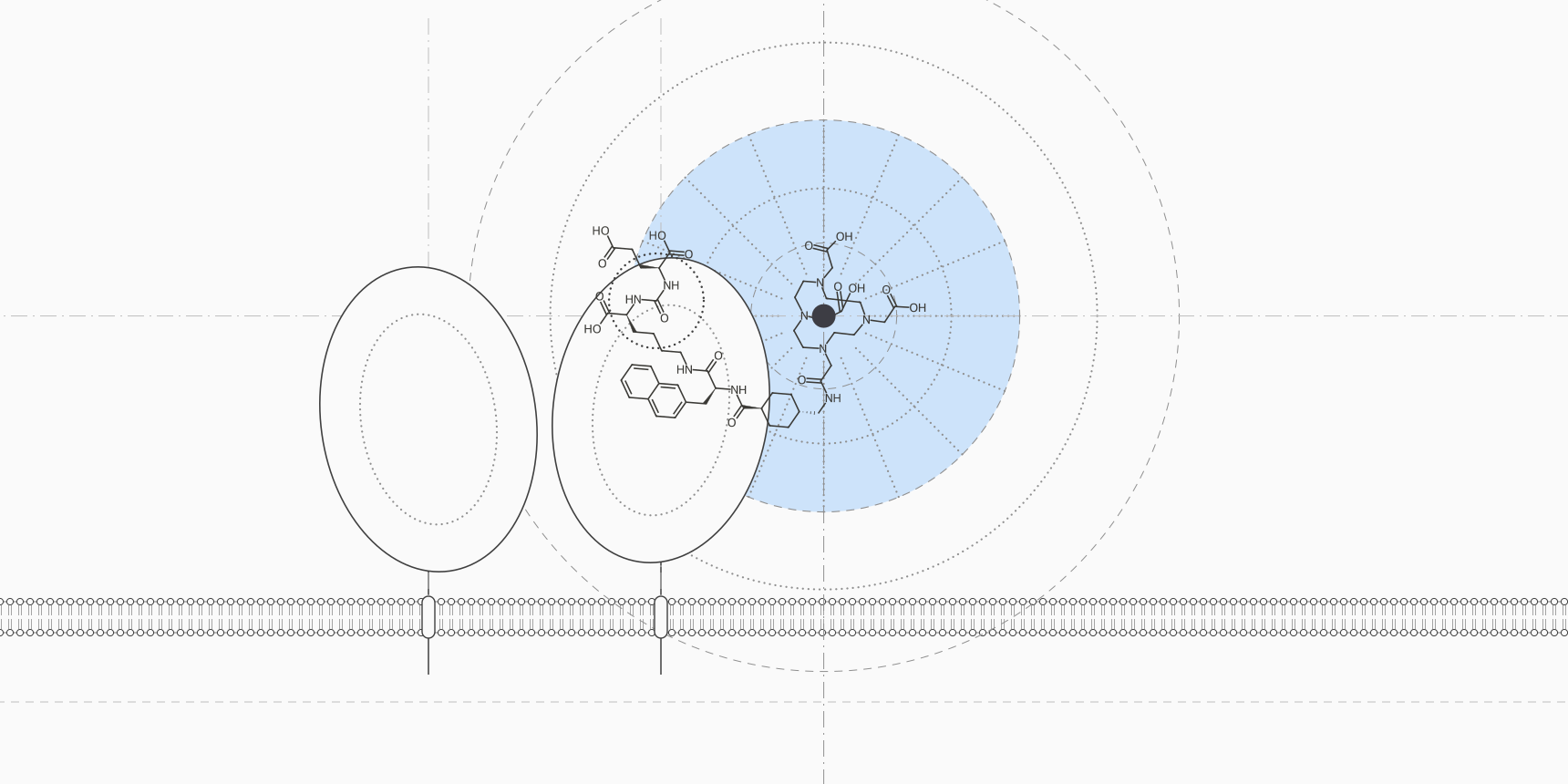
Glatiramer acetate is a random polymer of four amino acids with no defined sequence. PSMA agents such as lutetium Lu 177 vipivotide tetraxetan (Pluvicto) bind their target through a urea joining two amino acids rather than through a peptide chain. All are in the dataset, marked as not counted.
Peptides sold online as research chemicals are a different matter. BPC-157, TB-500 and similar products appear in neither Drugs@FDA nor the Purple Book, so none of them is an FDA-approved drug.[1][2]
How has the number of peptide approvals changed?
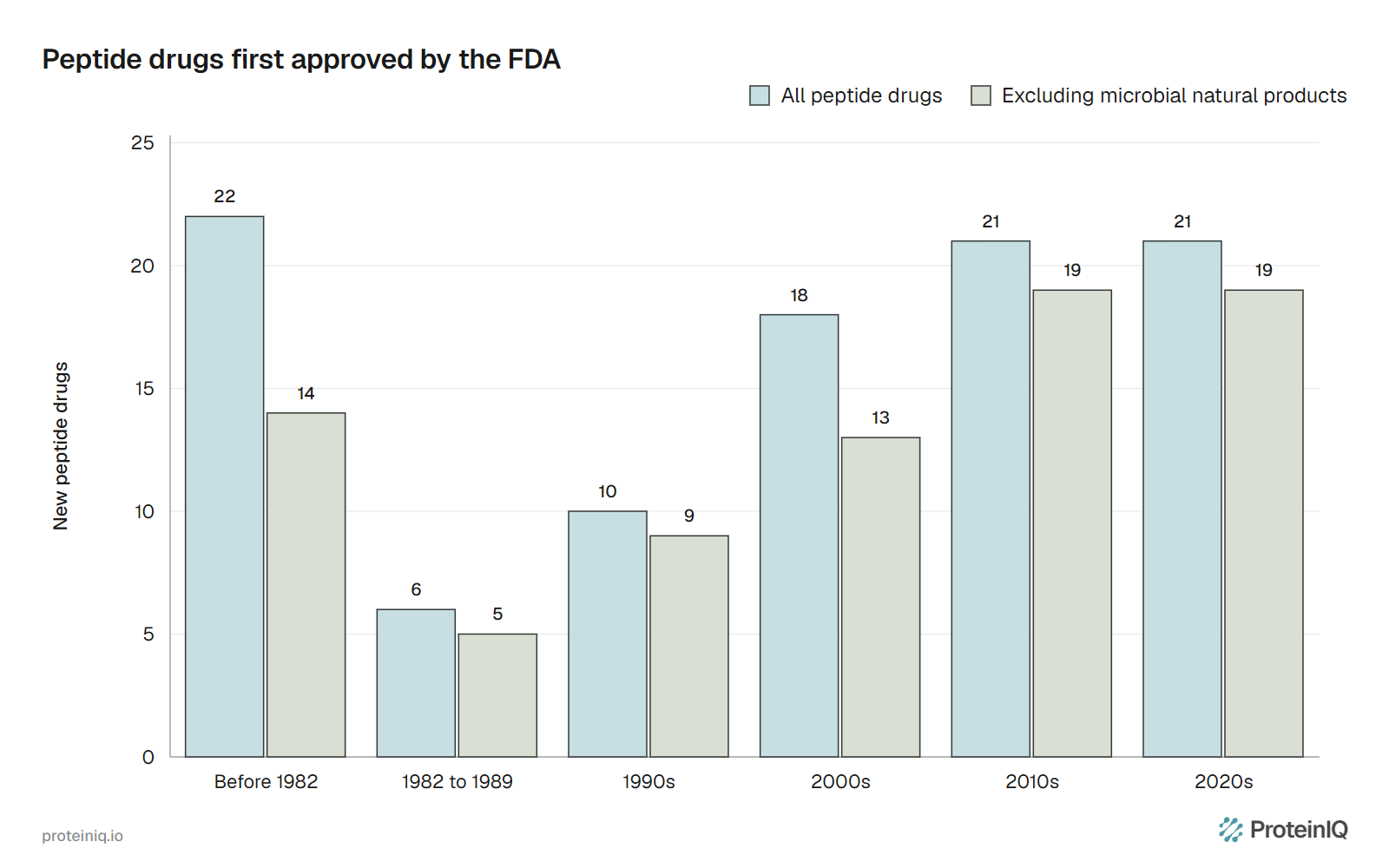
Peptide approvals came in two waves. Twenty-two of the 98 date from before 1982: hormones purified from animal glands or made by early peptide synthesis, such as corticotropin in 1950, glucagon in 1960 and desmopressin in 1978, alongside antibiotics such as bacitracin, polymyxin B and vancomycin.[1]
Approvals slowed in the 1980s and 1990s, when the new drugs were mostly analogs of known hormones, such as leuprolide, octreotide and goserelin. They picked up again after 2000 with longer-acting designs: the 2000s brought exenatide and the first echinocandin antifungals, and the 2010s the lipidated GLP-1 drugs among 21 peptide approvals. The 2020s matched that total in less than seven years.
As a share of new drugs, peptides remain small. From 2015 through 2022 the FDA's drug center approved 360 novel drugs, and 21 of them were peptides by our definition, or 5.8%.[8] The figure of about 10% for the same years comes from a 2023 review that also counted antibody-drug conjugates, an insulin, a proteasome inhibitor and, for 2022, several antibodies and other proteins, against 350 approvals in total.[9]
2026 is the exception so far. Five of the 47 novel drugs the FDA approved through October are peptides, 10.6% of the year's approvals and the most in one year since 2021, when there were six.[5]
Why do published counts of peptide drugs disagree?
Most published totals are right by their own rules. They differ in whether they count the world or only the US, whether insulin and fusion proteins are peptides, and whether radiolabelled tracers, imaging agents and microbial antibiotics belong on the list.
| Count | What it counts |
|---|---|
| More than 80 | Peptide drugs that have reached the market anywhere in the world since insulin |
| 33 | Peptides other than insulin approved anywhere in the world since 2000, as counted in 2022, including GLP-1 fusion proteins |
| About 10% | Share of FDA novel approvals from 2015 to 2022 (36 of 350), counting antibody-drug conjugates and some proteins |
| 5 | Peptides among the FDA's 2023 novel approvals, including a PSMA imaging agent |
| 98 | FDA-approved peptide drugs of 2 to 50 amino acids, ever, as counted in this guide |
The most quoted number comes from Markus Muttenthaler and colleagues, who wrote in 2021 that more than 80 peptide drugs had reached the market since insulin was introduced almost a century earlier.[10] It counts approvals anywhere in the world and includes insulin, so it is not comparable with an FDA list.
Lei Wang and colleagues repeated "more than 80" a year later and added that 33 peptides other than insulin had been approved worldwide since 2000.[11] Their table of those approvals includes albiglutide, dulaglutide and romiplostim, which are fusion proteins, and drugs never approved in the United States, such as atosiban and carbetocin. It leaves out daptomycin and the echinocandin antifungals, which are peptides made by microbes.
That last group is the main reason our total is larger than most. Vancomycin, daptomycin, cyclosporine and the echinocandins are peptides by structure, assembled by bacterial or fungal enzymes rather than ribosomes, and 19 of them are on our list. Without them the FDA count is 79.
Yearly reviews of FDA approvals, such as the TIDES harvests by Fernando Albericio and colleagues, cast a wider net in the other direction. The 2023 edition counted nine peptide and oligonucleotide approvals, four of them oligonucleotides, leaving five peptides.[12] We count four, because the fifth, flotufolastat F 18, binds its PSMA target through a urea rather than a peptide chain.
Which GLP-1 drugs are peptides?
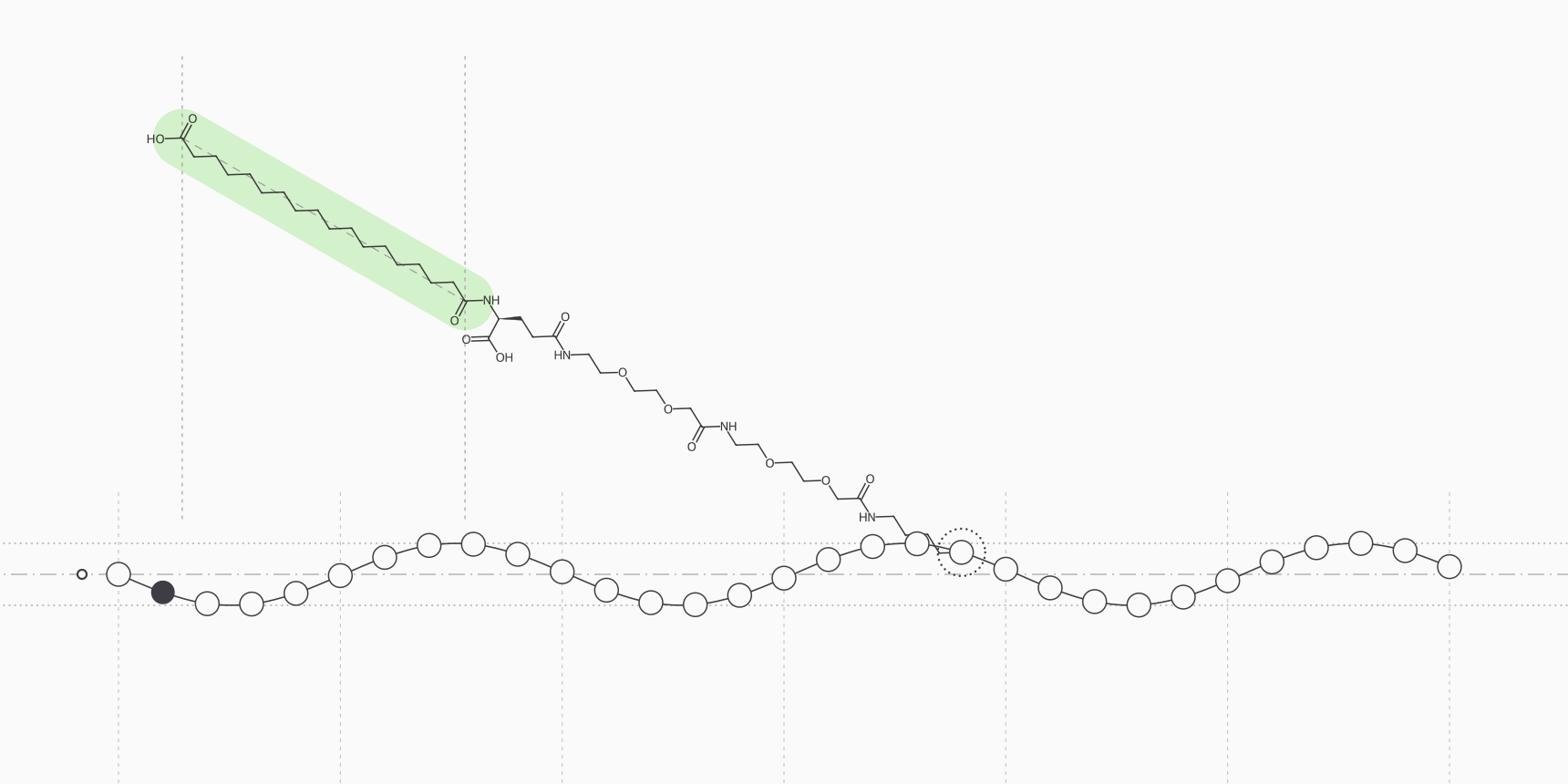
Five of the 98 peptides activate the GLP-1 receptor: exenatide, liraglutide, lixisenatide, semaglutide and tirzepatide, which also activates the receptor for GIP, a second gut hormone. They are 31 to 44 amino acids long. Liraglutide, semaglutide and tirzepatide also carry a fatty acid that binds albumin in the blood and slows their clearance, which is why semaglutide and tirzepatide are injected once a week.[7]
| Drug (brands) | Type | Amino acids | First FDA approval | US status |
|---|---|---|---|---|
| Exenatide (Byetta, Bydureon) | Peptide | 39 | April 2005 | Marketed |
| Liraglutide (Victoza, Saxenda) | Lipidated peptide | 31 | January 2010 | Marketed |
| Albiglutide (Tanzeum) | Albumin fusion protein, not counted | Over 50 | April 2014 | Discontinued |
| Dulaglutide (Trulicity) | Fc fusion protein, not counted | Over 50 | September 2014 | Marketed |
| Lixisenatide (Adlyxin, Soliqua) | Peptide, regulated as a biologic since 2020 | 44 | July 2016 | Only in Soliqua |
| Semaglutide (Ozempic, Rybelsus, Wegovy) | Lipidated peptide | 31 | December 2017 | Marketed |
| Tirzepatide (Mounjaro, Zepbound) | Lipidated peptide, GIP and GLP-1 receptor agonist | 39 | May 2022 | Marketed |
| Orforglipron (Foundayo) | Small molecule, not counted | None | April 2026 | Marketed |
Semaglutide was also the first GLP-1 peptide approved as a tablet, Rybelsus, in September 2019.[1] Orforglipron, approved in April 2026 as Foundayo for weight reduction, reaches the same receptor as a small molecule, so it is not a peptide drug at all.[5] Lixisenatide's own brand, Adlyxin, no longer has a license, but the peptide is still sold in Soliqua, combined with insulin glargine.[2]
What do approved peptide drugs look like?
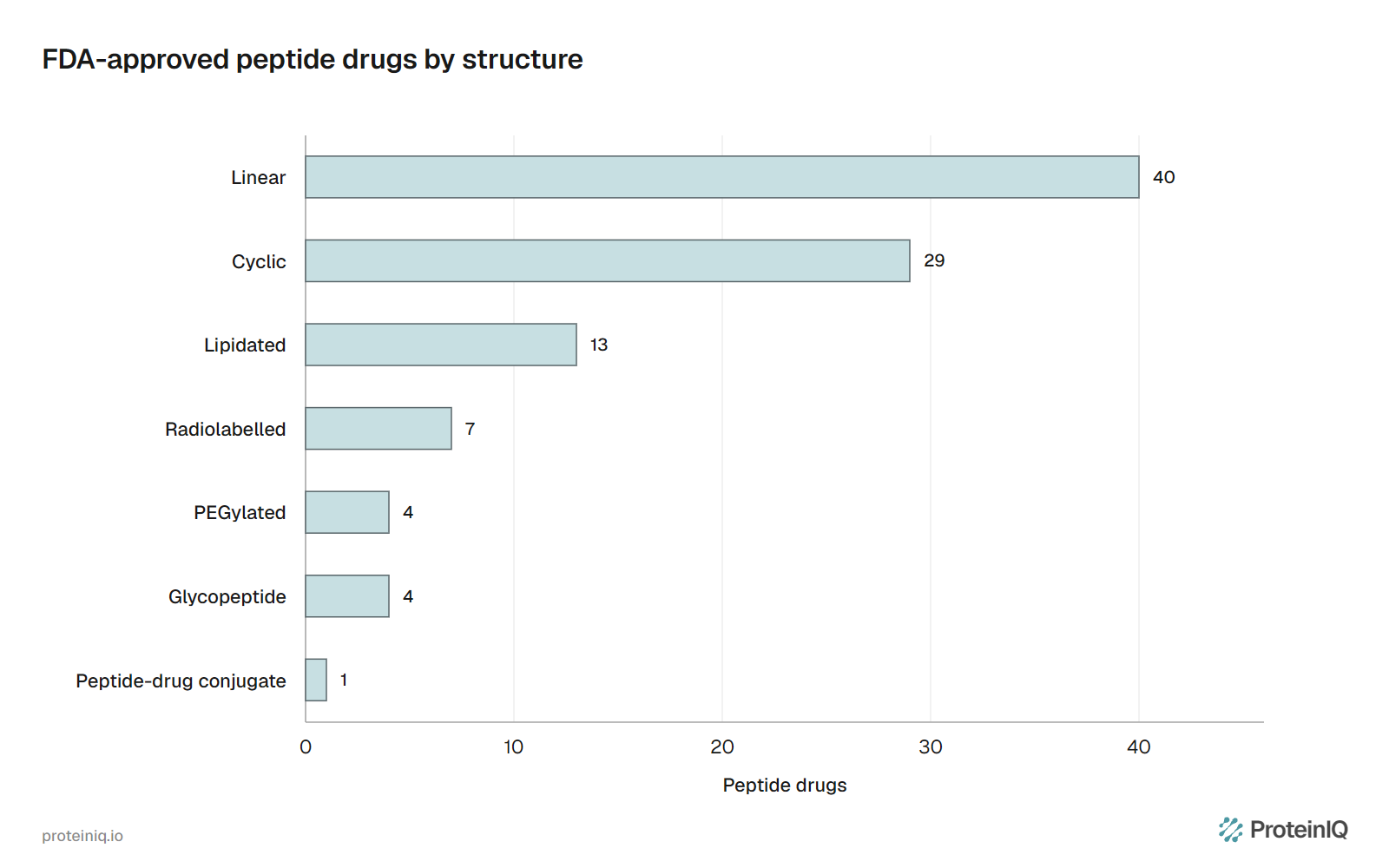
Most approved peptides are small. The median length is 10 amino acids, more than half (52 of the 97 with a stated length) have 10 or fewer, and only 20 are longer than 30.[7] Fifty-two of the 98 are rings, closed by a disulfide bond, a head-to-tail amide or another cross-link. A ring hides the chain ends that many proteases need and holds the peptide in the shape that binds its target.
Hormone receptors dominate the targets. Ten drugs act on the gonadotropin-releasing hormone receptor, from leuprolide to degarelix, and nine bind somatostatin receptors, six of them as radiolabelled tracers or therapy. Most are injected; 12 have an approved oral form, among them semaglutide, linaclotide, cyclosporine, icotrokinra and enlicitide.[1]
Their small size is also what makes peptides practical to model and make. PeptideBuilder turns a sequence into an all-atom structure in a chosen backbone conformation, and HighFold predicts the structures of head-to-tail and disulfide-bonded cyclic peptides, which standard structure predictors treat as linear chains.
For peptide design from a known binder, PepMimic generates short peptides that copy the binding interface of an antibody or receptor on its target. Short chains are also cheap to make: custom peptides list at about $2 to $4.50 per amino acid before purification, after the peptide mass calculator and isoelectric point calculator have covered the routine checks.
List of FDA-approved peptide drugs
| Drug (first brand) | Amino acids | Class | Target | First FDA approval | US status |
|---|---|---|---|---|---|
| Ceruletide (Tymtran) | 10 | Linear | Cholecystokinin receptors | Before 1982 | Discontinued |
| Lypressin (Diapid) | 9 | Cyclic | Vasopressin receptors | Before 1982 | Discontinued |
| Saralasin (Sarenin) | 8 | Linear | Angiotensin II type 1 receptor | Before 1982 | Discontinued |
| Porcine secretin (Secretin-Ferring) | 27 | Linear | Secretin receptor | Before 1982 | Marketed |
| Vasopressin (Pitressin Tannate) | 9 | Cyclic | Vasopressin V1a and V2 receptors | Before 1982 | Marketed |
| Viomycin (Viocin) | 5 | Cyclic | Bacterial ribosome | Before 1982 | Discontinued |
| Bacitracin (Baciguent) | 12 | Cyclic | Undecaprenyl pyrophosphate (cell wall synthesis) | September 1948 | Marketed |
| Corticotropin (Acthar) | 39 | Linear | Melanocortin 2 receptor (ACTH receptor) | July 1950 | Marketed |
| Polymyxin B (Neo-Polycin) | 10 | Lipidated | Lipopolysaccharide of the Gram-negative outer membrane | April 1954 | Marketed |
| Glucagon | 29 | Linear | Glucagon receptor | November 1960 | Marketed |
| Colistin (Coly-Mycin S) | 10 | Lipidated | Lipopolysaccharide of the Gram-negative outer membrane | May 1962 | Marketed |
| Vancomycin (Vancocin) | 7 | Glycopeptide | D-Ala-D-Ala terminus of peptidoglycan precursors | November 1964 | Marketed |
| Dactinomycin (Cosmegen) | 10 | Cyclic | DNA (intercalation, blocks transcription) | December 1964 | Marketed |
| Gramicidin (Neosporin) | 15 | Linear | Bacterial membrane (ion channel) | July 1968 | Marketed |
| Cosyntropin (Cortrosyn) | 24 | Linear | Melanocortin 2 receptor (ACTH receptor) | April 1970 | Marketed |
| Capreomycin (Capastat) | 5 | Cyclic | Bacterial ribosome | June 1971 | Discontinued |
| Pentagastrin (Peptavlon) | 5 | Linear | Cholecystokinin B (gastrin) receptor | July 1974 | Discontinued |
| Sincalide (Kinevac) | 8 | Linear | Cholecystokinin A receptor | July 1976 | Marketed |
| Protirelin (Thypinone) | 3 | Linear | Thyrotropin-releasing hormone receptor | November 1976 | Discontinued |
| Desmopressin (DDAVP) | 9 | Cyclic | Vasopressin V2 receptor | February 1978 | Marketed |
| Calcitonin salmon (Calcimar) | 32 | Cyclic | Calcitonin receptor | April 1978 | Marketed |
| Oxytocin (Syntocinon) | 9 | Cyclic | Oxytocin receptor | April 1980 | Marketed |
| Gonadorelin (Factrel) | 10 | Linear | Gonadotropin-releasing hormone receptor | September 1982 | Discontinued |
| Cyclosporine (Sandimmune) | 11 | Cyclic | Cyclophilin-calcineurin | November 1983 | Marketed |
| Leuprolide (Lupron) | 9 | Linear | Gonadotropin-releasing hormone receptor (agonist) | April 1985 | Marketed |
| Calcitonin human (Cibacalcin) | 32 | Cyclic | Calcitonin receptor | October 1986 | Discontinued |
| Octreotide (Sandostatin) | 8 | Cyclic | Somatostatin receptors 2 and 5 | October 1988 | Marketed |
| Goserelin (Zoladex) | 10 | Linear | Gonadotropin-releasing hormone receptor (agonist) | December 1989 | Marketed |
| Nafarelin (Synarel) | 10 | Linear | Gonadotropin-releasing hormone receptor (agonist) | February 1990 | Marketed |
| Sermorelin (Geref) | 29 | Linear | Growth hormone-releasing hormone receptor | December 1990 | Discontinued |
| Histrelin (Supprelin) | 9 | Linear | Gonadotropin-releasing hormone receptor (agonist) | December 1991 | Marketed |
| Indium In 111 pentetreotide (OctreoScan) | 8 | Radiolabelled | Somatostatin receptor 2 | June 1994 | Marketed |
| Corticorelin ovine triflutate (Acthrel) | 41 | Linear | Corticotropin-releasing hormone receptor 1 | May 1996 | Discontinued |
| Eptifibatide (Integrilin) | 7 | Cyclic | Integrin alphaIIb beta3 (GPIIb/IIIa) | May 1998 | Marketed |
| Technetium Tc 99m apcitide (AcuTect) | 13 | Radiolabelled | Integrin alphaIIb beta3 (GPIIb/IIIa) | September 1998 | Discontinued |
| Ganirelix | 10 | Linear | Gonadotropin-releasing hormone receptor (antagonist) | July 1999 | Marketed |
| Technetium Tc 99m depreotide (NeoTect) | 10 | Radiolabelled | Somatostatin receptors 2, 3 and 5 | August 1999 | Discontinued |
| Quinupristin (Synercid) | 6 | Cyclic | Bacterial 50S ribosome | September 1999 | Marketed |
| Triptorelin (Trelstar) | 10 | Linear | Gonadotropin-releasing hormone receptor (agonist) | June 2000 | Marketed |
| Cetrorelix (Cetrotide) | 10 | Linear | Gonadotropin-releasing hormone receptor (antagonist) | August 2000 | Marketed |
| Bivalirudin (Angiomax) | 20 | Linear | Thrombin | December 2000 | Marketed |
| Caspofungin (Cancidas) | 6 | Lipidated | Beta-1,3-glucan synthase | January 2001 | Marketed |
| Nesiritide (Natrecor) | 32 | Cyclic | Natriuretic peptide receptor A | August 2001 | Discontinued |
| Teriparatide (Forteo) | 34 | Linear | Parathyroid hormone 1 receptor | November 2002 | Marketed |
| Enfuvirtide (Fuzeon) | 36 | Linear | HIV-1 gp41 | March 2003 | Discontinued |
| Daptomycin (Cubicin) | 13 | Lipidated | Bacterial cell membrane (calcium dependent) | September 2003 | Marketed |
| Abarelix (Plenaxis) | 10 | Linear | Gonadotropin-releasing hormone receptor (antagonist) | November 2003 | Discontinued |
| Human secretin (ChiRhoStim) | 27 | Linear | Secretin receptor | April 2004 | Marketed |
| Ziconotide (Prialt) | 25 | Cyclic | N-type calcium channel (Cav2.2) | December 2004 | Marketed |
| Micafungin (Mycamine) | 6 | Lipidated | Beta-1,3-glucan synthase | March 2005 | Marketed |
| Pramlintide (Symlin) | 37 | Cyclic | Amylin receptors | March 2005 | Discontinued |
| Exenatide (Byetta) | 39 | Linear | GLP-1 receptor | April 2005 | Marketed |
| Anidulafungin (Eraxis) | 6 | Lipidated | Beta-1,3-glucan synthase | February 2006 | Marketed |
| Lanreotide (Somatuline Depot) | 8 | Cyclic | Somatostatin receptors 2 and 5 | August 2007 | Marketed |
| Degarelix (Firmagon) | 10 | Linear | Gonadotropin-releasing hormone receptor (antagonist) | December 2008 | Marketed |
| Telavancin (Vibativ) | 7 | Glycopeptide | D-Ala-D-Ala terminus of peptidoglycan precursors; bacterial membrane | September 2009 | Marketed |
| Liraglutide (Victoza) | 31 | Lipidated | GLP-1 receptor | January 2010 | Marketed |
| Tesamorelin (Egrifta) | 44 | Linear | Growth hormone-releasing hormone receptor | November 2010 | Marketed |
| Icatibant (Firazyr) | 10 | Linear | Bradykinin B2 receptor | August 2011 | Marketed |
| Lucinactant (Surfaxin) | 21 | Linear | Lung surfactant (mimics surfactant protein B) | March 2012 | Discontinued |
| Peginesatide (Omontys) | 21 | PEGylated | Erythropoietin receptor | March 2012 | Discontinued |
| Linaclotide (Linzess) | 14 | Cyclic | Guanylate cyclase C | August 2012 | Marketed |
| Pasireotide (Signifor) | 6 | Cyclic | Somatostatin receptors 1, 2, 3 and 5 | December 2012 | Marketed |
| Teduglutide (Gattex) | 33 | Linear | GLP-2 receptor | December 2012 | Marketed |
| Dalbavancin (Dalvance) | 7 | Glycopeptide | D-Ala-D-Ala terminus of peptidoglycan precursors | May 2014 | Marketed |
| Oritavancin (Orbactiv) | 7 | Glycopeptide | D-Ala-D-Ala terminus of peptidoglycan precursors; bacterial membrane | August 2014 | Marketed |
| Gallium Ga 68 dotatate (NETSPOT) | 8 | Radiolabelled | Somatostatin receptor 2 | June 2016 | Marketed |
| Lixisenatide (Adlyxin) | 44 | Linear | GLP-1 receptor | July 2016 | Marketed |
| Plecanatide (Trulance) | 16 | Cyclic | Guanylate cyclase C | January 2017 | Marketed |
| Etelcalcetide (Parsabiv) | 8 | Linear | Calcium-sensing receptor | February 2017 | Marketed |
| Abaloparatide (Tymlos) | 34 | Linear | Parathyroid hormone 1 receptor | April 2017 | Marketed |
| Semaglutide (Ozempic) | 31 | Lipidated | GLP-1 receptor | December 2017 | Marketed |
| Angiotensin II (Giapreza) | 8 | Linear | Angiotensin II type 1 receptor | December 2017 | Marketed |
| Lutetium Lu 177 dotatate (Lutathera) | 8 | Radiolabelled | Somatostatin receptor 2 | January 2018 | Marketed |
| Bremelanotide (Vyleesi) | 7 | Cyclic | Melanocortin receptors (MC4R) | June 2019 | Marketed |
| Gallium Ga 68 edotreotide | 8 | Radiolabelled | Somatostatin receptor 2 | August 2019 | Marketed |
| Afamelanotide (Scenesse) | 13 | Linear | Melanocortin 1 receptor | October 2019 | Marketed |
| Copper Cu 64 dotatate (Detectnet) | 8 | Radiolabelled | Somatostatin receptor 2 | September 2020 | Marketed |
| Setmelanotide (Imcivree) | 8 | Cyclic | Melanocortin 4 receptor | November 2020 | Marketed |
| Voclosporin (Lupkynis) | 11 | Cyclic | Cyclophilin-calcineurin | January 2021 | Marketed |
| Melphalan flufenamide (Pepaxto) | 2 | Peptide-drug conjugate | DNA (alkylating payload released by aminopeptidases) | February 2021 | Withdrawn |
| Dasiglucagon (Zegalogue) | 29 | Linear | Glucagon receptor | March 2021 | Discontinued |
| Pegcetacoplan (Empaveli) | 15 | PEGylated | Complement C3 | May 2021 | Marketed |
| Difelikefalin (Korsuva) | 4 | Linear | Kappa opioid receptor (peripheral) | August 2021 | Marketed |
| Vosoritide (Voxzogo) | 39 | Cyclic | Natriuretic peptide receptor B | November 2021 | Marketed |
| Tirzepatide (Mounjaro) | 39 | Lipidated | GIP and GLP-1 receptors | May 2022 | Marketed |
| Terlipressin (Terlivaz) | 12 | Cyclic | Vasopressin V1 receptor (prodrug of lysine vasopressin) | September 2022 | Marketed |
| Trofinetide (Daybue) | 3 | Linear | Not established (IGF-1 tripeptide analog) | March 2023 | Marketed |
| Rezafungin (Rezzayo) | 6 | Lipidated | Beta-1,3-glucan synthase | March 2023 | Marketed |
| Motixafortide (Aphexda) | 14 | Cyclic | CXCR4 | September 2023 | Marketed |
| Zilucoplan (Zilbrysq) | 15 | Lipidated | Complement C5 | October 2023 | Marketed |
| Palopegteriparatide (Yorvipath) | 34 | PEGylated | Parathyroid hormone 1 receptor | August 2024 | Marketed |
| Elamipretide (Forzinity) | 4 | Linear | Cardiolipin (inner mitochondrial membrane) | September 2025 | Marketed |
| Navepegritide (Yuviwel) | 38 | PEGylated | Natriuretic peptide receptor B | February 2026 | Marketed |
| Icotrokinra (Icotyde) | 13 | Cyclic | Interleukin-23 receptor | March 2026 | Marketed |
| Bulevirtide (Hepcludex) | 47 | Lipidated | Sodium taurocholate cotransporting polypeptide (NTCP) | May 2026 | Marketed |
| Enlicitide (Lipfendra) | Not stated | Cyclic | PCSK9 | July 2026 | Marketed |
| Rusfertide (Mimrylo) | 17 | Lipidated | Ferroportin (hepcidin mimetic) | August 2026 | Marketed |
How we counted
We started from every active ingredient in the Drugs@FDA data files of October 28, 2026 whose name carries a peptide naming stem (such as -tide, -relin, -relix, -pressin or -fungin) or names a known peptide hormone or antibiotic, then checked every new molecular entity approved from 2015 to 2026 in the same files, and the FDA's 2026 novel approvals list, for anything the names missed.[1][8]
Lengths and structures come from section 11 of each drug's prescribing information.[7] Each molecule's first approval is the earliest dated original approval across all of its applications. Melphalan flufenamide, removed from Drugs@FDA after its approval was withdrawn, is dated from the FDA's withdrawal decision, which records its February 2021 approval.[3]
Drugs@FDA leaves applications approved before 1982 undated, so six drugs whose only early records are undated old applications are dated "before 1982". Very old antibiotics appear under former antibiotic certifications, whose dates can be later than the drug's first sale.
Marketing status is "marketed" when any approved product containing the peptide, alone or in a combination, is listed for prescription or over-the-counter sale. For the peptides now licensed as biologics we used the Purple Book's status instead.[2] Share of novel approvals uses the yearly totals published by the FDA's Center for Drug Evaluation and Research.[8]
The full dataset lists each peptide's INN, first brand, length, structure, modification, class, origin, target, therapeutic area, first approval date and application, all application numbers, biologic status, routes and US status, plus 19 related products that are not counted, with the reason.
A summary file holds the counts by decade, class, origin, therapeutic area, route and year. The data are free to reuse under CC BY 4.0 with credit to ProteinIQ; we last checked them on October 29, 2026 and recheck them every quarter.