How many amino acids are in insulin?
Mature human insulin contains 51 amino acid residues: 21 in its A chain and 30 in its B chain.
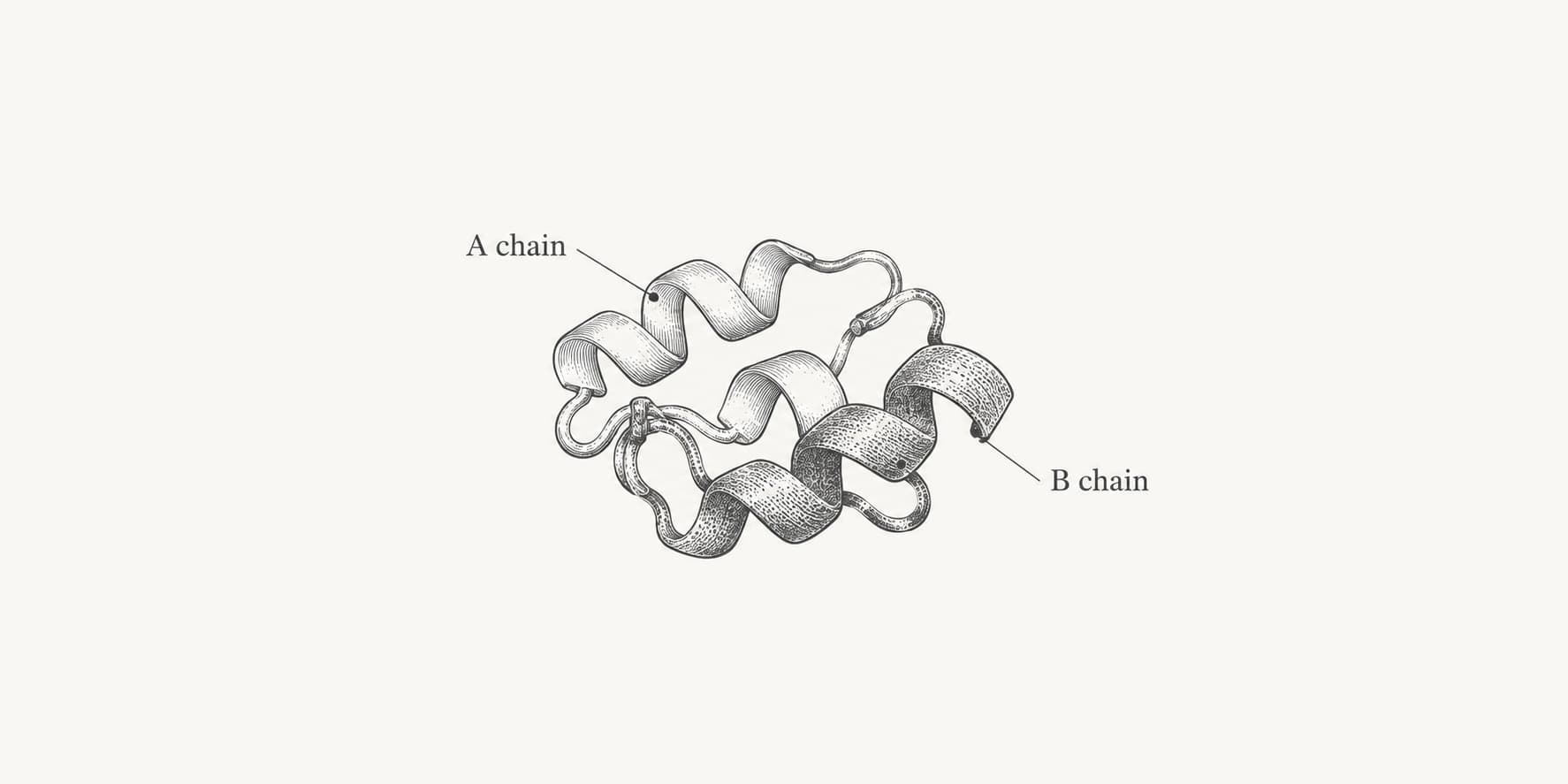
Mature human insulin contains 51 amino acid residues. They form two separate peptide chains, with 21 residues in the A chain and 30 in the B chain.
The human insulin gene initially produces a 110-residue precursor. Cells remove 59 residues before secreting the active hormone, which explains why both 51 and 110 appear in reference sources.
How many amino acids are in insulin?
One molecule of mature human insulin contains 51 amino acid residues.[1][2]
Insulin is not one continuous chain. Its two chains are held together by two disulfide bonds, and a third disulfide bond forms within the A chain.[2] The molecule has 49 peptide bonds, 20 in the A chain and 29 in the B chain. The disulfide bonds do not add to that count.
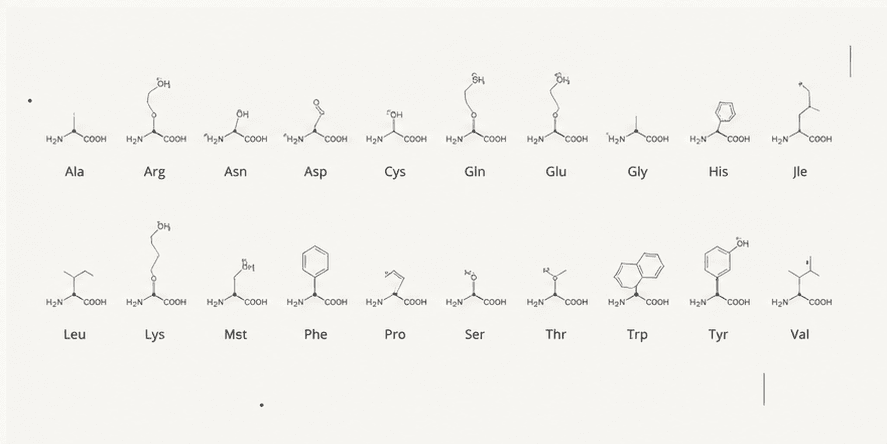
The 51 positions use 17 of the 20 standard amino acids. Human insulin contains no aspartic acid, methionine, or tryptophan.[5]
How many amino acids are in the insulin A and B chains?
The insulin A chain has 21 amino acid residues, and the B chain has 30.[2][3]
Their human sequences are:
A chain: GIVEQCCTSICSLYQLENYCN
B chain: FVNQHLCGSHLVEALYLVCGERGFFYTPKT
An amino acid composition of these sequences gives 21 residues for the A chain and 30 for the B chain. Together, they give the mature hormone's 51-residue total.[3]
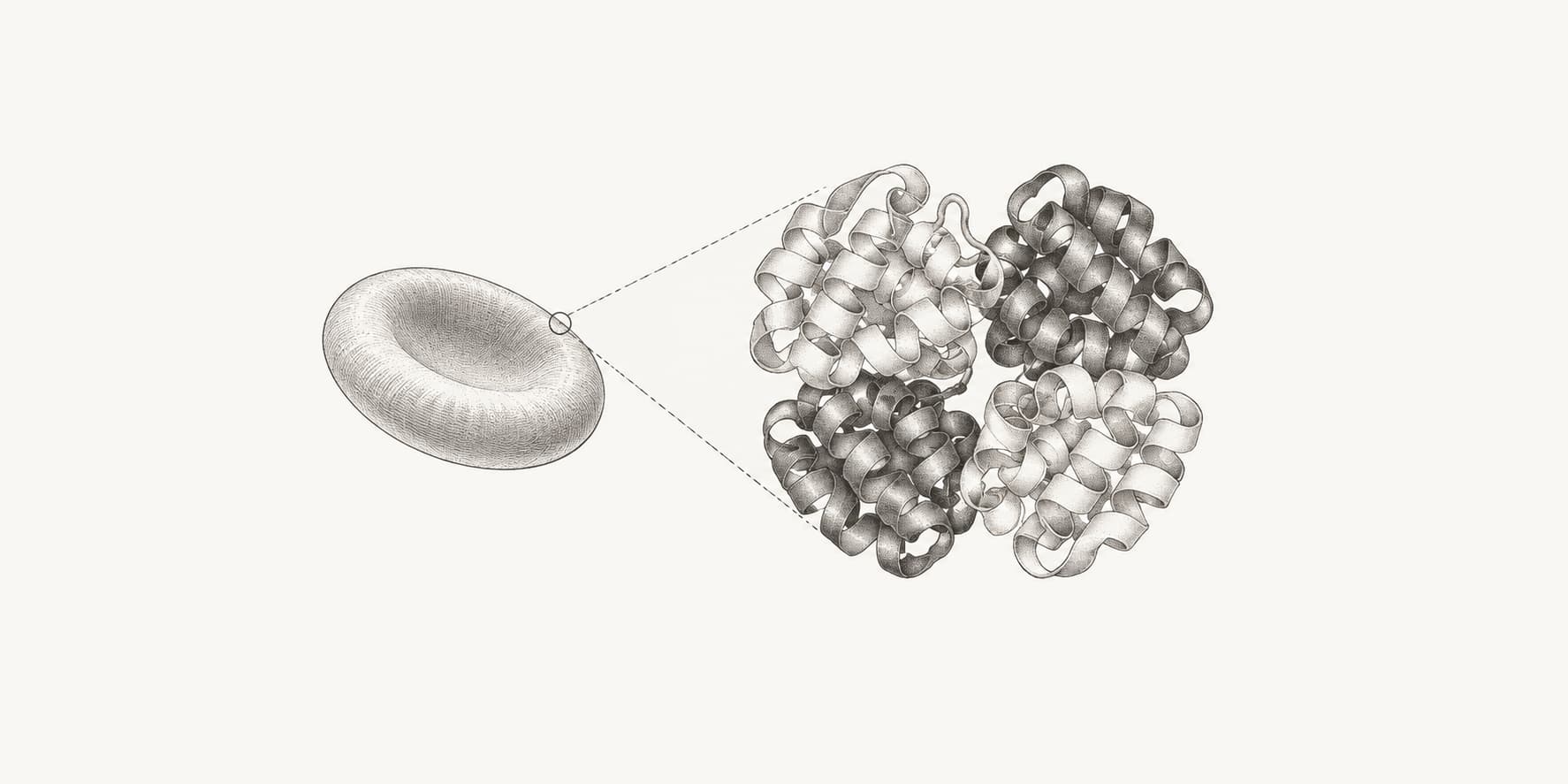
This count describes one insulin molecule. Insulin can assemble into dimers and zinc-stabilized hexamers for storage, but each insulin unit still contains the same 51 residues.[1]
Why do some sources say insulin has 110 amino acids?
The 110-amino-acid count describes preproinsulin, the single-chain precursor translated from the human insulin gene, while 51 describes mature insulin.[2][3][4]
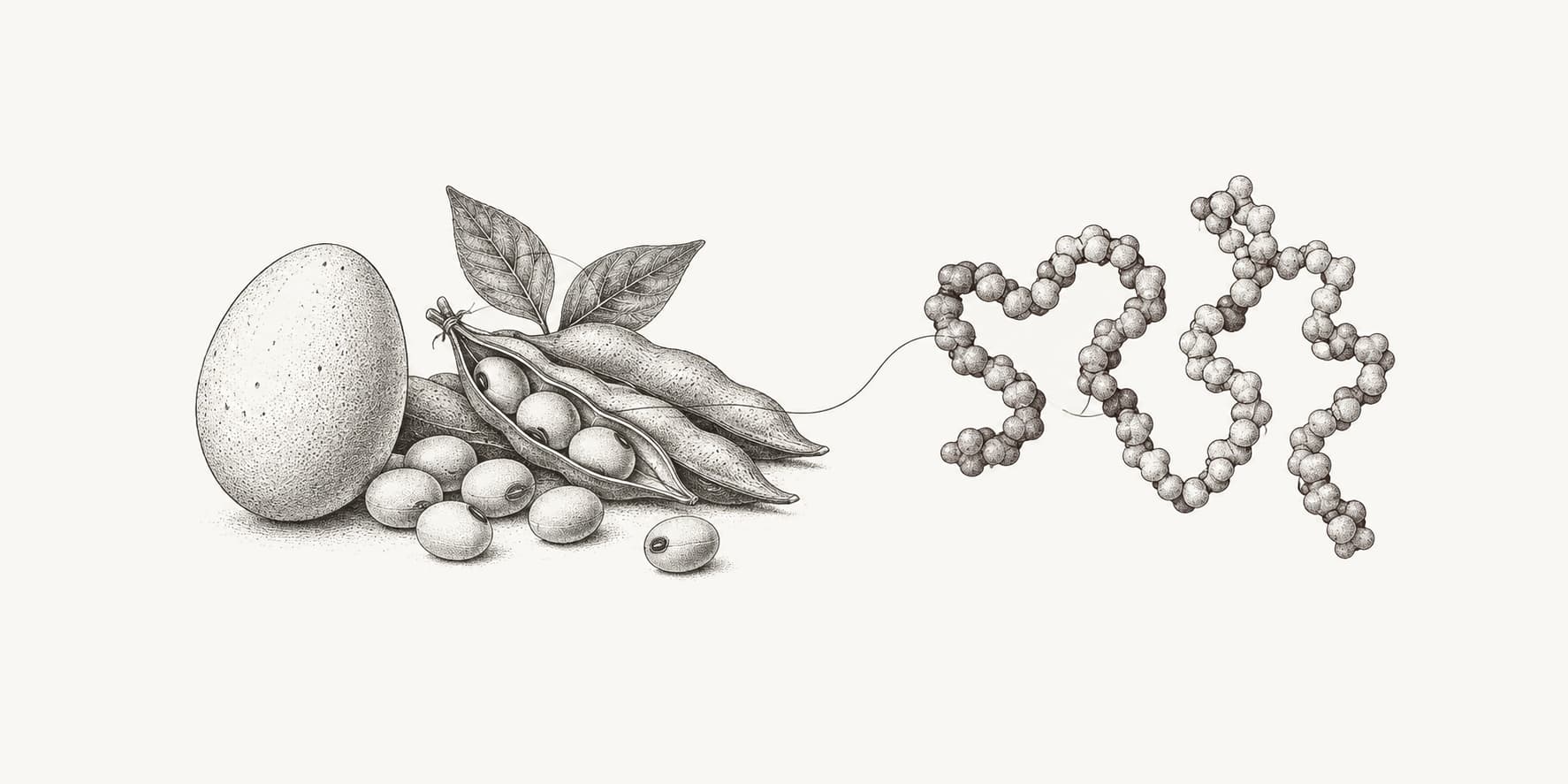
The first 24 residues form a signal peptide that directs preproinsulin into the endoplasmic reticulum. Removing it leaves 86-residue proinsulin, in which a connecting segment keeps the future B and A chains in one polypeptide while the three disulfide bonds form.[2][4]
The 86-residue proinsulin value is 110 minus the 24-residue signal peptide. Processing then removes the 31-residue C-peptide and four flanking basic residues, leaving the 21-residue A chain and 30-residue B chain.[2][4]
The mature hormone count is therefore:
21 A-chain residues + 30 B-chain residues = 51 amino acid residues.