Calculate the percentage and frequency of each amino acid in protein sequences Learn more
Input
What is amino acid composition?
Amino acid composition is the frequency of each of the 20 standard amino acids within a protein sequence. This fundamental metric provides a quantitative fingerprint of any protein, revealing patterns related to structure, function, and evolutionary history.
The composition of a protein directly influences its physical and chemical properties. Proteins enriched in hydrophobic amino acids (Ile, Leu, Val) tend to form stable hydrophobic cores, while those rich in charged residues (Asp, Glu, Lys, Arg) are typically more soluble and interact with other charged molecules.
Amino acid composition analysis serves as the foundation for many downstream calculations. Other protein parameters like GRAVY, instability index, and isoelectric point are all derived from the same underlying composition data. For a comprehensive analysis that calculates all these properties at once, use our Protein Parameters calculator.
How is amino acid composition calculated?
The calculation counts each amino acid in the sequence and expresses the result either as a raw count or as a percentage of total residues.
Percentage formula
For each amino acid, the percentage composition is:
Where is the count of amino acid type and is the total number of residues in the sequence.
The 20 standard amino acids
The tool analyzes all 20 standard amino acids, displayed using their three-letter codes with one-letter codes in parentheses:
| Three-letter | One-letter | Property |
|---|---|---|
| Ala | A | Nonpolar |
| Cys | C | Polar |
| Asp | D | Acidic |
| Glu | E | Acidic |
| Phe | F | Aromatic |
| Gly | G | Nonpolar |
| His | H | Basic |
| Ile | I | Nonpolar |
| Lys | K | Basic |
| Leu | L | Nonpolar |
| Met | M | Nonpolar |
| Asn | N | Polar |
| Pro | P | Nonpolar |
| Gln | Q | Polar |
| Arg | R | Basic |
| Ser | S | Polar |
| Thr | T | Polar |
| Val | V | Nonpolar |
| Trp | W | Aromatic |
| Tyr | Y | Aromatic |
Understanding the results
The output table shows one row per input sequence with columns for each amino acid.
The Residues column shows the total sequence length. Each amino acid column displays either the percentage (when Show percentage is enabled) or the raw count of that residue.
Interpreting percentages
Typical globular proteins show characteristic composition patterns. Leucine (Leu) is often the most abundant amino acid at around 9-10%, while tryptophan (Trp) and cysteine (Cys) are typically rare at 1-2%.
Unusual compositions can indicate specialized function. Membrane proteins are enriched in hydrophobic residues. Intrinsically disordered proteins often have high proportions of charged and polar amino acids with reduced hydrophobic content.
Comparing to reference distributions
The average amino acid composition varies by organism and protein type. Comparing your protein's composition against these references can highlight enrichments or depletions that may be functionally significant.
Input requirements
- Protein sequences: Enter one or more sequences in FASTA format
- Supports batch processing of multiple sequences
- Accepts
.fasta,.fa,.fas, and.txtfile uploads - Can fetch sequences directly from RCSB PDB using accession codes
Settings
- Show percentage: Toggle between percentage values (default) and raw amino acid counts
Use cases
Amino acid composition analysis supports many research applications:
- Protein classification: Machine learning models often use composition as input features for predicting subcellular localization, function, or structural class
- Comparative analysis: Identifying compositional biases between protein families or organisms
- Sequence validation: Detecting unusual compositions that may indicate sequencing errors or contamination
- Expression optimization: Adjusting codon usage based on amino acid requirements
- Protein engineering: Understanding which residues to modify for desired properties
Limitations
Composition analysis captures the global amino acid distribution but not positional information. Two proteins with identical compositions can have completely different sequences and structures.
Non-standard amino acids (selenocysteine, pyrrolysine) and modified residues are not recognized. These will cause validation errors if present in the input sequence.
Related tools
Protein motif scanner
Scan protein sequences for biologically important motifs including glycosylation sites, phosphorylation sites, nuclear localization signals, prenylation motifs, and more.
Aliphatic Index
Calculate the aliphatic index of protein sequences. A measure of the relative volume occupied by aliphatic side chains, indicating thermostability.
Extinction coefficient calculator
Calculate the molar extinction coefficient of protein sequences at 280 nm. Used for protein concentration determination by UV spectroscopy.
Glycosylation site finder
Find potential N-linked glycosylation sites (NX[S/T] sequons) in protein sequences. Identifies asparagine residues in the consensus motif for N-glycosylation.
GRAVY
Calculate the GRAVY (Grand Average of Hydropathy) score of protein sequences. Positive values indicate hydrophobic proteins, negative values indicate hydrophilic proteins.
Instability Index
Calculate the instability index of protein sequences. Values above 40 indicate an unstable protein with a short half-life in vitro.
Protein molecular weight calculator
Calculate protein molecular weight from amino acid sequences in Daltons and kilodaltons. Supports FASTA and CSV input, average or monoisotopic masses, initiator Met removal, and disulfide correction.
pI Calculator
Calculate the theoretical isoelectric point (pI) of protein sequences. The pI is the pH at which a protein carries no net electrical charge.
UniProt Download
Download UniProt protein sequence records as FASTA and JSON by accession.
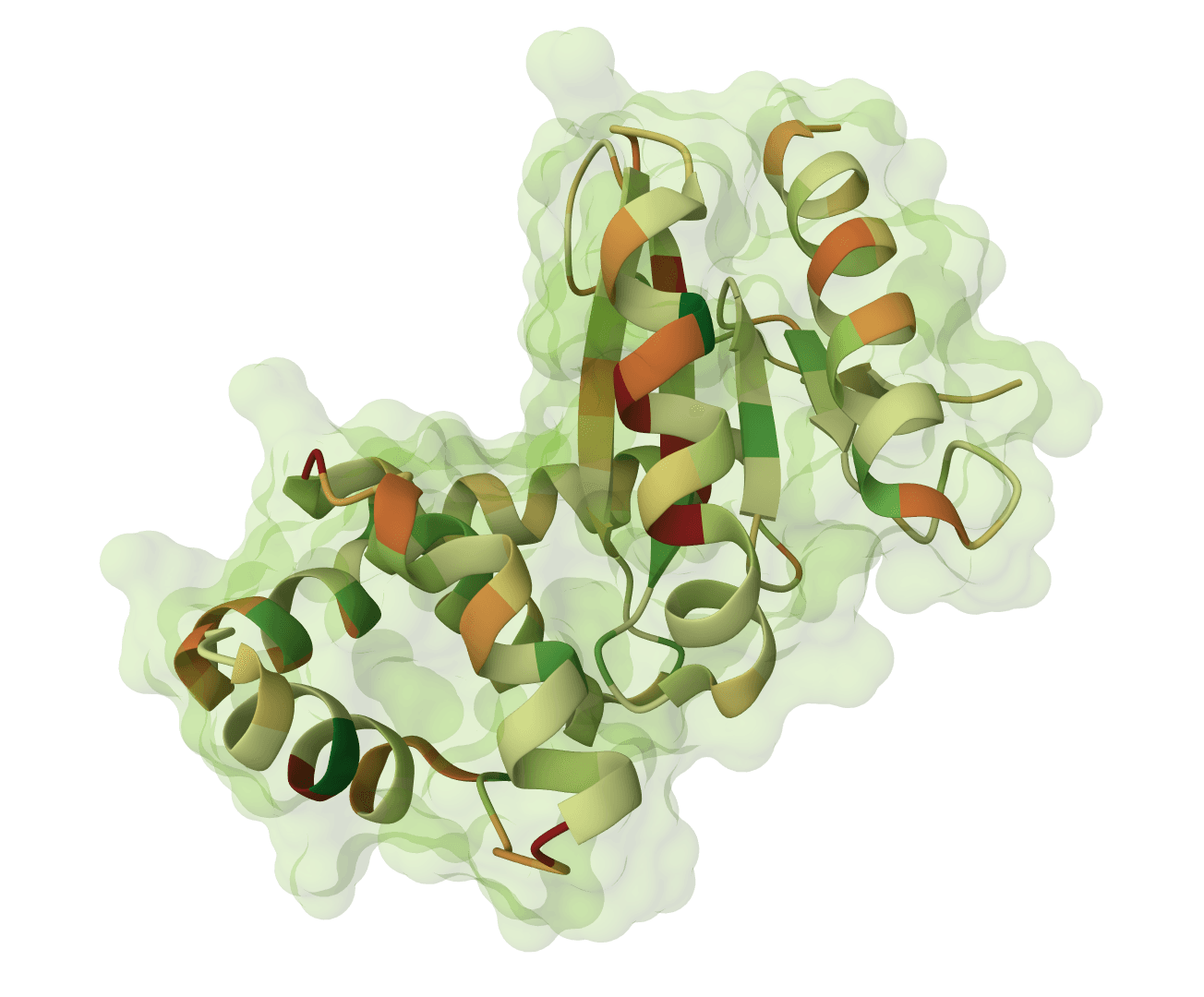
IPC 2.0 (isoelectric point calculator)
Isoelectric Point Calculator 2.0 - Predict protein/peptide isoelectric point (pI) using 18+ validated pKa scales, SVR models, and deep learning. Supports proteins, peptides, and comprehensive analysis.