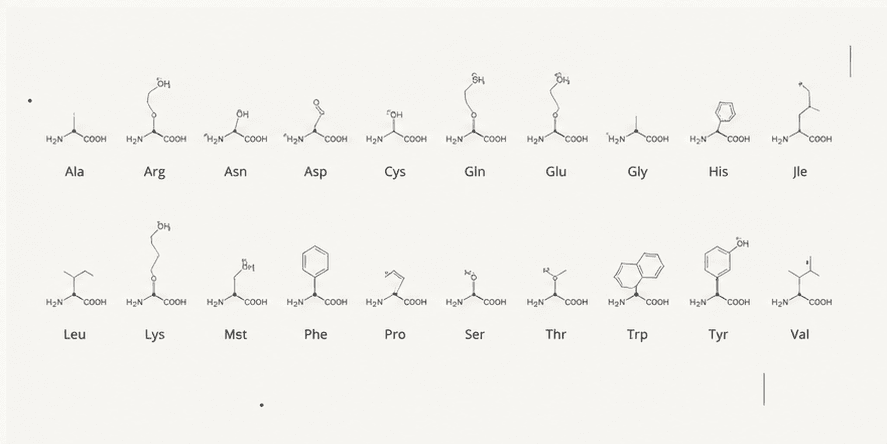
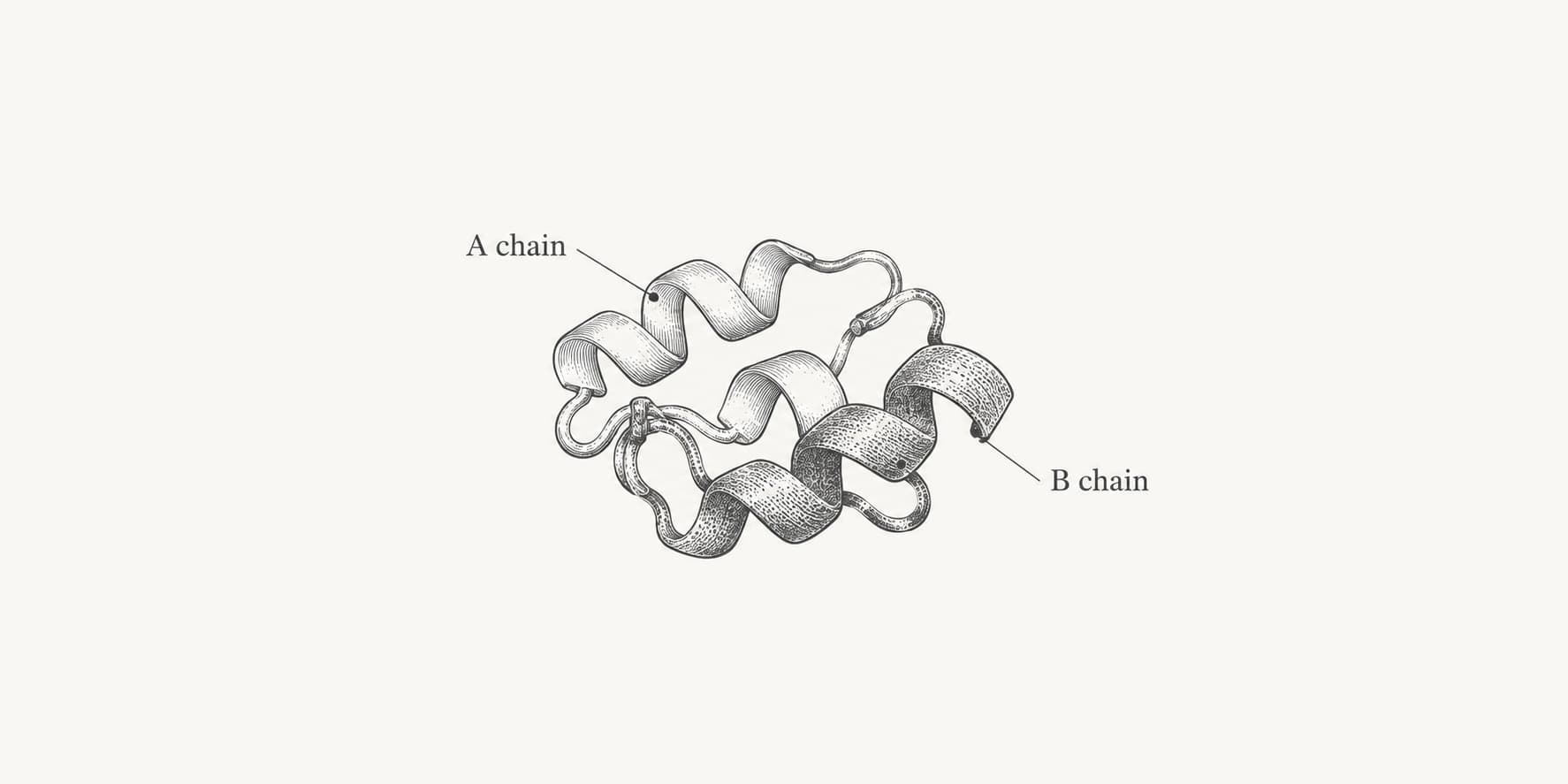
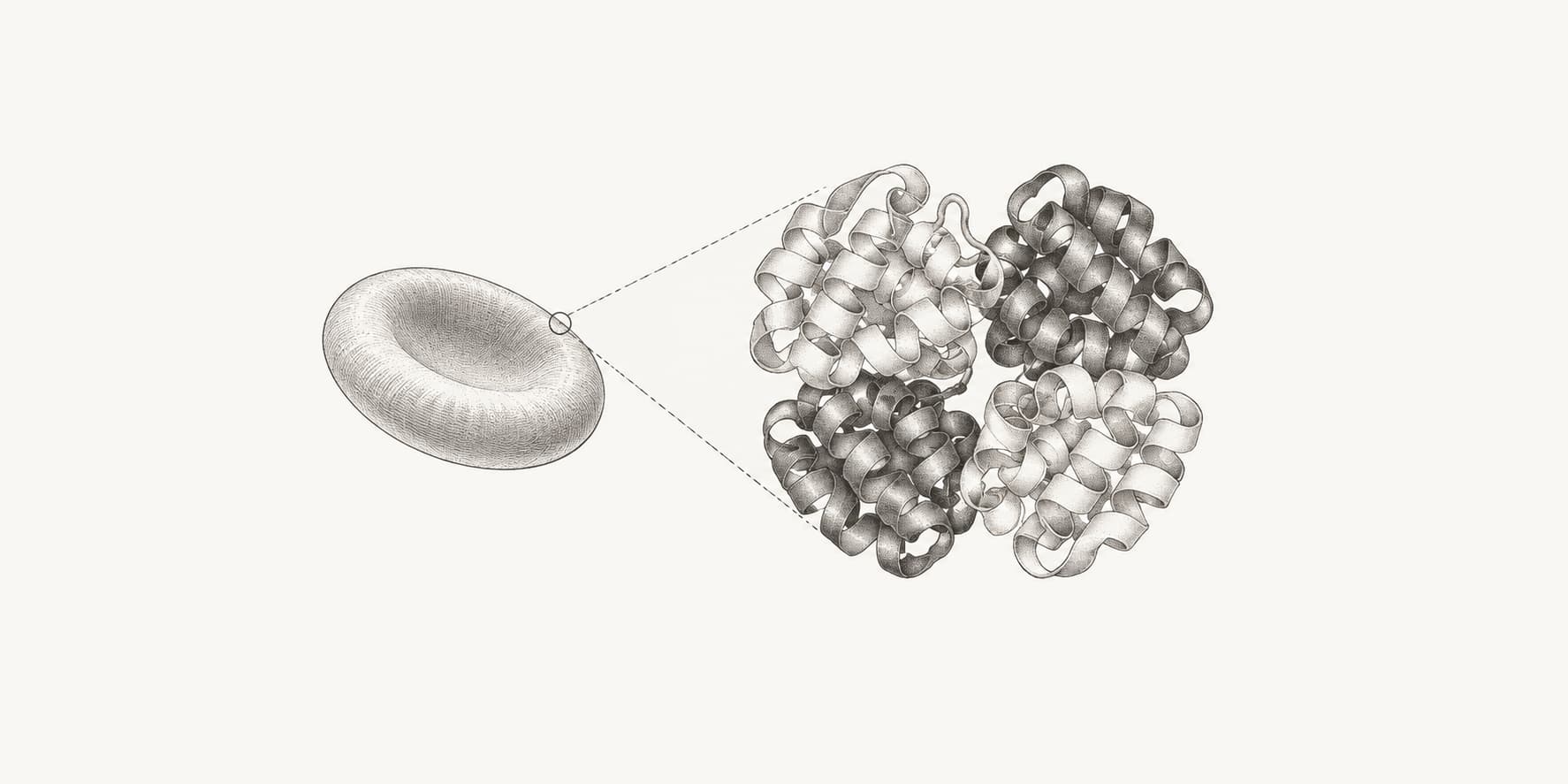
How many amino acids are in a complete protein?
A complete dietary protein supplies all nine essential amino acids in adequate amounts. Complete and incomplete describe nutritional quality, not the length of a protein molecule.
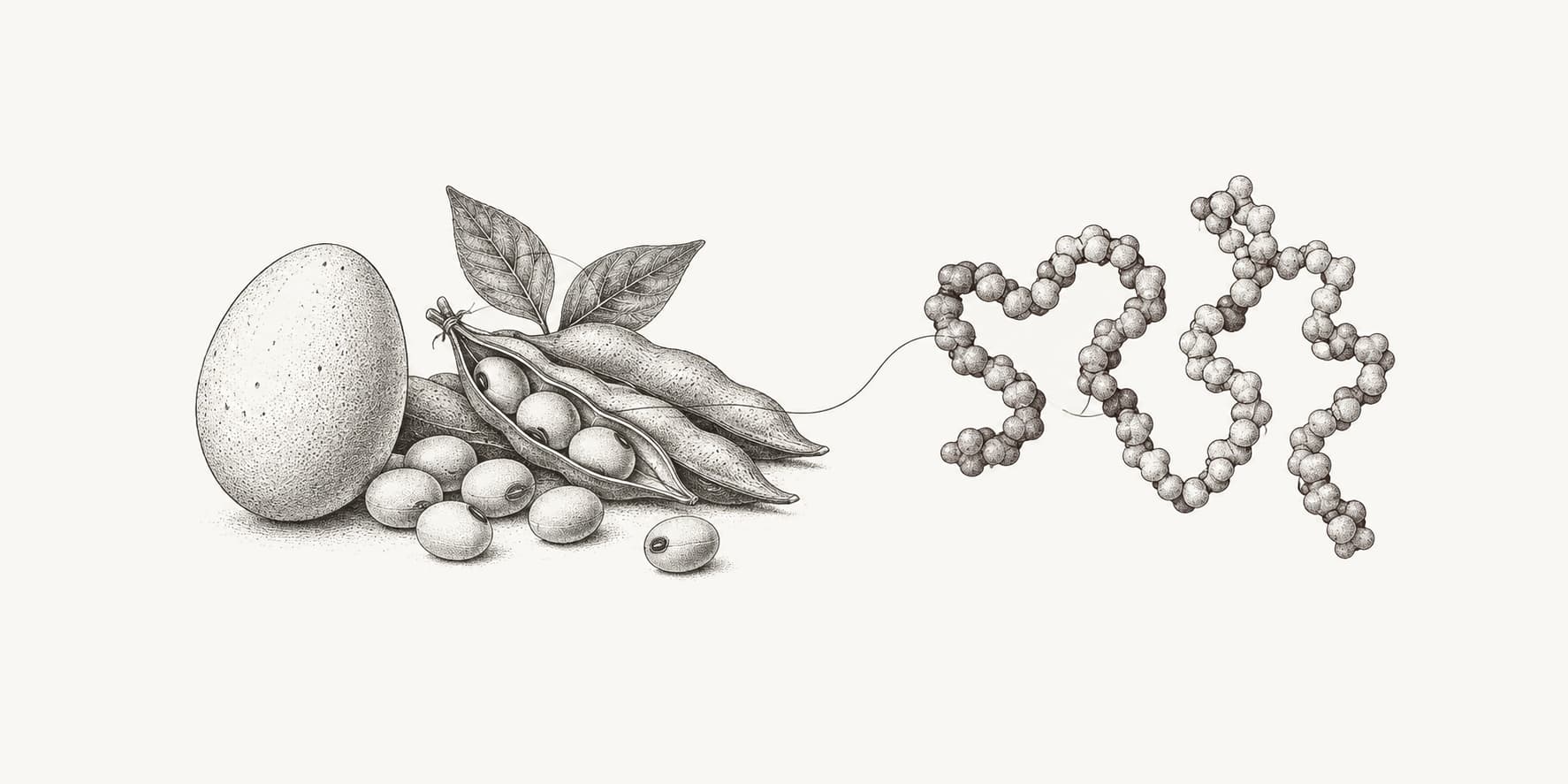
A complete dietary protein supplies all nine essential amino acids in adequate amounts. Nine is the number of essential amino-acid types, while most food proteins are chains of hundreds of residues assembled from the standard amino acids.
“Complete” and “incomplete” describe how well a food's protein meets human amino-acid needs. They do not describe the size of a protein.
How many amino acids are in a complete protein?
A complete protein supplies all nine essential amino acids: histidine, isoleucine, leucine, lysine, methionine, phenylalanine, threonine, tryptophan, and valine.[1]
The count refers to nine types. A typical protein chain contains hundreds of residues, and the same amino-acid type can appear many times.
The amounts matter too. The Food and Agriculture Organization evaluates protein quality against an age-specific reference pattern and corrects for how well each indispensable amino acid is digested. The lowest ratio determines the Digestible Indispensable Amino Acid Score, or DIAAS.[2]
The chart shows the FAO reference pattern for older children, adolescents, and adults. Methionine is grouped with cysteine, and phenylalanine with tyrosine, because the paired amino acids are assessed together. Values range from 6.6 milligrams of tryptophan to 61 milligrams of leucine per gram of protein.[2]
For a specific sequence, an amino acid composition reports how many times each residue occurs. That is a different calculation from judging a food's dietary protein quality.
What is the difference between complete and incomplete protein?
A complete protein provides all nine essential amino acids in adequate amounts; an incomplete protein is low in one or more of them.[3]
A review of vegetarian diets found that plant foods contain all 20 standard amino acids, including all nine essential ones. The proportions vary: grains tend to be relatively low in lysine, while legumes tend to be relatively low in methionine and cysteine.[4]
Digestibility also matters. Two foods can contain similar amino-acid profiles but differ in how much of each amino acid the body absorbs. This is why modern protein-quality scoring compares digestible amino acids with a reference pattern rather than counting how many amino-acid names appear in a food database.[2]
Do complementary proteins need to be eaten together?
Complementary proteins do not need to be eaten in the same meal; a varied diet can supply the full amino-acid pattern across the day.[3][4]
Pairing grains and legumes is still useful because their limiting amino acids differ. Rice and beans are a familiar example, but the balance does not depend on eating them in the same mouthful or even at the same meal.
Total protein intake and dietary variety matter more than labeling every individual plant food complete or incomplete. The 2019 review found that protein-rich plant foods such as legumes, nuts, and seeds can meet adult protein and amino-acid needs when the diet supplies enough energy and includes a reasonable range of foods.[4]