How many amino acids are in hemoglobin?
Mature adult hemoglobin A contains 574 amino acid residues: two 141-residue alpha chains and two 146-residue beta chains.
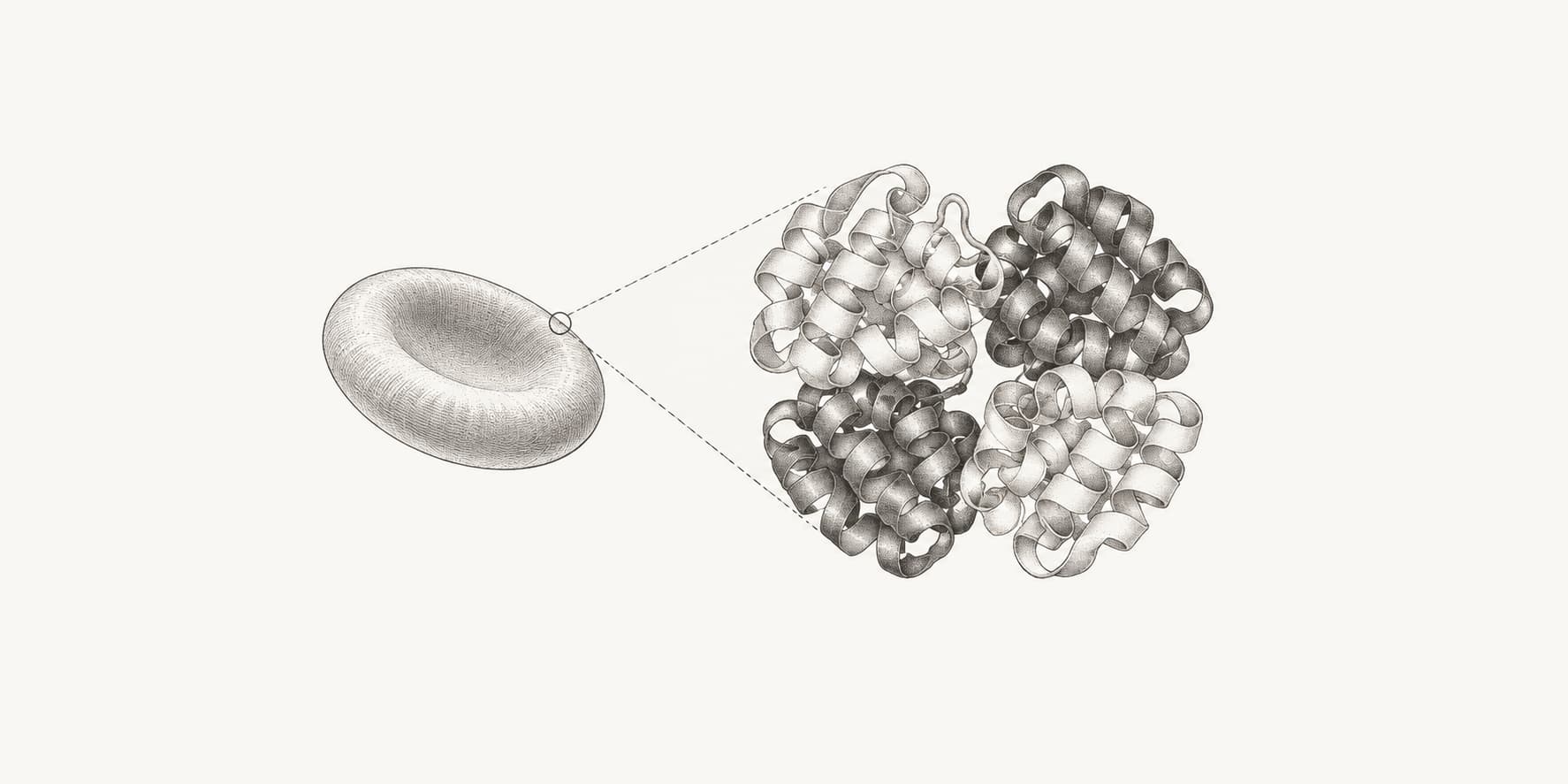
Mature adult hemoglobin A contains 574 amino acid residues. The molecule has four protein subunits: two alpha chains of 141 residues and two beta chains of 146 residues.
The calculation is 2 × 141 + 2 × 146 = 574. Counts such as 142, 147, and 578 describe the initially translated chains before their first methionine is removed, or refer to one subunit rather than the complete hemoglobin molecule.
How many amino acids are in hemoglobin?
One mature molecule of adult human hemoglobin A has 574 amino acid residues divided among four globin chains.[1][2][3]
Adult hemoglobin A is an α2β2 tetramer. Its two alpha chains contribute 282 residues, and its two beta chains contribute 292. Together they make 574:
2(141) + 2(146) = 574 residues.
The chart uses the mature chain lengths reported for adult hemoglobin and the complete translated sequence lengths curated by UniProt.[1][2][3]
Each chain also binds one heme group, so one hemoglobin molecule contains four hemes and can bind up to four oxygen molecules. Heme is not an amino acid and is not included in the 574-residue total.[3]
How many amino acids are in the alpha and beta chains?
The mature human hemoglobin alpha chain contains 141 amino acid residues, while the mature beta chain contains 146.[1][2][3]
Normal adult hemoglobin A contains two copies of each chain. The alpha subunits are encoded by the closely related HBA1 and HBA2 genes, while the beta subunits are encoded by HBB. The alpha and beta chains are similar in length but have different sequences.[1][2]
At 141 and 146 residues, both globin chains are much shorter than the roughly 375-residue median human protein. The 574 total describes the assembled four-chain complex, not one continuous polypeptide.
The classic deoxyhemoglobin structure 4HHB contains alpha chains A and C at 141 residues each and beta chains B and D at 146 residues each.[4] These are the mature sequences found in the assembled protein.
A residue count measures the number of positions in a sequence. It is different from asking how many amino acids exist, which asks about amino acid types rather than the length of a particular protein.
Why do some sources report 142, 147, or 578 amino acids?
The higher counts include the initiator methionine added when each globin chain is first translated: 142 residues for alpha, 147 for beta, and 578 for two copies of each encoded sequence.[1][2]
UniProt displays the complete translated alpha sequence at 142 amino acids and the beta sequence at 147. In both entries, it marks residue 1, methionine, as removed. The mature alpha chain therefore spans positions 2 to 142, giving 141 residues; the mature beta chain spans positions 2 to 147, giving 146.
That processing changes the tetramer total by four residues:
2(142) + 2(147) = 578 translated residues.
2(141) + 2(146) = 574 mature residues.
Other totals can reflect a different counting unit. One alpha-beta pair contains 287 mature residues, one alpha subunit has 141, and one beta subunit has 146. When a database sequence includes the starting methionine, an amino acid composition count will return 142 for alpha or 147 for beta unless that residue is removed first.