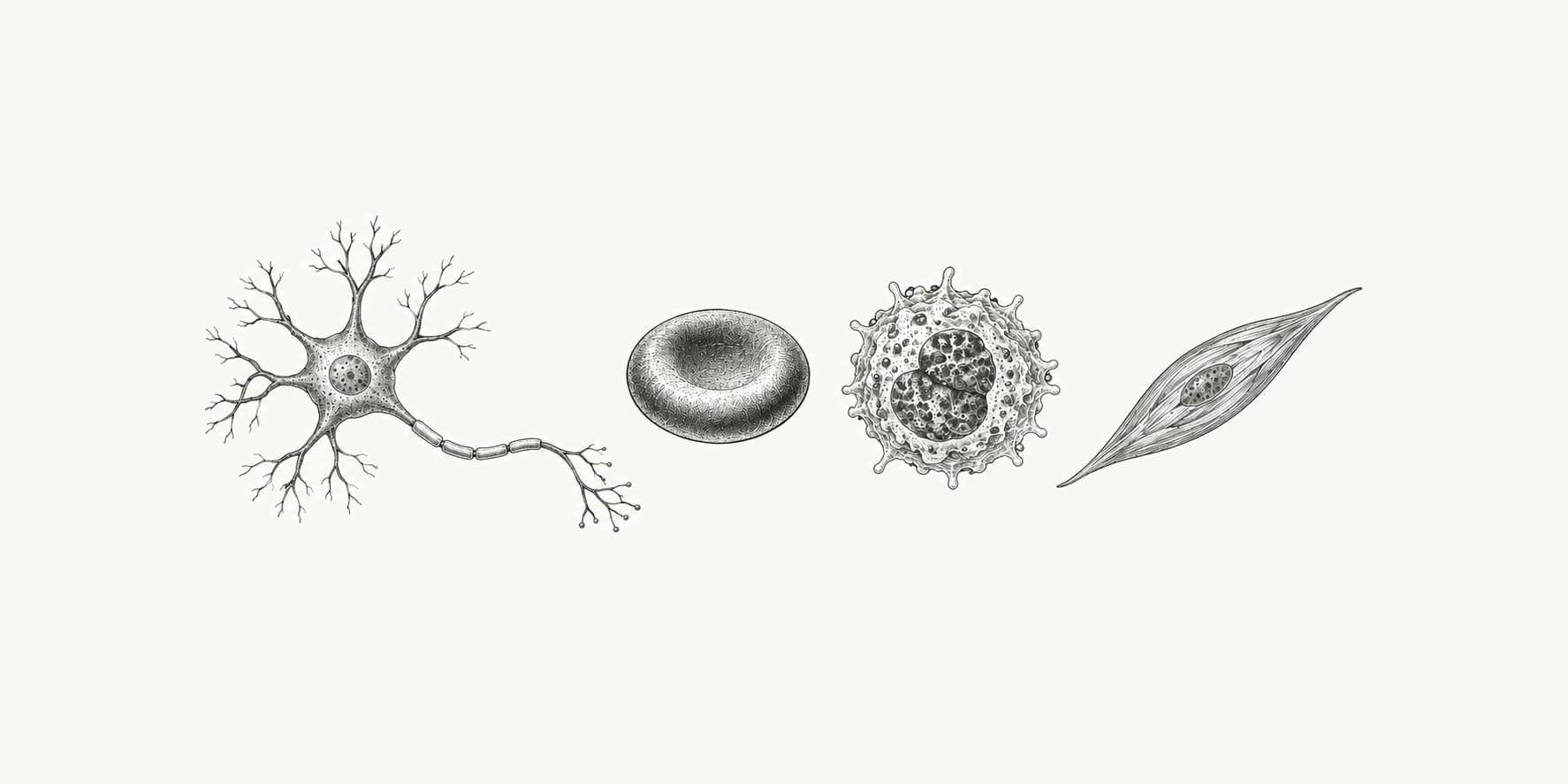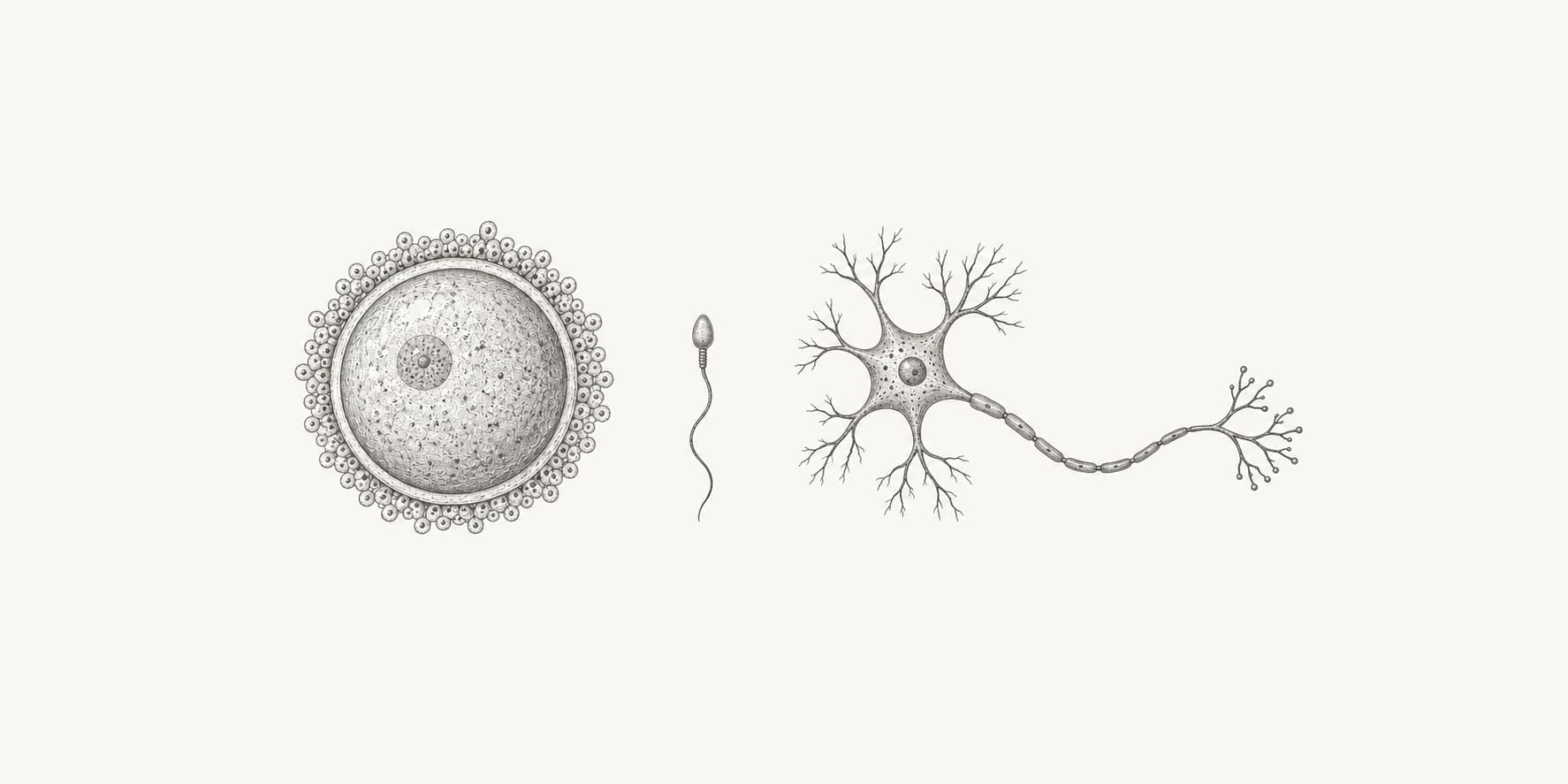
The largest cell in the human body is usually said to be the egg cell, or oocyte, which at about 115 micrometers (0.115 millimeters) across is the widest single human cell. The smallest is the sperm cell, roughly 40,000 times smaller than the egg by volume, and the longest is a sensory neuron whose fiber runs more than a meter from the lower spine to the toes. When we ranked all 401 human cell types in a recent census by mass, however, ten outweighed the egg: skeletal muscle fibers, which form by fusion, and nine kinds of long nerve cell, some with about 60 times the egg's mass.
Each of these answers depends on what counts as a cell and what counts as size. A cell can be wide, voluminous, or long without leading all three measurements. Across all life, the same choices decide the records: the textbook smallest cell, the bacterium Mycoplasma genitalium, is about 0.3 micrometers wide, while a single cell of the seaweed Caulerpa taxifolia can grow to 2.8 meters.
How big is a typical human cell?
A typical nucleated human cell weighs about 0.4 nanograms, the mass of a sphere about 9 micrometers across, or less than a tenth of the width of a human egg. We estimated this median from the cell census that Hatton and colleagues compiled for a 70-kilogram reference man, weighting each of its 1,264 cell groups by the number of cells it contains.[1] Half of the body's nucleated cells fall between about 0.13 and 0.83 nanograms, or about 6 to 11 micrometers across, a range that runs from lymphocytes to the type 2 cells of the lungs' air sacs. A capillary lining cell sits almost exactly at the median.
The typical cell is small because small cells are the most numerous. Of the 36 trillion cells in the reference man, about 29 trillion are red blood cells and platelets, and white blood cells make up about 3.4 trillion of the remaining 7 trillion cells with a nucleus.[1] The largest cells are few and far heavier: human cell sizes span seven orders of magnitude from red blood cells to the largest muscle fibers, comparable to the mass ratio of a shrew to a blue whale.[1] Which of those large cells counts as the largest depends on the measurement.
What is the largest cell in the human body?
The oocyte is the widest single cell in the human body, with a mean diameter of about 115 micrometers.[2] Pors and colleagues measured 1,563 immature oocytes from 75 women and found diameters from 60 to 171 micrometers, with the middle half of the cells between 107 and 124 micrometers. They measured from the inner edge of the zona pellucida, the protective coat that surrounds the egg, so the values describe the cell itself.[2]
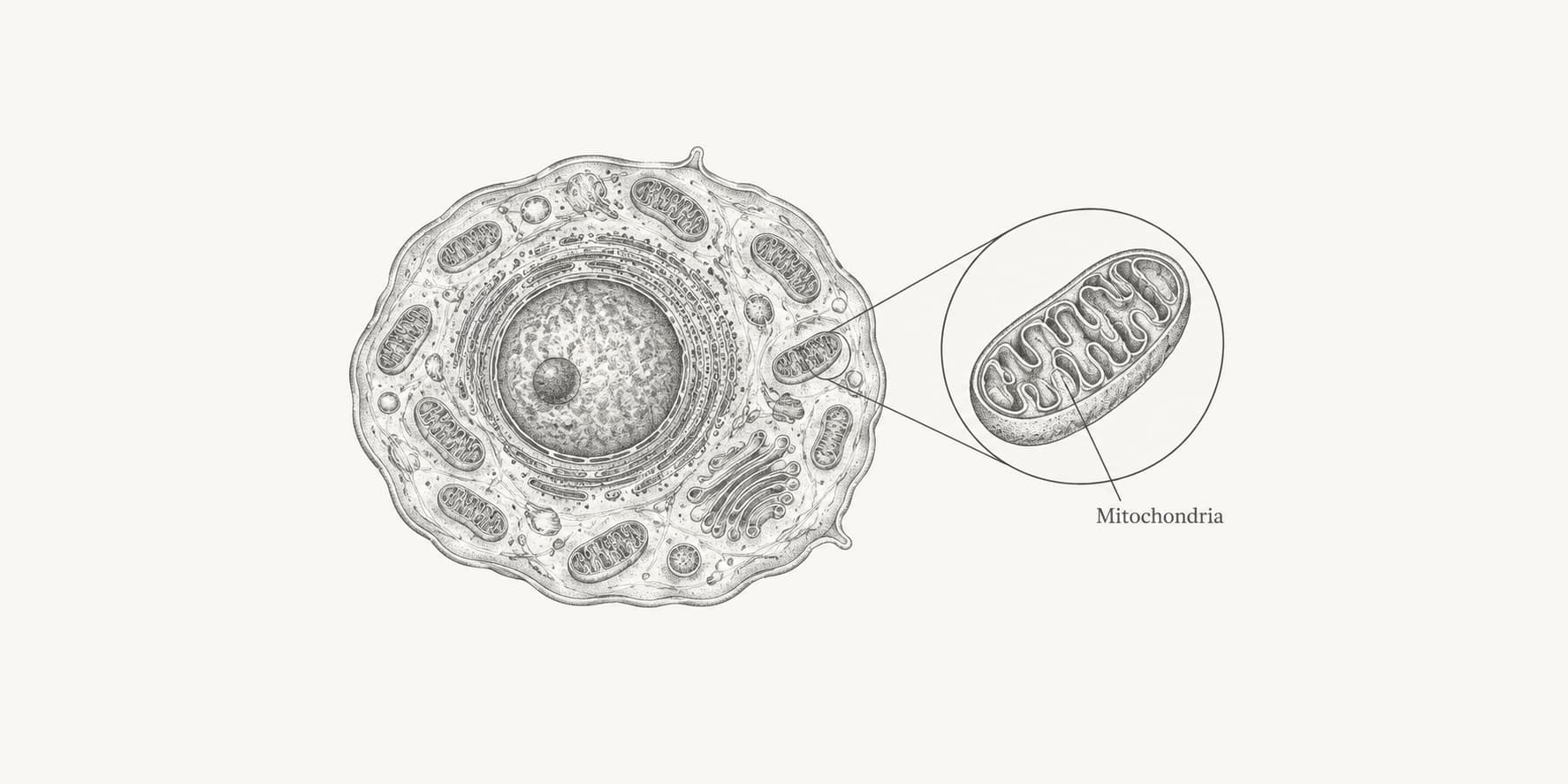
Treated as a sphere, a 115-micrometer oocyte has a volume of about 800,000 cubic micrometers, or 0.80 nanoliters. That volume is filled with cytoplasm and organelles; the oocyte's mitochondria, for example, are more numerous than those of ordinary body cells.[3]
Width favors compact cells, though, and many large cells are long rather than round. To compare every cell type on one scale, we ranked the 401 cell types in Hatton and colleagues' census by mean cell mass, which the census estimates from published cell dimensions and shapes.[1] For cells of similar density, mass tracks volume. In this analysis, the oocyte, at about 1.0 microgram, ranks 11th. The ten heavier types are skeletal muscle fibers and nine kinds of long neuron: the large motor and sensory neurons of the peripheral nerves and the Betz cells that carry movement commands from the brain's motor cortex down the spinal cord. The heaviest neuron record, a large sensory neuron serving the leg, averages 63 micrograms, about 61 times the egg, because its axon runs for most of a meter.[1]
These neuron estimates combine the cell body, the dendrites, and an axon of assumed length, a median of 84 centimeters for the nerves of the leg. They leave out the myelin sheath wrapped around the axon, which is made by separate Schwann cells.[1] Even so, a single neuron with one nucleus can hold far more cytoplasm than an egg. The oocyte is therefore the widest human cell and the heaviest one that is neither a muscle fiber nor a neuron, but not the most voluminous single-nucleus cell.
We ranked cell types by the count-weighted mean mass of their records and used the median of nucleated cells for the typical cell. The masses are mostly calculated from microscope dimensions and assumed shapes rather than weighed, and Hatton and colleagues note that source values for one cell type can differ up to fourfold, so the ranking is best read in orders of magnitude.[1] The complete ranking, selected records, and reproduction script are available for download; we completed the analysis on September 27, 2026, with the dataset version documented there.
White fat cells, or adipocytes, come closest to the egg among compact cells, and they grow and shrink with the fat they store. Li and Spalding report human adipocyte diameters from 20 micrometers to several hundred micrometers; in a meta-analysis of more than 89 studies of subcutaneous fat, the mean was 75 to 80 micrometers in lean adults, rising with body mass index to a plateau near 120 micrometers in severe obesity.[4] The census puts the average white fat cell at 0.41 micrograms and its largest subcutaneous size class, 113 to 153 micrometers across, at 0.89 micrograms, close to the egg.[1] A 200-micrometer adipocyte, within the reported range, would hold about five times the oocyte's volume.
Megakaryocytes, the bone marrow cells that shed platelets, can reach about 100 micrometers in diameter.[5] On average they are much smaller: the census puts the most mature stage at about 29 nanograms, roughly a thirty-fifth of an egg.[1]
Skeletal muscle fibers are the largest cells in the body by a wide margin, if cells formed by fusion count. Each fiber arises from many precursor cells and carries thousands of nuclei. The census gives a fiber of the sartorius, the long strap muscle of the thigh, a diameter of 44 micrometers and a length of 44 centimeters, for a mass of about 0.72 milligrams, some 700 times the egg.[1] That length assumes that fibers run the full length of the muscle, so it is likely an upper estimate for long muscles. Taken together, skeletal muscle cells make up about half of the body's 45 kilograms of cellular mass while accounting for less than 0.002% of its nucleated cells.[1]
| Cell | Reported size | Mean mass | Caveat |
|---|---|---|---|
| Sartorius muscle fiber | About 44 µm wide, up to about 44 cm long | 0.72 mg | Formed by fusion, with thousands of nuclei |
| Leg sensory neuron | Cell body 28 to 56 µm in culture, fiber over 1 m long | 63 µg | Axon length assumed; myelin excluded |
| Oocyte | 115 µm mean diameter, range 60 to 171 µm | 1.0 µg | Widest single cell |
| White fat cell | 75 to 80 µm mean in lean adults, about 120 µm in severe obesity | 0.41 µg on average, 0.89 µg in the largest class | Size varies with body fat |
| Megakaryocyte | Up to about 100 µm in diameter | 29 ng in the most mature stage | Size varies with maturation stage |
What is the smallest cell in the human body?
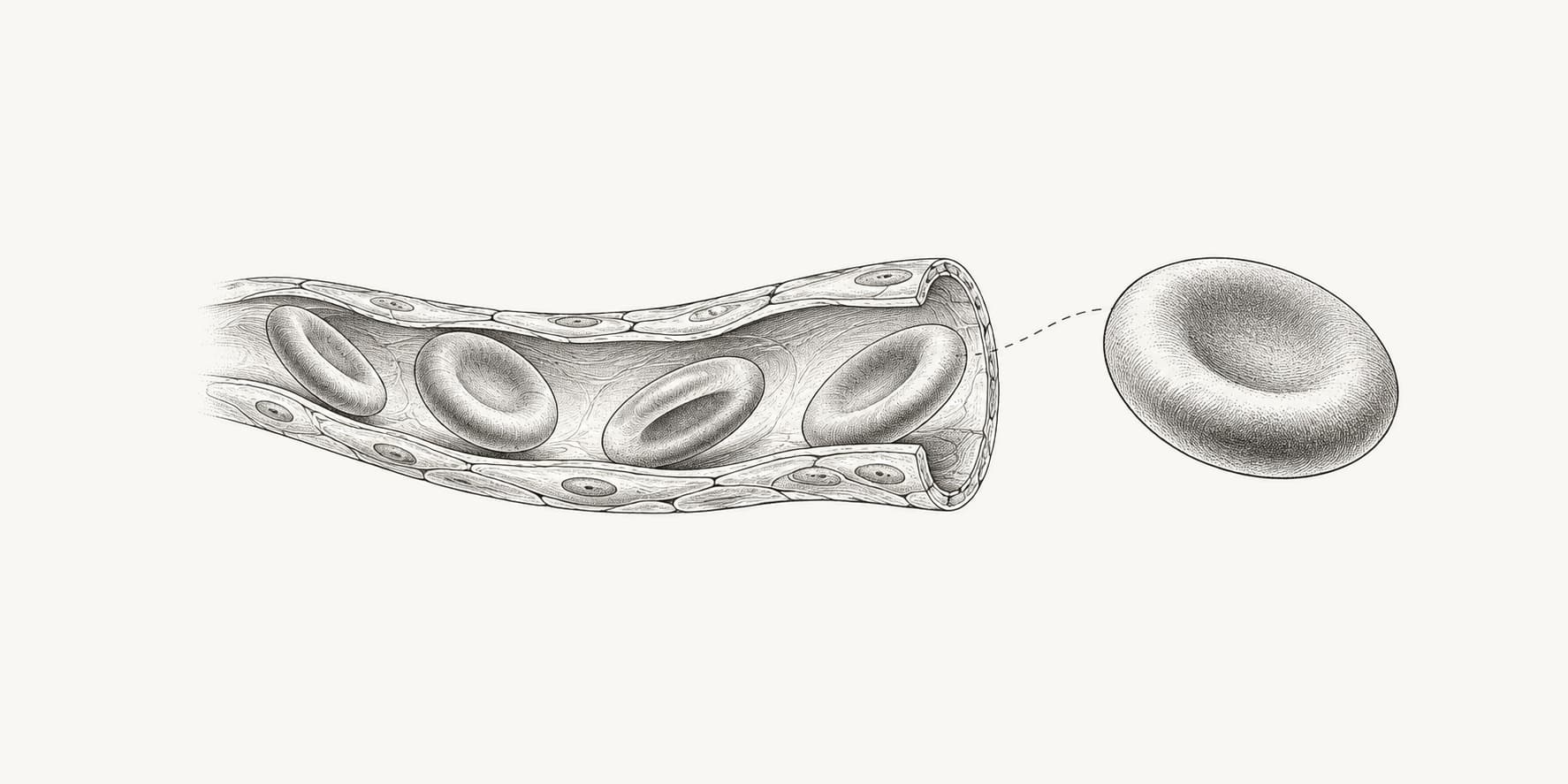
The sperm cell is the smallest complete human cell by volume, with a mean of 17.4 cubic micrometers in one study.[7] Milo and Phillips give a somewhat higher 20 to 40 cubic micrometers, which is still well below the roughly 100 cubic micrometers of a red blood cell, a disc 7 to 8 micrometers across.[5] Reference measurements put the median length of a sperm head at 4.1 micrometers and its width at 2.8 micrometers.[8] That head carries a single set of chromosomes, half the DNA of most body cells, while the flagellum makes the whole cell much longer than its head.
Between the two reproductive cells, an egg of mean size has about 46,000 times the volume of a 17.4-cubic-micrometer sperm cell. We calculated this ratio from the two published means; the census masses, 1.0 micrograms for the egg and 28 picograms for sperm, give about 37,000.[1] Both populations vary from cell to cell, so the difference is best read as roughly 40,000-fold.
Our mass ranking agrees on the bottom of the scale. The three lightest entries among the 401 cell types are platelets at 9 picograms, sperm at 28 picograms, and red blood cells at 98 picograms. Among the smallest body cells that keep their nucleus are lymphocytes, the white blood cells of the immune system, at about 0.13 nanograms, the mass of a sphere about 6 micrometers across.[1]
Smaller particles circulate in the blood, but whether they count depends on the definition of a cell. Red blood cells lose their nucleus as they mature and are still counted as cells. Platelets are only 2 to 3 micrometers across, but they are fragments shed by megakaryocytes rather than cells produced by division.[9] Hatton and colleagues left both platelets and sperm out of their whole-body size distribution, which begins at the red blood cell, because the two fall below a gap in the continuum of human cell sizes.[1] If fragments count, a platelet is the smallest; if only complete cells count, the sperm is.
What is the longest cell in the human body?
The longest cell in the human body is a sensory neuron: the fiber of a neuron in a lower spinal ganglion that reaches the big toe can exceed 1 meter.[6]
Almost all of that length is a thin process rather than the cell body. Human dorsal root ganglion neurons measured in culture had cell bodies 28 to 56 micrometers across, although isolation probably destroys the largest ones, and some of their processes are only about 1 micrometer in diameter. Only 1 to 2% of the neuron's cytoplasm sits in the cell body.[6] If a 56-micrometer cell body were enlarged to the size of a tennis ball, its fiber would stretch for more than a kilometer. Neuron size also follows the distance a cell has to span: sensory cells are smaller in the face than in the legs.[1]
A neuron can therefore be the longest human cell without being the widest. Its length also makes the largest neurons some of the most voluminous cells in the body, as the mass ranking shows. The same geometry explains why a count of brain neurons says little about their combined length, since each neuron's branches add up to far more than its longest straight-line span.
What are the largest and smallest cells in the world?
Across all life, the smallest well-studied cells are about 0.3 micrometers wide, while a single cell with many nuclei can reach 2.8 meters. Outside the human body the definition of a cell matters even more, because the record holders include parasites, fused cells, and organisms no one has grown in a laboratory.
Mycoplasma genitalium is the standard answer to the question of the smallest cell in the world. Its diameter is about 0.3 micrometers, close to the proposed lower size limit for a growing, self-replicating cell with DNA, ribosomes, and a membrane.[10] It also has one of the smallest known genomes. Smaller cells exist but are harder to study. Luef and colleagues filtered groundwater through a 0.2-micrometer filter and imaged bacteria from little-known lineages with a mean volume of 0.009 cubic micrometers.[11] That volume corresponds to a sphere about 0.26 micrometers across. These cells hold only a few densely packed ribosomes and appear to lack some biosynthetic pathways, so they may depend on neighboring microbes.[11] Viruses are smaller still, but they are not cells and cannot reproduce without entering a host cell.
At the other end, most bacterial species are about 2 micrometers long, and the largest previously described specimens reached about 750 micrometers.[12] Volland and colleagues then described Thiomargarita magnifica, a bacterium with an average cell length above 9,000 micrometers that is visible to the naked eye; the longest measured cells approach 2 centimeters.[12] An average T. magnifica cell is therefore thousands of times longer than a typical bacterium such as E. coli.
Among animals, the ostrich egg cell is the usual answer to the question of the largest cell. A review of cell size cites a measurement of 8 centimeters, about 700 times the width of a human oocyte.[13] The cell is the yolk-filled ovum; the egg white, membranes, and shell are added around it in the oviduct and are not part of the cell.[14] Single-celled algae go further. The stalked alga Acetabularia forms a single cell 3 to 5 centimeters tall.[13] Caulerpa taxifolia is a coenocyte, a single continuous cell with many nuclei and no internal membranes dividing its cytoplasm, and individuals have been found to reach 2.8 meters, the largest known single cells.[15]
| Record | Cell | Reported size |
|---|---|---|
| Smallest well-studied cell | Mycoplasma genitalium | About 0.3 µm wide |
| Among the smallest known cells | Uncultivated groundwater bacteria | 0.009 µm³ mean volume |
| Largest bacterium | Thiomargarita magnifica | Average above 9 mm long, up to about 2 cm |
| Largest animal cell | Ostrich ovum | About 8 cm across |
| Largest single cell | Caulerpa taxifolia | Up to 2.8 m |
These records follow what each cell does. The typical human cell is about 10 micrometers across, but cells that store material, such as eggs and fat cells, have very large volumes, and cells that carry signals grow long and thin.[5] The very largest cells escape the usual limits by fusing, by stretching a single cell over a meter, or by never dividing their cytoplasm, while the smallest have stripped their genomes and machinery close to the minimum a living cell needs. A cell size record is therefore meaningful only together with its rule: width, length, or mass, one nucleus or many, a complete cell or a fragment.