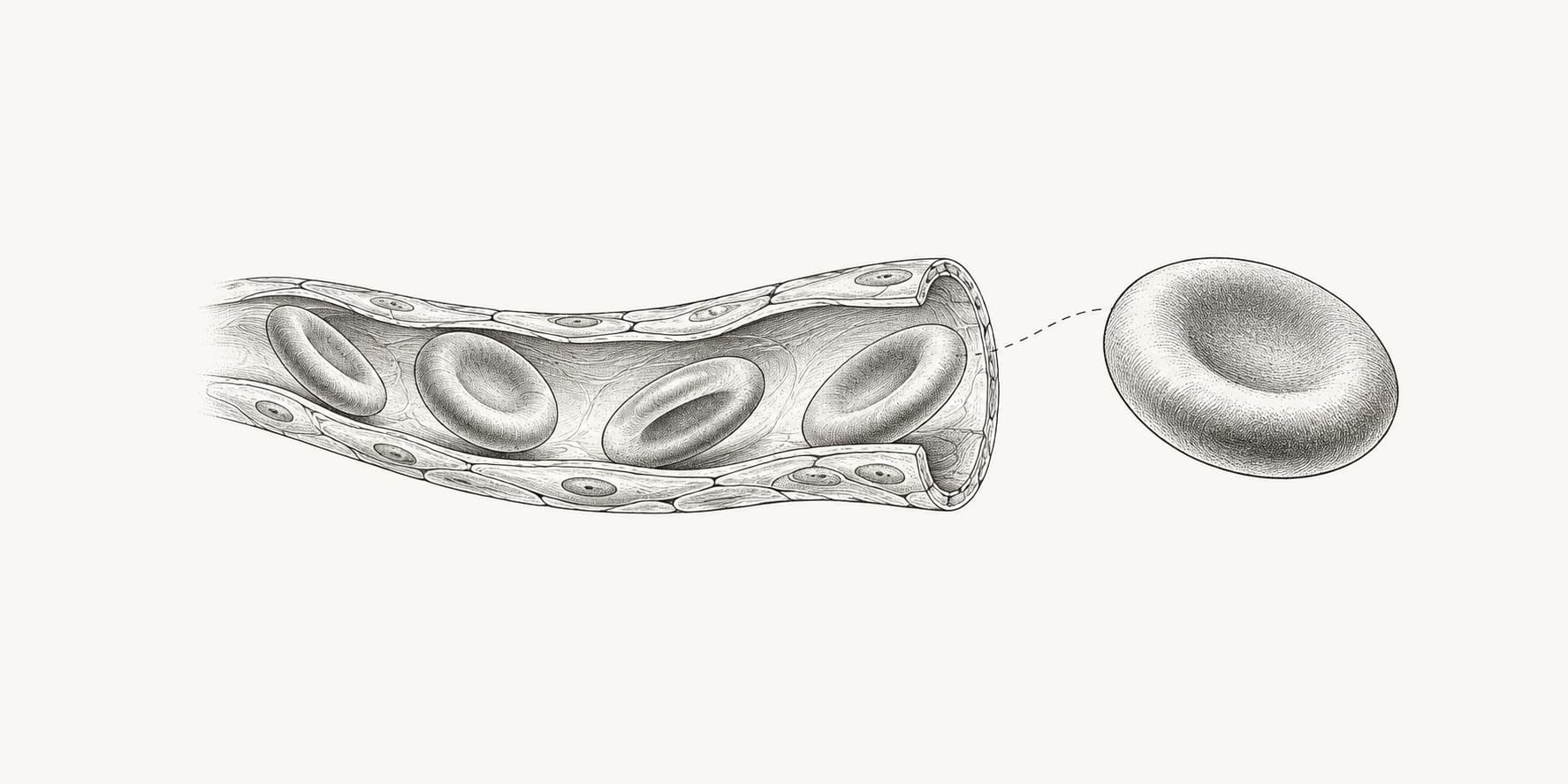
How many white blood cells are in the human body?
A 73-kilogram reference man has an estimated 1.8 trillion immune cells, but only about 2% of them are in the blood.
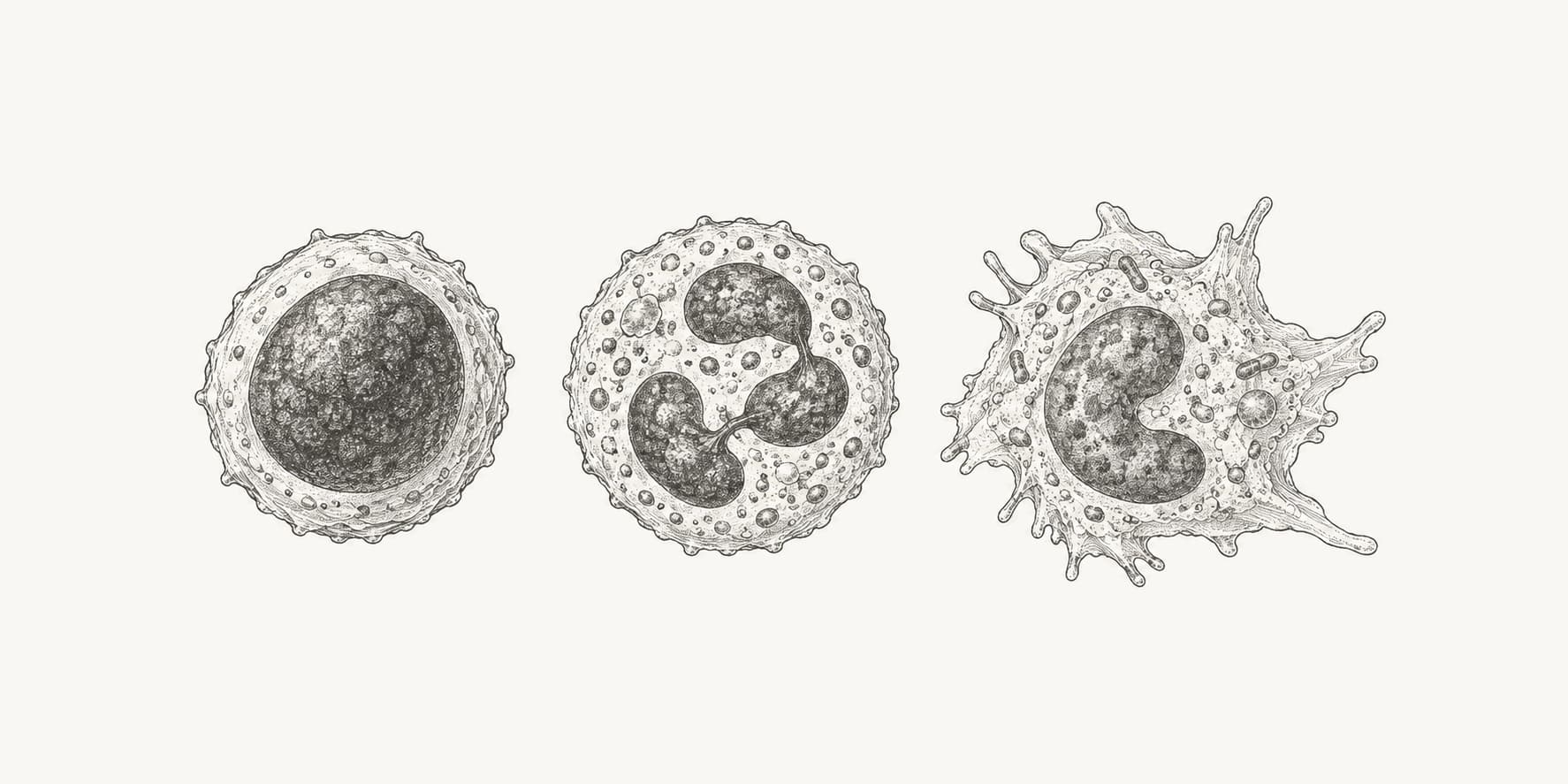
The best whole-body estimate is about 1.8 trillion immune cells in a 73-kilogram reference man. Most are in bone marrow and lymphatic tissues. Only about 2% are circulating in the blood, so a routine white blood cell count measures a small part of the body's immune-cell population.
How many white blood cells are in the human body?
The human body contains an estimated 1.8 trillion immune cells, with a 95% confidence interval of 1.5 to 2.3 trillion, in a healthy 73-kilogram reference man.[1]
This is the best available body-wide estimate for the cells commonly grouped as white blood cells or leukocytes. It includes lymphocytes with rearranged immune receptor sequences, as well as neutrophils, macrophages, monocytes, and several less abundant immune-cell types in blood and tissues.
About 40% of these cells are in bone marrow and 39% are in the lymphatic system. Only about 2%, or roughly 36 billion cells, are in blood. The remaining 19% are spread across the skin, lungs, gastrointestinal tract, and other tissues.[1]
The chart groups the PNAS census into four compartments. Percentages are rounded, and “other tissues” is calculated as the remainder after bone marrow, lymphatic tissues, and blood.[1]
A blood test gives a different but compatible estimate. The common adult reference interval is 4,500 to 11,000 white blood cells per microliter, although laboratories set their own ranges.[2] Multiplying that concentration by nearly 5 liters of adult blood gives about 22.5 to 55 billion circulating white blood cells.[3] The result sits around the 36-billion blood estimate from the whole-body census.
White blood cells are far less numerous than the roughly 25 trillion red blood cells in a reference adult. They are also included in the broader estimate of 36 trillion human cells.
How many white blood cells are in a drop of blood?
A 50-microliter drop of blood contains about 225,000 to 550,000 white blood cells at the common adult reference concentration of 4,500 to 11,000 cells per microliter.[2]
There is no standard biological drop size, which is why published answers differ. A smaller 20-microliter drop at the same concentration would contain about 90,000 to 220,000 white blood cells. Both ranges are calculated from the measured concentration rather than counted from a typical drop.
Platelets are a separate blood component. The phrase “white platelets” is not a standard medical term: platelets are cell fragments involved in clotting, while white blood cells are nucleated immune cells.
How many white blood cells in urine is normal?
A common reference range for urine microscopy is 0 to 5 white blood cells per high-power field. More than 5 per field can support a urinary tract infection diagnosis when a person also has symptoms, but the count alone does not prove an infection.[4]
Urine results cannot be compared directly with a blood count because the units and sample preparation differ. Microscopy reports cells in the area visible under high magnification after the urine sediment is prepared. Some laboratories instead report cells per microliter, so the reference range printed on the result is the one that applies.
White blood cells can appear in urine with infection or inflammation, including urinary stones and some sexually transmitted infections. Collection contamination can also affect the result.[4]
How many white blood cells are in a drop of breast milk?
There is no fixed white blood cell count for a drop of breast milk. In one flow-cytometry study, the median concentration fell from 146,000 leukocytes per milliliter in colostrum to 27,500 in transitional milk and 23,650 in mature milk.[5]
For a 50-microliter drop, those medians equal about 7,300 white blood cells in colostrum, 1,375 in transitional milk, and 1,183 in mature milk. These are calculated examples, not universal counts.
Another study found 0 to 1,151 viable leukocytes per milliliter in mature milk from healthy mother-infant pairs, with counts rising sharply when the mother or infant had an infection.[6] Stage of lactation, health, collection, and counting method all matter.
The often-repeated claim that every drop of breast milk contains one million white blood cells is not supported by these measured medians. A reliable figure must name the milk stage, drop volume, health conditions, and measurement method.