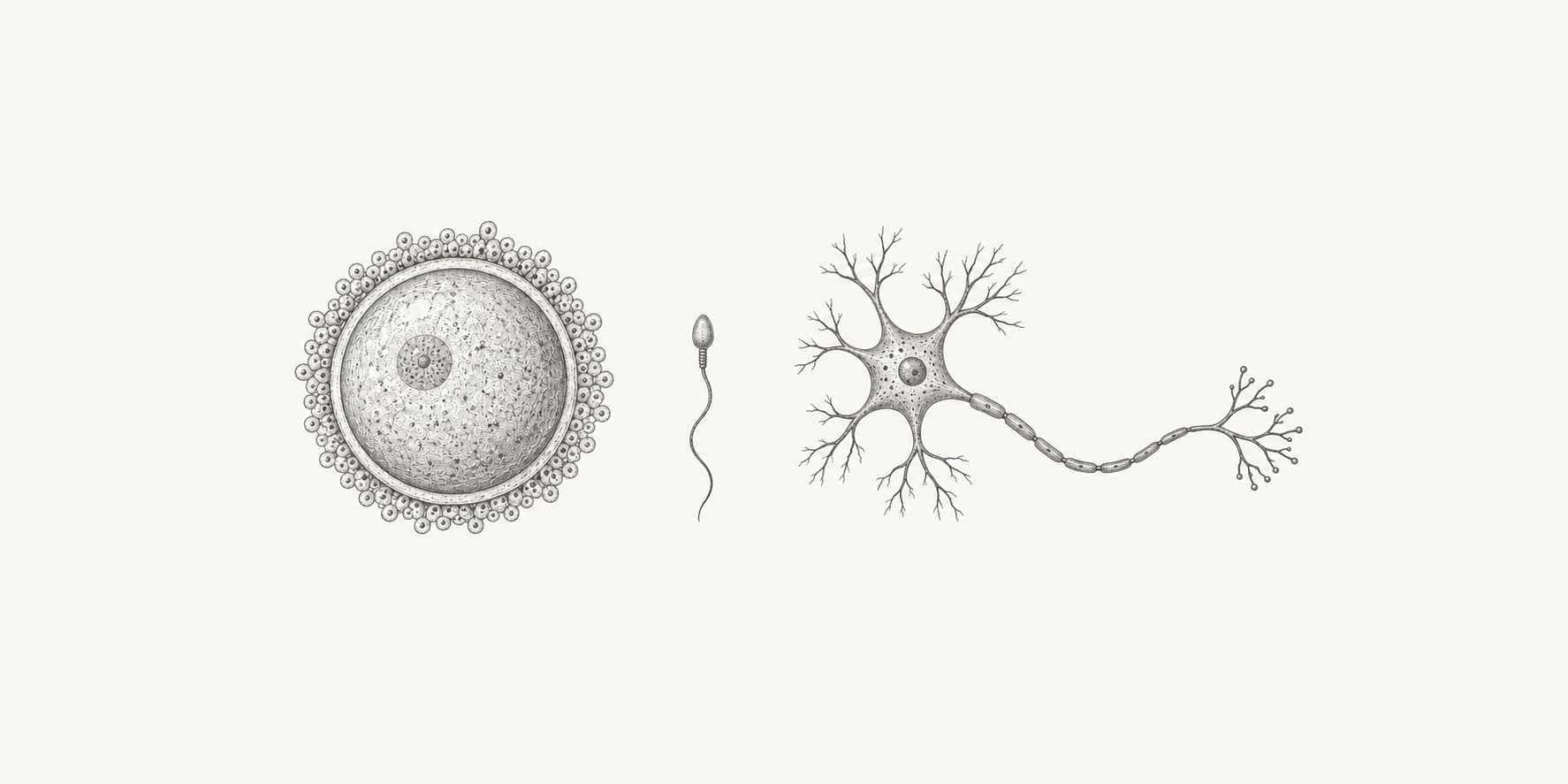
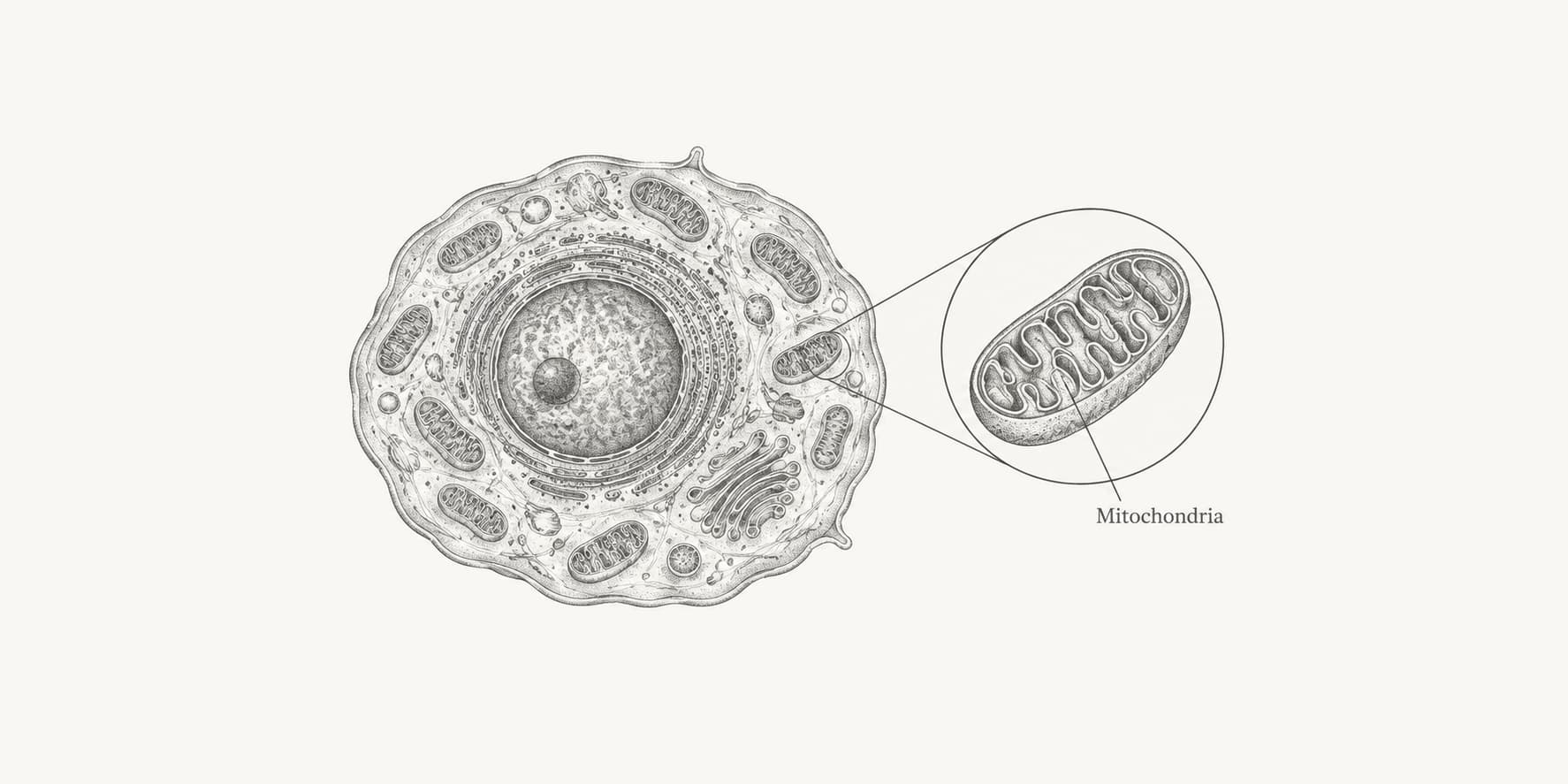
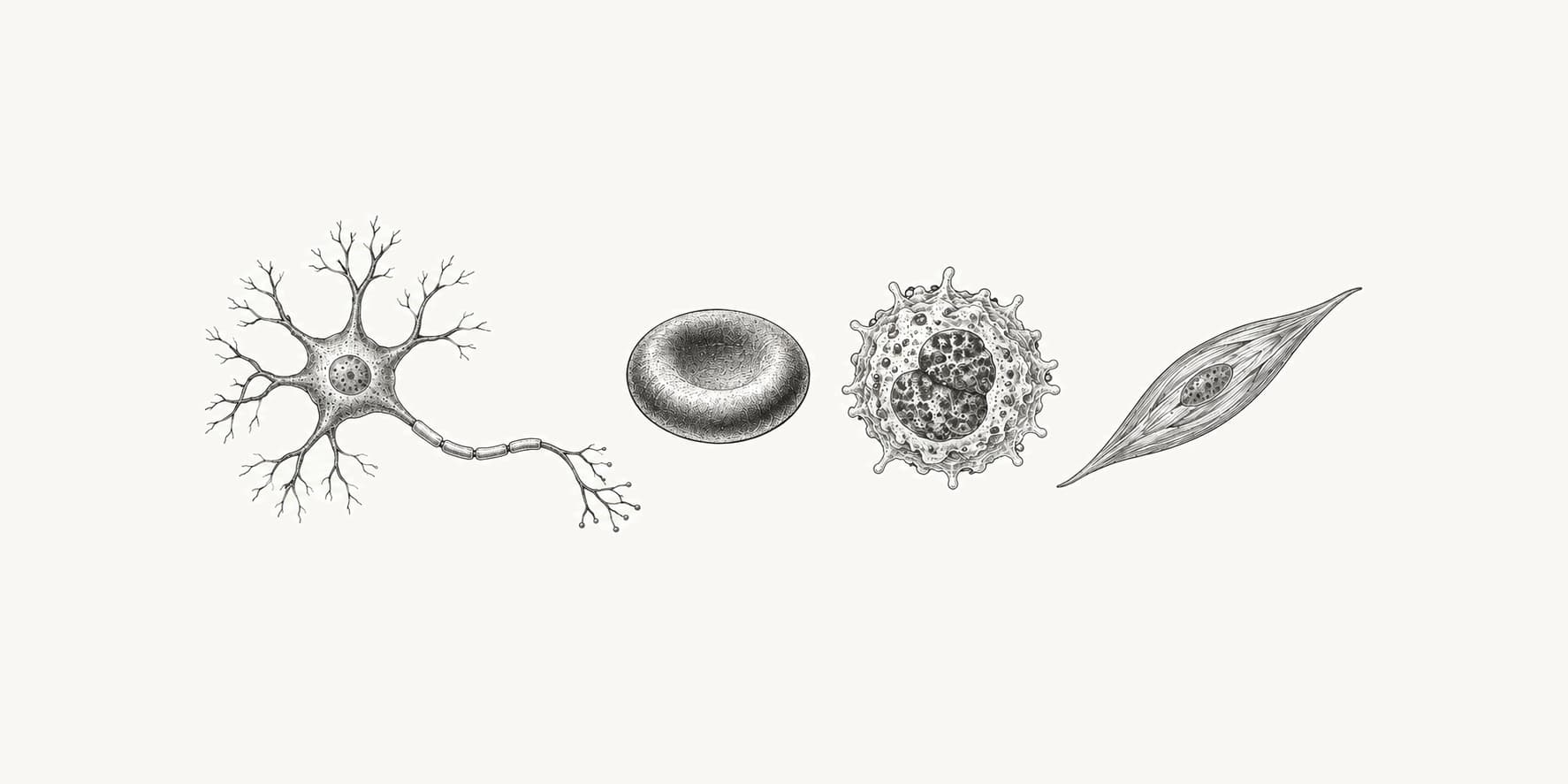
How many cells are in the human body?
A reference adult male has about 36 trillion human cells. The estimate is about 28 trillion for an adult female and 17 trillion for a 10-year-old child.
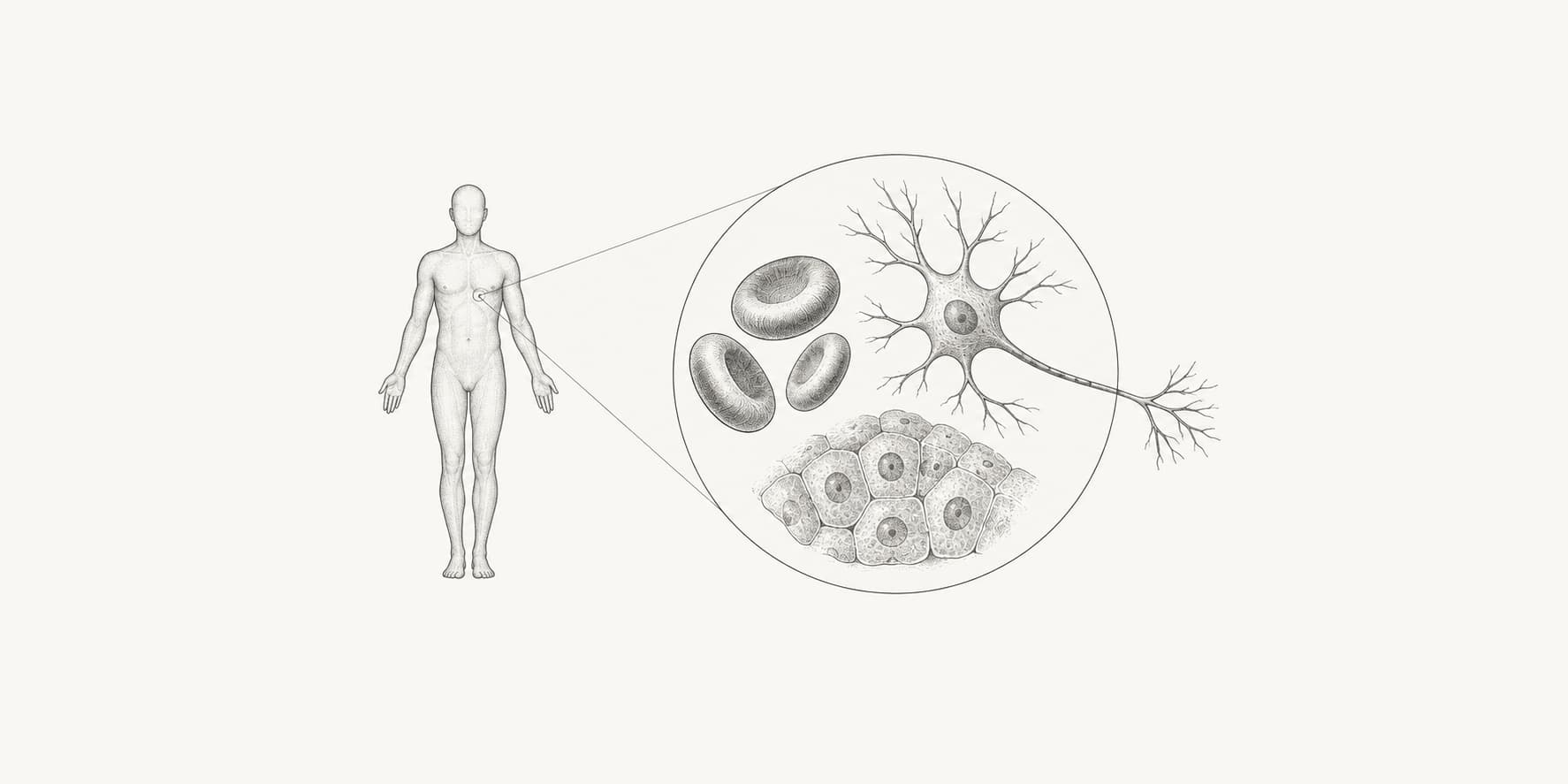
A 70-kilogram adult male has about 36 trillion human cells. The current estimate is 28 trillion for a reference adult female and 17 trillion for a 10-year-old child.
Most of these are tiny blood cells. The cells that make up muscles, fat, and organs account for much more of the body's mass, but far less of its cell count.
How many cells are in the human body?
A reference adult male has about 36 trillion human cells, a reference adult female has about 28 trillion, and a 10-year-old child has about 17 trillion.[1]
| Reference body | Body mass | Estimated human cells |
|---|---|---|
| Adult male | 70 kg | 36 trillion |
| Adult female | 60 kg | 28 trillion |
| 10-year-old child | 32 kg | 17 trillion |
These are modeled reference bodies, not universal counts. The estimates combine measurements and published data for about 400 cell types across the body's organs.[1] A taller or heavier person will not have a proportionally larger count because tissues differ greatly in cell size and in the amount of material between cells.
About 29 trillion of the 36 trillion cells in the reference male are nonnucleated blood cells, mainly red blood cells and platelets. That leaves roughly 7 trillion nucleated cells.[1] This distinction matters when estimating the total length of DNA in the body, because mature red blood cells and platelets do not contain a nuclear genome.
The count is dominated by small cells, while mass is dominated by large ones. Red blood cells are the most numerous human cells, but muscle cells and fat cells contribute far more mass. This is why dividing body mass by the mass of one “average cell” gives a poor estimate.
How many cell types are in the human body?
There is no fixed count of human cell types, but modern cell atlases distinguish several hundred. The Tabula Sapiens atlas classified 475 distinct cell types from nearly 500,000 cells sampled across 24 tissues and organs.[2]
The dedicated guide to human cell types explains why published counts range from hundreds to thousands, how a cell type differs from a temporary state, and how single-cell atlases classify cells.
How many red blood cells are in the human body?
A 70-kilogram reference man has about 25 trillion red blood cells, making them the most numerous human cell type.[4] Mature red blood cells have no nucleus, and about 210 billion are removed and replaced each day.[7]
The full red blood cell count explains how the estimate is calculated, how long these cells live, and how quickly the body replaces them.
How many bacteria are in the human body?
A 70-kilogram reference adult male carries an estimated 38 trillion bacteria, nearly all in the colon.[4] That is the same order of magnitude as his 36 trillion human cells, giving a ratio of about 1.1 bacterial cells per human cell.
The full bacteria-to-human-cell comparison covers the uncertainty, bacterial mass, body-site distribution, and why the older 10:1 claim was too high.
How many cells die in the human body per day?
About 330 billion human cells die and are replaced each day in a 70-kilogram reference man, equivalent to roughly 3.8 million cells per second.[7]
The estimate is 0.33 ± 0.02 trillion cells and 80 ± 20 grams of cellular mass per day. Close to 90% of the turnover by cell number comes from blood cells; gut epithelial cells account for much of the remainder.[7]
Compared with the current 36-trillion-cell census, 330 billion is about 0.9% of all human cells. That percentage is a ProteinIQ calculation. Cell death and production balance in a healthy steady state, but turnover rates differ sharply between tissues: blood and gut cells renew quickly, while many neurons and heart muscle cells last for years or decades.
How many viruses are in the human body?
The human virome is thought to contain roughly 10 trillion virus particles, but no precise whole-body count exists and the total varies greatly among people.[5]
“Viruses in the body” can mean several different things: free virus particles, viruses replicating inside human cells, bacteriophages that infect the body's bacteria, or latent viral DNA. Most particles in the healthy human virome are thought to be bacteriophages rather than viruses attacking human cells.[5]
Particle count and viral diversity are also different questions. A 2023 study of eukaryotic DNA viruses in nine organs detected 17 viruses across 31 people, with a mean of 6.7 detected virus types per person. It examined a defined panel and does not represent every virus or every body site.[6]
Some viral sequences have become part of our chromosomes over evolutionary time. They contribute to estimates of viral DNA in the human genome, but they are not 10 trillion active infections. This mix of particles, latent infections, bacteriophages, and inherited sequences is why the viral total should be read as an order-of-magnitude estimate.