How many cell types are in the human body?
Modern whole-body atlases classify several hundred human cell types, but there is no final count because the answer changes with the definition and level of detail.
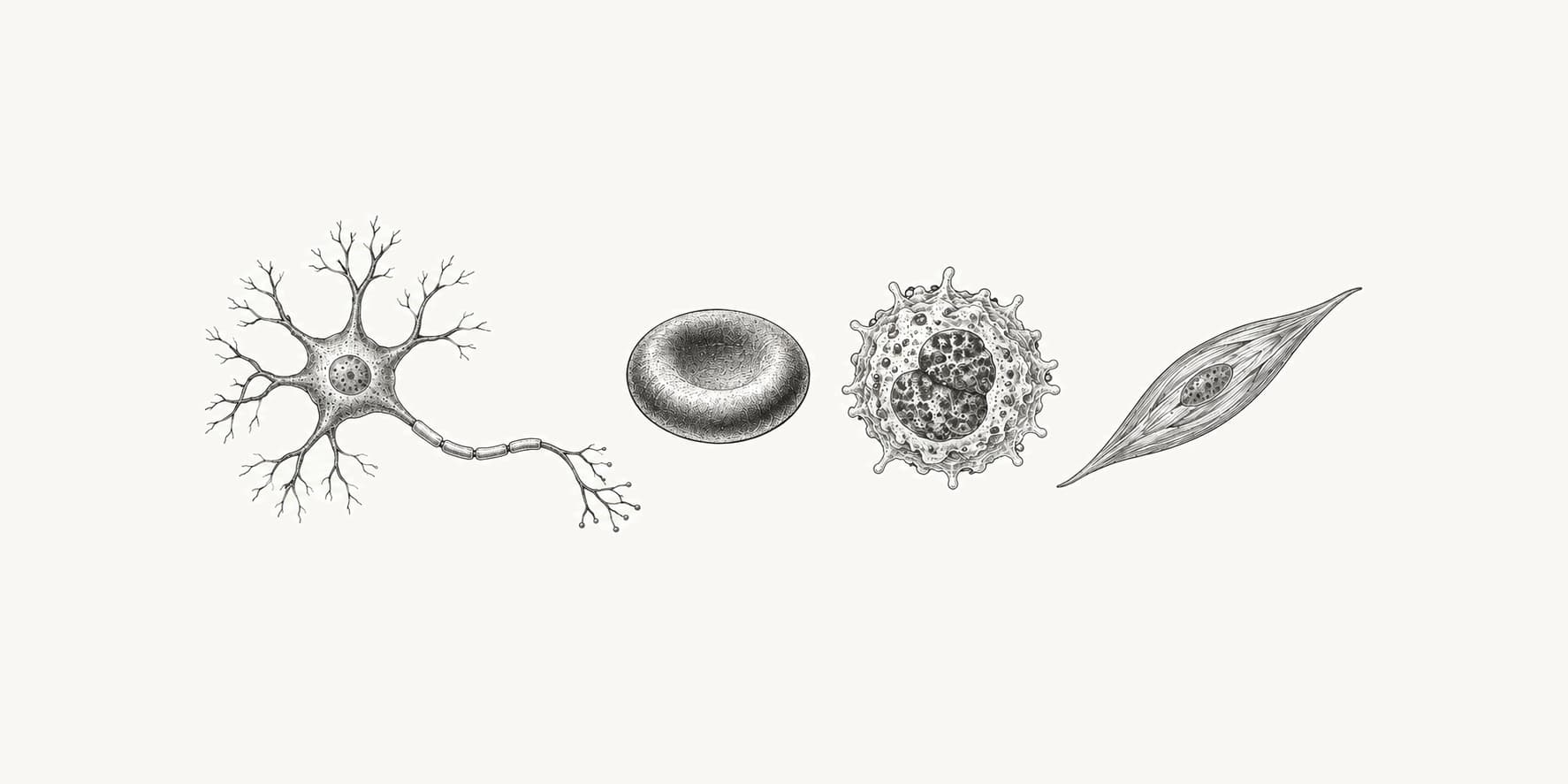
There is no exact, agreed count of human cell types. The best short answer is several hundred. Tabula Sapiens, a major multi-organ atlas, classified 475.
Broader classifications merge related cells. High-resolution molecular studies can split them into thousands of subtypes.
How many cell types are in the human body?
Modern whole-body studies identify about 400 to 500 major human cell types. Tabula Sapiens classified 475 types after analyzing 483,152 cells from 24 tissues and organs.[1]
The older claim that the body has about 200 cell types is still common in educational references, but it is too coarse to describe what current single-cell atlases can distinguish.[6] A separate 2023 census used morphology and function to classify about 400 major cell types across 60 tissues.[2]
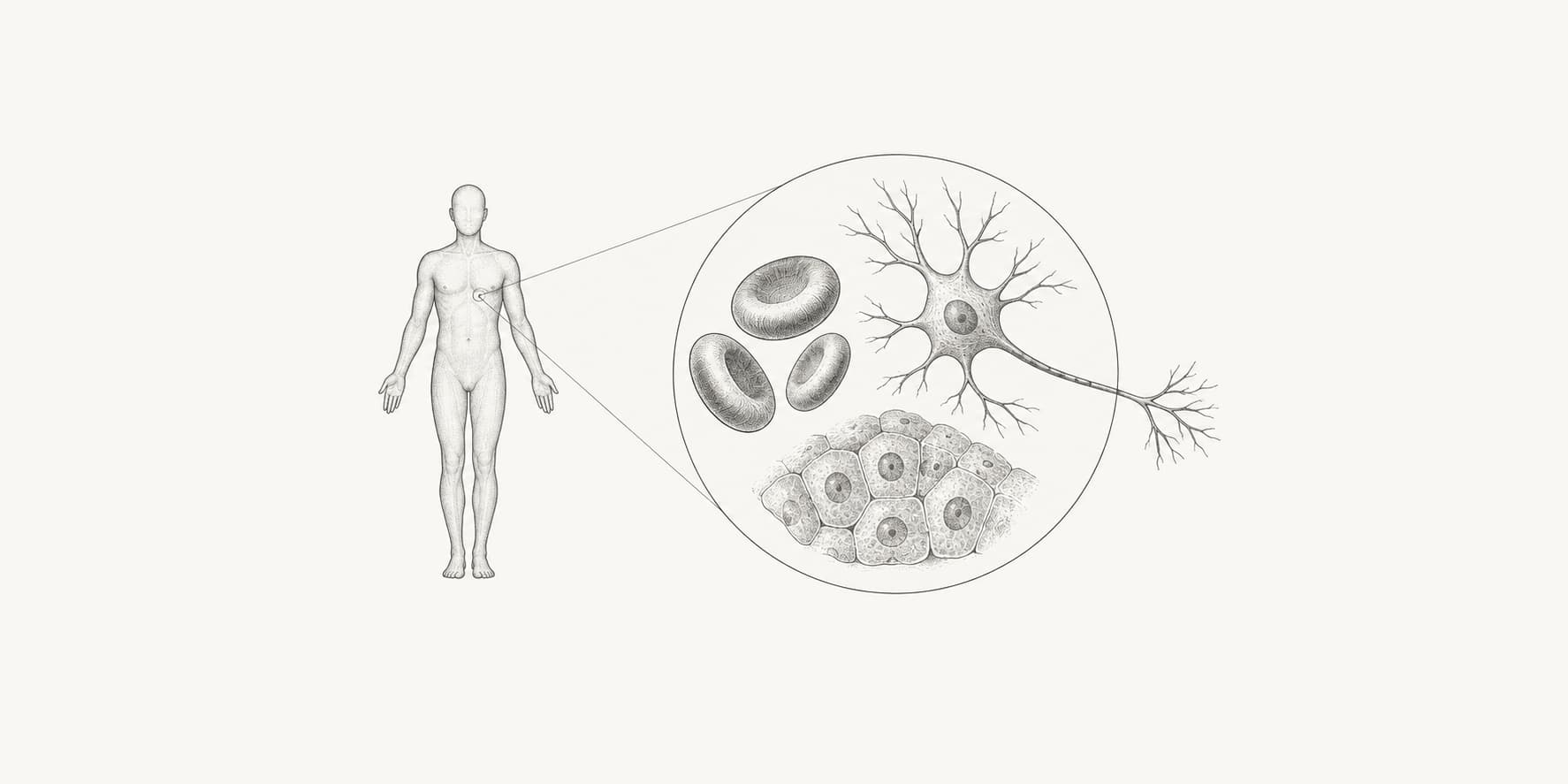
Several hundred is the most useful whole-body answer at the level of major types. The count rises as researchers divide those types into finer molecular and tissue-specific subtypes. This classification question is separate from the body's individual cell count, which is measured in trillions.
Why do cell-type counts range from hundreds to thousands?
Cell-type counts range from hundreds to thousands because researchers classify cells at different levels of detail. A 2023 whole-body census organized the same dataset into 18 broad classes, about 400 major types, 924 more specific types, and 1,264 tissue-specific cell groups.[2]
These four bars are classification levels from one study, not competing estimates of a single true total. “Immune cell” is a broad class. T cells and B cells are narrower types, and each can be divided again by function, molecular profile, location, or developmental history.
Finer methods can produce much larger counts. A transcriptomic atlas of the adult human brain identified 461 clusters and 3,313 subclusters from more than 3 million cell nuclei.[5] The 3,313 figure is a count of molecular subclusters at that study's chosen resolution, not a final inventory of brain cell types.
What counts as a cell type?
A cell type is a group of cells with a shared, relatively stable identity, usually defined by a combination of structure, function, location, developmental origin, and molecular profile.[3]
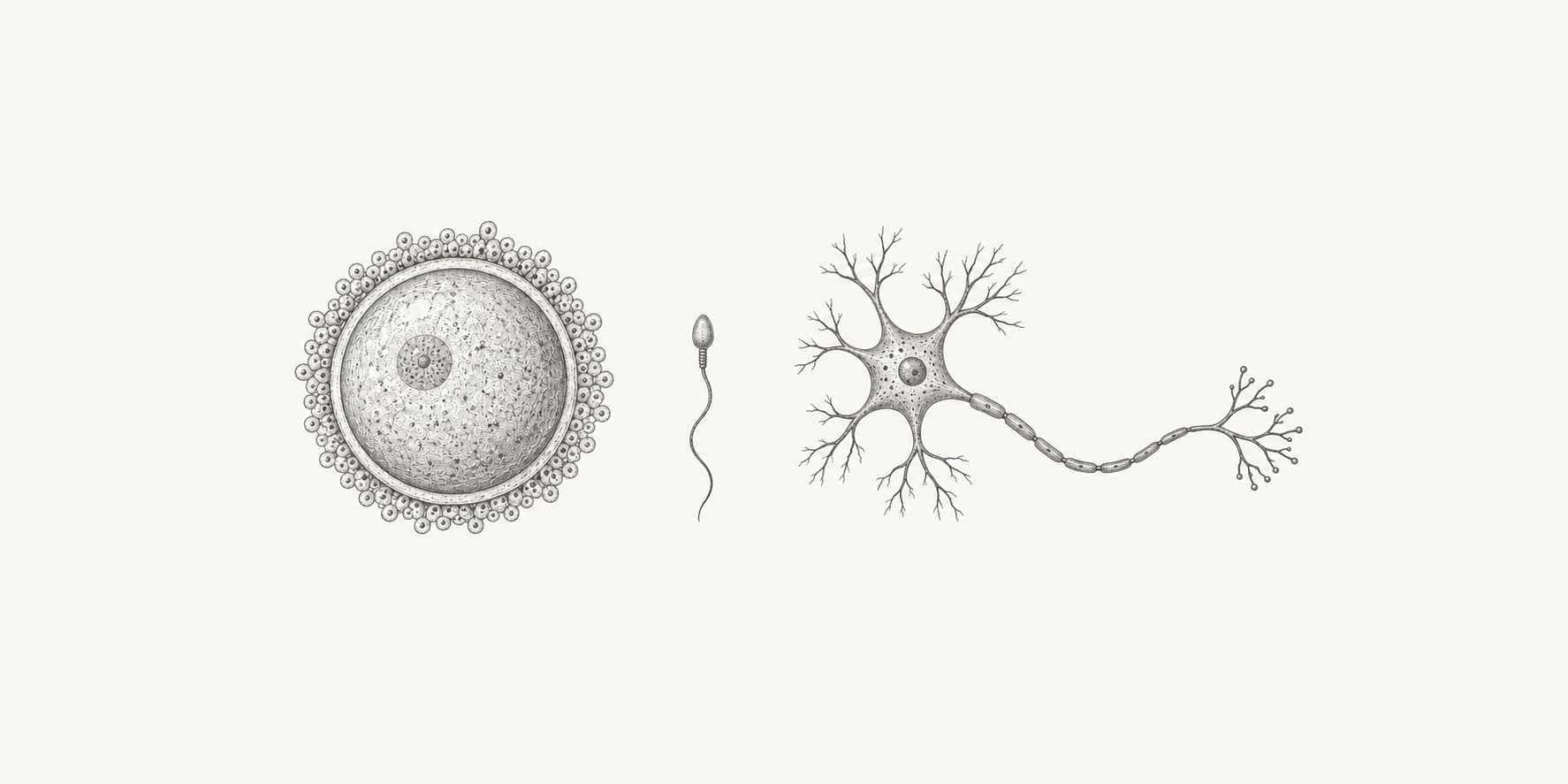
No single test decides whether two cells are different types. A neuron and a liver cell differ clearly in shape, function, and gene expression. The boundary between two closely related immune cells may depend on which markers are measured and how much difference a study requires before it creates a new category.
A cell type also differs from a cell state. A T cell can become activated during an immune response without necessarily becoming a new type. Cell-cycle stage, inflammation, aging, and disease can all shift gene expression temporarily. Because single-cell sequencing captures a snapshot, researchers must decide whether a cluster reflects a durable identity or a temporary state.[3]
How do scientists identify human cell types?
Scientists identify cell types by combining microscopy, anatomy, function, developmental history, and molecular measurements such as single-cell RNA sequencing.[4]
Traditional classifications rely on what cells look like, where they are found, and what they do. Modern atlases measure which genes are active in individual cells, cluster cells with similar expression profiles, and then compare those clusters with known anatomy and function. Nearly all cell types carry the same human genes; their identities depend largely on which genes they use and when.[4]
The Human Cell Atlas is mapping cell types across tissues, life stages, and diverse people.[4] Cell-type-specific gene regulation can also be studied with AlphaGenome, which predicts regulatory effects across tissues and cell types.
Better sampling will uncover rare cells, while better measurements will separate some groups and shared naming standards will merge others. Any reported total needs its sampling method and classification level beside it.