How many genes are in a chromosome?
Human nuclear chromosomes contain 61 to 2,016 protein-coding genes in GENCODE Release 50. The X chromosome has 853 and the Y chromosome has 61.
As of July 2026, human nuclear chromosomes contain between 61 and 2,016 protein-coding genes in the current reference annotation. Chromosome 1 has the most, while the Y chromosome has the fewest.
The number depends on the chromosome and on what counts as a gene. If non-coding RNA genes, pseudogenes, and other annotated loci are included, the range is 672 to 7,108 genes per nuclear chromosome.
How many genes are in a chromosome?
A human nuclear chromosome contains 61 to 2,016 protein-coding genes in GENCODE Release 50: 61 on the Y chromosome and 2,016 on chromosome 1.[1][2]
This is a count of gene locations, or loci, on one copy of each chromosome type. The two copies of an autosome in a typical diploid cell carry largely the same set of gene loci, although their DNA sequences can contain different alleles. Having 46 chromosomes therefore does not double the number of distinct human genes.
The complete GENCODE catalog contains 19,442 protein-coding genes across chromosomes 1 through 22, X, Y, and mitochondrial DNA. For more on the genome-wide total, see human gene counts.
Chromosome 1 has 2,016 protein-coding genes, the most of any human chromosome; chromosome 21 has the fewest among the autosomes with 216, and the Y chromosome has the fewest among the nuclear chromosomes with 61.
| Chromosome | Protein-coding genes | All annotated genes |
|---|---|---|
| 1 | 2,016 | 7,108 |
| 2 | 1,221 | 5,687 |
| 3 | 1,041 | 4,159 |
| 4 | 745 | 3,577 |
| 5 | 874 | 3,948 |
| 6 | 1,013 | 4,232 |
| 7 | 899 | 3,958 |
| 8 | 687 | 3,265 |
| 9 | 754 | 3,188 |
| 10 | 713 | 3,271 |
| 11 | 1,282 | 4,171 |
| 12 | 1,004 | 3,862 |
| 13 | 315 | 2,000 |
| 14 | 595 | 2,795 |
| 15 | 571 | 2,819 |
| 16 | 822 | 3,186 |
| 17 | 1,140 | 3,793 |
| 18 | 260 | 1,652 |
| 19 | 1,393 | 3,543 |
| 20 | 526 | 1,972 |
| 21 | 216 | 1,133 |
| 22 | 428 | 1,747 |
| X | 853 | 2,958 |
| Y | 61 | 672 |
| Mitochondrial DNA | 13 | 37 |
ProteinIQ calculated these chromosome totals from the gene records in the GENCODE Release 50 GTF file. The protein-coding column follows GENCODE's headline method by excluding 665 readthrough genes; the broader column counts every gene record.[1][2][3]
Chromosome size is not a reliable shortcut for gene count. Chromosome 19 carries 1,393 protein-coding genes, more than chromosome 2's 1,221, even though chromosome 2 contains far more DNA.[2]
Why do chromosome gene counts differ between sources?
Chromosome gene counts differ because databases and publications do not always count the same gene categories, and genome annotations change as evidence improves.
GENCODE Release 50 contains 20,107 records with the protein_coding biotype. Its headline total is 19,442 because 665 readthrough genes are reported separately. The same annotation contains 78,733 gene records when non-coding RNA genes, pseudogenes, immune receptor segments, and other categories are included.[1][3]
An ORF finder can locate candidate coding regions in a DNA sequence. Reference annotators also examine transcript, protein, comparative, and manual evidence before classifying a region as a protein-coding gene. Older chromosome maps and current databases can therefore give different answers under different evidence standards.
How many genes are in the X chromosome?
The human X chromosome contains 853 protein-coding genes and 2,958 annotated genes of all types in GENCODE Release 50.[2]
The National Human Genome Research Institute gives the rounded answer of about 900 genes on the X chromosome.[4] The exact figure depends on which gene categories and annotation release are counted.
For comparison, the Y chromosome contains 61 protein-coding genes and 672 annotated genes of all types. Under the same GENCODE method, the X chromosome has about 14 times as many protein-coding genes as the Y.[2]
How many chromatids and centromeres are in a chromosome?
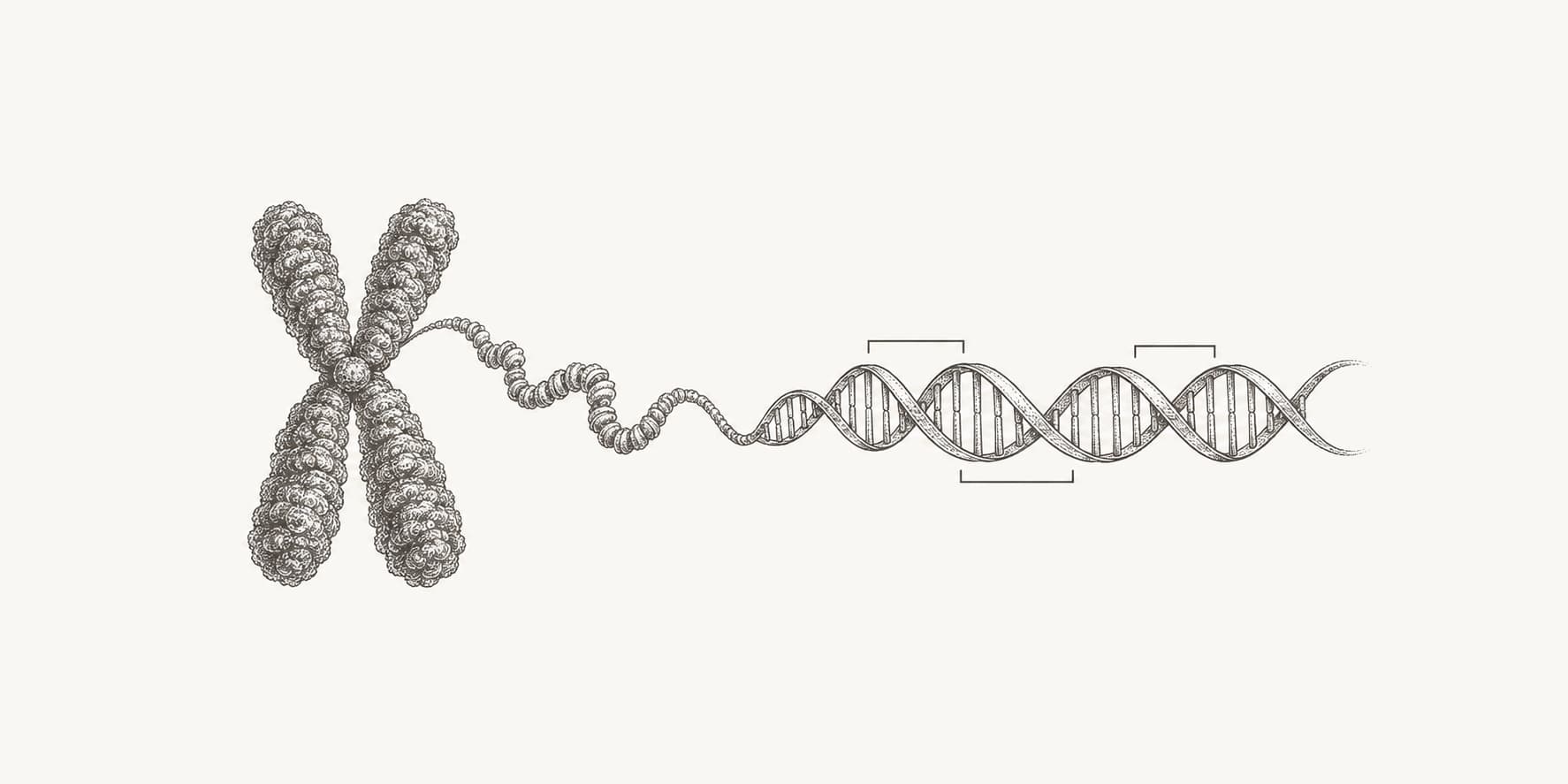
A chromosome has one chromatid before DNA replication and two sister chromatids after replication; a typical human chromosome has one centromeric region.
A chromatid is one replicated copy of a chromosome. After the cell copies its genome, the two sister chromatids remain joined until they separate during cell division.[5] A human cell can therefore have 46 chromosomes and 92 chromatids after replication but before the sister chromatids separate.
Each normal chromosome has one centromere, along with two telomeres and multiple origins of replication.[6] Replication copies the centromeric DNA along with the rest of the chromosome, allowing the two sister chromatids to attach to the mitotic spindle and move into separate daughter cells.