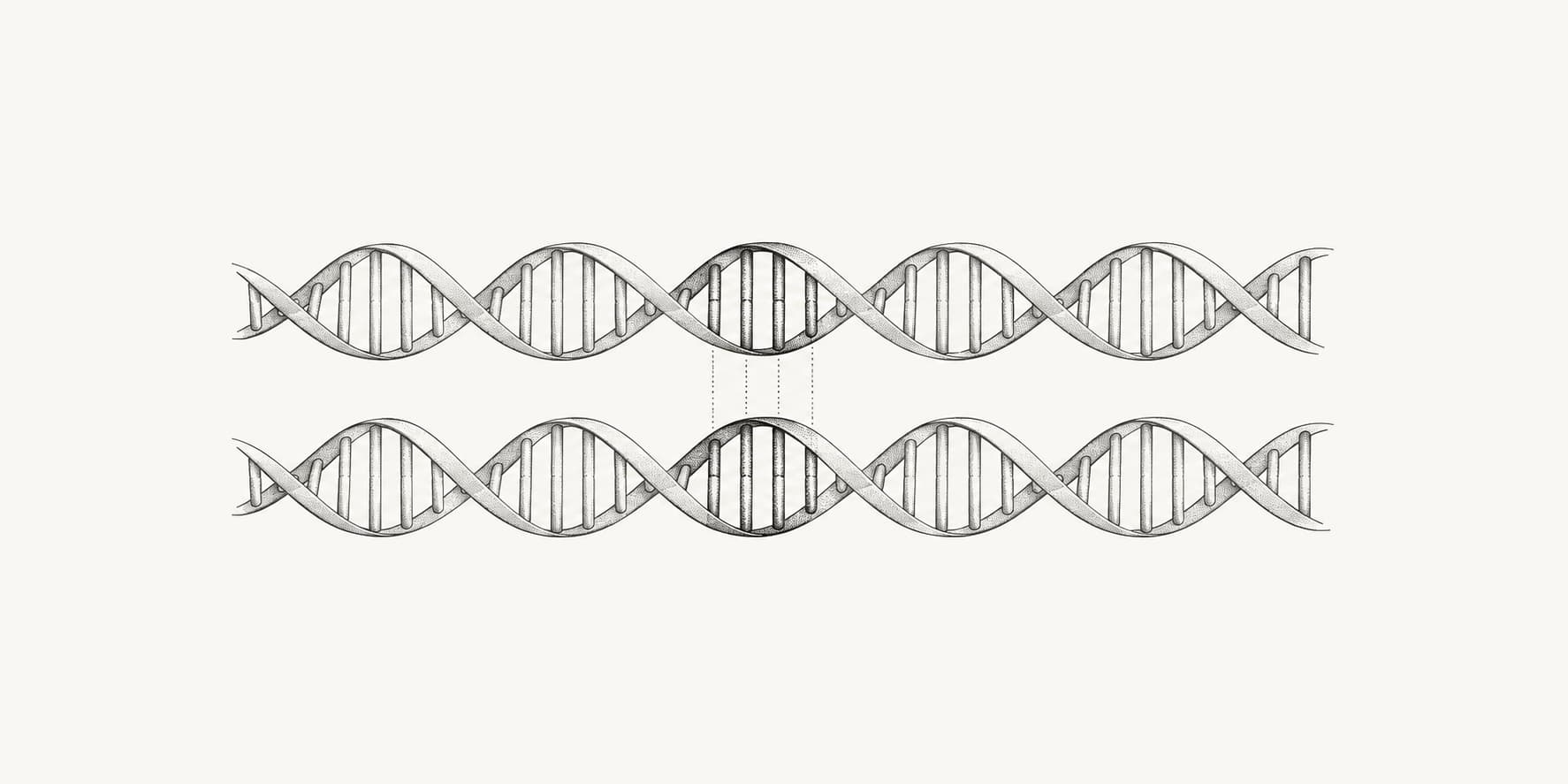
How much DNA do siblings share?
Full siblings share about 50% of their autosomal DNA by descent, but the amount varies. One study measured a range from 37.4% to 61.7%.
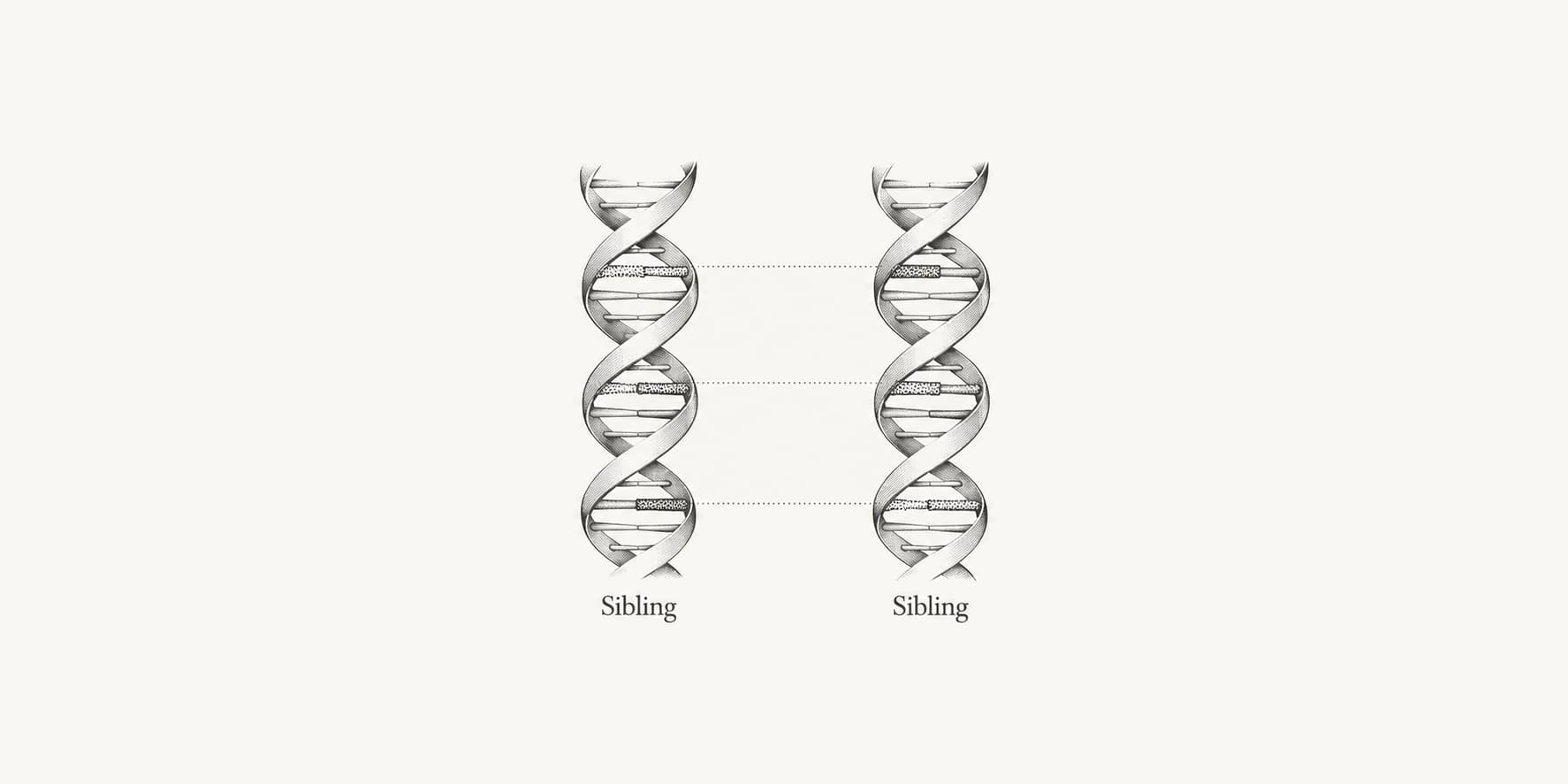
Full biological siblings share about 50% of their autosomal DNA by descent on average. The actual percentage varies because each child inherits a different shuffled set of DNA from the same two parents.
Half-siblings average 25%. In consumer DNA data, their expected range is about 17% to 34%, or roughly 1,160 to 2,436 centimorgans. Identical twins share virtually 100%.
How much DNA do full siblings share?
Full siblings share an average of 50% of their autosomal DNA by descent. A study of 4,401 sibling pairs measured an average of 49.8%, with an observed range from 37.4% to 61.7%.[1]
The range describes the people in that study, not absolute biological limits. A percentage alone cannot establish a family relationship.
“By descent” means that two people inherited the same stretch of DNA from a shared ancestor. At any autosomal location, full siblings have a 25% chance of sharing both parental copies, a 50% chance of sharing one, and a 25% chance of sharing neither. Across the whole autosomal genome, those probabilities produce an expected shared proportion of 50%.[2]
Fraternal twins develop from separate eggs and sperm, so they share 50% on average like other full siblings. Identical twins develop from one fertilized egg and share virtually all inherited DNA, although mutations after conception create a small number of differences.[3]
How much DNA do half-siblings share?
Half-siblings share 25% of their autosomal DNA by descent on average because they inherit DNA from one shared biological parent. 23andMe gives an expected range of 17% to 34%.[5]
The Shared cM Project reports an average of 1,759 centimorgans for half-siblings and a 99th-percentile range of 1,160 to 2,436 cM. These are observed consumer-test values, not hard cutoffs, and the project does not account for endogamy or pedigree collapse.[6]
Half-siblings usually share more DNA than first cousins. The expected averages are 25% for half-siblings and 12.5% for first cousins, although the observed ranges can overlap.[2][5]
Maternal and paternal half-siblings still average 25%, but their shared segments have different patterns. A 2019 study found that simulated maternal half-siblings shared 51.9 segments on average, compared with 37.1 for paternal half-siblings, because recombination rates differ between eggs and sperm.[7]
A result near 50% is not typical for ordinary half-siblings. It falls well outside 23andMe's 17% to 34% range and fits a full-sibling or parent-child relationship better. Endogamy, pedigree collapse, or being related through more than one family line can raise the total.[5][6]
Can a DNA test tell whether two people are half-siblings?
A DNA test can often support a half-sibling relationship, but the amount of shared DNA alone may not identify it uniquely. Half-siblings, grandparents and grandchildren, and aunts or uncles with nieces or nephews all share about 25% on average.[5]
23andMe notes that a 17% match could fit several of those relationships or even a first cousin. Relationship prediction also uses the number and pattern of shared segments, ages, and matches shared with other relatives.[5]
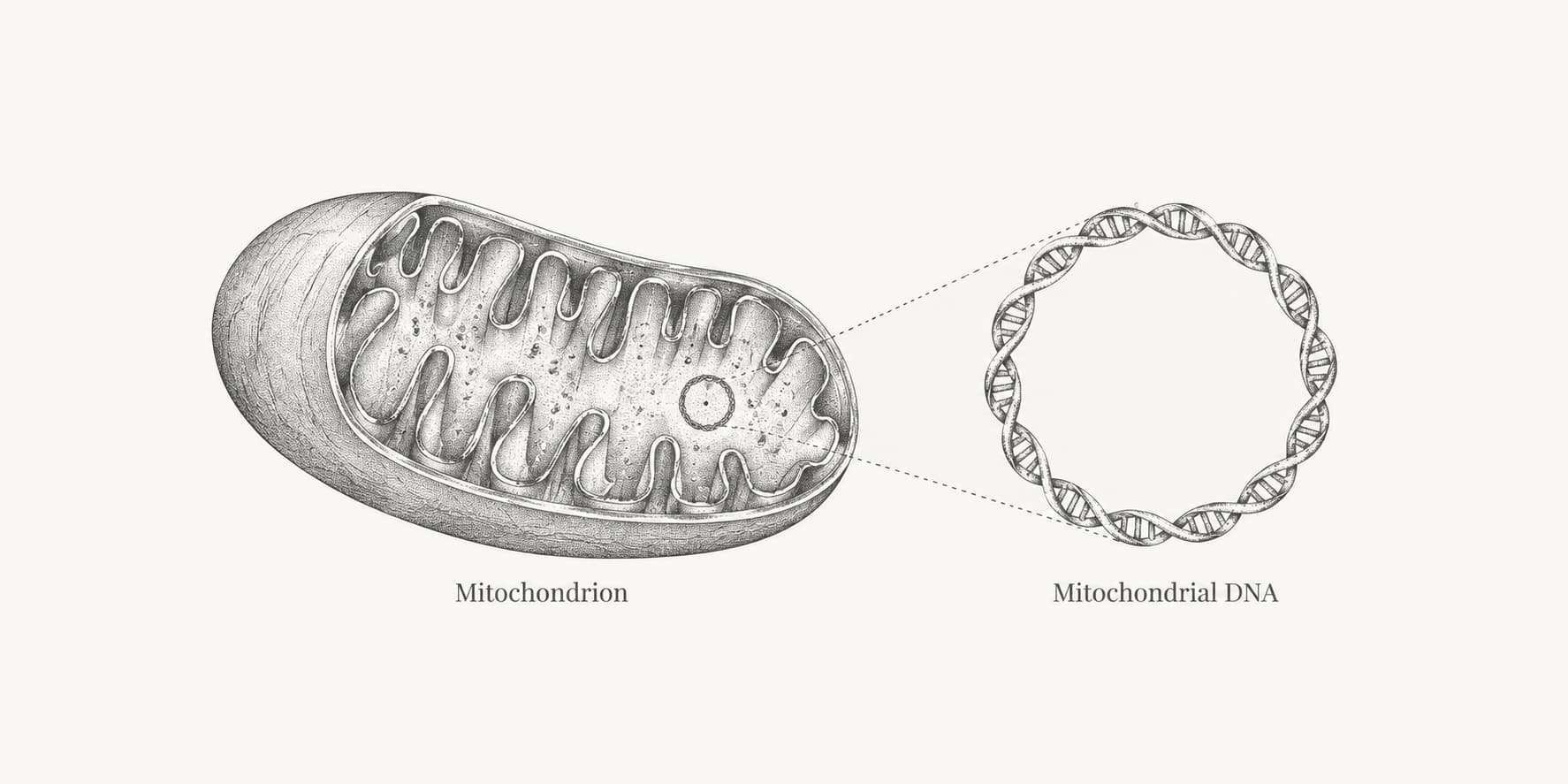
Maternal and paternal half-siblings can sometimes be distinguished through segment patterns and lineage markers. Shared mitochondrial DNA may support a common maternal line, while the Y chromosome can support a common paternal line for two male siblings. These markers do not replace an autosomal relationship analysis.
Why do siblings not share exactly 50%?
Full siblings do not share exactly 50% because each egg and sperm carries a different recombinant mixture of a parent's chromosome copies. The 50% figure is an average across many possible inheritances.
A child receives one set of 23 nuclear chromosomes from the mother and one from the father. Before an egg or sperm forms, paired chromosomes exchange segments, creating a new mosaic. Two siblings can therefore inherit more or less of the same mosaic from each parent.[4]
Recombination also makes inheritance from each grandparent variable. One sibling can carry more DNA from a particular grandparent than another sibling does.
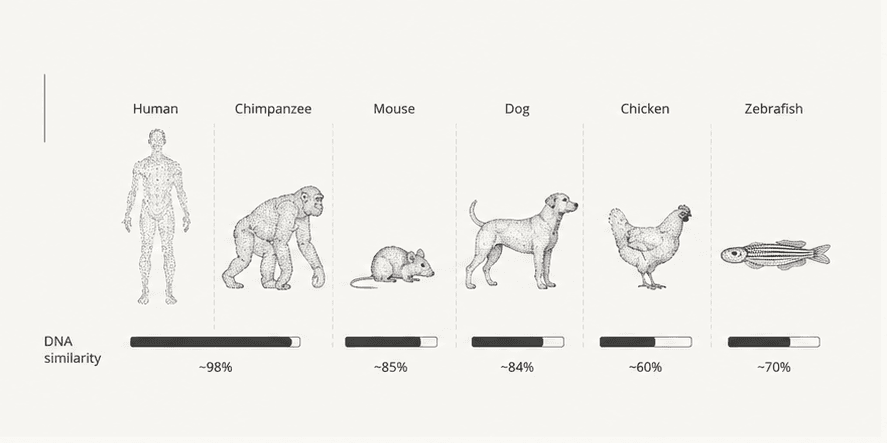
The 50% sibling figure measures autosomal DNA inherited from recent shared ancestors. It does not conflict with the fact that any two human genomes are more than 99% identical at the sequence level. Those are different comparisons.