How many ATP are produced in fermentation?
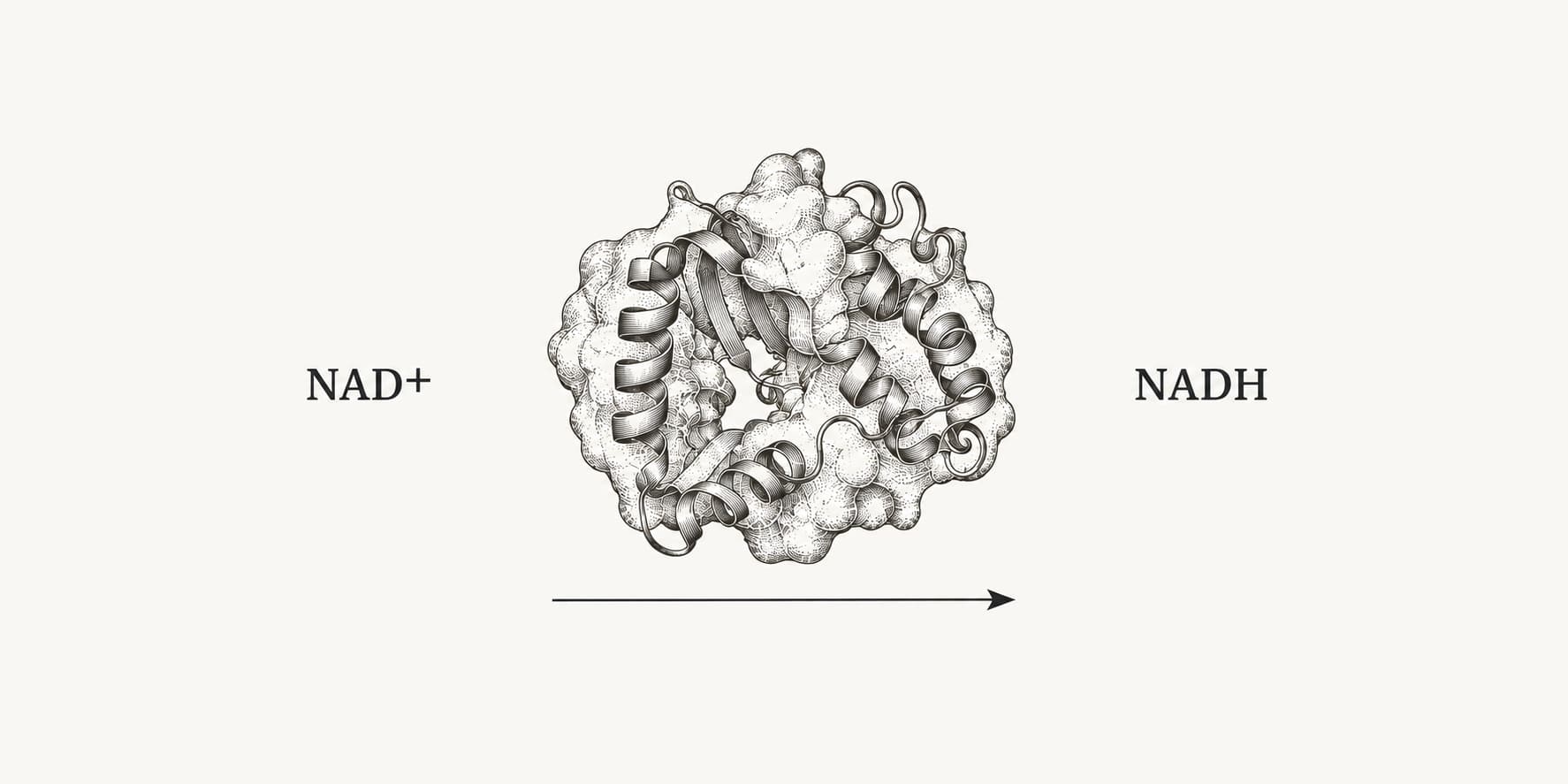
The standard fermentation of one glucose molecule yields two net ATP. Glycolysis makes the ATP, while fermentation regenerates the NAD+ needed to keep glycolysis running.
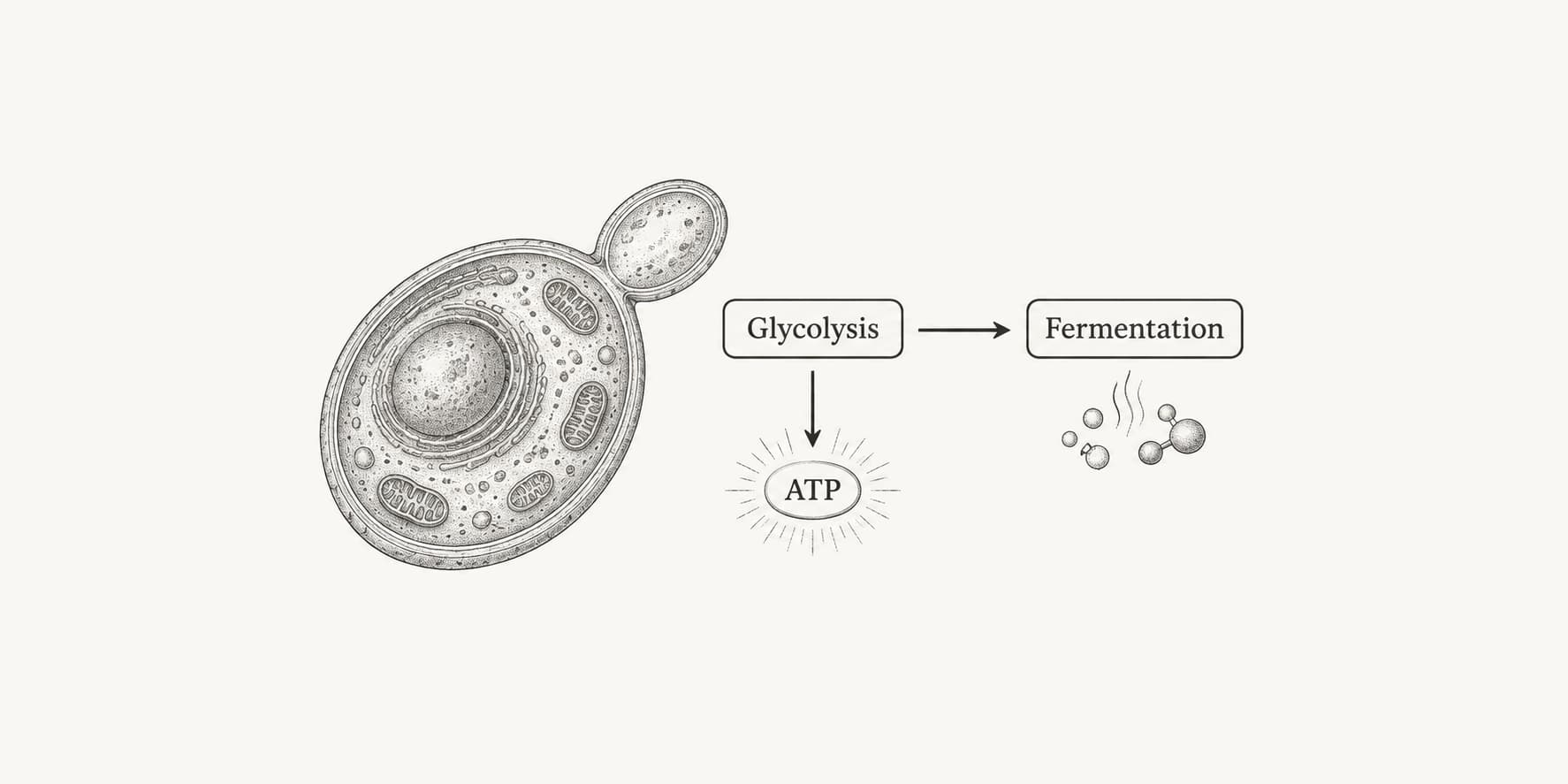
The standard fermentation of one glucose molecule yields two net ATP. Both lactic acid fermentation and alcoholic fermentation have this yield.
The ATP comes from glycolysis, which makes four ATP but uses two. Converting pyruvate into lactate or ethanol then regenerates NAD+ without making additional ATP.
How many ATP are produced in fermentation?
Fermentation yields two net ATP molecules per glucose when the glucose passes through glycolysis.[1]
Glycolysis first invests two ATP and later produces four, leaving two ATP. It also forms two pyruvate and two NADH. The fermentation reactions transfer electrons from NADH to a carbon product, restoring the NAD+ that glycolysis needs to continue.[1]
This distinction explains two common descriptions. Textbooks often say that fermentation produces two ATP because they count glycolysis and the conversion of pyruvate as one anaerobic pathway. More narrowly, the reactions that convert pyruvate to lactate or ethanol produce zero ATP. The pathway's two ATP were already made during glycolysis.
The chart treats ATP used as a positive magnitude so that the gross production, investment, and net yield are easy to compare. The final pyruvate-to-product step contributes no ATP.
How many ATP are produced in lactic acid fermentation?
Lactic acid fermentation yields two net ATP and two lactate molecules per glucose.[2][3]
Human cells reduce two pyruvate molecules to two lactate molecules. Lactate dehydrogenase uses the two NADH from glycolysis and returns two NAD+. This reaction adds no ATP, but the recycled NAD+ allows glycolysis to keep producing two net ATP per glucose.[1][2]
The name “lactic acid fermentation” is common, although lactate is the dominant form at physiological pH. The ATP count is unchanged.
How many ATP are produced in alcoholic fermentation?
Alcoholic fermentation yields two net ATP, two ethanol molecules, and two carbon dioxide molecules per glucose.[1][3]
Yeast first converts the two pyruvate from glycolysis into two acetaldehyde and two carbon dioxide. It then reduces acetaldehyde to ethanol, oxidizing two NADH back to two NAD+. Neither step produces ATP, so the net yield remains the two ATP made during glycolysis.[1]
Lactic acid and alcoholic fermentation therefore have the same ATP yield but different carbon products. Lactic fermentation retains all six glucose carbons in two lactate molecules. Alcoholic fermentation divides them between two ethanol and two carbon dioxide molecules.[2][3]
Does every type of fermentation produce two ATP?
Two ATP per glucose is the standard answer for homolactic fermentation and alcoholic fermentation through glycolysis, but it is not a universal yield for every microbial fermentation.
Microorganisms can use other substrates, routes, and end products. Heterolactic fermentation, for example, can yield one ATP when glucose is converted to lactate, ethanol, and carbon dioxide, while routes that form acetate can capture additional ATP.[4]
The two-ATP figure remains the correct count for the classic pathways taught alongside aerobic cellular respiration. Aerobic cells extract much more energy because pyruvate continues into the Krebs cycle and oxidative phosphorylation instead of ending with lactate or ethanol.