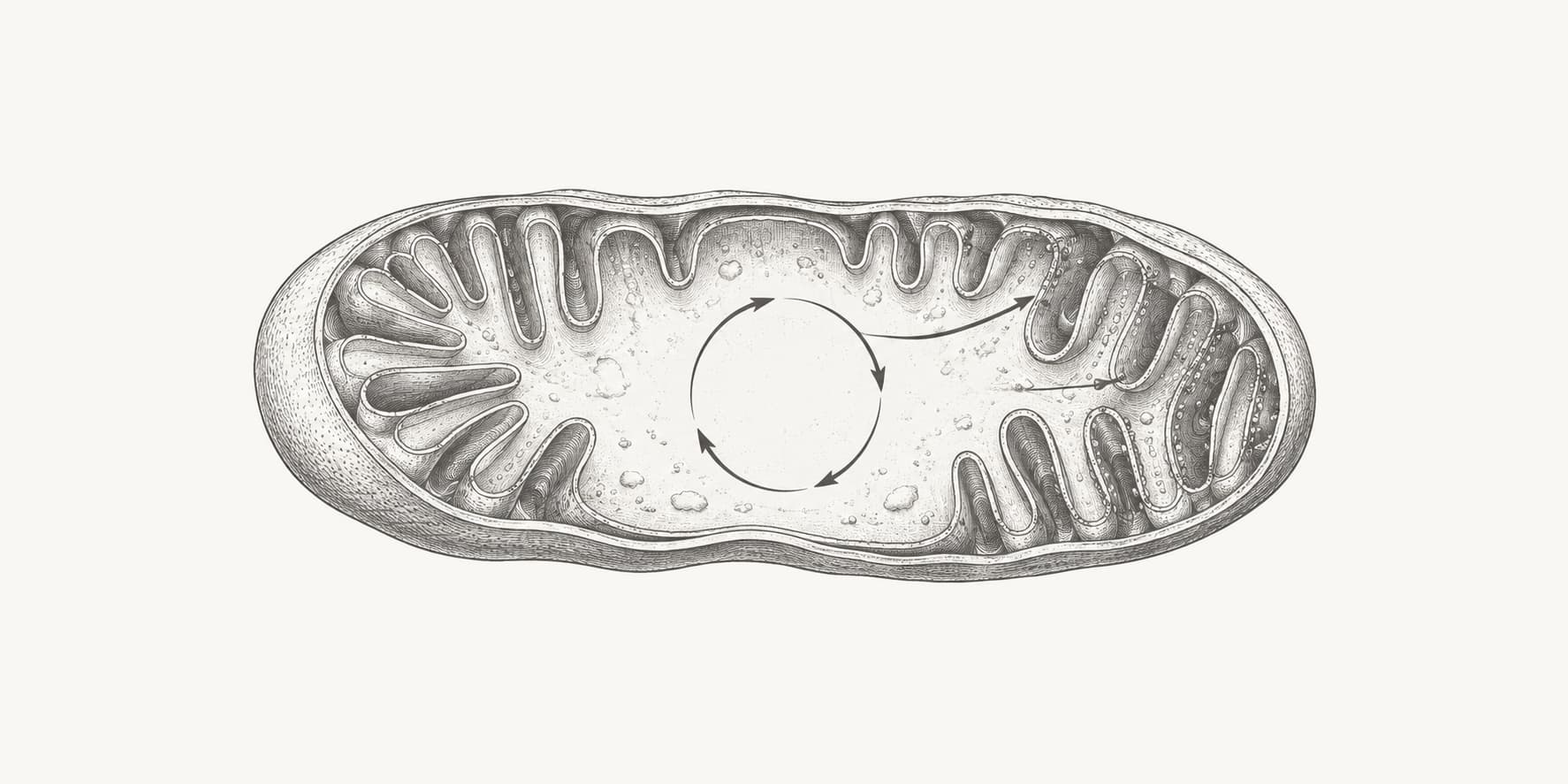
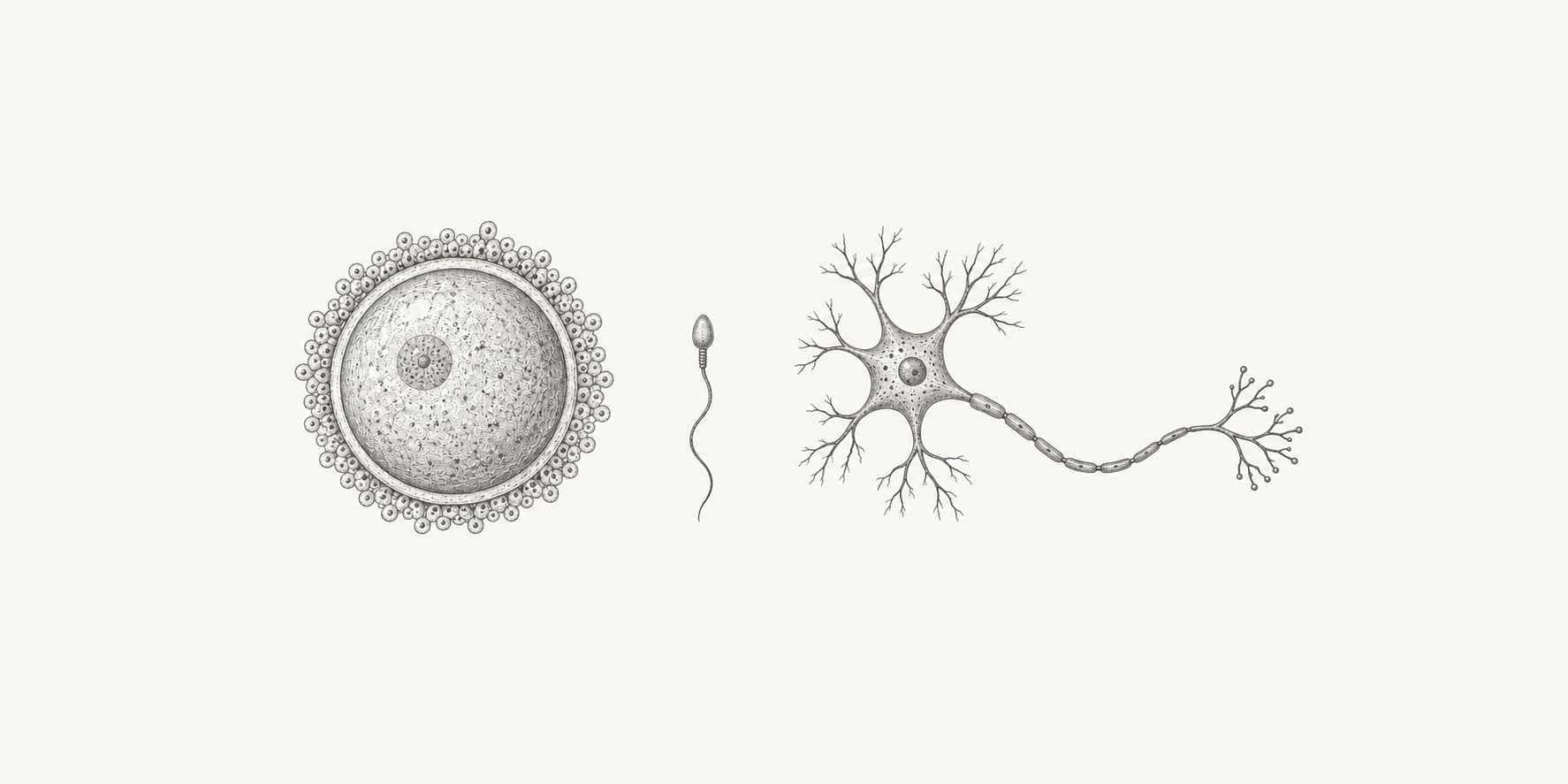
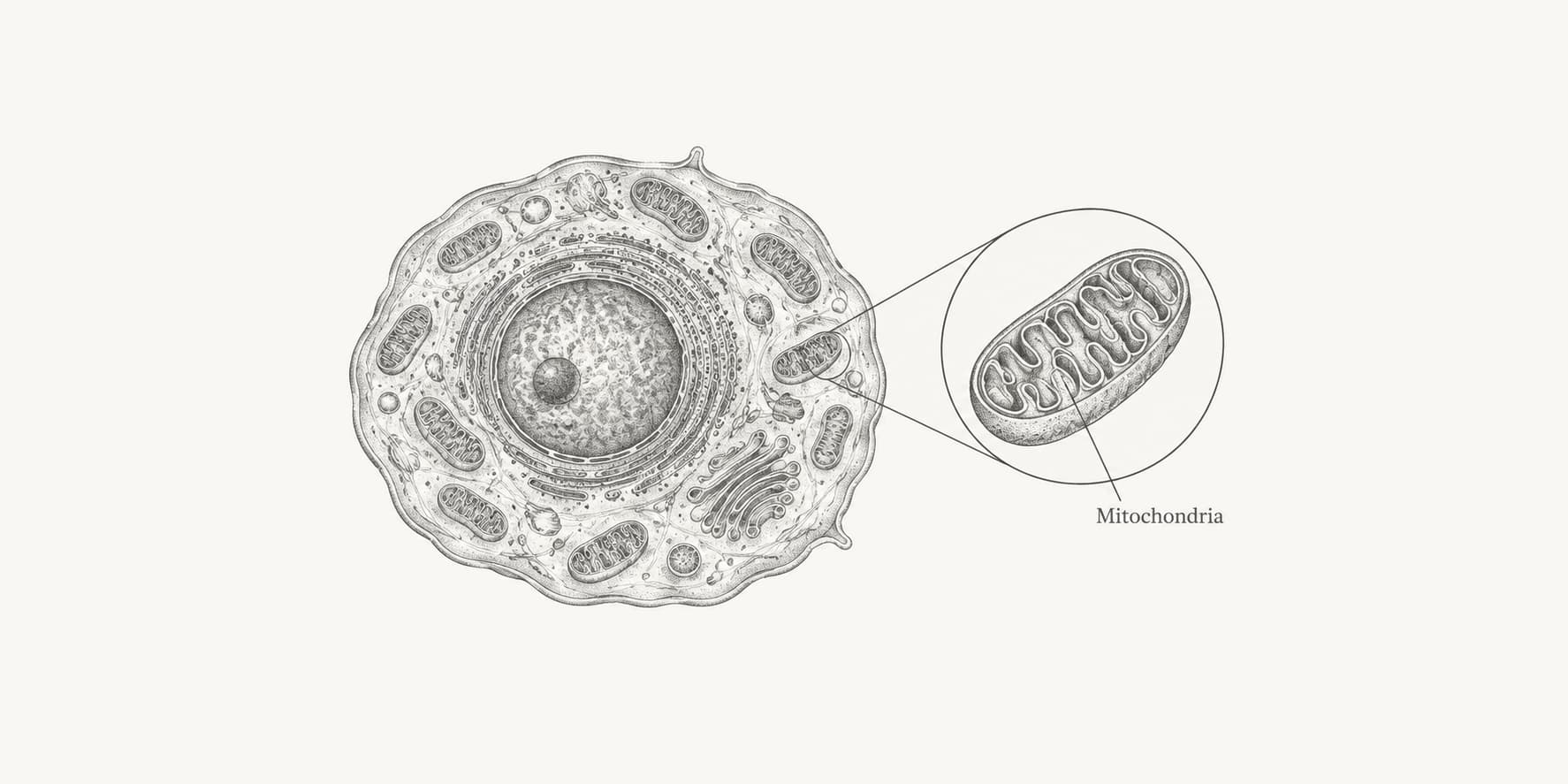
How many ATP are produced in oxidative phosphorylation?
Oxidative phosphorylation produces about 26 to 28 ATP per glucose molecule. The exact textbook total depends on how the two NADH made in glycolysis transfer their electrons into mitochondria.
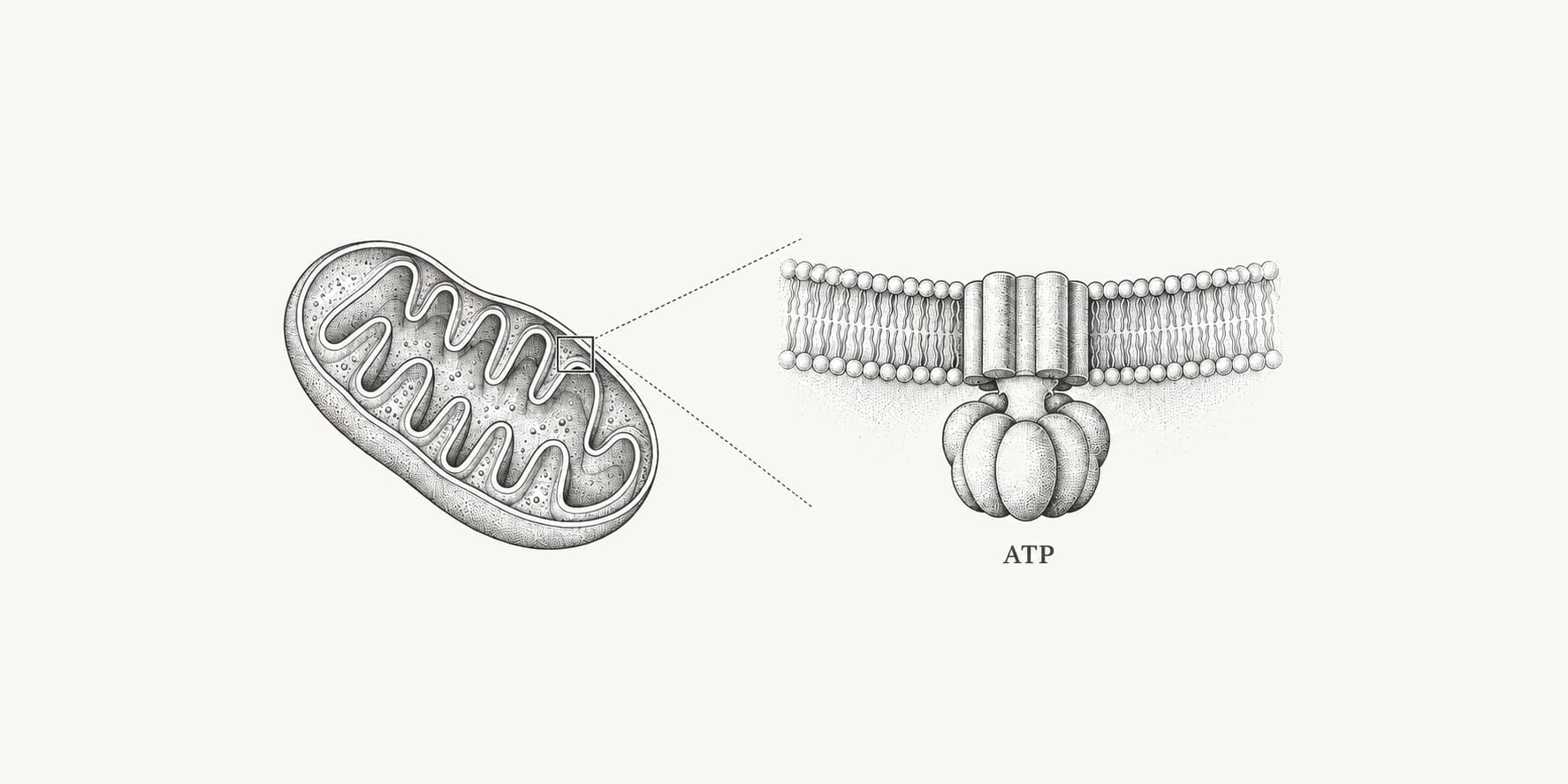
Oxidative phosphorylation produces about 26 to 28 ATP molecules per glucose. In either accounting, 26 of 30 or 28 of 32, that is about 87% of the ATP commonly attributed to the complete aerobic breakdown of one glucose molecule.
The range comes from the two NADH made during glycolysis. Their electrons can enter mitochondria by either of two shuttle systems, and one route preserves more of their energy than the other.
How many ATP are produced in oxidative phosphorylation?
Oxidative phosphorylation produces about 26 or 28 ATP per glucose molecule, depending on how the electrons from glycolytic NADH enter the mitochondrion.[1][2]
Glucose breakdown supplies 10 NADH and 2 FADH₂ in total. Eight NADH are formed in the mitochondrial matrix, while two are formed during glycolysis in the cytosol. Using the standard estimates of 2.5 ATP per NADH and 1.5 ATP per FADH₂ gives:
- 20 ATP from the eight mitochondrial NADH
- 3 ATP from the two FADH₂
- either 3 or 5 ATP from the electrons carried by the two cytosolic NADH
The sum is 26 ATP with the glycerol 3-phosphate shuttle or 28 ATP with the malate-aspartate shuttle. Glycolysis and the Krebs cycle add four ATP equivalents through substrate-level phosphorylation, bringing the full cellular respiration total to 30 or 32 ATP per glucose.
The two cytosolic-NADH bars are alternative routes, not values to add together. The malate-aspartate route supports 5 ATP, while the glycerol 3-phosphate route supports 3 ATP.
How many ATP are produced per NADH and FADH₂?
One mitochondrial NADH supports about 2.5 ATP, while one FADH₂ supports about 1.5 ATP under conventional modern accounting.[2][4]
Electrons from NADH enter the respiratory chain at complex I and drive the movement of about 10 protons across the inner mitochondrial membrane. Electrons from FADH₂ enter farther downstream, bypassing complex I, and drive the movement of about 6 protons. ATP synthesis and the transport of its substrates and products require roughly four proton equivalents per ATP, which gives the familiar ratios of 2.5 and 1.5.[2][4]
These ATP-yield ratios are accounting estimates rather than guarantees for every cell. Proton leak, transport costs, membrane potential, and the structure of ATP synthase can change the measured yield.
Why does oxidative phosphorylation produce 26 or 28 ATP?
The 26-to-28 ATP range reflects two ways of transferring the electrons from cytosolic NADH into mitochondria.[3]
NADH itself cannot cross the inner mitochondrial membrane. The malate-aspartate shuttle transfers its reducing power to mitochondrial NADH, so each of the two glycolytic NADH retains a value of about 2.5 ATP. Together they support 5 ATP.
The glycerol 3-phosphate shuttle transfers those electrons to the respiratory chain downstream of complex I. Each cytosolic NADH then supports about 1.5 ATP, or 3 ATP for the pair. This two-ATP difference produces the 26-or-28 range.[3]
Older sources may report 32 to 34 ATP from oxidative phosphorylation because they assign 3 ATP to every NADH and 2 ATP to every FADH₂. Measurements and mechanistic studies support lower non-integer ratios near 2.5 and 1.5.[2][4]
How many ATP does the electron transport chain produce?
The electron transport chain is commonly credited with the same 26 to 28 ATP per glucose, but it does not make ATP directly.
Complexes I, III, and IV use electron transfer to pump protons across the inner mitochondrial membrane. ATP synthase then lets protons flow back into the matrix and uses that energy to phosphorylate ADP. Together, electron transport and ATP synthesis make up oxidative phosphorylation.[1]
The process occurs on the inner membrane of mitochondria. Oxygen accepts the electrons at the end of the chain and combines with protons to form water. Without oxygen, the chain stops, the proton gradient collapses, and oxidative ATP production ceases.[1]