How many types of RNA are there?
Biology courses teach three major RNA types. rRNA is the most abundant by mass, tRNA is the smallest of the three, and mRNA has the widest size range.
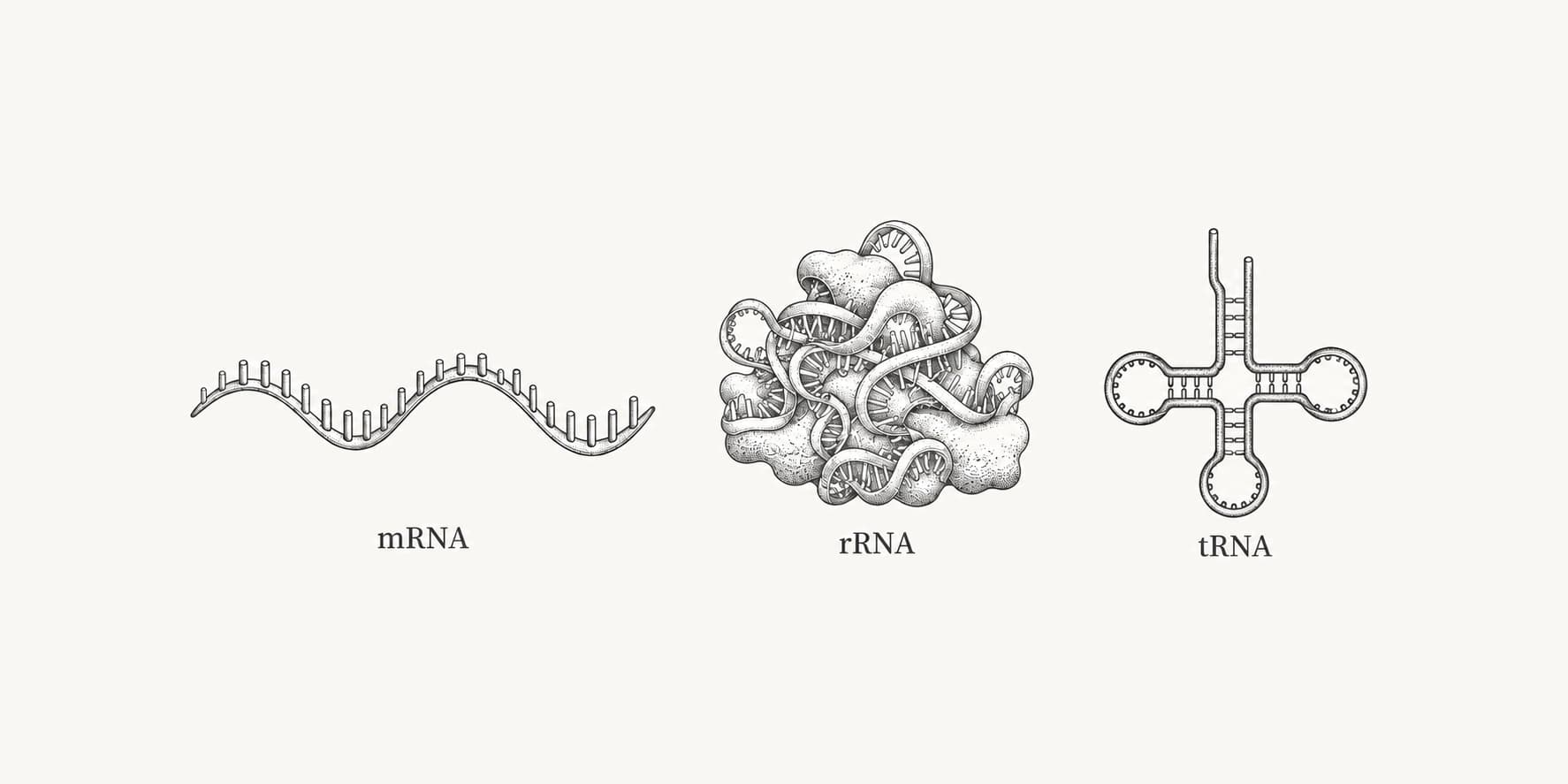
There are three major types of RNA in the standard textbook answer: messenger RNA (mRNA), ribosomal RNA (rRNA), and transfer RNA (tRNA).
RNAcentral currently distinguishes 56 types of human non-coding RNA alone. The total depends on whether “type” means a broad role, an annotated class, a sequence, or a gene.
How many types of RNA are there?
There are three major types of RNA, but no fixed total number of RNA classes. The three are mRNA, rRNA, and tRNA; RNAcentral release 26 separately annotates 56 types of human non-coding RNA.[1][2]
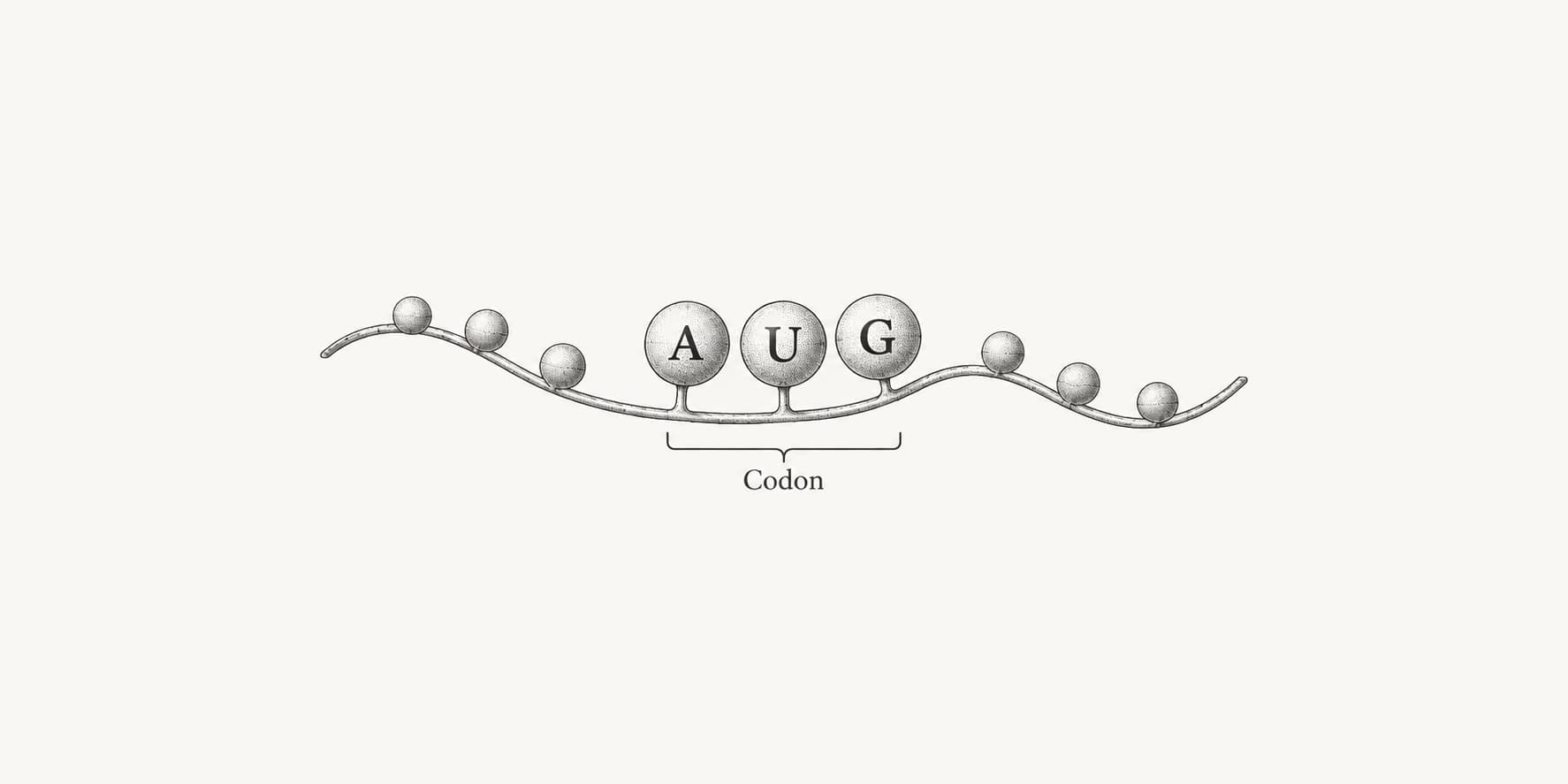
mRNA, rRNA, and tRNA sit at the core of protein synthesis. mRNA carries a coding sequence, rRNA forms the catalytic and structural core of the ribosome, and tRNA matches mRNA codons to amino acids.
The 56-class count describes a different level of classification. It includes long non-coding RNA (lncRNA), antisense lncRNA, precursor microRNA, small nuclear RNA (snRNA), small nucleolar RNA (snoRNA), ribosomal RNA, transfer RNA, and many narrower classes. RNAcentral reports 103,814 human non-coding RNA genes and 600,225 transcripts across those 56 types.[1]
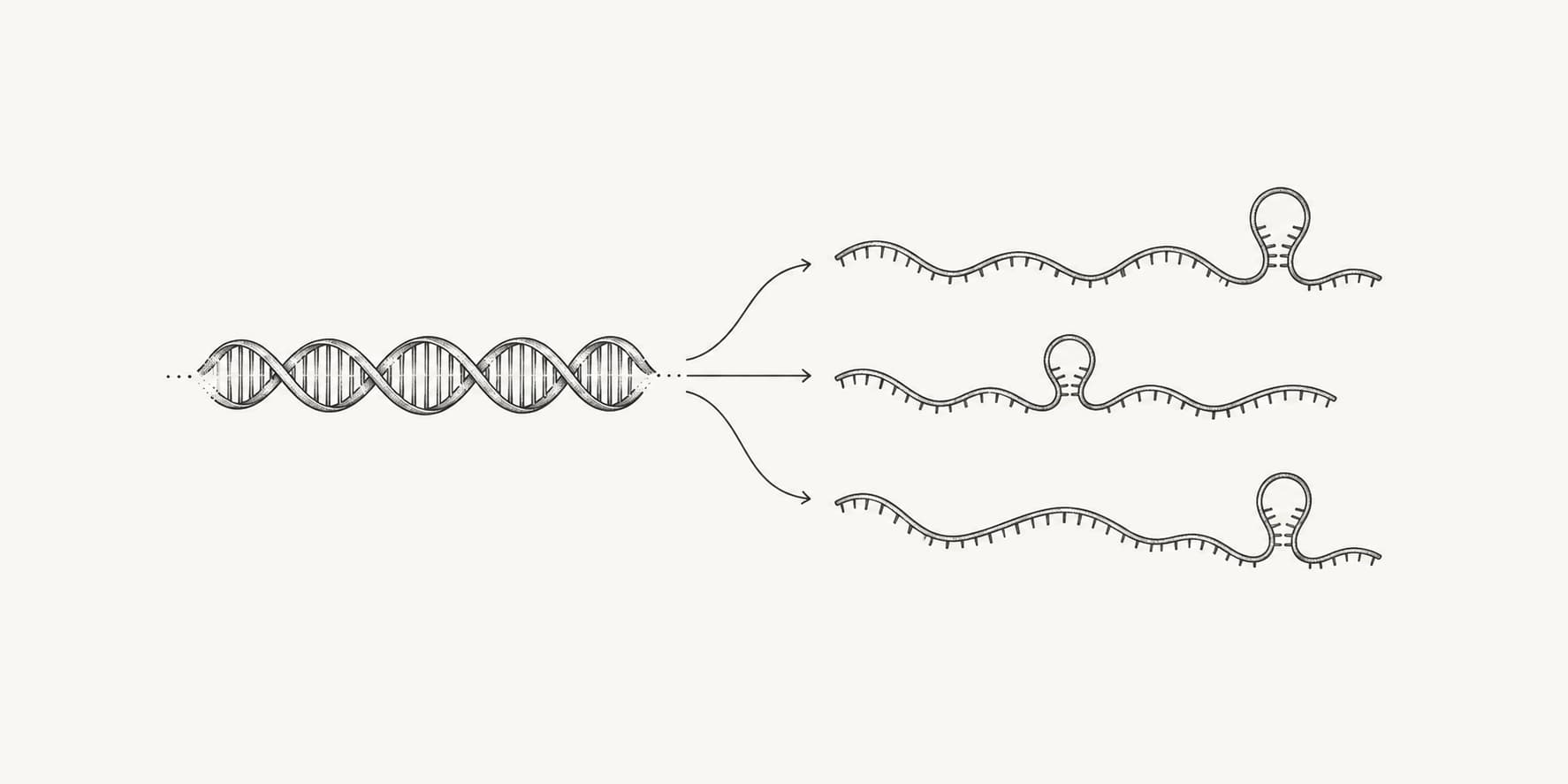
The 56 classes are annotation categories rather than a fixed inventory inside every human cell. RNA databases divide molecules by sequence, origin, structure, and biological role, and their vocabularies change as new RNAs are characterized. Individual sequences can also fit more than one useful description.
How many types of tRNA are there?
Humans have 47 chromosomal tRNA anticodon families, encoded by 429 high-confidence genes that produce 267 unique predicted tRNA sequences.[3]
Each number answers a different version of the question:
| Counting level | Human tRNA count |
|---|---|
| Standard amino acid identities | 20 |
| Chromosomal anticodon families | 47 |
| Unique predicted sequences | 267 |
| High-confidence genes in hg38 | 429 |
| Mitochondrial tRNA genes | 22 |
The gene, sequence, anticodon-family, and mitochondrial counts come from the hg38 tRNA analysis; the 20 amino acid identities follow the standard genetic code.[3][4]
Wobble pairing lets one tRNA anticodon read more than one codon, so humans do not need 61 anticodon families for the 61 sense codons. A separate survey counted 48 human tRNA anticodons that directly complement sense codons; modified bases let the same pool read the remaining codons.[4] The 47-family and 48-anticodon figures come from different classification sets, and neither is a gene count.
The hg38 reference contains more than 600 predicted nuclear tRNA loci, but 429 pass the study's high-confidence threshold for a canonical tRNA structure.[3] This is why a raw tRNA gene prediction count should not be treated as a count of functional tRNA types.
Which type of RNA is most abundant?
rRNA is the most abundant type of RNA in a typical human cell. By mass, cellular RNA is about 80% cytosolic rRNA, 10% tRNA, and 4% mRNA. The same reference estimates about 10 million cytosolic rRNA molecules, 100,000 tRNAs, and 100,000 mRNAs per cell.[5]
| RNA class | Approximate share of RNA mass | Approximate molecules per human cell |
|---|---|---|
| Cytosolic rRNA | 80% | 10 million |
| tRNA | 10% | 100,000 |
| mRNA | 4% | 100,000 |
| Mitochondrial rRNA | 5% | 100,000 |
The chart combines cytosolic and mitochondrial rRNA into an 85% rRNA total. “Other RNA” is the 1% remainder after subtracting the four reported shares from 100%.[5]
These are order-of-magnitude reference values. RNA content changes with cell type, size, growth, and protein-production rate. The percentages are mass shares, so they do not have to match molecule shares: one cytosolic ribosome contains four long rRNA molecules, while a tRNA is only about 80 nucleotides long.[5]
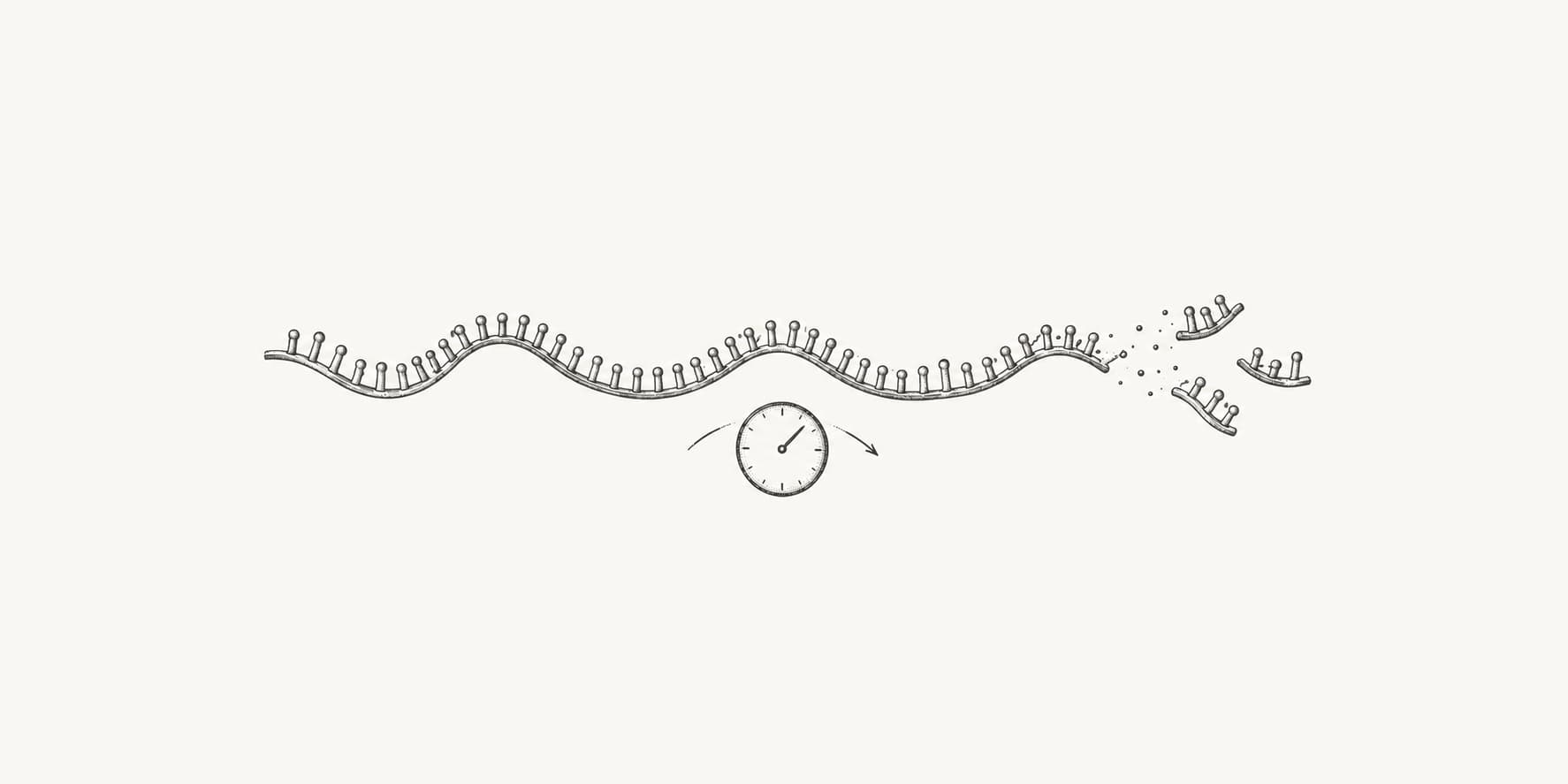
rRNA dominates because cells need many ribosomes. mRNA is much less abundant even though it contains the protein-coding messages. A single mRNA can be translated repeatedly, so cells do not need one mRNA molecule for every protein molecule they make. Its half-life ranges from minutes in bacteria to hours in human cells.
These totals also explain why ordinary total-RNA sequencing is dominated by rRNA unless the sample preparation removes it. For structure-level analysis of an individual transcript, ViennaRNA predicts folds and base-pairing properties from RNA sequences rather than estimating cellular abundance.
What is the smallest type of RNA?
tRNA is the smallest of the three major RNA types, with most molecules measuring 74 to 90 nucleotides.[6]
The answer changes when smaller regulatory RNAs are included. A mature microRNA is about 22 nucleotides long, making it much shorter than an intact tRNA.[7] This is why “the smallest RNA is tRNA” is correct only in the textbook comparison of mRNA, rRNA, and tRNA.
There is no useful absolute record for the smallest RNA. Cells also contain shorter RNA fragments produced during processing and degradation, so a meaningful comparison has to specify a stable RNA class or functional molecule.
What is the largest RNA?
Among the three major RNA types, mRNA can be the longest, but there is no single largest RNA molecule. Messenger RNA length follows the gene, transcript isoform, and processing stage.
Human dystrophin shows why “longest RNA” needs a definition. Its mature mRNA is about 14,000 nucleotides long,[8] but the DMD gene spans at least 2.3 million DNA base pairs and takes about 16 hours to transcribe. Splicing starts before transcription finishes, so the 2.3-million-base genomic span is not the length of the mature RNA.[9]
The same distinction applies across the human transcriptome: a long gene, a nascent RNA, and a mature spliced transcript are different measurements. Any claim about the largest or longest RNA should state which one it counts.