How many codons are there?
The standard genetic code has 64 codons: 61 specify amino acids and three are stop signals.
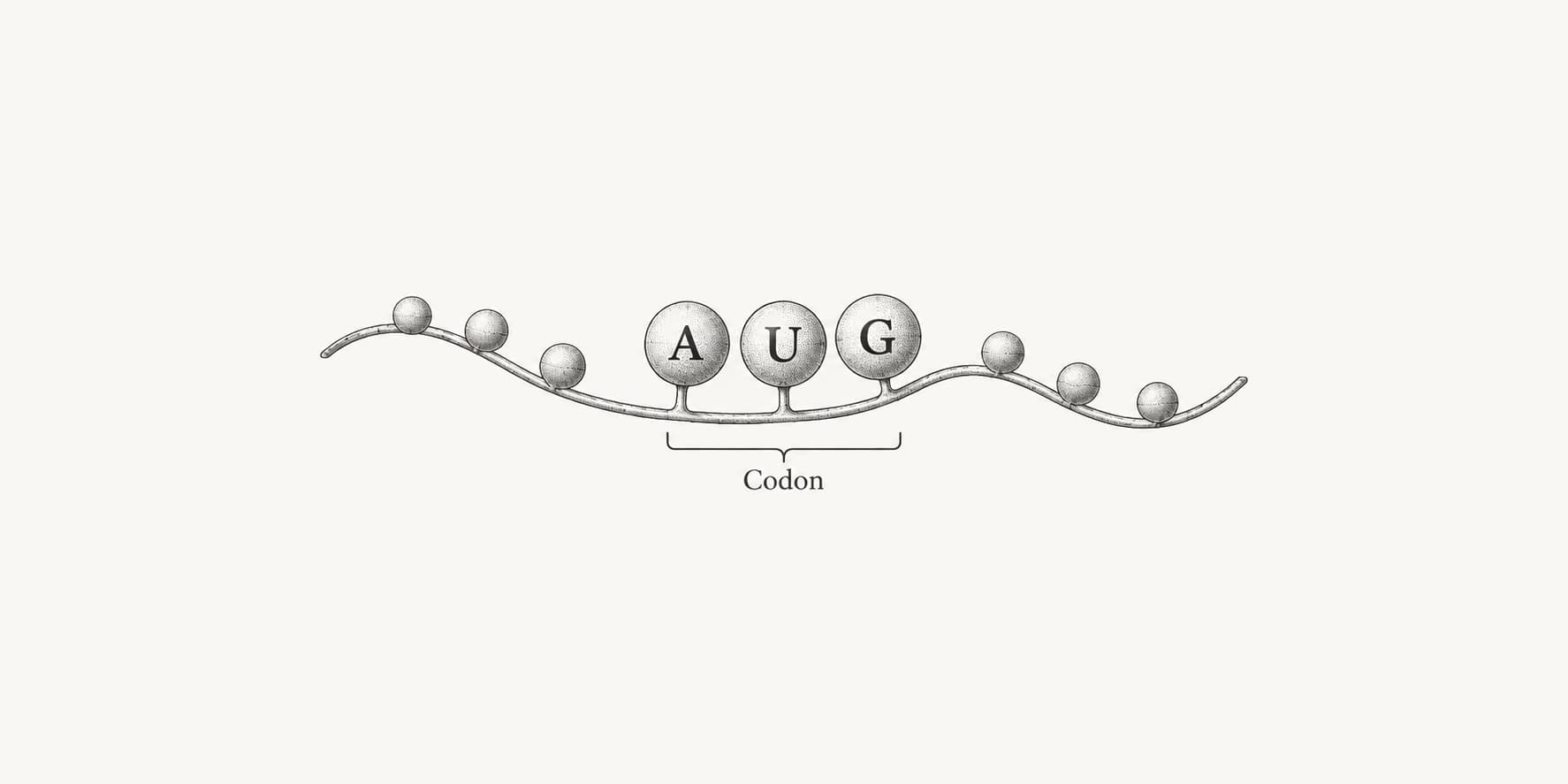
There are 64 possible codons in the standard genetic code. Sixty-one specify amino acids, while three signal the end of translation.
The total is 64 because a codon has three positions and each position can contain one of four RNA bases: 4 × 4 × 4 = 64.
How many codons are there?
There are 64 codons in the standard genetic code: 61 sense codons that specify amino acids and three stop codons.[1][2]
During translation, a ribosome reads an mRNA sequence three bases at a time. Each triplet either adds an amino acid to the growing protein or tells translation to stop.
The 64-codon table
The table below uses mRNA notation and reads each codon from 5′ to 3′. U is uracil; DNA notation uses T in the same positions.
| First base | Second base U | Second base C | Second base A | Second base G |
|---|---|---|---|---|
| U | UUU Phe, UUC Phe, UUA Leu, UUG Leu | UCU Ser, UCC Ser, UCA Ser, UCG Ser | UAU Tyr, UAC Tyr, UAA Stop, UAG Stop | UGU Cys, UGC Cys, UGA Stop, UGG Trp |
| C | CUU Leu, CUC Leu, CUA Leu, CUG Leu | CCU Pro, CCC Pro, CCA Pro, CCG Pro | CAU His, CAC His, CAA Gln, CAG Gln | CGU Arg, CGC Arg, CGA Arg, CGG Arg |
| A | AUU Ile, AUC Ile, AUA Ile, AUG Met | ACU Thr, ACC Thr, ACA Thr, ACG Thr | AAU Asn, AAC Asn, AAA Lys, AAG Lys | AGU Ser, AGC Ser, AGA Arg, AGG Arg |
| G | GUU Val, GUC Val, GUA Val, GUG Val | GCU Ala, GCC Ala, GCA Ala, GCG Ala | GAU Asp, GAC Asp, GAA Glu, GAG Glu | GGU Gly, GGC Gly, GGA Gly, GGG Gly |
The assignments follow NCBI translation table 1, the standard genetic code.[3]
The 61 sense codons encode only 20 standard amino acids because the code is degenerate: several codons can specify the same amino acid. Leucine, serine, and arginine each have six codons. Methionine and tryptophan have one each.
Counting the standard table gives two amino acids with one codon, nine with two, one with three, five with four, and three with six. These groups account for all 20 standard amino acids and all 61 sense codons.[3]
This redundancy makes reverse translation one-to-many. A protein-to-DNA conversion must choose among synonymous codons for most amino acids, often using the codon preferences of the intended expression host.
How many stop codons are there in the genetic code?
There are three stop codons in the standard genetic code: UAA, UAG, and UGA.[1][2]
Stop codons do not add one of the 20 standard amino acids. They recruit release factors that end translation and release the completed protein. In DNA coding-strand notation, the same three signals are TAA, TAG, and TGA.
The count of three applies to the standard code. Some organisms and organelles reassign these triplets. UGA, for example, specifies tryptophan in the vertebrate mitochondrial code rather than acting as a stop.[3]
How many start codons are there?
AUG is the primary start codon, but there is no single organism-independent count of alternative start codons.[3]
At the start of an open reading frame, AUG recruits an initiator tRNA and is read as methionine. The same AUG encountered inside that reading frame also encodes methionine, but it does not start a new protein unless the surrounding sequence supports initiation.
Bacteria commonly use AUG, GUG, or UUG to begin translation. In a study of annotated E. coli genes, these accounted for 83%, 14%, and 3% of starts, respectively.[4] An ORF finder therefore needs both the sequence and the correct genetic-code and start-codon rules.
A sensitive experiment detected low-level initiation from 47 of the 64 codons in E. coli, but the noncanonical starts produced only 0.007% to 3% as much translation as AUG.[4] That result shows that initiation is not an all-or-nothing property of a triplet. It does not mean that every organism routinely uses 47 annotated start codons.
Are there always 64 mRNA and DNA codons?
There are always 64 possible three-base combinations in a four-letter mRNA or DNA alphabet, but their biological assignments can change.
Codons are usually written as mRNA because the ribosome reads mRNA directly. RNA uses A, C, G, and U; a DNA coding strand uses A, C, G, and T. Thus mRNA AUG corresponds to DNA ATG, and mRNA UGA corresponds to DNA TGA. A DNA-to-protein translation must also use the correct strand and reading frame.
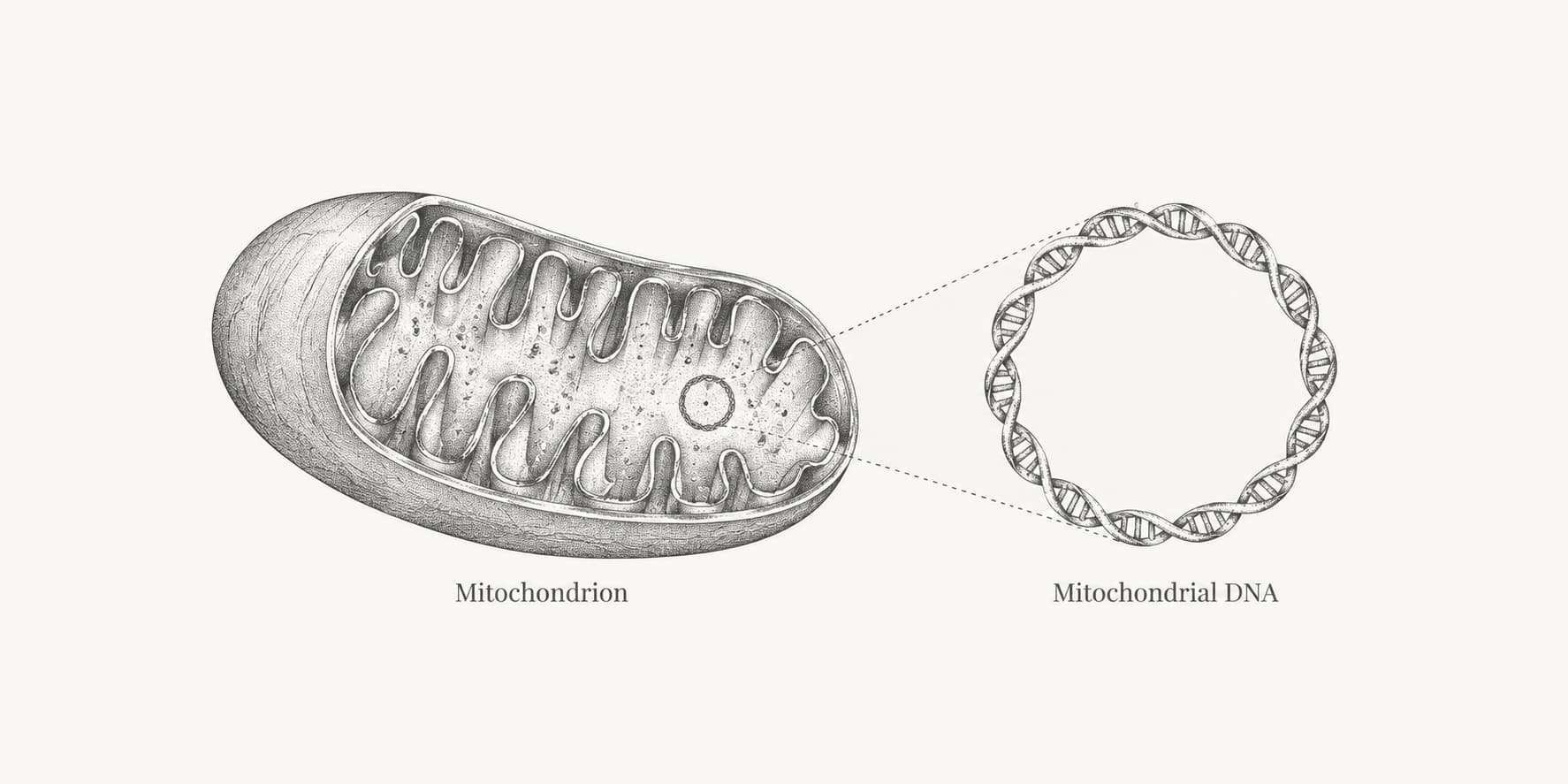
The standard table covers most nuclear genes. Mitochondria and some bacteria, archaea, protists, fungi, and plastids use alternative codes. In NCBI's vertebrate mitochondrial table, AUA changes from isoleucine to methionine, UGA changes from stop to tryptophan, and AGA and AGG are assigned as termination signals rather than arginine.[3]
Human mitochondrial termination is more specific than that compact table suggests. NCBI notes that AGA and AGG are not directly recognized as stop codons in humans; a ribosomal frameshift places a standard UAG stop at the ends of the affected genes.[3] The possible triplets still number 64, but “61 sense plus three stop” is a property of the standard code, not a rule without exceptions.