How long does mRNA last in a cell?
Messenger RNA lasts for minutes in bacteria and usually for hours in human cells. Its half-life depends on the transcript, cell type, growth state, and measurement method.
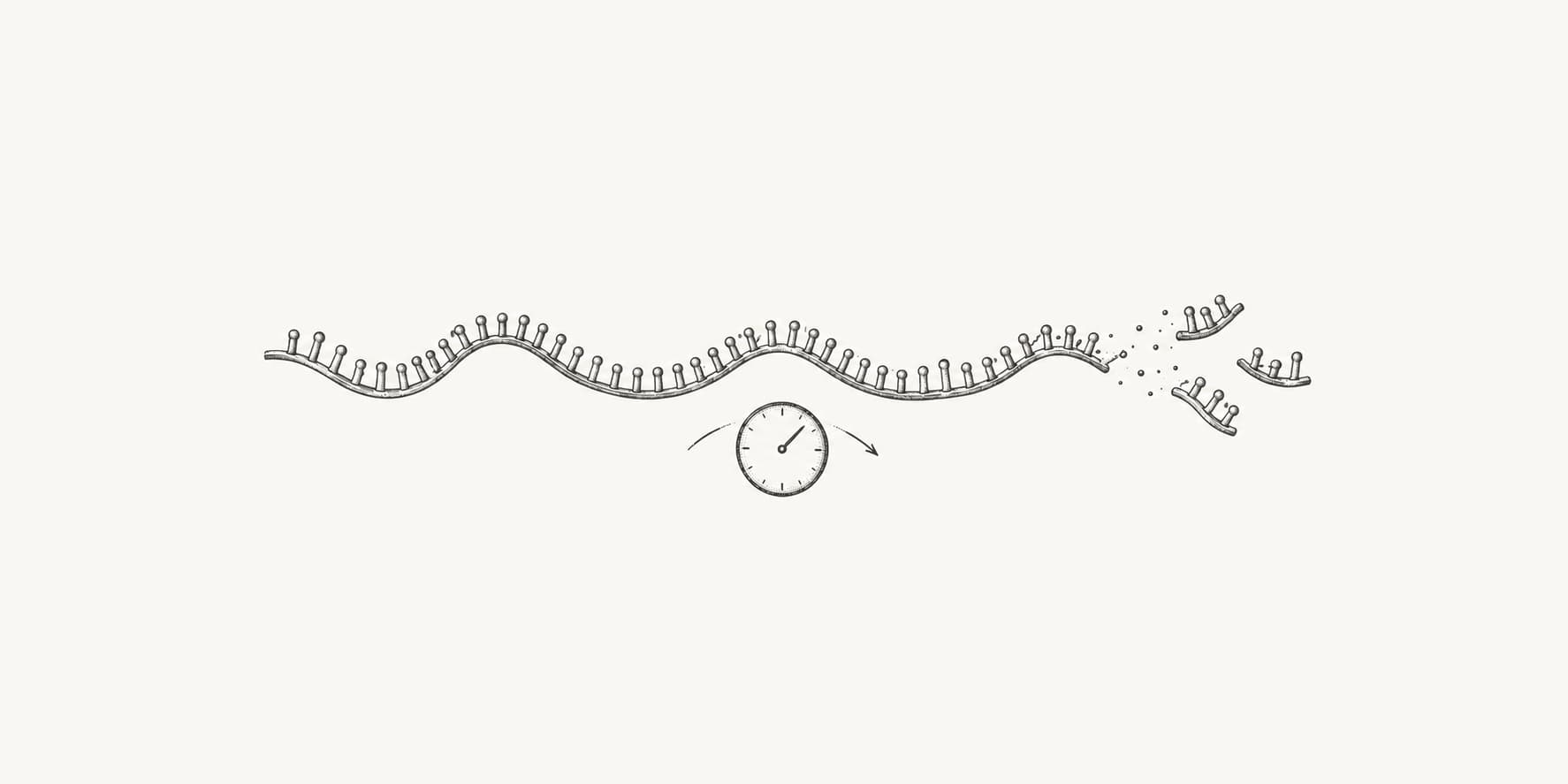
Messenger RNA lasts for minutes in bacteria and usually for hours in human cells. There is no single expiration time. Each transcript has its own decay rate, and studies normally report a half-life rather than the moment when every molecule has disappeared.
How long does mRNA last in a cell?
Most cellular mRNAs have half-lives ranging from a few minutes to several hours. Median measurements are about 5 minutes in E. coli, 18 minutes in budding yeast, and roughly 3.3 to 5.3 hours in two metabolic-labeling studies of cultured human cells.[1][2][3][4]
The human figures are not universal constants. A 2024 study measured a median whole-cell turnover half-life of 200 minutes in K562 cells. An earlier study found 315 minutes in human B cells, while a 2003 study using transcriptional inhibition reported about 10 hours in HepG2 cells and primary fibroblasts.[1][2][5]
The chart compares medians, not the shortest and longest transcripts in each cell. In E. coli, about 80% of measured mRNAs had half-lives between 3 and 8 minutes. In budding yeast, 91% fell between 12 and 29 minutes in one metabolic-labeling study.[3][4]
What does mRNA half-life mean?
An mRNA half-life is the time required for half of a starting population of that transcript to be degraded. It does not mean that every molecule disappears when the half-life ends.
If decay follows a simple exponential pattern, 50% remains after one half-life, 25% after two, 12.5% after three, and about 3% after five. A human mRNA with a five-hour half-life can therefore leave a small detectable fraction for more than a day even though most copies are gone sooner.
This distinction also separates natural cellular mRNA from questions about synthetic vaccine RNA. Formulation, nucleotide modifications, dose, tissue, and detection method make that a different measurement problem.
Why do some mRNAs last longer than others?
mRNA stability varies widely because sequence, structure, translation, RNA-binding proteins, and cellular conditions all affect decay.[7]
In eukaryotic cells, decay commonly begins when the poly(A) tail shortens. The RNA can then lose its protective 5′ cap and be digested from the 5′ end, or be degraded from the 3′ end by the exosome. Regulatory sequences and bound proteins can speed up or slow down these steps.[7]
Measurement also matters. Blocking transcription can disturb cell physiology and RNA metabolism, while metabolic-labeling methods follow newly made or pre-existing RNA without an abrupt shutdown. Method comparisons have produced different absolute half-lives for the same biological system, so a precise figure should always name the cell type and assay.[6]
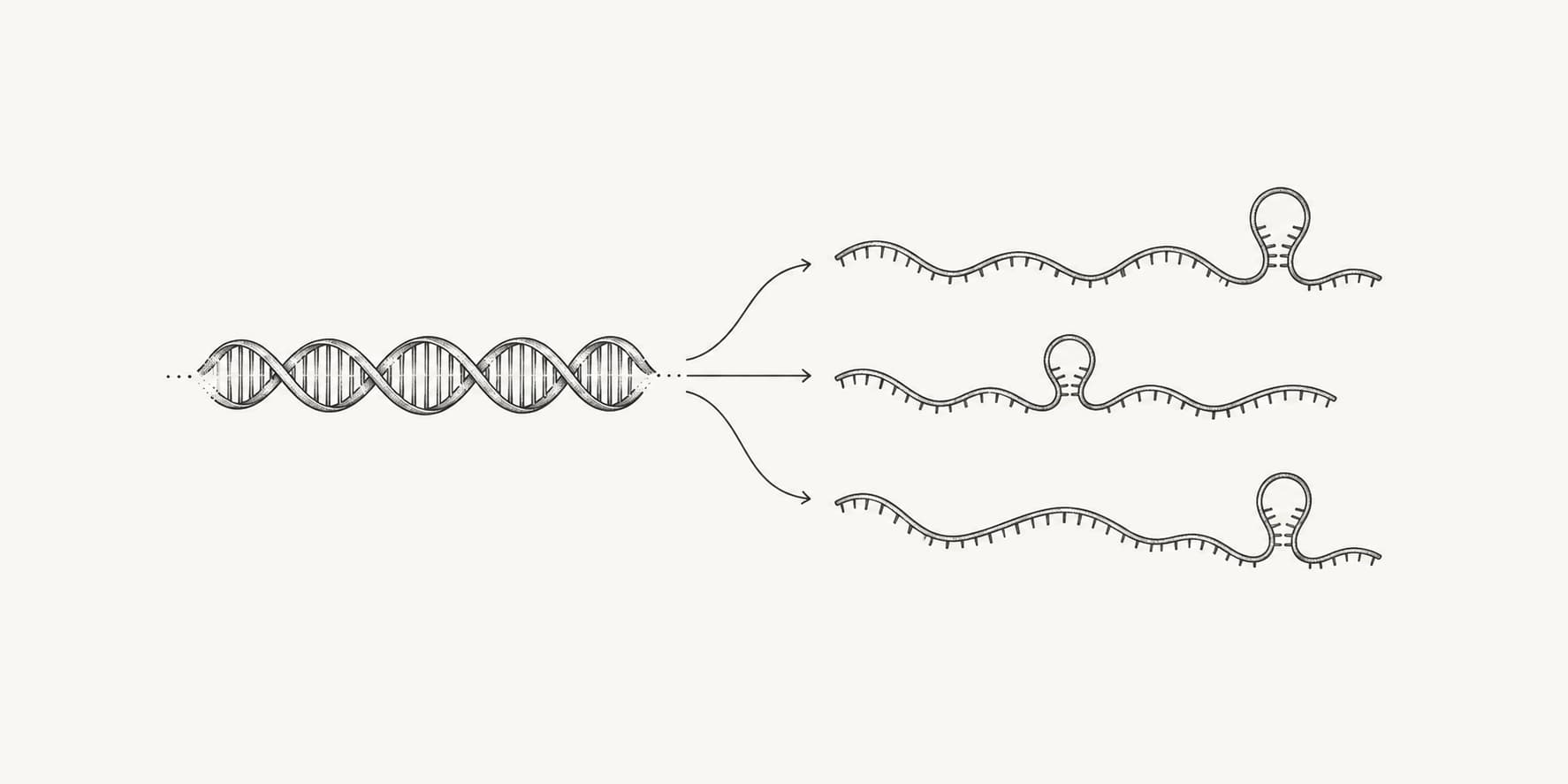
RNA structure is one of several features that can change stability. The RNAfold web server, part of ViennaRNA, predicts secondary structures from an RNA sequence, but a structure prediction alone cannot determine an mRNA's half-life inside a living cell.
How much RNA is in a human cell?
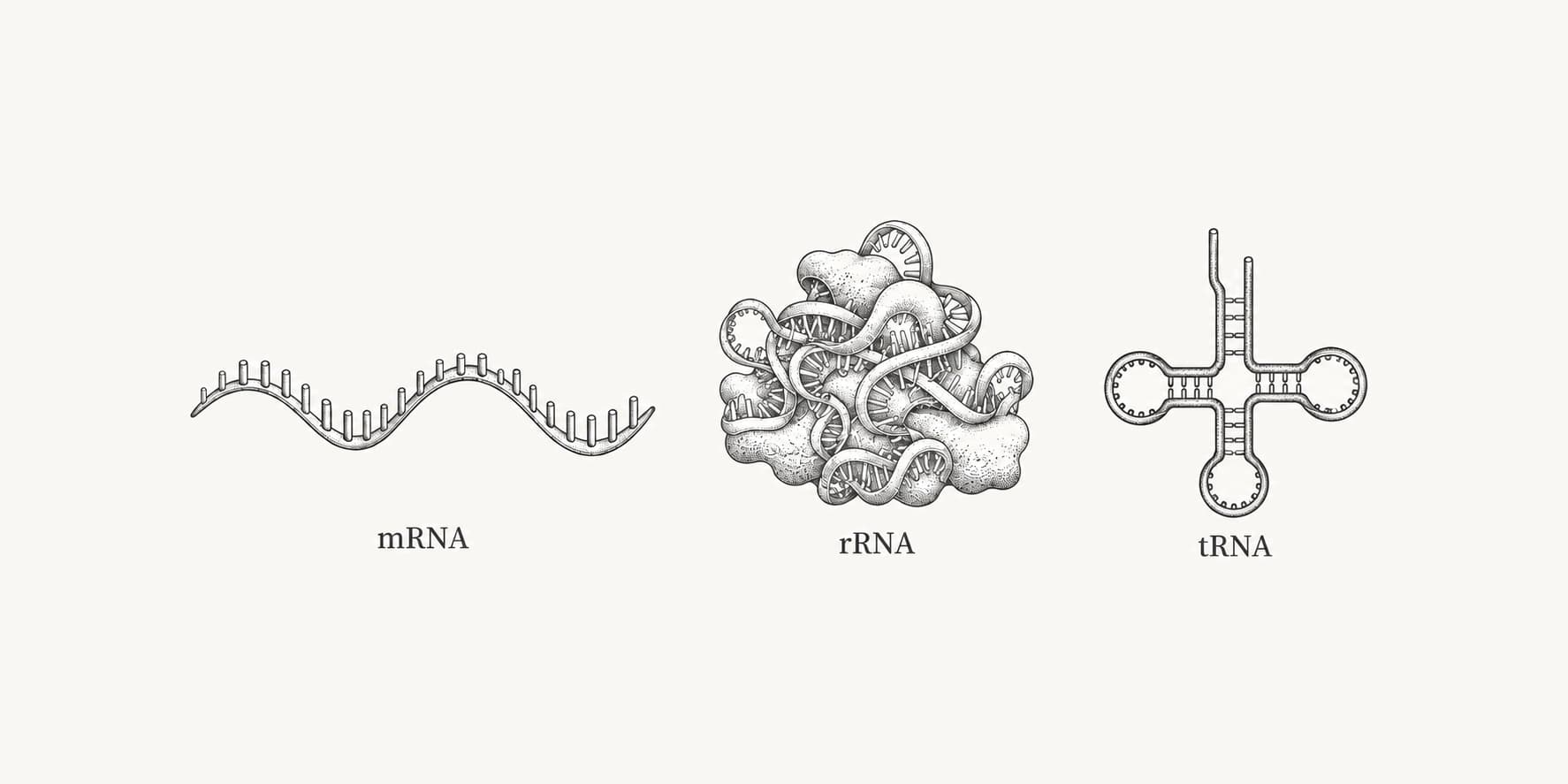
A typical mammalian cell contains about 10 to 30 picograms of total RNA. Roughly 80% to 90% of that RNA mass is ribosomal RNA, while mRNA contributes only about 1% to 7%, depending on the reference and cell type.[8][10]
Reference estimates put the mRNA pool at about 300,000 to 1 million molecules in a mammalian cell. A direct calibration of RNA sequencing with single-molecule imaging estimated about 300,000 mRNA molecules in a human U2-OS cell.[8][9]
An average mammalian mRNA is about 1,700 to 2,000 nucleotides long in commonly used reference estimates.[8][10] This is an average across many transcripts, not a standard size. Cells contain tens of millions of RNA molecules in total because short, abundant tRNAs and the rRNAs in millions of ribosomes far outnumber most individual mRNAs.
The RNA composition figures also explain why mRNA can control protein production despite making up little of the cell's RNA. Each transcript can be read repeatedly, and several ribosomes can translate the same mRNA at once. The broader RNA types differ greatly in abundance, size, function, and stability.