How many medicines are there in the world?
No authority maintains a complete global count. DrugBank currently labels 4,815 drugs as approved and contains 19,879 drug entries in total, while product-level databases contain many more records.
There is no official count of every medicine in the world. The clearest current benchmark is 4,815 approved drugs in DrugBank, a database that combines records from multiple markets. Its 19,879 total entries span approved, experimental, investigational, withdrawn, illicit, and veterinary drugs.
The number rises into the tens of thousands when each brand, strength, dose form, or combination is counted as a separate product. A credible answer must say what it counts.
How many medicines are there in the world?
DrugBank labels 4,815 drugs as approved as of July 2026, including 3,034 approved small-molecule drugs. It lists 19,879 drug entries across all development and regulatory categories.[1][2]
These are database counts, not a complete census of all medicines sold in every country. DrugBank may merge products that share an active drug, while national regulators often create separate records for brands, strengths, routes, and dosage forms.
The difference is visible in US data alone. ProteinIQ counted 26,715 active prescription and over-the-counter product records in the July 2026 Drugs@FDA files. Those products represented 4,539 drug names and 2,329 distinct nonblank ingredient entries. The full calculation is documented in our FDA drug count.[3]
The World Health Organization answers a narrower public-health question. Its 2025 Model List contains 523 essential medicines, including fixed-dose combinations. The list covers priority health needs and is not intended to include every approved drug.[4]
The chart compares different units on a logarithmic scale. The values come from DrugBank, the July 2026 Drugs@FDA calculation, and the 2025 WHO Model List.[1][3][4]
How many medicines come from plants?
No current global database gives an exact plant-derived medicine count. The most cited direct estimate is that about 25% of drugs prescribed worldwide came from plants, with 121 plant-derived active compounds in use. That estimate was published in 2001, so it should be treated as a historical benchmark rather than a current census.[5]
“Plant-derived” can mean an unchanged plant compound, a modified derivative, or a synthetic drug inspired by a natural structure. Modern studies often group plants with bacteria, fungi, and animals under the broader category of natural products.
A 2024 analysis of small-molecule drugs approved from 1981 through 2019 found that 6% were unmodified natural products, 28% were natural-product derivatives, and 33% were synthetic drugs inspired by natural products. Together, these categories made up 67% of approvals, but the study does not assign that whole share to plants.[6]
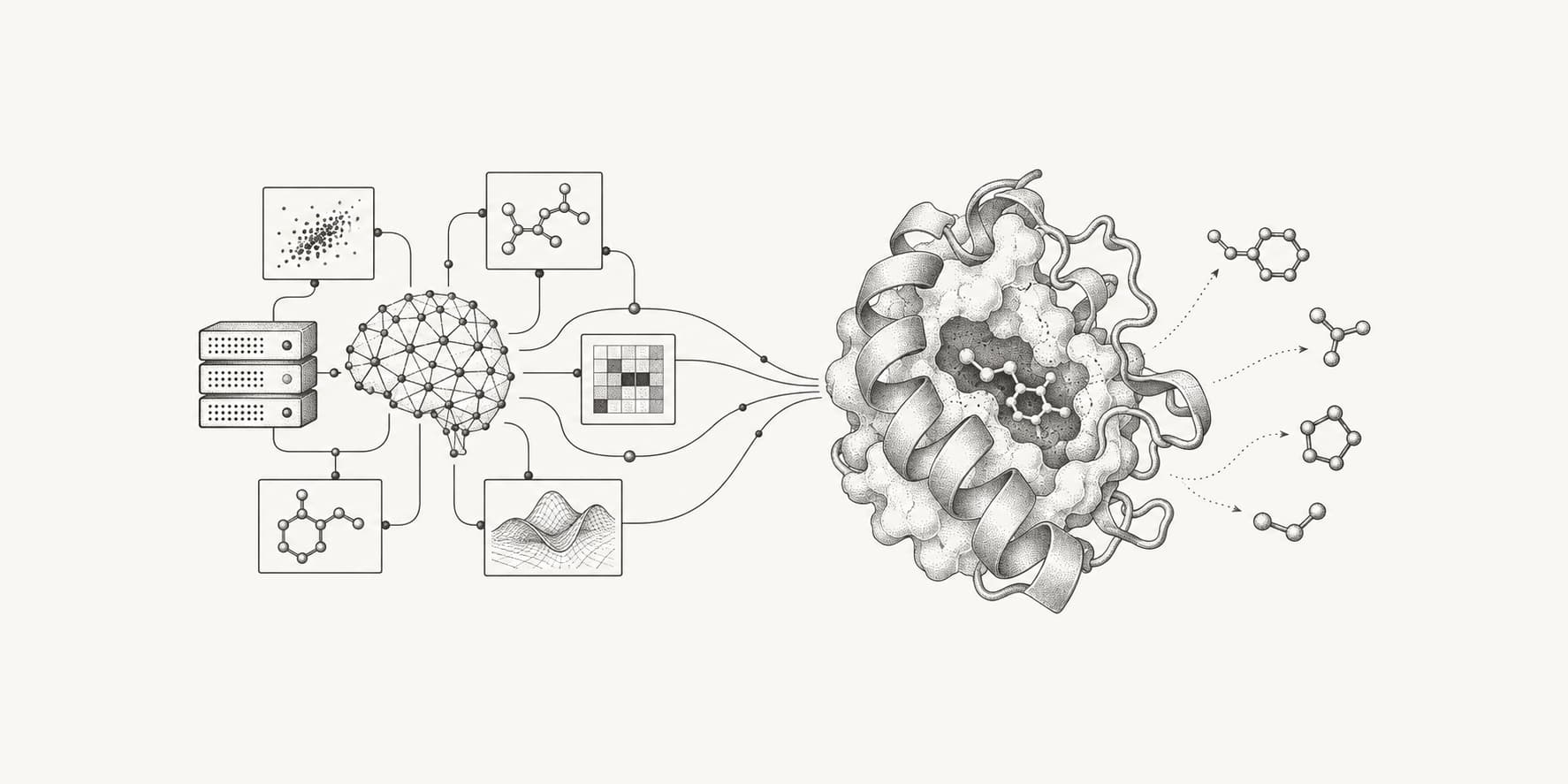
The origin of a drug and the way it is manufactured today can also differ. Natural compounds remain starting points for drug discovery, including structure-based searches with molecular docking.
How many medicines come from animals?
There is no reliable current count of animal-derived medicines. A historical analysis assigned 8.7% of 252 essential chemicals to animal sources, equivalent to about 22 compounds, but that figure does not describe today’s much larger medicine supply.[7]
The count changes depending on whether it includes only active drugs or also inactive ingredients. Heparin can be sourced from porcine tissue, while gelatin, lactose, shellac, and some stearates may appear as capsule shells, fillers, coatings, or processing materials.
A 2025 review found no centralized resource that identifies animal-derived components across medicines. Formulations can also differ by manufacturer and country, so two products containing the same active drug may not have the same animal-derived ingredients.[8]
How many medicines come from the Amazon rainforest?
There is no defensible count or percentage for medicines that come specifically from the Amazon rainforest. The repeated claim that 25% of medicines come from the Amazon appears to reuse the older worldwide estimate for plant-derived prescription drugs and attach a location that the source did not report.[5]
Amazonian plants have contributed compounds and research leads, and the region remains important to ethnobotany and natural-product research. A major review of Amazonian drug discovery described the forest’s biological and Indigenous knowledge as a source of leads, but it did not publish a count of approved medicines originating there.[9]
Rainforest is also not a synonym for Amazon. Tropical forests span South America, Central America, Africa, Asia, Australia, and islands including Madagascar. Claims about “rainforest medicines” often combine discoveries from these separate regions.
How many pharmaceutical companies are there in the world?
Citeline counted 7,057 companies with active pharmaceutical R&D pipelines at the start of 2026, up from 6,823 one year earlier.[10][11]
This is a count of companies developing drugs, not every pharmaceutical business. It excludes many manufacturers, distributors, pharmacies, contract service providers, and companies without an active development program.
Company count and medicine count measure different stages of the same system. At the start of 2026, those companies had 22,940 drug candidates in development. Only a small fraction will reach approval because about nine in ten clinical candidates fail and successful development commonly costs around USD 1 billion.[11]
ProteinIQ. "How many medicines are there in the world?" Published July 28, 2026. Accessed [your access date]. https://proteiniq.io/guides/how-many-medicines-are-there-in-the-world