The short answer is that a successful new drug usually costs around 1 billion US dollars to develop when failed programs and capital costs are counted. The evidence supports a range rather than one universal figure.
Direct spending on one successful program can be much lower. The large headline numbers fold in the cost of candidates that failed, years of capital tied up before launch, and the scope of R&D counted by the study.
How much does it cost to develop a new drug?
A defensible current estimate is about 700 million to 1.3 billion US dollars for a typical approved new drug after adjusting for failed development programs and capital costs, while published capitalized estimates range from 161 million to 4.54 billion US dollars.
The range is wide because studies are measuring different things. Some include drug discovery, preclinical work, failed compounds, and capital costs. Others rely on public company disclosures, clinical-trial activity, or proprietary industry surveys.[1][2][3][4][5]
| Source/study | Basis | Cost |
|---|---|---|
| Systematic review | Capitalized pre-launch R&D per NME, 2019 USD | USD 161 million to USD 4.54 billion |
| JAMA 2020 public data | 2009-2018 FDA approvals, with failed trials | USD 985 million median; USD 1.34 billion mean |
| JAMA Open 2025 | 2019 FDA approvals, with capital and failure adjustments | USD 708 million median; USD 1.31 billion mean |
| Tufts/JHE 2016 | Pre-approval cost in 2013 USD | USD 1.40 billion cash; USD 2.56 billion capitalized |
| Deloitte ROI series | Discovery-to-launch assets for top-20 biopharma | USD 2.67 billion in 2025 |
Sources: Schlander et al., Wouters et al., DiMasi et al., Mulcahy et al., and Deloitte.[1][2][3][5][12]
The median is often more useful than the mean. In the 2025 JAMA Network Open study, the adjusted mean was USD 1.31 billion, but excluding just two unusually expensive drugs lowered the mean to USD 950 million. The median stayed closer to the typical case.[5]
How much does a clinical trial cost?
A sponsor-run drug trial typically costs several million to tens of millions of US dollars. A US government model estimated average costs of about USD 3.8 million for one Phase 1 study, USD 13.4 million for Phase 2, and USD 19.9 million for Phase 3.[7]
Those figures cover one study. A program may run several trials in the same phase, and the failure-adjusted cost per approval also includes spending on candidates that never reach the market.
| Stage | Scale/duration | Evidence |
|---|---|---|
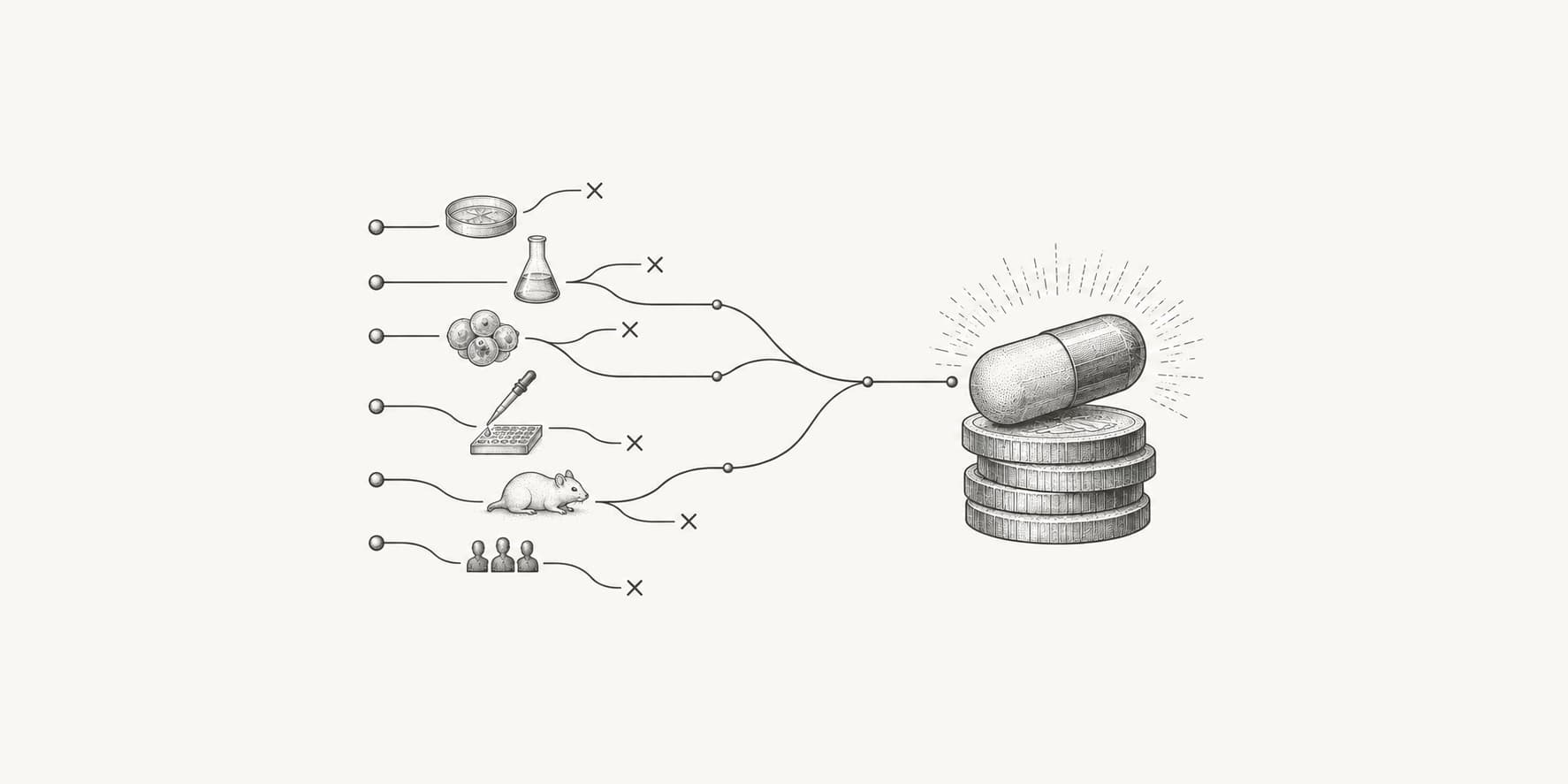
| Discovery/preclinical | Lab, manufacturing, and animal toxicology | JAMA model: USD 11.8M cash; 40.2% of adjusted capitalized cost |
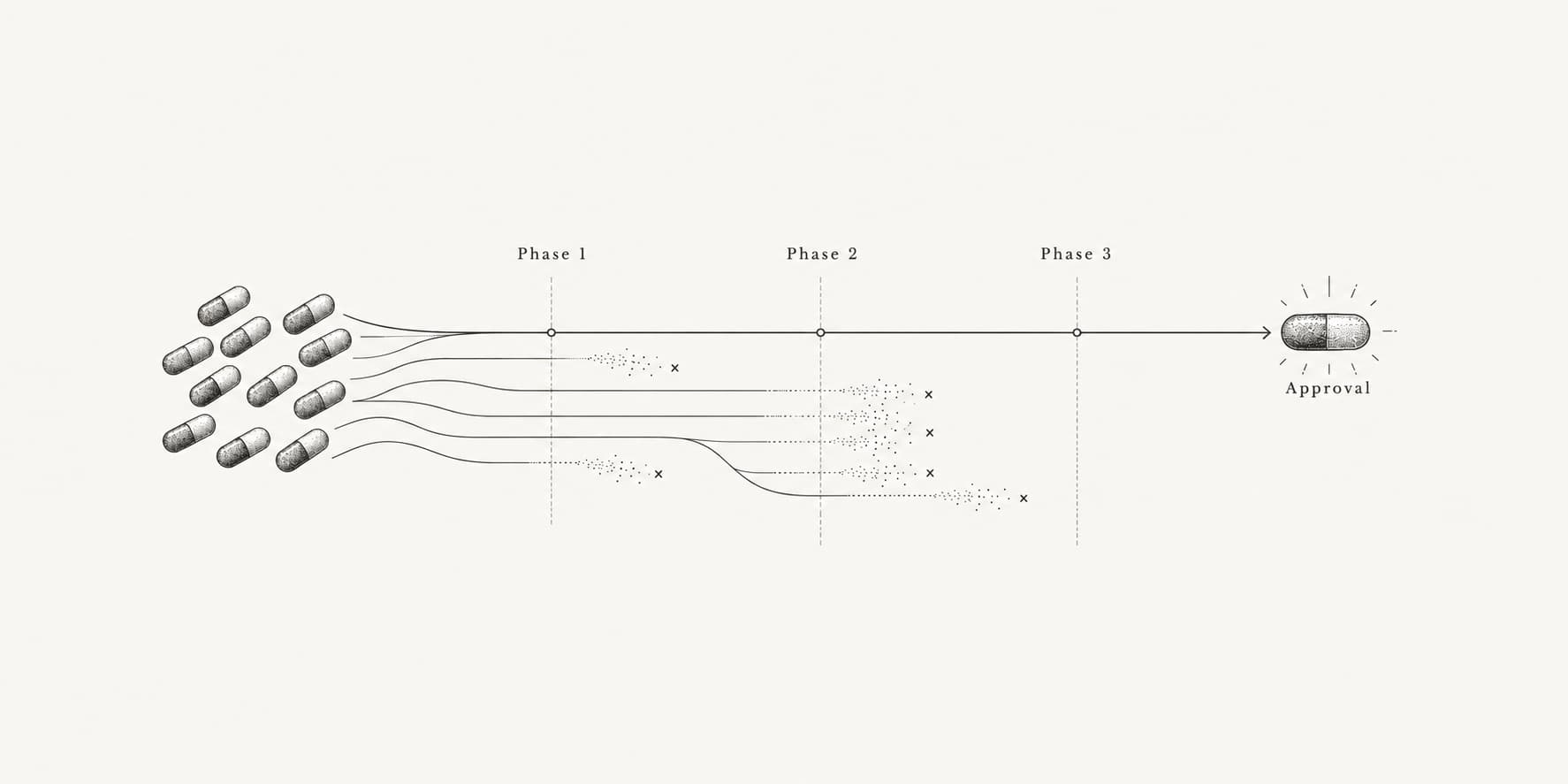
| Phase 1 | 20-100 participants; months | ASPE: USD 3.8M per study; FDA: ~70% advance |
| Phase 2 | Up to several hundred participants; months to 2 years | ASPE: USD 13.35M per study; FDA: ~33% advance |
| Phase 3 | 300-3,000 participants; 1-4 years | ASPE: USD 19.89M average; FDA: ~25-30% advance |
| FDA review/Phase 4 | Review, commitments, safety monitoring | ASPE: ~USD 2M review fees; USD 19.95M average Phase 4 study |
Sources: FDA clinical-phase descriptions, ASPE's clinical-trial cost model, and the 2024 JAMA Network Open cost model.[6][7][4]
Cost per participant is another measure. A newer ASPE model estimated average site-based costs of USD 81,338 per participant in Phase 1, USD 58,618 in Phase 2, USD 53,180 in Phase 3, and USD 35,190 in Phase 4, all in 2018 dollars.[15] The sponsor bears these costs; they are separate from any payment to a participant.
Per-study and per-participant averages vary sharply by disease area and protocol. The same ASPE analysis put Phase 3 per-participant costs at USD 30,001 for anti-infective trials and USD 118,473 for hematology trials.[15] Enrollment, trial length, procedures, laboratory work, site count, and monitoring all affect the final budget.
Clinical development is the largest direct cash category. Across all therapeutic areas in the 2024 JAMA Network Open model, clinical work represented 68% of direct cost. After failure and capital adjustments, nonclinical work rose to 40.2% of expected capitalized cost and clinical work accounted for 53.0%.[4]
Late pivotal trials can be much cheaper or much more expensive than the Phase 3 average. A 2018 JAMA Internal Medicine study of pivotal trials supporting FDA approvals found a median estimated cost of USD 19 million, with an interquartile range of USD 12.2 million to USD 33.1 million; the highest estimated trial cost was USD 346.8 million.[8]
How much does it cost to develop a generic drug or biosimilar?
A simple small-molecule generic can cost only a few million dollars to develop, while a biosimilar usually costs hundreds of millions because it still requires extensive analytical, manufacturing, clinical, legal, and launch work.
Generics are cheaper because they do not repeat the full new-drug efficacy program. They usually show pharmaceutical equivalence and bioequivalence to an already approved reference drug. Biosimilars are different: biologic products are harder to characterize and often need pharmacokinetic, pharmacodynamic, immunogenicity, and sometimes comparative efficacy evidence.
| Product type | Cost | Why |
|---|---|---|
| Simple generic | USD 2.43M direct; USD 5.28M expected capitalized | Relies on equivalence to a reference drug |
| Complex generic | No single average; cost rises with studies, devices, or litigation | Moves closer to clinical development |
| Biosimilar | USD 131M-142M before failures; USD 314M-344M capitalized | Clinical comparison, IP, and launch drive cost |
Sources: HHS/ASPE generic and biosimilar reports.[9][10]
For biosimilars, clinical studies dominate the budget. In the ASPE model, the PK/PD similarity and comparative efficacy stages together accounted for 69% to 72% of total biosimilar development cost, depending on reference-product market size.[10]
How long do drug discovery and drug development take?
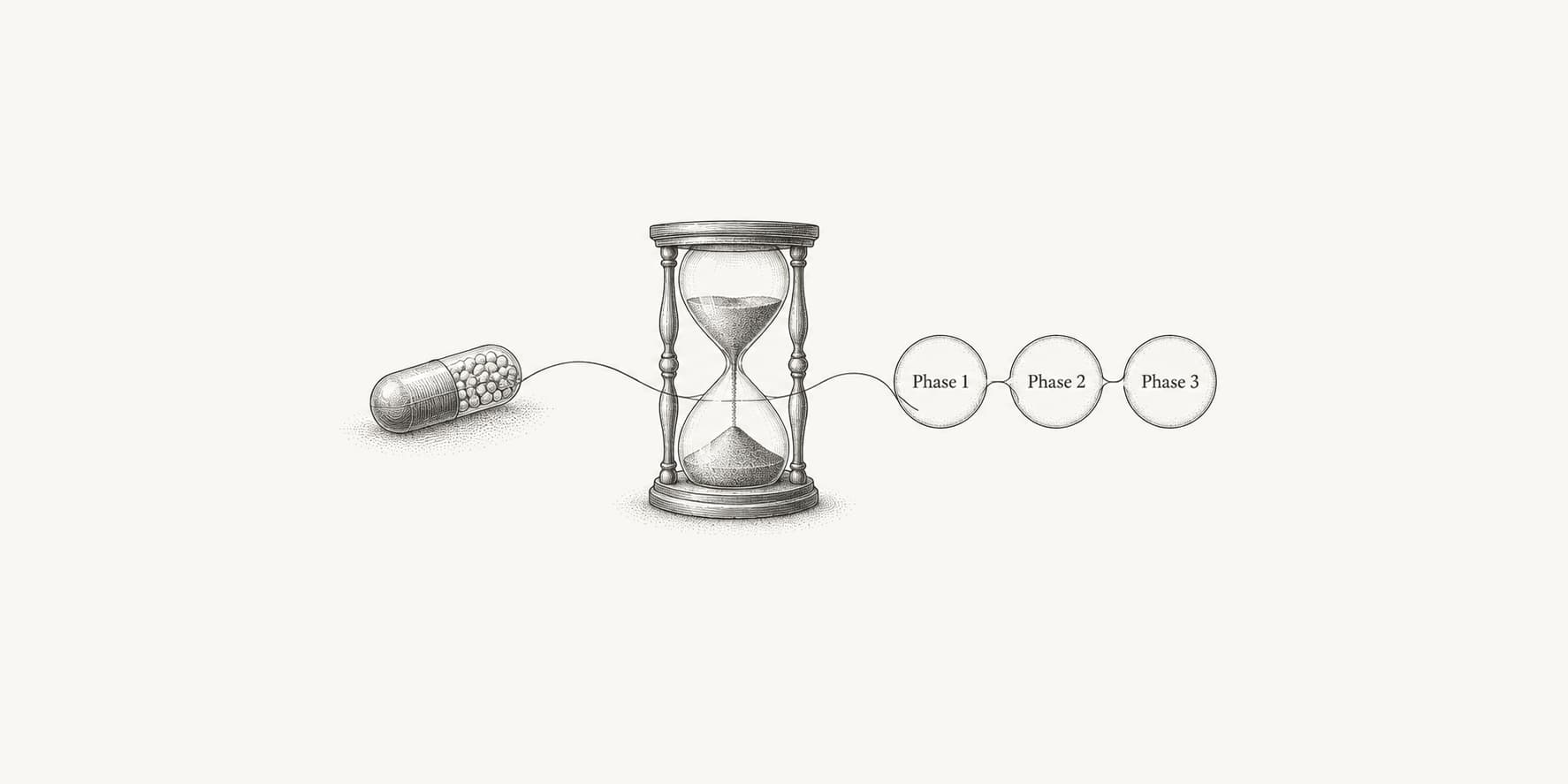
New-drug development commonly takes 10 to 15 years from early laboratory work to approval, including roughly 2 to 5 years of discovery and preclinical research before human testing begins.[16]
The NIH Clinical Center divides the rest of the path into roughly 2 to 10 years of clinical studies and 6 months to 2 years of regulatory review.[16] Discovery work includes identifying and validating a target, finding a hit, optimizing a lead, and completing the safety studies needed to begin a clinical trial. Programs can take longer when the target is poorly understood or candidate molecules fail during optimization.
The full timeline includes discovery, preclinical research, human trials, and review. FDA's phase descriptions show why clinical development alone can take years: Phase 1 generally lasts several months, Phase 2 several months to 2 years, and Phase 3 about 1 to 4 years.[6]
Cost estimates differ for five main reasons:
- Cash cost versus capitalized cost. Capitalized estimates add the time value of money before launch.
- Successful programs versus all attempted programs. Failure-adjusted estimates spread failed-candidate spending across the drugs that reach approval.
- Preclinical scope. Discovery and preclinical work are hard to allocate because many compounds never enter human testing.
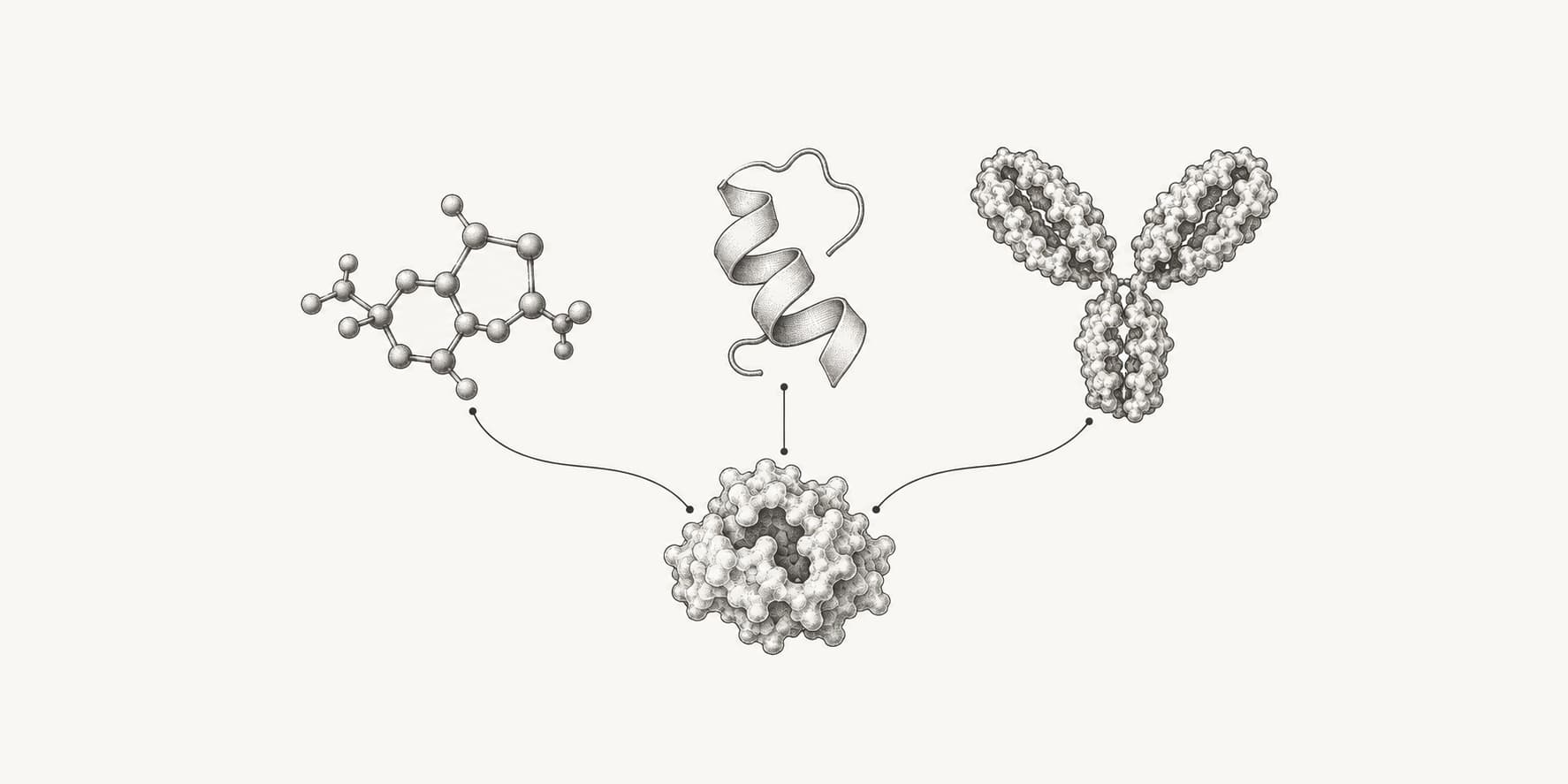
- Product mix. Oncology, rare disease, chronic disease, biologic, gene therapy, and small-molecule programs have different trial sizes and success rates.
- Data source. Studies based on public disclosures, vendor trial-cost data, confidential company surveys, or top-20 pharma cohorts answer different versions of the question.
That is why the same year can produce different answers. Deloitte's 2022 industry ROI series reported USD 2.284 billion per asset for its analyzed cohort, while transparent academic studies using different data put central estimates closer to USD 879 million to USD 1.31 billion.[11][4][5]
At the industry level, the numbers are much larger. The Congressional Budget Office estimated that the pharmaceutical industry spent USD 83 billion on R&D in 2019, about 10 times its annual 1980s level after inflation. Deloitte reported that the 20 companies it analyzed spent USD 139 billion on R&D in 2022.[13][11]
Product-specific searches need extra caution. For example, public reporting around Zolgensma often discusses its launch price or Novartis's AveXis acquisition, but those are not the same thing as the drug's development cost. Unless a sponsor discloses project-level R&D spending, the product-specific development cost is usually not public.[14]
ProteinIQ. "How much does drug development cost?" Updated July 1, 2026. Accessed [your access date]. https://proteiniq.io/guides/drug-development-cost