How many antibiotics are there?
The WHO classified 268 antibiotics used in humans in 2025. Its Essential Medicines List contains 50 antibiotics, while the wider market includes more products, formulations, and combinations.
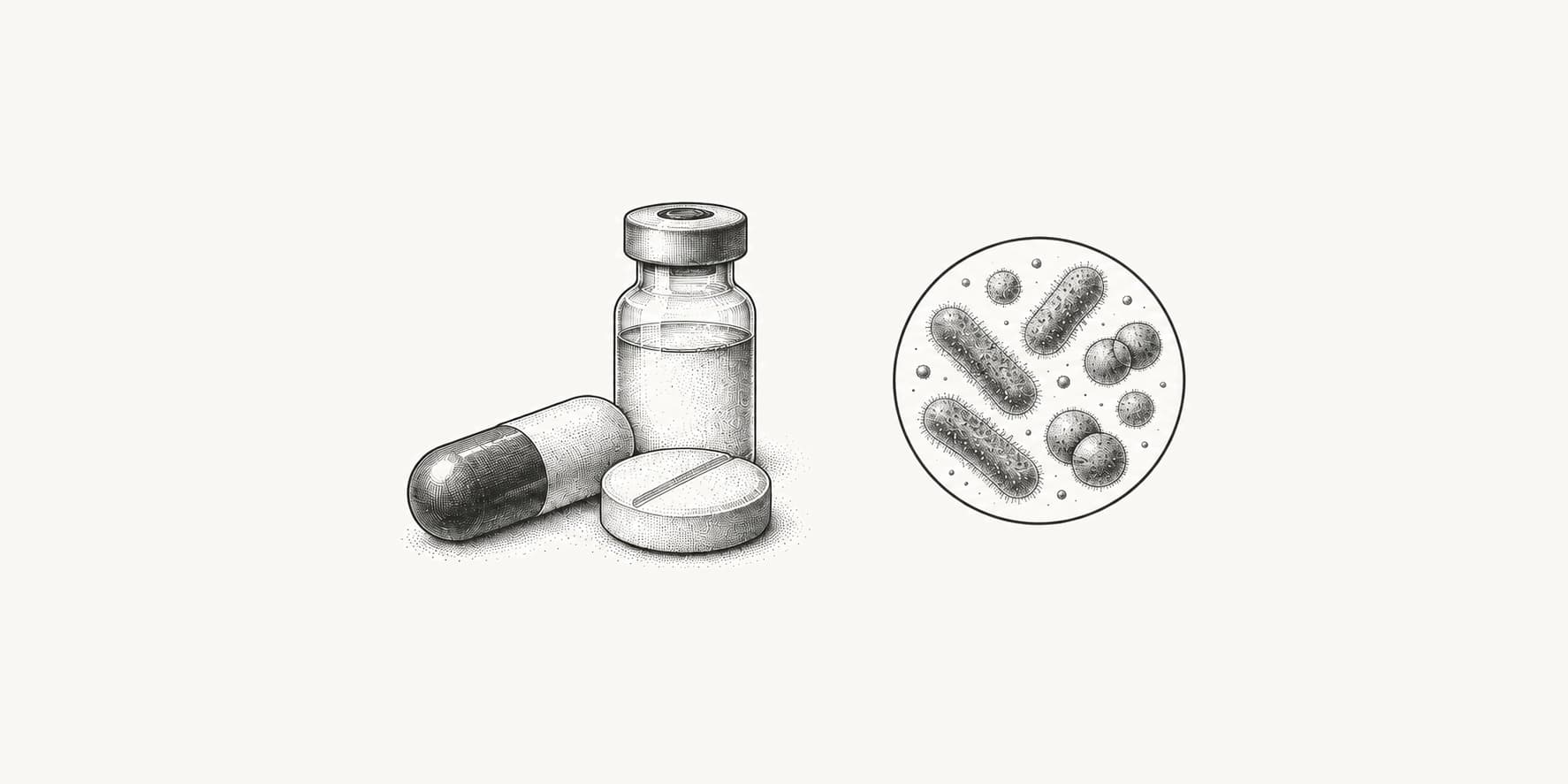
The closest current global count is 268 antibiotics used in humans. That is the number assigned to the World Health Organization's Access, Watch, or Reserve groups in 2025.
It is not a count of every antibiotic brand, dose, formulation, veterinary drug, topical treatment, or experimental compound. There is no single worldwide total that covers all of those categories.
How many antibiotics are there?
The WHO classified 268 antibiotics used in humans in 2025. This is the clearest current worldwide reference count.[1]
The number depends on the unit being counted. The 268 figure covers antibiotic substances in the WHO's global stewardship system. The 2025 WHO Model List of Essential Medicines contains a narrower selection of 50 antibiotics for priority health needs.[1] Neither figure counts every branded product separately. The same active-substance-versus-product distinction explains why broader counts of medicines worldwide differ.
The WHO list has expanded as more drugs have been classified. It contained 180 antibiotics in 2019 and 257 in 2023 before reaching 268 in 2025.[2][3][1]
These releases are comparable counts of antibiotics assigned to the WHO's Access, Watch, or Reserve groups. Access antibiotics are preferred for many common infections, Watch antibiotics have higher resistance potential, and Reserve antibiotics are held back for infections with few suitable alternatives.
How many classes of antibiotics are there?
The WHO's ATC system has 10 main groups for systemic antibacterials. There is no universal class count because antibiotics can also be grouped by chemical structure, mechanism, spectrum, or use.[4][5]
Those 10 groups are tetracyclines, amphenicols, penicillins, other beta-lactams, sulfonamides and trimethoprim, macrolides/lincosamides/streptogramins, aminoglycosides, quinolones, antibacterial combinations, and other antibacterials.[5]
Popular lists often count cephalosporins, carbapenems, and monobactams as separate classes. The ATC system places them together under “other beta-lactam antibacterials.” This difference in splitting and grouping explains why credible class counts do not always match.
How many antibiotics are there for UTIs?
Current European guidelines name four first-line antibiotic options for cystitis in women: fosfomycin, pivmecillinam, nitrofurantoin, and nitroxoline. There is no fixed count for every type of UTI.[6]
The same guideline lists cephalosporins, trimethoprim, and trimethoprim-sulfamethoxazole as alternatives under specific conditions. Kidney infections, complicated UTIs, pregnancy, allergies, kidney function, and resistant bacteria require different choices.
The available list also changes. The US Food and Drug Administration approved pivmecillinam for uncomplicated UTIs in adult women in 2024 and gepotidacin for uncomplicated UTIs in female patients aged 12 years and older in 2025.[7][8] A urine culture and local resistance data can narrow the appropriate options for an individual infection.
Are new antibiotics still being developed?
New antibiotics are still being developed. In 2025, the WHO counted 90 antibacterial agents in clinical development, but only 15 met at least one of its innovation criteria and only five were active against at least one critical-priority bacterium.[9]
Seventeen antibacterial agents targeting priority pathogens received marketing authorization between July 2017 and February 2025. Only two represented a new chemical class.[9]
The pipeline spans drug discovery, molecular docking, laboratory studies, and clinical trials. An experimental candidate does not add to the 268-antibiotic reference count merely by entering development; AWaRe classifies antibiotics used in humans.
ProteinIQ. "How many antibiotics are there?" Published July 28, 2026. Accessed [your access date]. https://proteiniq.io/guides/how-many-antibiotics-are-there