TL;DR
- A classical monoclonal antibody population comes from one antibody-producing clone and shares one antigen-binding sequence and specificity.
- Monoclonal antibodies usually recognize one epitope, whereas polyclonal preparations contain antibodies from multiple B-cell clones and can recognize several epitopes.
- Monoclonal antibodies can be discovered through hybridomas, single B cells, or display libraries and then produced from a defined heavy- and light-chain sequence.
- Monoclonality does not guarantee specificity, affinity, or performance in every assay; each antibody must be validated for its intended application.
What are monoclonal antibodies?
Monoclonal antibodies, or mAbs, are a defined population of antibodies produced from one antibody-forming clone or from one recombinant antibody sequence. Classical monoclonal antibodies share the same paired heavy- and light-chain variable regions and are selected to recognize the same epitope on an antigen.[1][8]
The term describes the antibody population, not its purpose. Monoclonal antibodies can be laboratory reagents, diagnostic components, or medicines. They can detect a molecule, block or activate a biological pathway, recruit immune functions, neutralize a target, or carry a linked payload.[4]
How do monoclonal and polyclonal antibodies differ?
A monoclonal preparation contains one selected antibody specificity. A polyclonal preparation contains antibodies produced by multiple B-cell clones in an immune response, often recognizing several epitopes on the same antigen.[1][3]
| Feature | Monoclonal antibody | Polyclonal antibody |
|---|---|---|
| Antibody population | One selected clone or defined recombinant sequence | Mixture from multiple B-cell clones |
| Epitopes recognized | Usually one | Usually several on the immunizing antigen |
| Sequence definition | Can be fully defined when heavy- and light-chain sequences are known | Contains multiple sequences that are rarely all defined |
| Supply | Renewable from a preserved clone or recombinant sequence | Limited by the source animal and new production batches |
| Batch consistency | Highest for sequence-defined recombinant production | Can vary among animals, bleeds, and purification batches |
| Typical advantage | Precise recognition of one epitope | Detection can survive loss or masking of one epitope |
| Typical limitation | Signal can fail if its single epitope is altered or inaccessible | More potential contributors to background and cross-reactivity |
Neither type is automatically superior. The useful choice depends on the target, sample preparation, assay format, and whether epitope breadth or a defined renewable reagent matters more.
How are monoclonal antibodies produced?
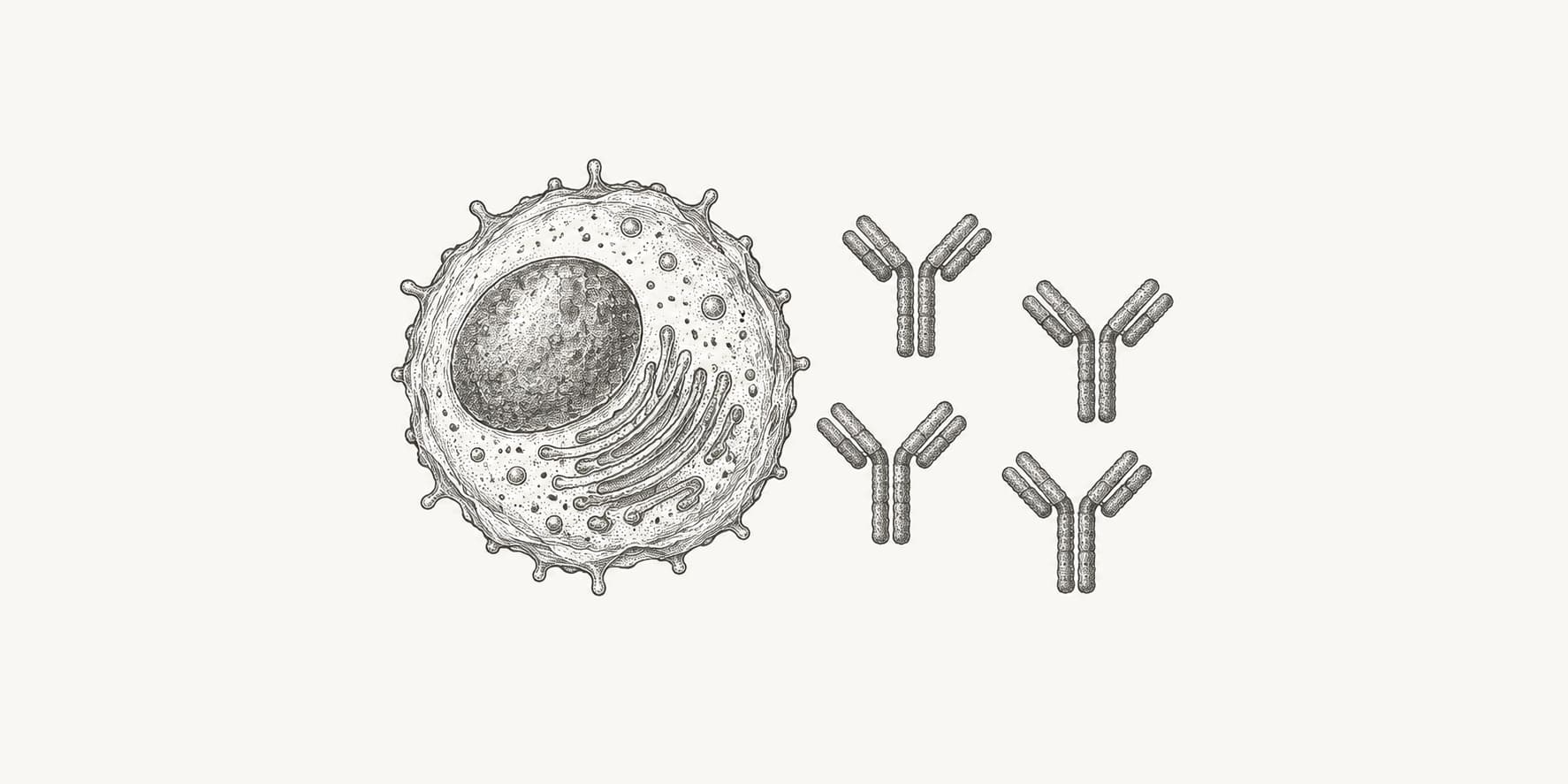
The original hybridoma method fused short-lived antibody-producing B cells with immortal myeloma cells. Individual fused cells were screened and cloned so one stable cell line could continually secrete an antibody of predefined specificity.[2]
Modern discovery can start from hybridomas, isolated single B cells, immunized or transgenic animals, or recombinant display libraries. Once a useful binder is selected, its heavy- and light-chain genes can be cloned and expressed in a defined producer cell line.[4][5]
| Stage | Hybridoma route | Recombinant route |
|---|---|---|
| Obtain candidate diversity | Immunize an animal and collect antibody-producing B cells | Isolate single B cells or screen phage, yeast, or other display libraries |
| Select a binder | Fuse B cells with myeloma cells, screen wells, and clone a positive hybridoma | Recover or select paired heavy- and light-chain sequences and screen expressed antibodies |
| Preserve identity | Maintain and bank the selected hybridoma | Store the defined nucleotide and amino acid sequences |
| Produce antibody | Expand the hybridoma in culture | Express the selected genes in a host cell line |
| Confirm product | Test binding, isotype, purity, and cross-reactivity | Confirm sequence, binding, purity, structure-related quality attributes, and function |
Calling an antibody monoclonal does not mean it was necessarily produced by hybridoma technology. A sequence-defined recombinant antibody is also monoclonal even when its binder came from a display library rather than a single natural B cell.[4][5]
Are monoclonal antibody molecules completely identical?
They are intended to share the same primary heavy- and light-chain sequence and antigen-binding specificity. They are not necessarily identical in every chemical detail.
Cell-produced antibodies can contain different glycoforms, charge variants, terminal processing states, oxidized or deamidated residues, aggregates, and fragments. Therapeutic monoclonal-antibody manufacturing therefore controls a profile of product-related variants rather than assuming every molecule is physically indistinguishable.[5]
For research antibodies, knowing the heavy- and light-chain sequences makes the reagent reproducible and recoverable. A hybridoma name or catalogue number alone does not provide the same molecular definition.[6]
How do monoclonal antibodies work?
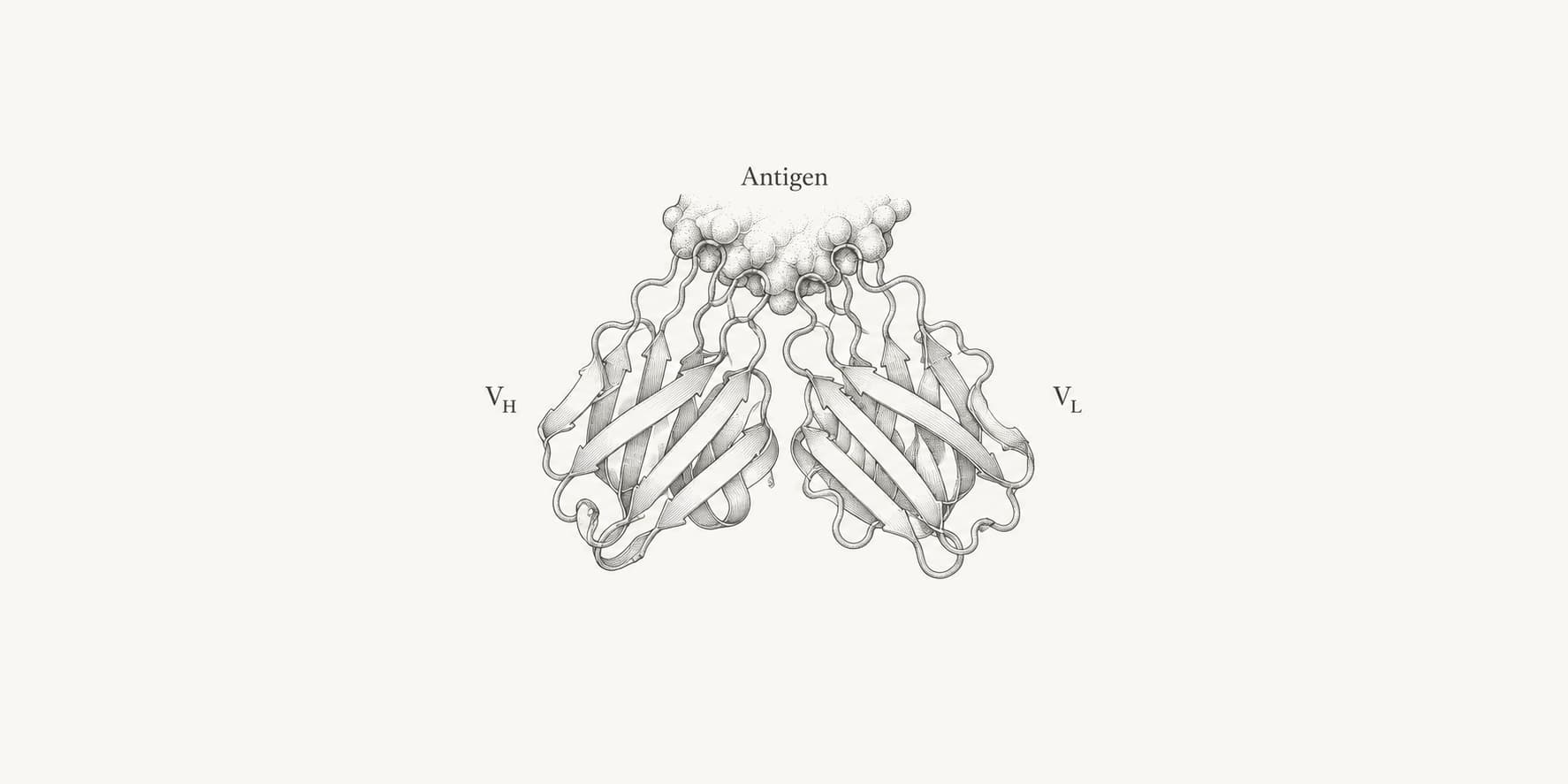
The variable regions bind the target. The resulting biological effect depends on the epitope, antibody format, valency, Fc region, attached molecules, and target biology.[4]
| Mechanism | What the antibody does |
|---|---|
| Neutralization | Binds a soluble molecule, toxin, or pathogen surface and prevents a required interaction |
| Ligand or receptor blockade | Stops a ligand from reaching its receptor or prevents receptor activation |
| Receptor activation | Cross-links or stabilizes a receptor state that triggers signaling |
| Fc-mediated recruitment | Uses Fc receptors or complement to support cellular cytotoxicity, phagocytosis, or complement activity |
| Targeted delivery | Carries a drug, radionuclide, enzyme, or other payload to cells bearing the target antigen |
A monoclonal antibody may use one mechanism or several. Binding the intended target does not by itself establish which mechanism dominates in a particular biological system.
Are all monoclonal antibodies IgG?
No. Monoclonal describes clonality or sequence definition, not antibody class or molecular format. Research monoclonal antibodies can belong to different immunoglobulin classes. Many therapeutic monoclonal antibodies use an IgG-based format because it combines two antigen-binding arms with an Fc region, but fragments, conjugates, and other engineered formats are also used.[4][5]
Classical monoclonal antibodies are monospecific, but monoclonal and monospecific are not exact synonyms in modern antibody engineering. A bispecific antibody is a defined engineered product designed to recognize two epitopes or antigens.[7] The separate approval-count guide tracks FDA-approved bispecific antibodies.
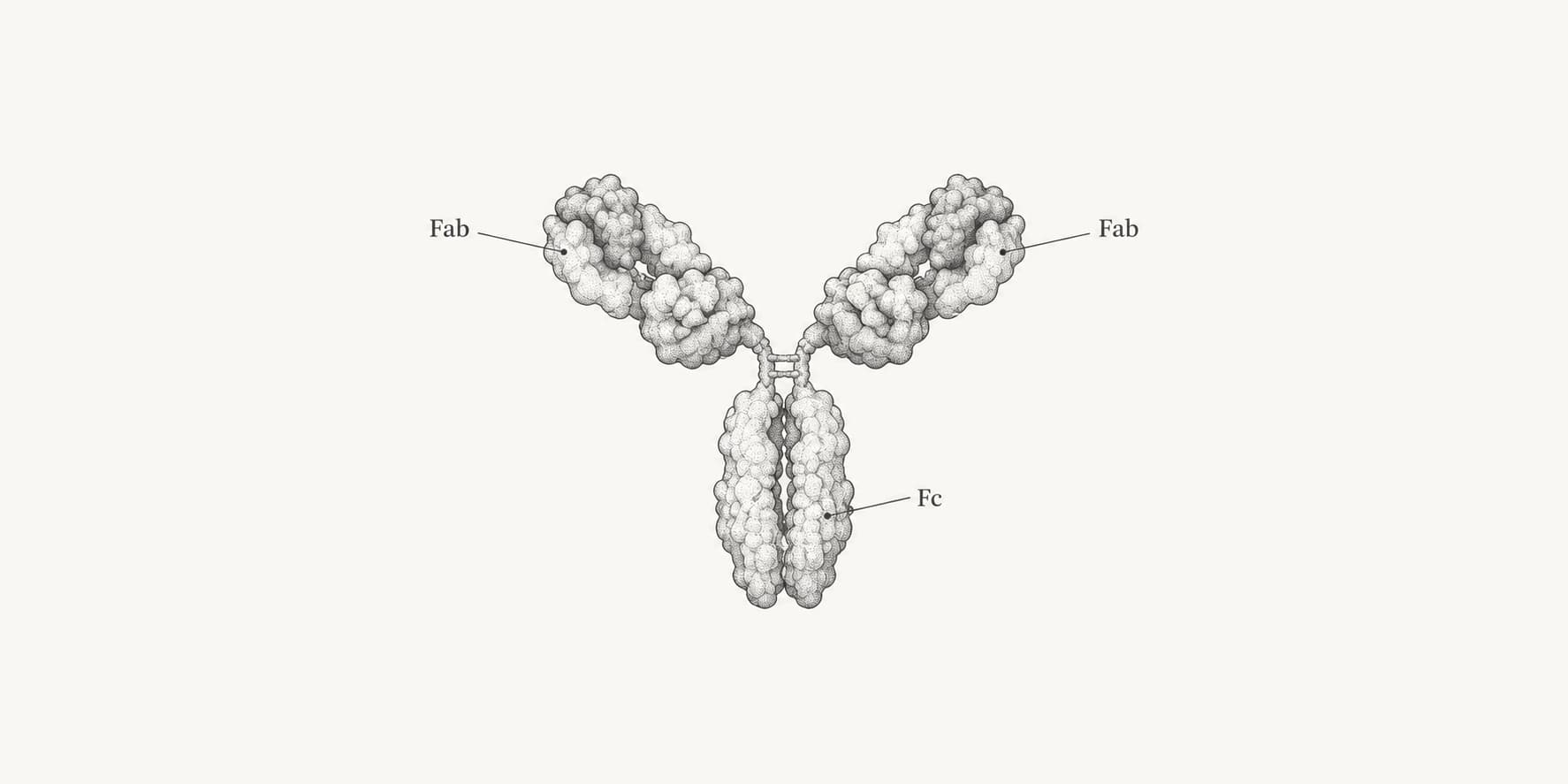
Antibody class, molecular weight, Fab/Fc composition, specificity, and clonality answer different questions. See the guides to antibody classes, antibody molecular weight, and Fab and Fc regions for those distinctions.
How are research monoclonal antibodies validated?
Monoclonality does not prove that an antibody binds only the intended target. Cross-reactivity, an inaccessible epitope, sample processing, and assay conditions can all change the observed result. Validation must match the intended application.[6]
| Validation question | Useful evidence |
|---|---|
| Does the signal depend on the target gene? | Knockout, knockdown, or other genetic perturbation |
| Does an independent method show the same pattern? | Targeted proteomics, RNA–protein comparison, or another orthogonal assay |
| Does another antibody support the result? | A second validated antibody recognizing a different epitope |
| Is the detected molecule the expected target? | Tagged-protein expression or immunocapture followed by mass spectrometry |
| Does it work in this application? | Separate validation in western blot, immunohistochemistry, immunofluorescence, flow cytometry, ELISA, or the intended functional assay |
| Does it bind unintended samples or proteins? | Cross-reactivity panels and relevant positive and negative controls |
Validation in one assay does not transfer automatically to another. A linear epitope exposed in a denatured western blot can be hidden in a folded protein, while a conformation-dependent epitope can be destroyed by fixation or denaturation.
How are monoclonal-antibody sequences and structures analyzed?
Start by preserving the paired heavy- and light-chain sequences and the antibody's clone identifier. IgBLAST assigns germline V, D, and J genes and annotates rearrangement junctions. ANARCII classifies and numbers variable domains under standard antibody numbering schemes.
ABodyBuilder3 predicts a paired VH–VL structure from the two variable-region sequences. These analyses characterize the antibody sequence and a predicted binding-region structure; they do not replace target-binding, cross-reactivity, or application-specific validation. The antibody variable-region guide explains those sequence boundaries in detail.