How many types of antibodies are there?
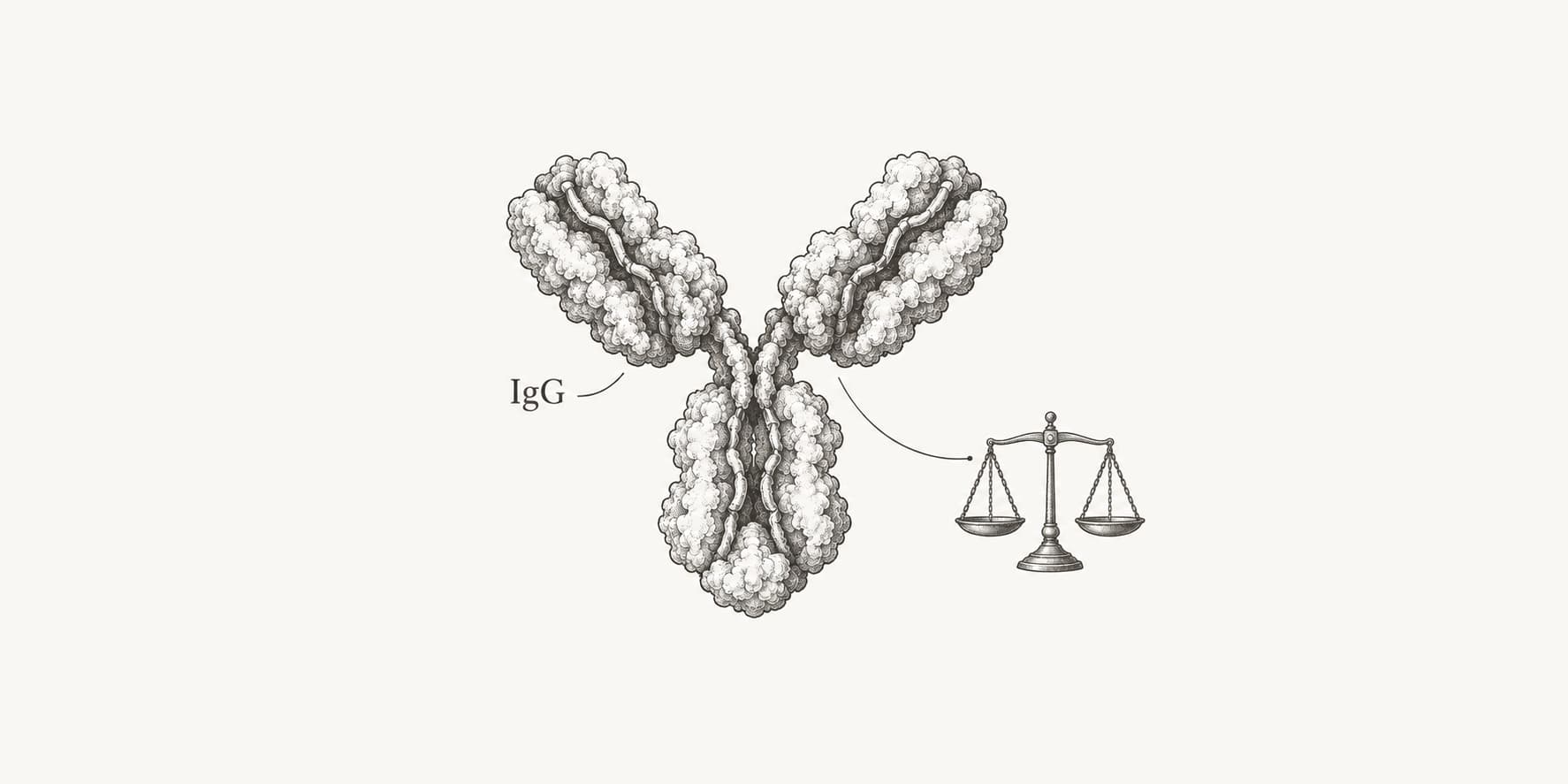
Humans have five antibody classes: IgG, IgA, IgM, IgD, and IgE. Counting each IgG and IgA subclass separately gives nine heavy-chain class/subclass forms.
TL;DR
- Humans have five major antibody classes: IgG, IgA, IgM, IgD, and IgE.
- The antibody class is determined by its heavy-chain constant region; its variable region determines antigen binding.
- IgG has four human subclasses and IgA has two, producing nine heavy-chain class/subclass forms when each subclass is counted separately.
- Kappa and lambda are light-chain types, not additional antibody classes.
Humans have five major classes of antibodies: IgG, IgA, IgM, IgD, and IgE. Antibodies are also called immunoglobulins, so “five types of antibodies” and “five immunoglobulin classes” usually mean the same thing.
The answer becomes nine when IgG1–IgG4 and IgA1–IgA2 are counted separately. These are structural and functional categories defined by the heavy-chain constant region—not a count of all the different antigen-binding antibodies a person can make.
The five antibody classes at a glance
The five classes differ in their heavy chains, assembled forms, locations, and immune functions.[1][3][7]
| Class | Heavy chain | Common form | Main locations and roles | Human subclasses |
|---|---|---|---|---|
| IgG | γ (gamma) | Monomer | Major serum class; neutralization, opsonization, Fc-receptor binding, complement activation, and placental transfer | IgG1, IgG2, IgG3, IgG4 |
| IgA | α (alpha) | Monomer in serum; usually dimeric in secretions | Mucosal defense in the respiratory and digestive tracts; prominent in saliva, tears, and milk | IgA1, IgA2 |
| IgM | μ (mu) | Monomer as a B-cell receptor; usually pentameric when secreted | First class expressed during B-cell development and the main early antibody in a primary response; efficient complement activation | None |
| IgD | δ (delta) | Mostly membrane-bound monomer | Coexpressed with IgM as an antigen receptor on mature naïve B cells; secreted only in small amounts | None |
| IgE | ε (epsilon) | Monomer, commonly bound to Fc receptors | Activates mast cells and basophils; involved in immediate allergic responses and defense against parasites | None |
“None” in the final column means that no named human subclasses are recognized for that class. It does not mean that all antibodies in the class have identical sequences.
What determines an antibody's class?
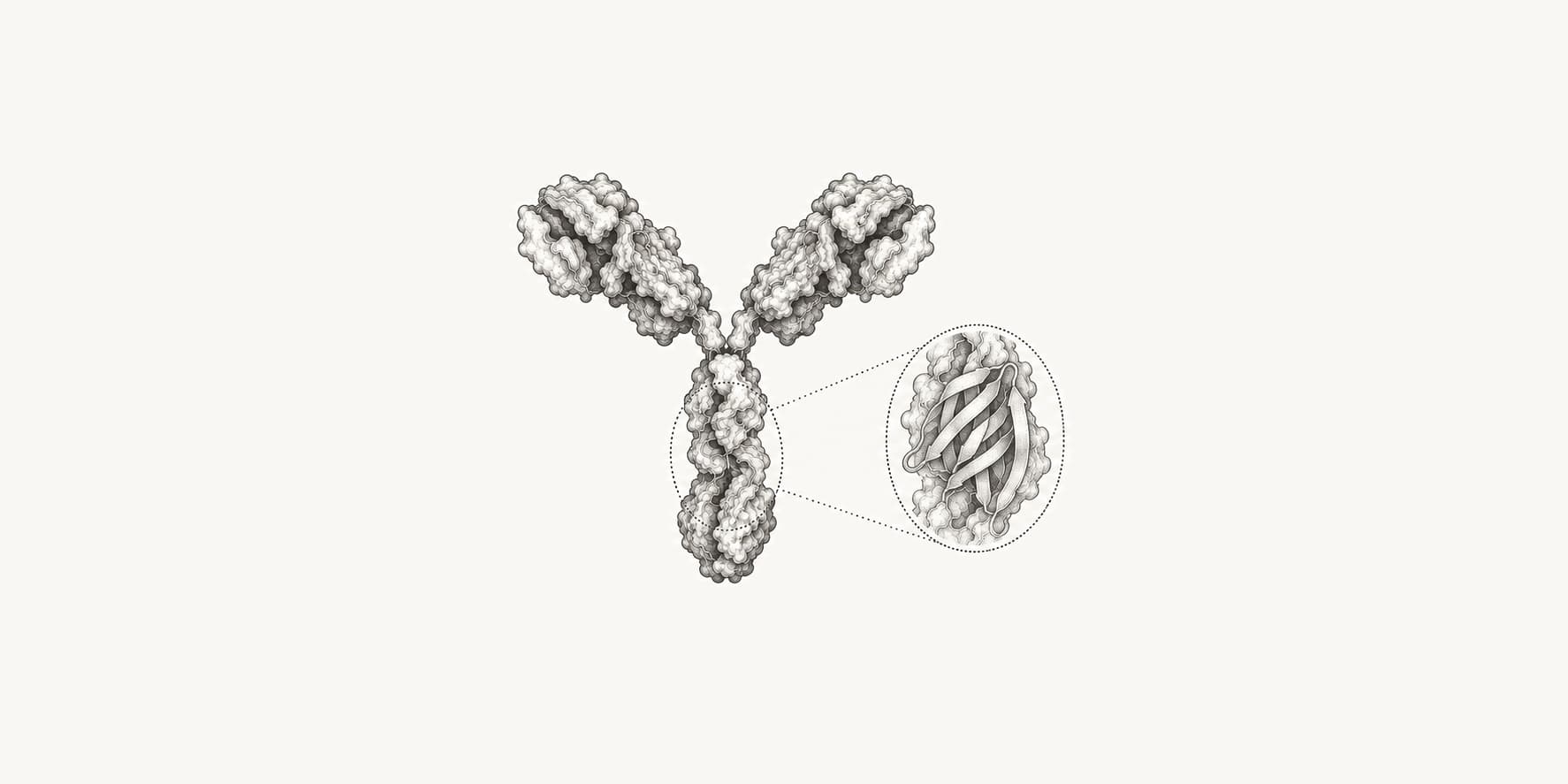
An antibody's class is determined by the constant region of its heavy chain. The five heavy-chain types—γ, α, μ, δ, and ε—produce IgG, IgA, IgM, IgD, and IgE, respectively.[1][2]
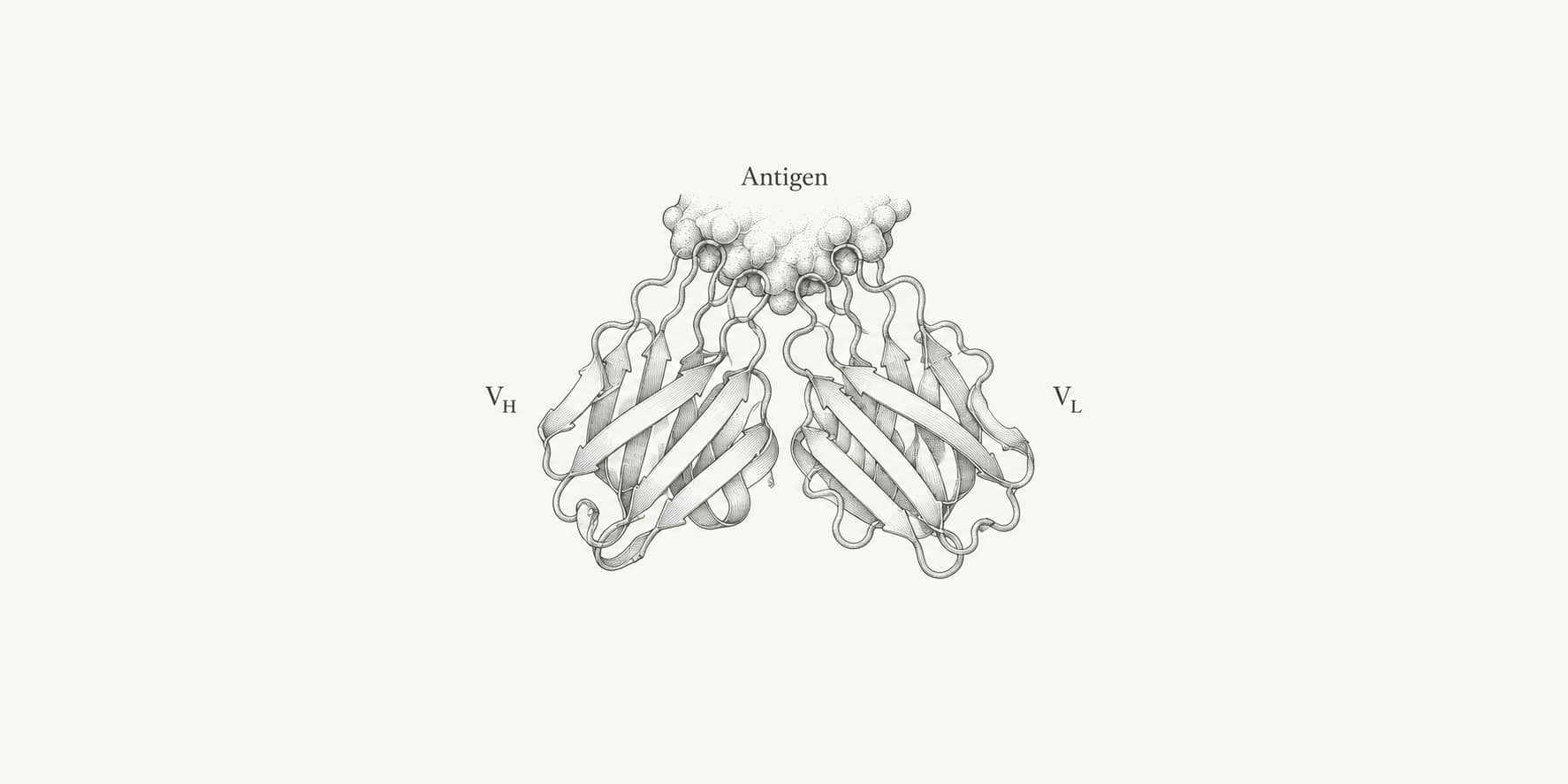
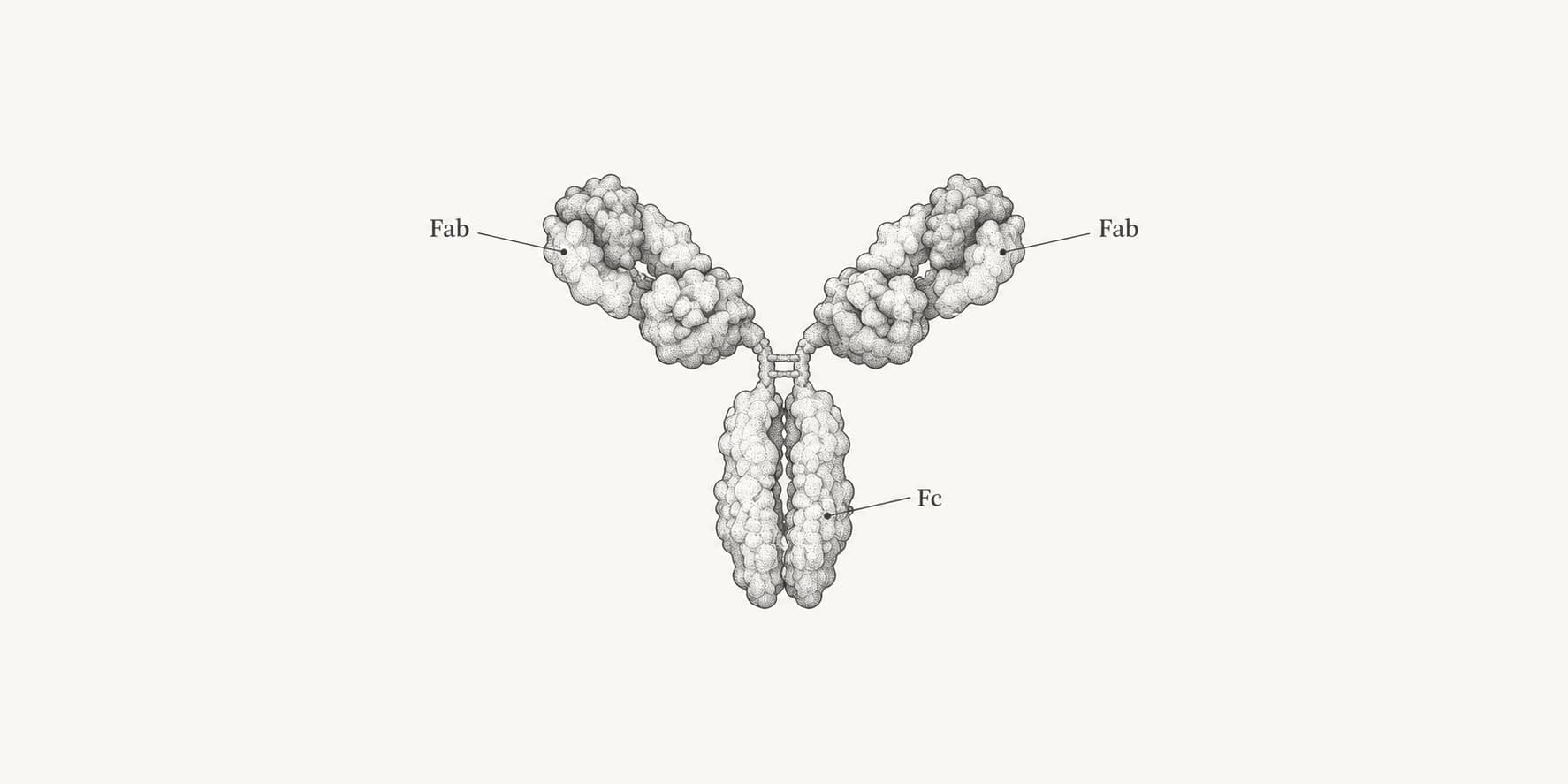
The constant region controls how the antibody interacts with Fc receptors, complement proteins, and transport systems. In IgG, many of these interaction surfaces lie in the Fc region. By contrast, the variable regions of the heavy and light chains form the antigen-binding site. Two antibodies can therefore recognize the same antigen while belonging to different classes and recruiting different immune functions.[2][3]
A B cell can change the heavy-chain constant region while retaining its assembled antigen-binding variable region. This process, called class-switch recombination or isotype switching, allows descendants of the same B cell to produce IgG, IgA, or IgE with broadly preserved antigen specificity.[2][3] This separation between binding and effector function is also central to antibody engineering, where variable and Fc regions can be optimized for different goals.
How many types of IgG are there?
Humans have four IgG subclasses: IgG1, IgG2, IgG3, and IgG4.[1][4]
IgA has two subclasses, IgA1 and IgA2. IgM, IgD, and IgE have no named human subclasses. Counting the four IgG subclasses, two IgA subclasses, and the three remaining classes produces nine heavy-chain class/subclass forms.[1][3]
The chart counts IgG1 through IgG4 and IgA1 through IgA2 separately. Each of the other three classes contributes one heavy-chain form.[1]
The subclasses differ in their constant regions, hinge structures, abundance, complement activity, and binding to Fc receptors. IgG1 is the most abundant IgG subclass in serum, but the mix varies with the antigen and the immune response.[3][4]
Which antibody type is most common?
IgG is the most abundant antibody class in human serum.[3][4]
IgA is more prominent at many mucosal surfaces and in external secretions, where it helps protect the respiratory and digestive tracts. The most abundant class therefore depends on which body compartment is measured.[3]
IgG is also the only antibody class that crosses the human placenta in substantial quantities. This transfer provides passive protection to the fetus and newborn.[4]
How many different antibodies can the human body make?
The human preimmune repertoire is estimated to contain at least one trillion, or (10^), unique antibodies.[5][6] This is why “five types” cannot mean five antigen specificities.
This is a diversity estimate, not the number of antibody molecules circulating at one moment. A healthy adult has about (5 \times 10^9) B cells in peripheral blood, so the circulating population samples only a fraction of the possible repertoire.[5]
B cells create this diversity through V(D)J rearrangement and the pairing of different heavy and light chains. After antigen exposure, somatic hypermutation creates further sequence variants in the antibody's variable regions.[2][6] IgBLAST can identify V, D, and J gene assignments in immunoglobulin sequences, while ANARCI applies standardized antibody residue numbering.
Methodology: what counts as an antibody type?
The answer depends on the classification level:
| What is being counted? | Human count | Definition |
|---|---|---|
| Major antibody classes | 5 | IgG, IgA, IgM, IgD, and IgE, classified by heavy-chain type |
| Heavy-chain class/subclass forms | 9 | IgG1–IgG4, IgA1–IgA2, IgM, IgD, and IgE |
| IMGT receptor types including light chain | 18 | Each of the nine heavy-chain forms paired with either κ or λ light chains |
| Antigen-binding antibodies | Vast repertoire | Different variable-region sequences and heavy/light-chain pairings |
This guide uses the standard five-class answer because class and subclass are identified by heavy-chain type. IMGT treats κ (kappa) and λ (lambda) as light-chain types rather than extra classes; when the nine heavy-chain forms are paired with both light-chain types, IMGT lists 18 complete human immunoglobulin receptor types.[1]
The repertoire estimate answers a different question. It concerns distinct antigen-binding sequences or clonotypes, not constant-region classes, and therefore should not be added to the five-class count.[5][6]
Frequently asked questions
Are antibodies and immunoglobulins the same thing?
Yes. Antibody and immunoglobulin refer to the same family of proteins. “Immunoglobulin” is often used when discussing molecular classes, genes, or measured protein concentrations, while “antibody” emphasizes antigen recognition and immune function.
Are kappa and lambda additional antibody classes?
No. κ and λ are the two human light-chain types. Either can pair with any heavy-chain class, but a normal antibody molecule contains two identical light chains of one type, not one of each.[1][7]
Can antibodies from different classes bind the same antigen?
Yes. Class switching changes the heavy-chain constant region while retaining the assembled variable region. The resulting antibodies can preserve antigen specificity but differ in distribution and effector function.[2][3]
What do the letters in IgG, IgA, IgM, IgD, and IgE mean?
“Ig” means immunoglobulin. The final letter identifies the heavy-chain class: IgG uses γ chains, IgA uses α, IgM uses μ, IgD uses δ, and IgE uses ε.[1][7]