What is Chai-2?
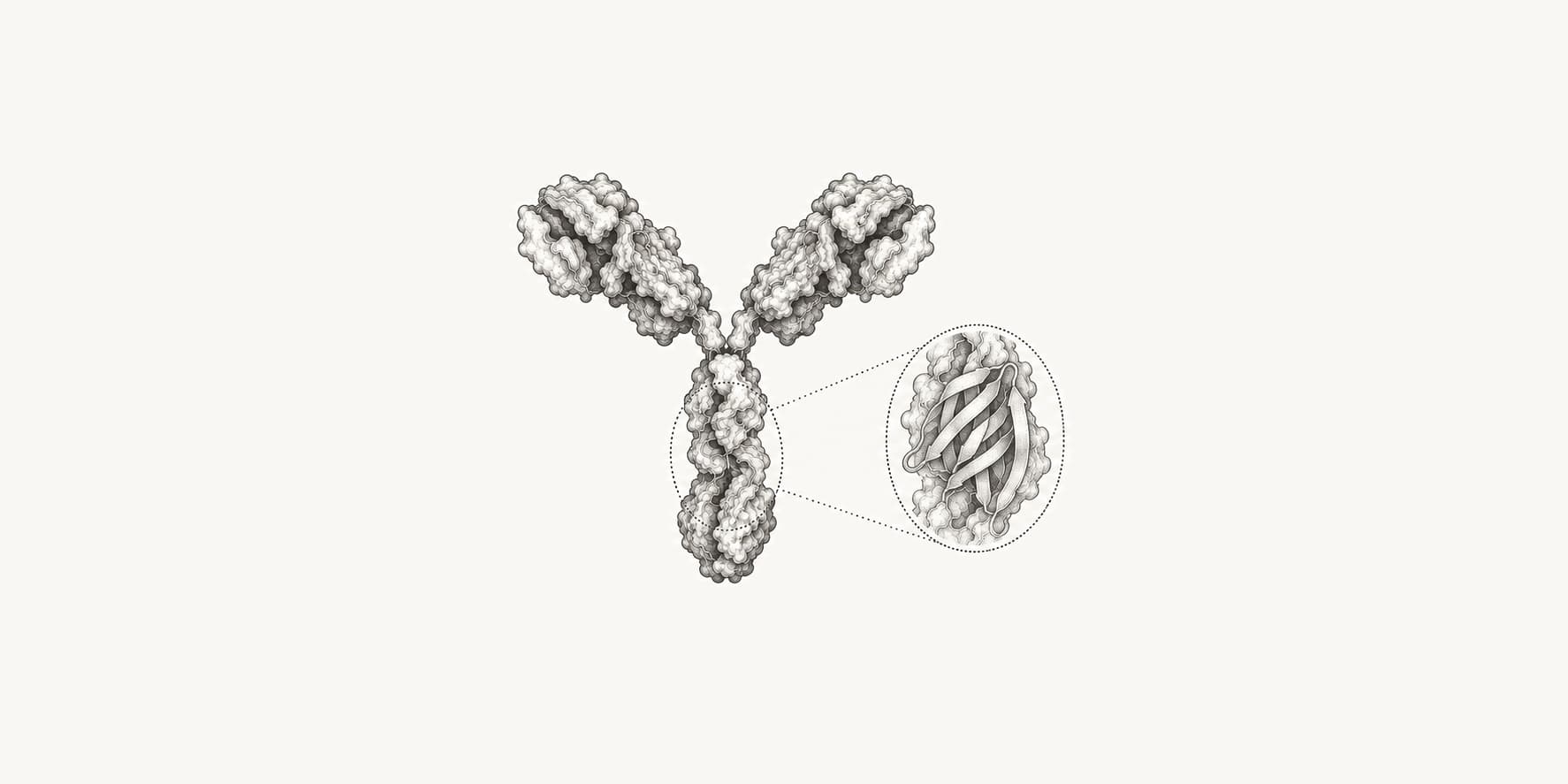
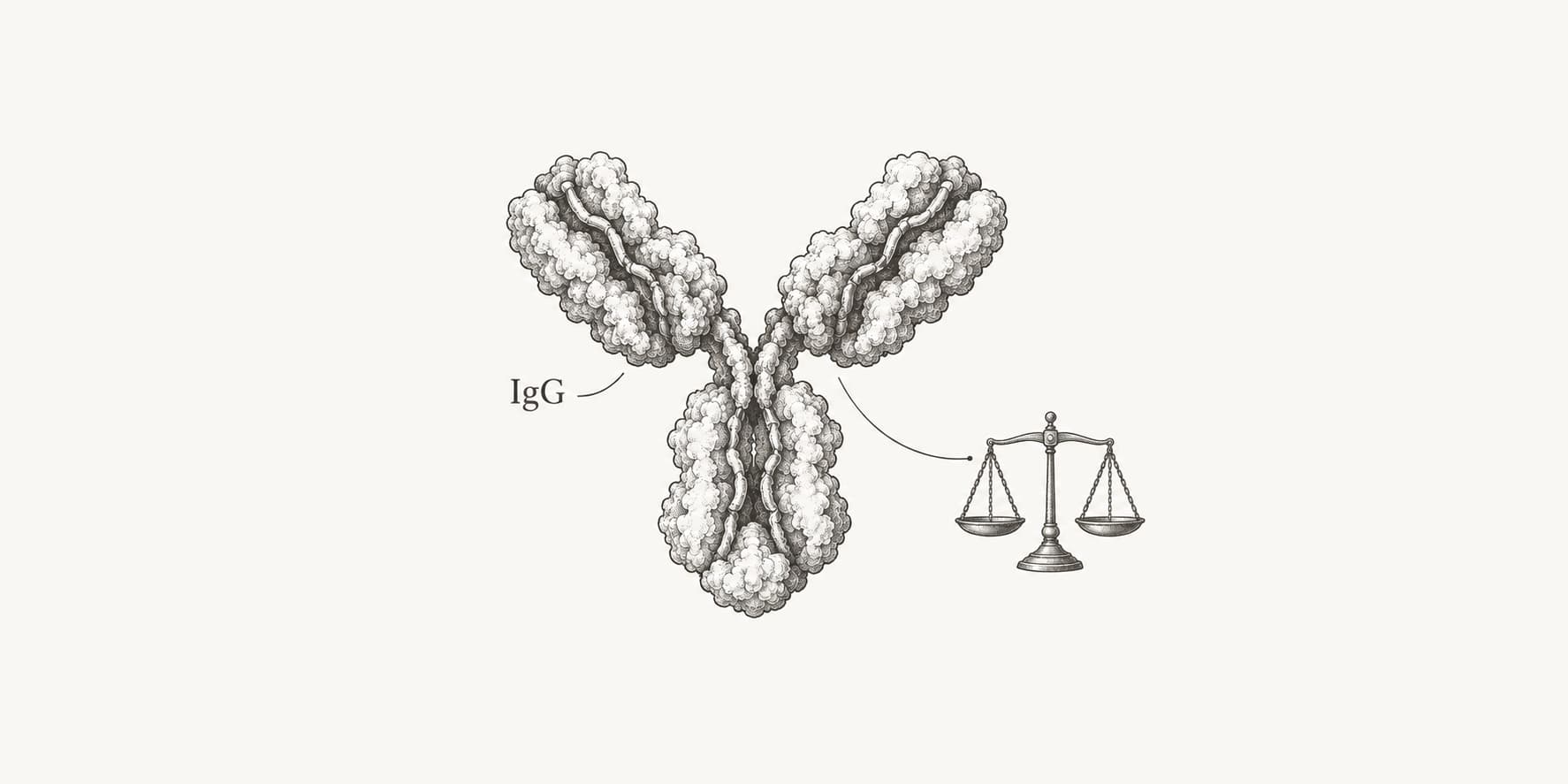
Chai-2 is a generative AI platform for de novo antibody and protein binder design developed by Chai Discovery. Released in June 2025, it can design novel antibodies and nanobodies that bind to specified protein targets without requiring existing antibody templates, structural starting points, or large-scale experimental screening.
The system achieves a 16% binding rate across antibody designs tested against 52 diverse protein targets with no known binders in the Protein Data Bank. This represents a roughly 100-fold improvement over previous computational antibody design methods. For miniprotein binder design, Chai-2 achieves a 68% hit rate with picomolar binding affinities.
| Binder type | Hit rate | Validation |
|---|---|---|
| scFv antibodies | ~16% | Biolayer interferometry |
| VHH nanobodies | ~16% | Biolayer interferometry |
| Miniproteins | 68% | Picomolar affinity confirmed |
Chai-2 can design several types of binding molecules:
- Single-chain variable fragments (scFvs)
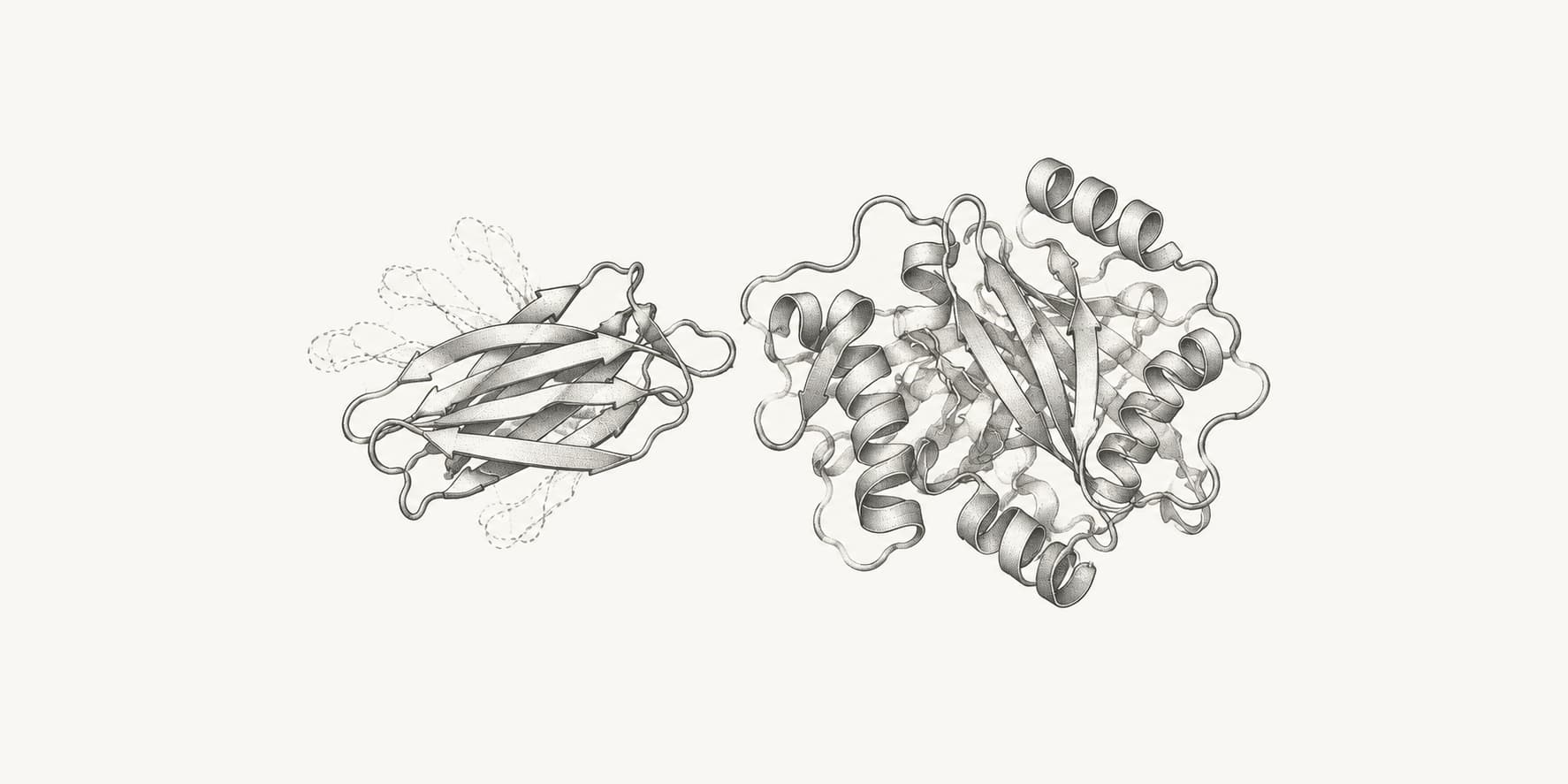
- VHH nanobody domains
- Miniprotein binders
- Cross-reactive antibodies targeting multiple species homologs
- Format-switchable designs that can convert between scFv and VHH
The platform compresses the antibody discovery timeline from months to approximately two weeks by requiring only 20 or fewer designs per target for wet-lab testing. When scFv hits were reformatted into full-length monoclonal antibodies, 93% retained binding activity, suggesting the designs are compatible with standard therapeutic development workflows.
Chai-2 has also demonstrated the ability to design functional antibodies against challenging targets. In one experiment, the system designed binders for six GPCRs (G protein-coupled receptors) and produced functional agonists for two of them.
How does Chai-2 work?
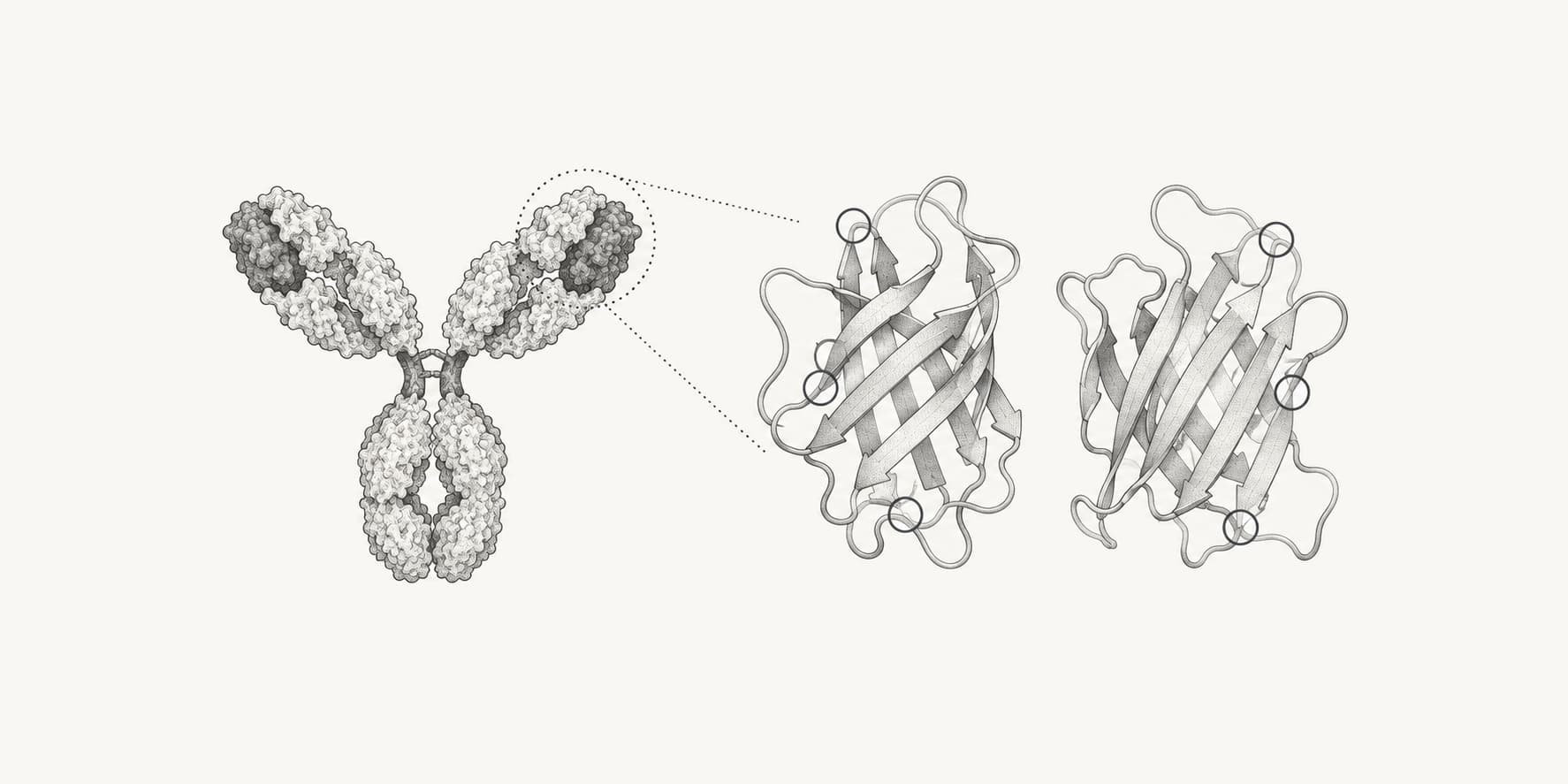
Chai-2 uses a multimodal generative architecture that integrates all-atom structure prediction with generative sequence and structure design. The system accepts a target protein structure and epitope definition as input, then generates complete antibody designs including all complementarity-determining regions (CDRs) from scratch.
The architecture operates at atomic resolution, modeling not just protein backbone but also ligands and post-translational modifications. This allows Chai-2 to reason about atomic-level interactions at the binding interface. The model also includes a structure prediction component that achieved twice the experimental accuracy of its predecessor Chai-1, reaching DockQ scores above 0.8 for 34% of antibody-antigen complex predictions.
Chai-2 supports controllable generation where users can specify:
- The binding epitope or pocket on the target
- Antibody format (scFv, VHH, miniprotein)
- Cross-reactivity requirements for multiple species
- Desired binding site geometry
The training and architectural details have not been fully disclosed in public documentation. The model builds on Chai-1, a multimodal foundation model for biomolecular structure prediction that was released as open source in 2024 and demonstrated competitive performance with AlphaFold 3 on structure prediction benchmarks.
How to use Chai-2 online
Chai-2 is not publicly available. As of July 2025, access is limited to early access partners selected through Chai Discovery's Responsible Deployment policy. The company prioritizes access for researchers working on molecules intended to benefit human health.
There is no public web server, API, or downloadable version. Academic and industry researchers interested in access must apply through Chai Discovery. Commercial licensing terms have not been publicly disclosed.
Unlike Chai-1, which was released as open-source software on GitHub, Chai-2 remains proprietary.
Chai-2 alternatives
Several open-source tools can perform related binder design tasks, though none currently match Chai-2's reported de novo antibody design performance.
BindCraft uses AlphaFold2 backpropagation combined with ProteinMPNN sequence optimization to design de novo protein binders. It generates novel protein sequences that bind to user-specified target surfaces and can target specific hotspot residues. BindCraft works with miniprotein scaffolds rather than antibody formats, so it sits closer to protein engineering than antibody-format design.
RFdiffusion is a diffusion-based protein design tool from the Baker lab that can generate binders among other design tasks. Users specify a target chain and binding pocket, and the model generates backbone structures that are then sequence-optimized with ProteinMPNN. Like BindCraft, it focuses on general protein binders rather than antibody-specific design.
For structure prediction of antibody-antigen complexes (rather than design), Chai-1 and Boltz-2 can predict 3D structures of multi-component complexes including proteins with ligands, DNA, and RNA.
Sources
- "Introducing Chai-2." Chai Discovery News (June 2025)
- Chai Discovery. "Zero-shot antibody design in a 24-well plate." bioRxiv (2025)
- Chai Discovery Business Wire Announcement (June 2025)
- Chai-1 GitHub Repository