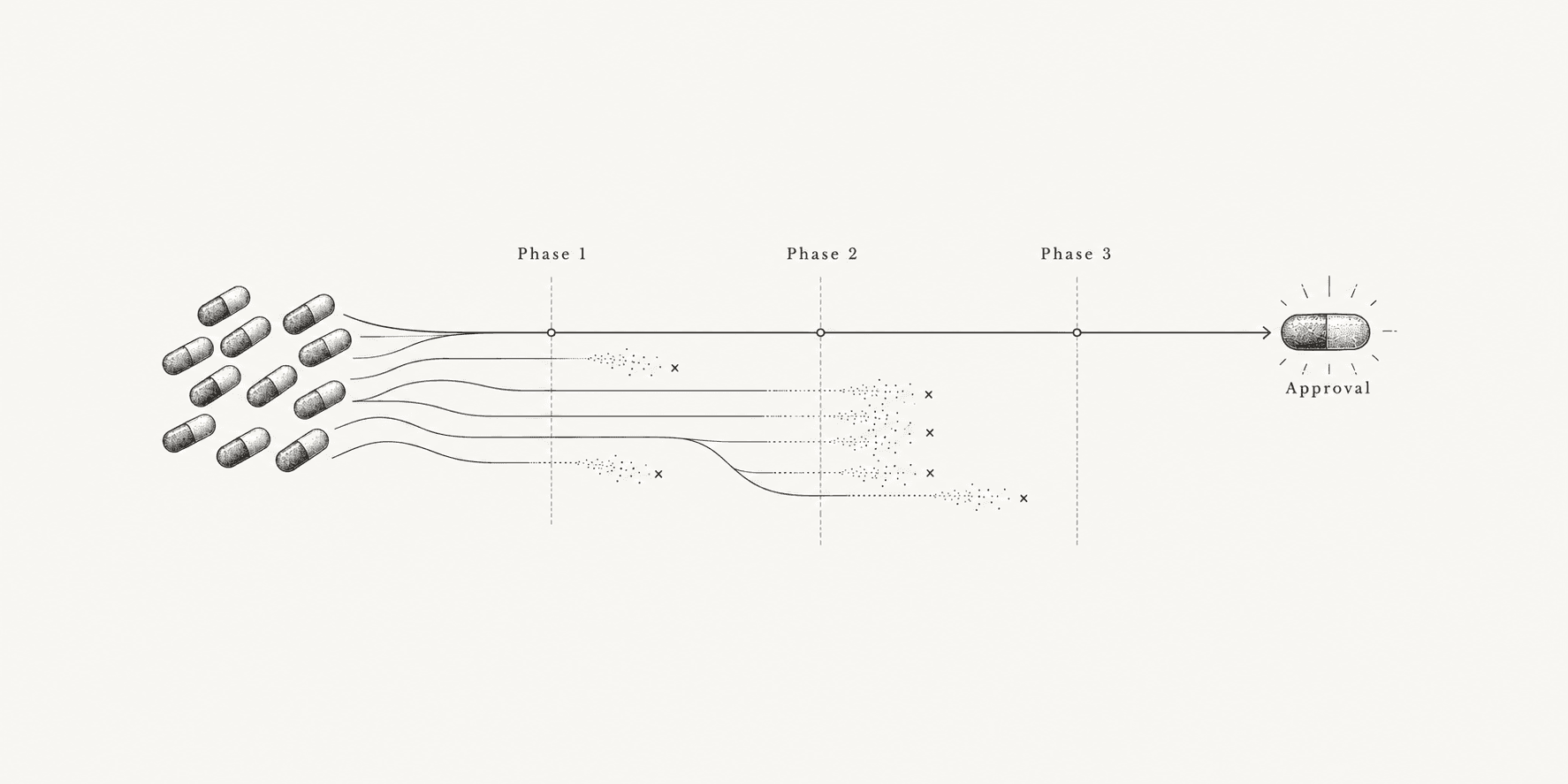
How long does a drug patent last?
A US drug patent usually ends 20 years from filing, but studies find that new drugs average about 12 to 15 years without generic competition after launch.
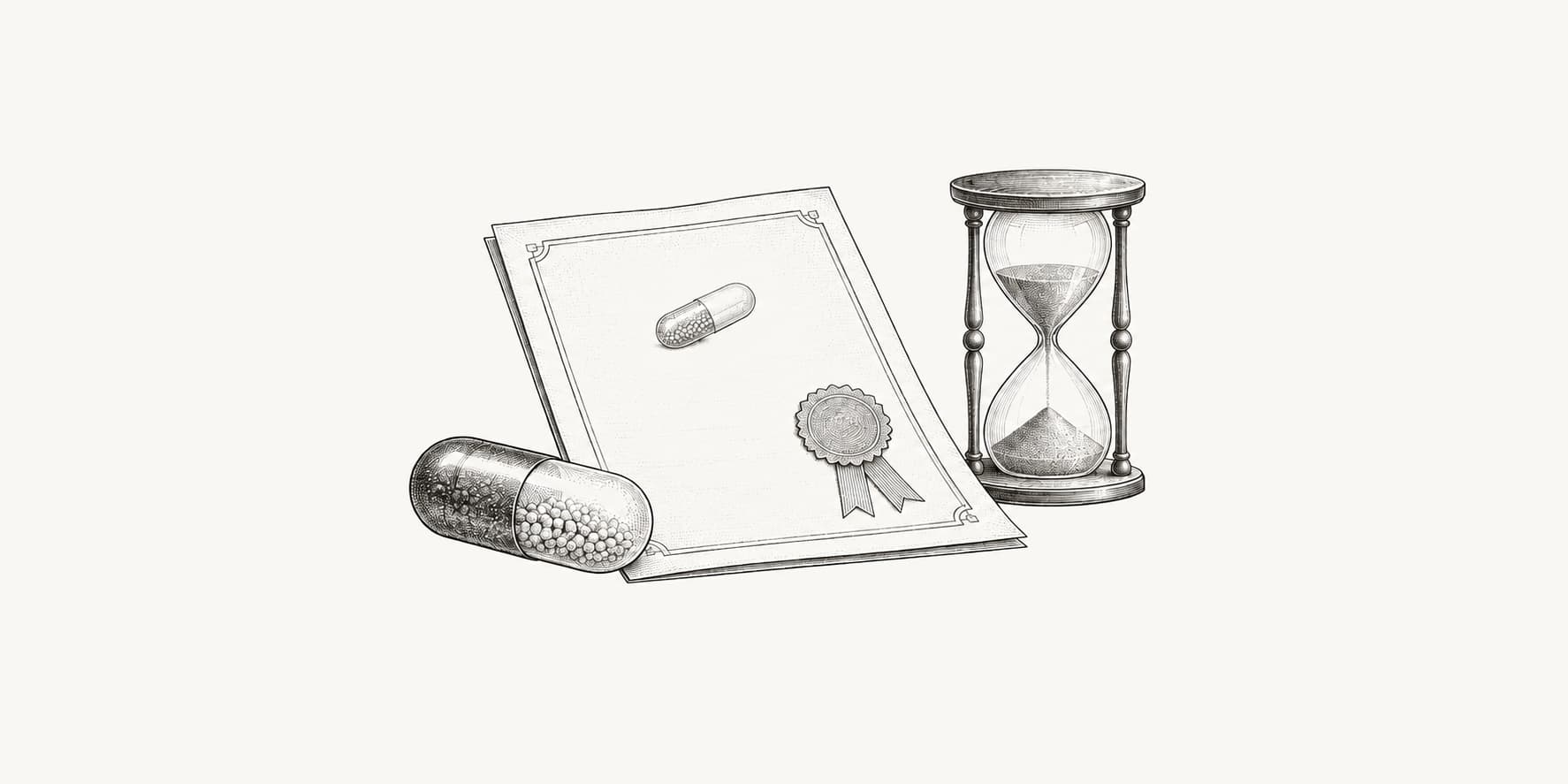
In the United States, a drug patent usually lasts 20 years from the relevant filing date, not 20 years from FDA approval. Because much of that clock runs during drug development, new drugs typically spend about 12 to 15 years on the market before the first generic arrives.
Patent terms, FDA exclusivity, and generic approval are separate parts of the calculation. A medicine may also have several patents with different expiration dates, so one patent date rarely predicts the exact day a generic will launch.
How long does a drug patent last?
A US drug patent generally ends 20 years after the relevant patent application was filed.[1]
Its enforceable term begins when the US Patent and Trademark Office issues the patent, but the end date is measured from filing. A company also needs FDA approval before it can sell the medicine.[1][3]
The 20-year filing-based term is also the international minimum under Article 33 of the TRIPS Agreement.[13] The generic timing, FDA exclusivities, and extensions below describe the US system.
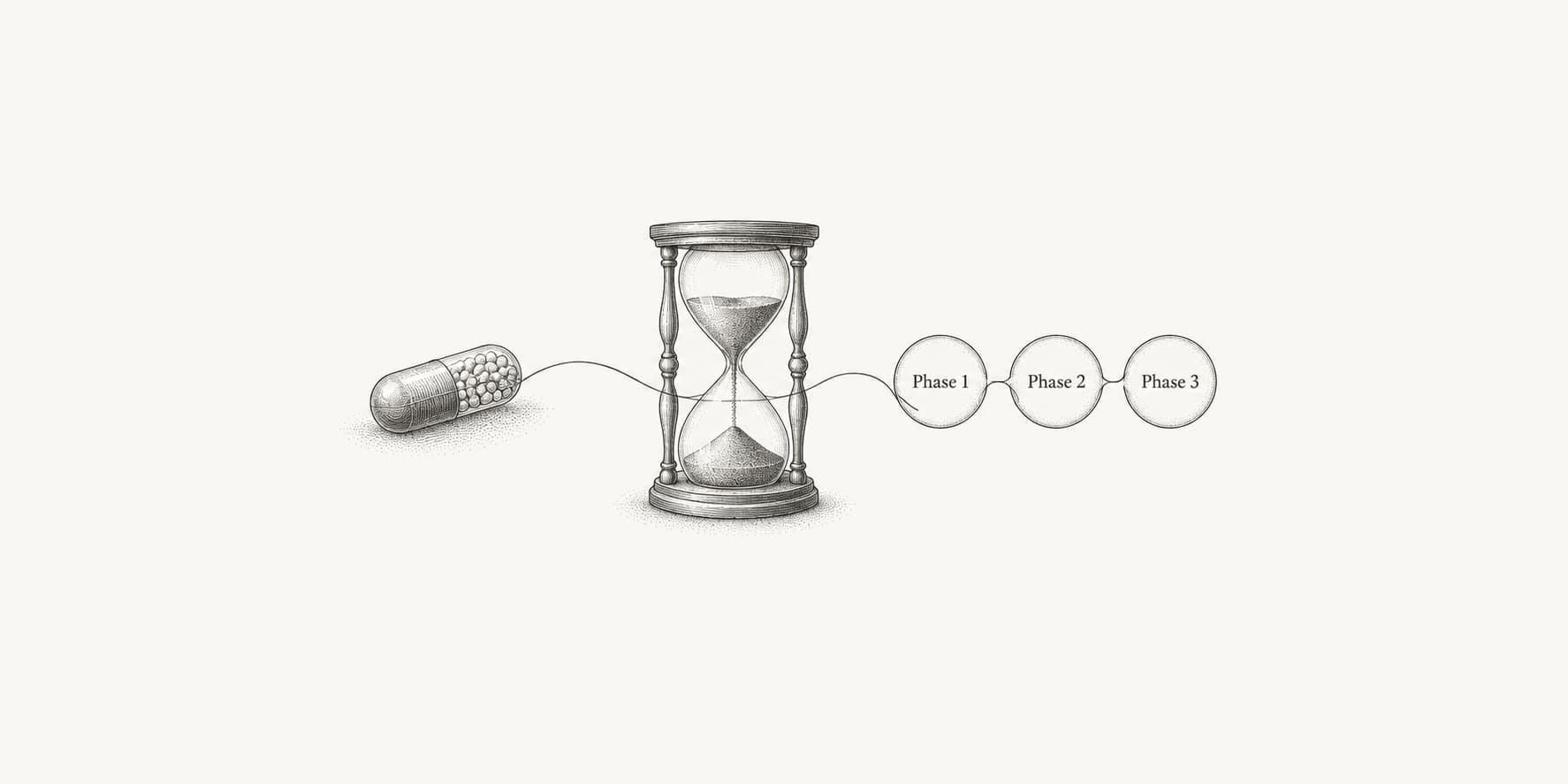
Drug patents can cover the active ingredient, a formulation, a manufacturing process, a device, or a method of use. The earliest patents may be filed while a candidate is still being optimized through molecular docking, laboratory studies, and clinical trials. Those years count against the 20-year term.
The same medicine can have later patents on different inventions. Each patent has its own filing date, claims, and expiration date. That is why the expiry of the original compound patent may not end every patent dispute around the product.[3]
How long before a drug becomes generic?
There is no fixed waiting period before a drug becomes generic, but studies usually place US market exclusivity at 12 to 15 years from brand launch to the first generic entry.[3]
A 2021 study of new molecular entities that first faced generic competition from 2017 through 2019 found an average of 14.1 years for all drugs in its sample. The average was 13.0 years for drugs with more than USD 250 million in annual sales.[4]
The chart compares published averages summarized by the Congressional Research Service. The studies used different drug cohorts and time periods, so their results should be read as a range rather than combined into one average.[3]
A generic can receive final FDA approval when the relevant patents and marketing exclusivities have expired or when the generic company successfully challenges the blocking patents.[8] A Paragraph IV application can challenge a listed patent before it expires. If the patent owner sues within 45 days, FDA approval is generally postponed for 30 months unless a court resolves the patent earlier. The first qualifying applicant is generally eligible for 180 days of generic exclusivity.[7]
Patent expiry still does not guarantee an immediate generic. FDA maintains a list of drug products that are off-patent and off-exclusivity but have no approved generic, showing that legal eligibility can arrive before generic competition does.[12]
The FDA's Orange Book lists patent and exclusivity information for approved small-molecule drugs. Even with those dates, FDA says it is not possible to determine exactly when a generic will be allowed onto the market because each application, patent certification, exclusivity, and dispute must be assessed separately.[9]
Can a drug patent last longer than 20 years?
Yes. A US drug patent can run beyond its ordinary 20-year end date through patent term adjustment or patent term extension, but the extension is limited.
Patent term adjustment can add time for certain delays caused by the patent office. Patent term extension can restore part of the term lost while an eligible drug awaited regulatory approval.[1][5]
For regulatory review, the extension cannot exceed five years. The extended patent term after FDA approval also cannot exceed 14 years.[6]
Several later-expiring patents can protect different parts of one medicine after the original patent ends. The first patent still expires on its own schedule; later patents form a separate portfolio that a generic or biosimilar company may need to avoid, wait out, license, or challenge.
A 2024 study of 10 top-selling US prescription drugs found a median of 16 active patents at FDA approval and 42 at peak density, 13 years after approval. The drugs had a median of 77 issued patents in total, and post-approval patents added a median 7.9 years beyond the expiry of pre-approval patents.[10] These findings describe 10 blockbuster drugs, not the typical medicine.
Is FDA exclusivity the same as a patent?
No. A patent is a property right granted by the patent office, while FDA exclusivity is a statutory limit on the submission or approval of certain competing applications.[2]
Patents can be filed and granted before or after approval. FDA exclusivity begins when the agency approves a qualifying drug or supplement. The two periods may overlap, and one may end before the other.[2]
The five-year period for a new chemical entity, seven-year orphan-drug exclusivity, three-year new-clinical-investigation exclusivity, and six-month pediatric addition apply only when their statutory conditions are met.[2] New reference biologics receive 12 years of exclusivity before FDA can approve and market a biosimilar, although patent disputes can continue beyond that period.[11]
For a specific FDA-approved drug, the Orange Book is the starting point. Its dates do not guarantee a generic launch because patent challenges, settlements, FDA exclusivities, and the readiness of a generic application can all change the timing.