How long does it take to develop a vaccine?
A successful new vaccine usually takes 10 to 15 years from early research to approval. COVID-19 reached its first U.S. authorization in 336 days, but that shorter clock began after decades of platform and coronavirus research.
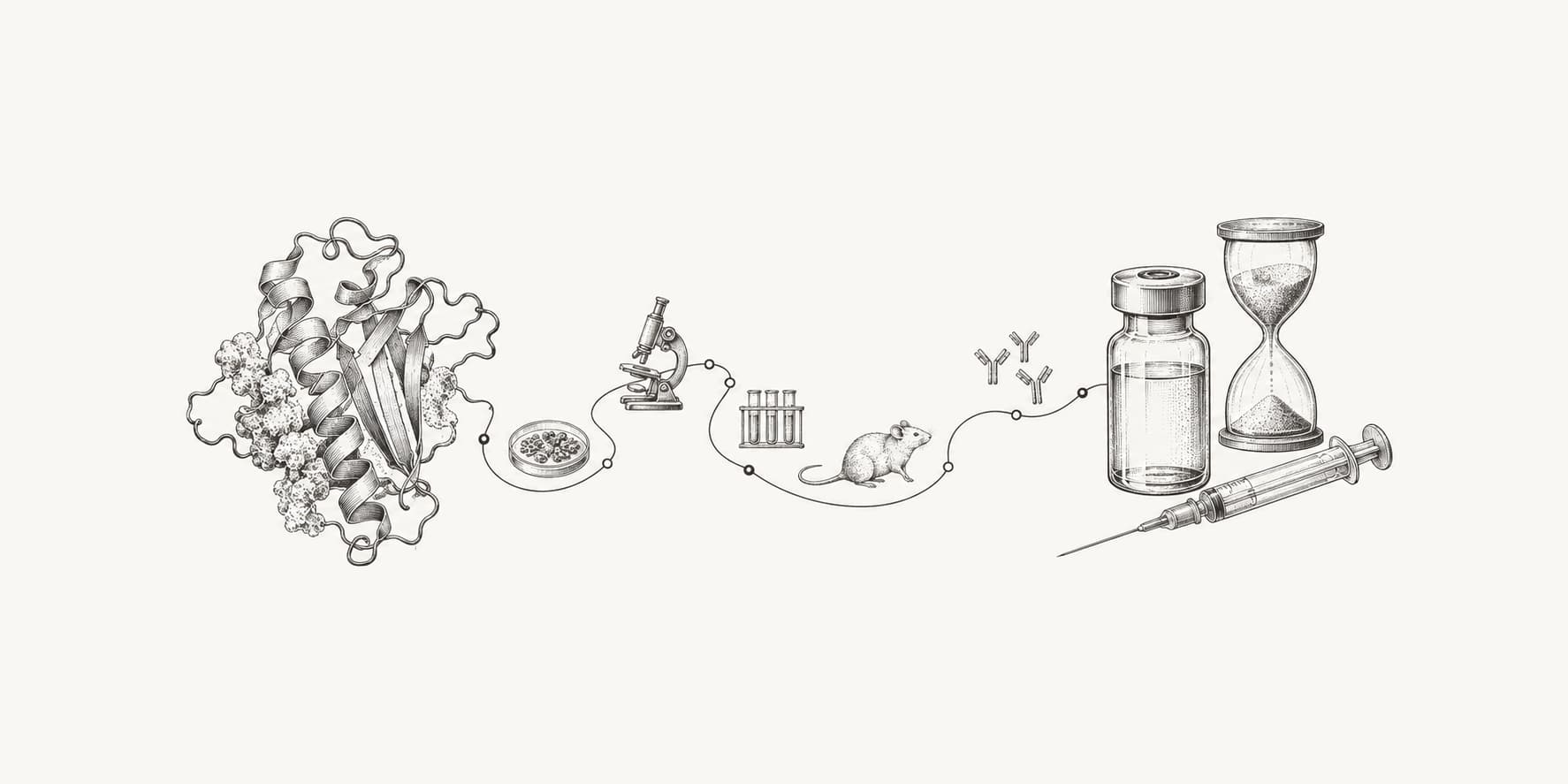
A successful new vaccine usually takes 10 to 15 years from early research to approval. The work includes laboratory studies, animal testing, three phases of human trials, manufacturing validation, and regulatory review.
The clock can be much shorter when researchers adapt an established vaccine platform, run stages in parallel, and fund manufacturing before approval. That is how the first COVID-19 vaccines reached emergency authorization in less than a year after decades of related research.
How long does it take to develop a vaccine?
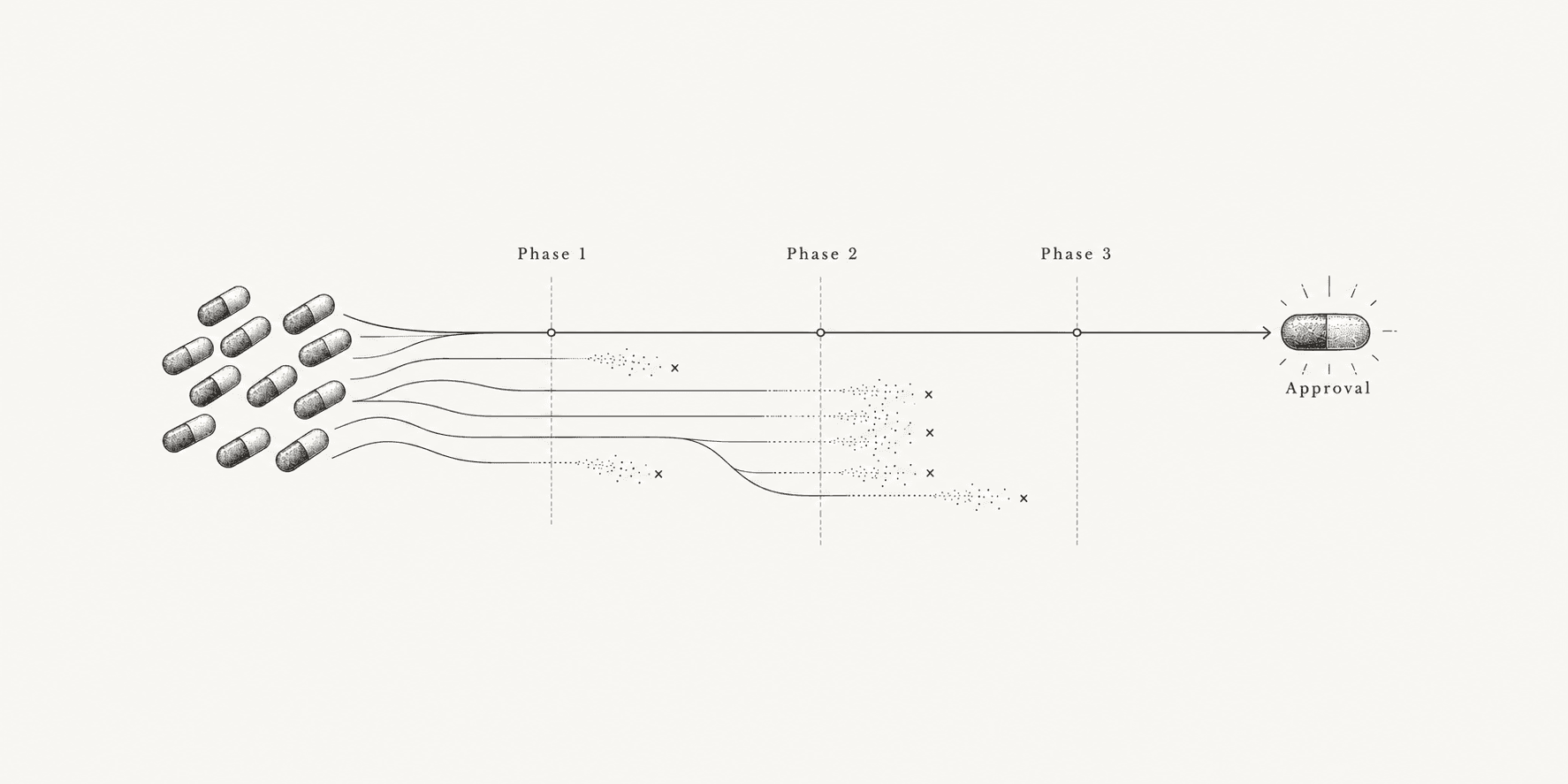
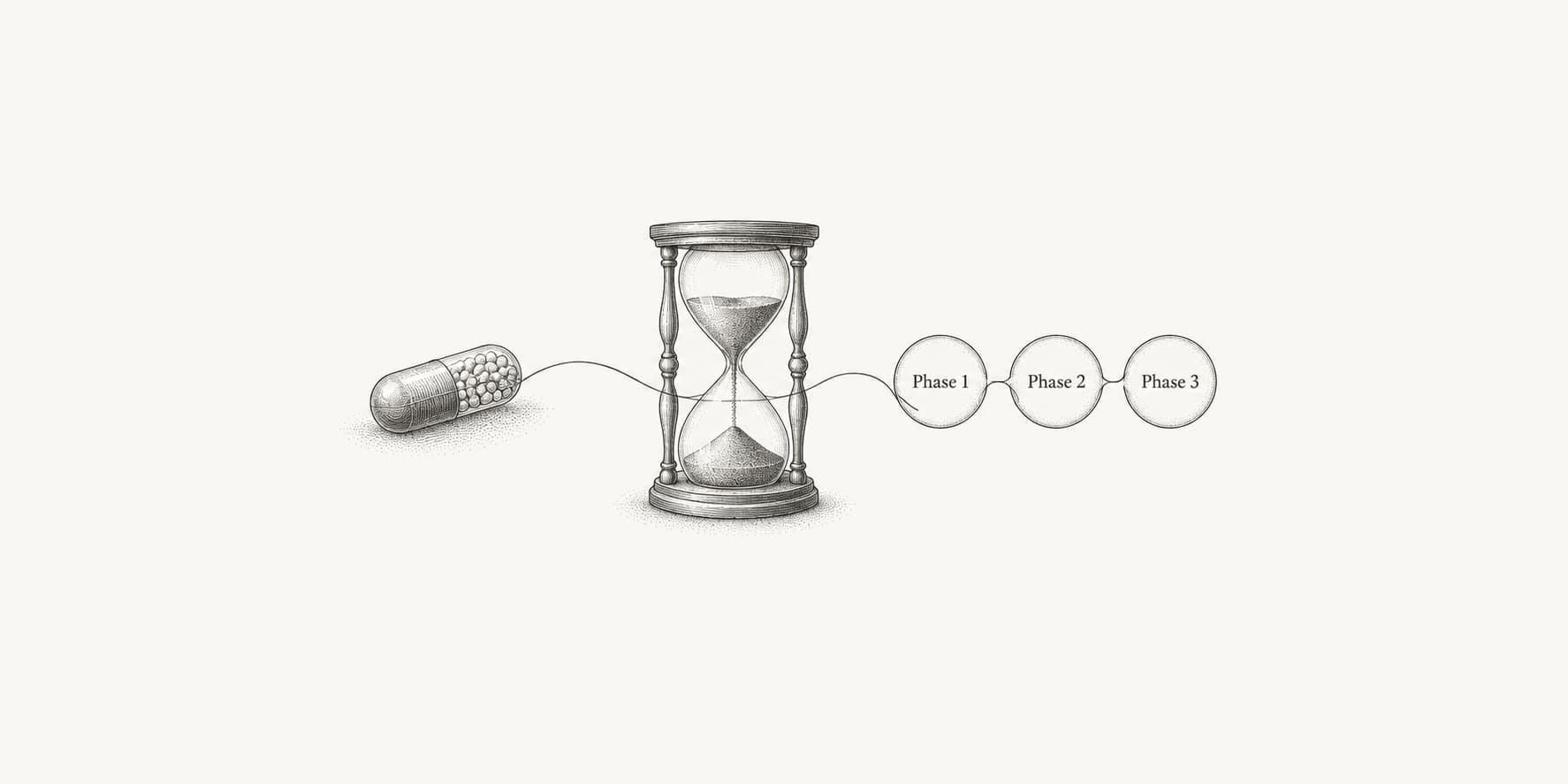
The usual end-to-end timeline for a successful new vaccine is 10 to 15 years, although some programs take longer or never reach approval.[1][2]
Early research identifies a promising antigen and tests whether it can produce the intended immune response. Computational methods such as immunogenicity prediction can help researchers rank candidates, but laboratory and clinical evidence still decide whether a vaccine is safe and effective.
Human testing then expands through three pre-approval phases. CDC describes Phase 1 as 20 to 100 participants, Phase 2 as 100 to 300, and Phase 3 as 1,000 to 3,000. Each phase adds evidence on dose, immune response, effectiveness, and less common side effects.[1] A complete program takes longer than any single clinical trial.
The chart uses the upper end of each CDC participant range for bar length. The labels show the full ranges.[1]
Seasonal flu vaccines follow a different clock because manufacturers update an established product rather than inventing a vaccine from the beginning. WHO estimated that the first supplies of a vaccine against a new influenza strain could be ready in about five to six months after the strain was identified.[4]
New medicines follow a similar timeline. Discovery, preclinical work, trials, and review commonly make drug development a decade-long process too.
How long does vaccine approval take?
FDA's review goal is 10 months for a standard application and 6 months for priority review, but that review begins only after the developer has assembled the required laboratory, clinical, and manufacturing evidence.[1][3]
In the United States, a developer normally submits a Biologics License Application. FDA reviews trial results, manufacturing methods, facility information, labeling, and evidence that the vaccine is safe and effective. A review target is not a guaranteed approval date. FDA can request more information, inspect facilities, or decline the application.
Emergency use authorization is also different from full approval. It can permit use during a declared emergency when the statutory criteria are met, while a later full approval follows the standard licensing decision.
How long did it take to develop the COVID-19 vaccine?
It took 336 days from the public release of the SARS-CoV-2 genome on January 10, 2020, to the first U.S. COVID-19 vaccine authorization on December 11, 2020.[5][7]
The first participant received Moderna's experimental vaccine on March 16, just 66 days after the genome was posted.[6] From that first dose to the Pfizer-BioNTech emergency authorization was 270 days. FDA granted full approval to the Pfizer-BioNTech vaccine on August 23, 2021, 591 days after the genome release.[7]
The product-specific sprint sat on years of prior research into mRNA delivery and the spike proteins of related coronaviruses. The vaccine design used a stabilized spike approach developed through earlier coronavirus work.[5]
Large public investment also allowed trials, regulatory work, and manufacturing preparation to overlap. A 2025 HHS analysis described the broader COVID-19 vaccine development process as around two years when earlier work and the path to market were included.[2] The one-year and two-year answers are therefore measurements of different starting points.
How long did polio, mumps, MMR, and Ebola vaccines take?
The focused Salk polio program took about five years, the Jeryl Lynn mumps vaccine took four, the combined MMR interval was eight years from its first component license, and Ervebo took about five years from its 2014 emergency acceleration to FDA approval.[8][9][10][11]
| Vaccine | Interval measured | Elapsed time |
|---|---|---|
| COVID-19 | Public genome to first U.S. emergency authorization | 336 days |
| Mumps, Jeryl Lynn strain | Virus isolation in 1963 to U.S. license in 1967 | 4 years |
| Polio, Salk vaccine | Early-1950s development to successful results and license in 1955 | About 5 years |
| Ebola, Ervebo | Emergency acceleration in 2014 to FDA approval in 2019 | About 5 years |
| Combined MMR | First component vaccine license in 1963 to combined MMR license in 1971 | 8 years |
The dates come from the original COVID-19 studies and FDA record, WHO's polio history, a peer-reviewed account of Maurice Hilleman's mumps vaccine, CDC's MMR history, and the Ervebo development record.[5][7][8][9][10][11]
The bars compare differently defined intervals. MMR combined three existing vaccines, the Ebola interval starts with the 2014 emergency acceleration, and the COVID-19 interval starts with the public genome. Polio research began decades before the early-1950s program that produced the first successful vaccine.[8][10][11]
“Meningitis vaccine” is similarly ambiguous because meningitis can be caused by several bacteria and viruses. Meningococcal, pneumococcal, and Haemophilus influenzae type b vaccines each have their own development history. Shingles also has more than one milestone: Zostavax became the first U.S. shingles vaccine in 2006, while Shingrix was approved in 2017.[13]
How much does it cost to develop a vaccine?
A 2025 HHS analysis estimated that bringing a novel preventive vaccine to the U.S. market costs an average of USD 886.8 million.[2]
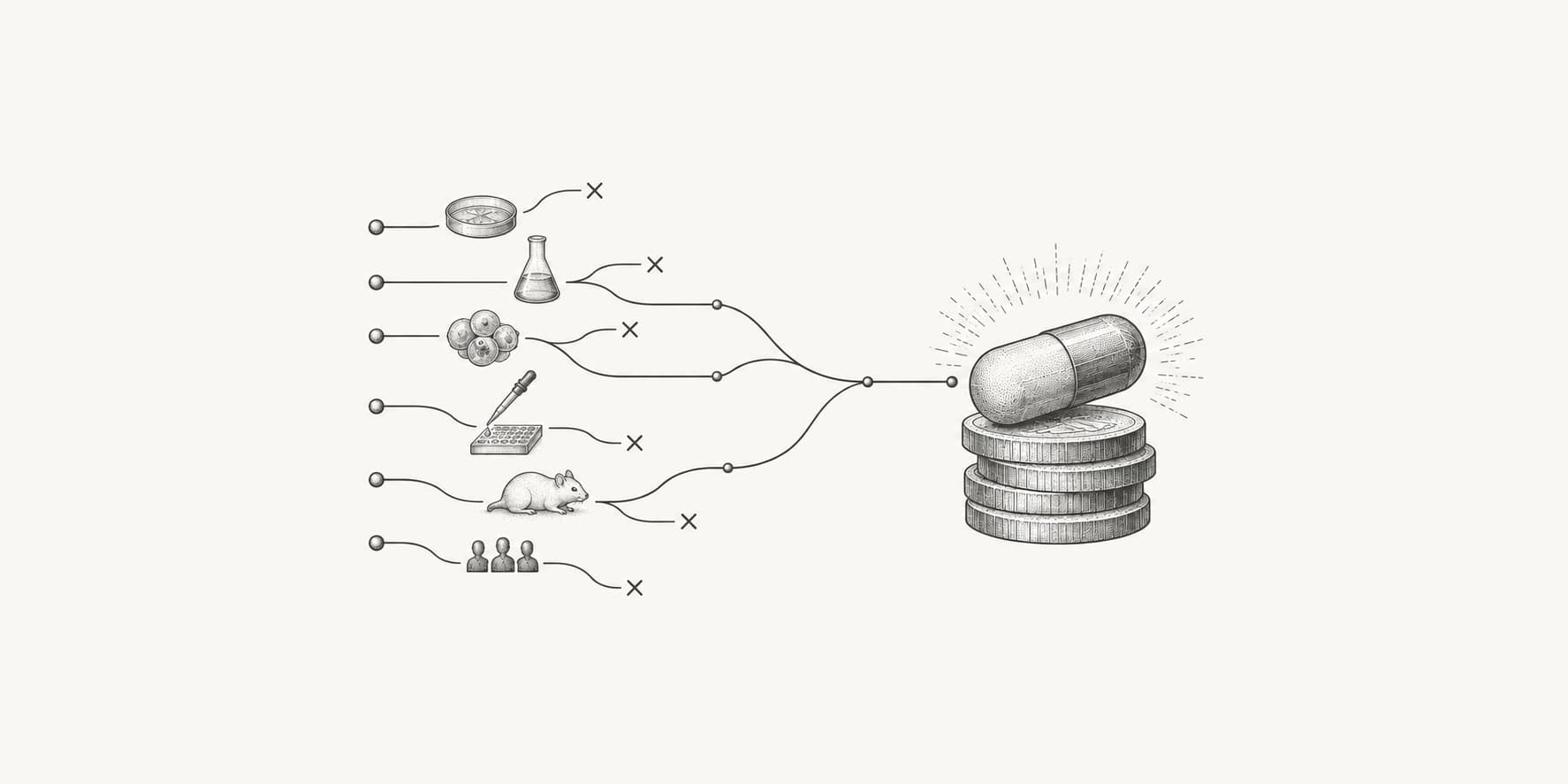
The total depends on where the accounting starts and stops. A 2018 study estimated USD 31 million to USD 68 million for one epidemic-infectious-disease vaccine candidate from preclinical development through Phase 2a. After accounting for failed candidates, it estimated USD 319 million to USD 469 million for one successful candidate to reach the end of Phase 2a.[12]
The smaller estimates stop before the full Phase 3 and licensing path covered by the HHS market estimate. Failure matters because the cost of unsuccessful programs is carried by the vaccines that reach approval. The same accounting issue explains why drug development costs vary so widely across published studies.