How many CpG sites are in the human genome?
The human genome contains about 28 million CpG sites. A whole-genome methylation atlas counted 28,217,448 positions, while common methylation arrays measure about 1.6% to 3.3% of them.
The human genome contains about 28 million CpG sites. A whole-genome methylation atlas analyzed 28,217,448 CpG positions, equal to roughly one CpG for every 110 base pairs.
These sites are not spread evenly. Most occur at low density, while CpG islands pack many CpGs into short stretches of DNA that often overlap gene-regulatory regions.
How many CpG sites are in the human genome?
One haploid human reference genome contains about 28 million CpG sites. A 2023 atlas used an exact set of 28,217,448 CpG positions.[1]
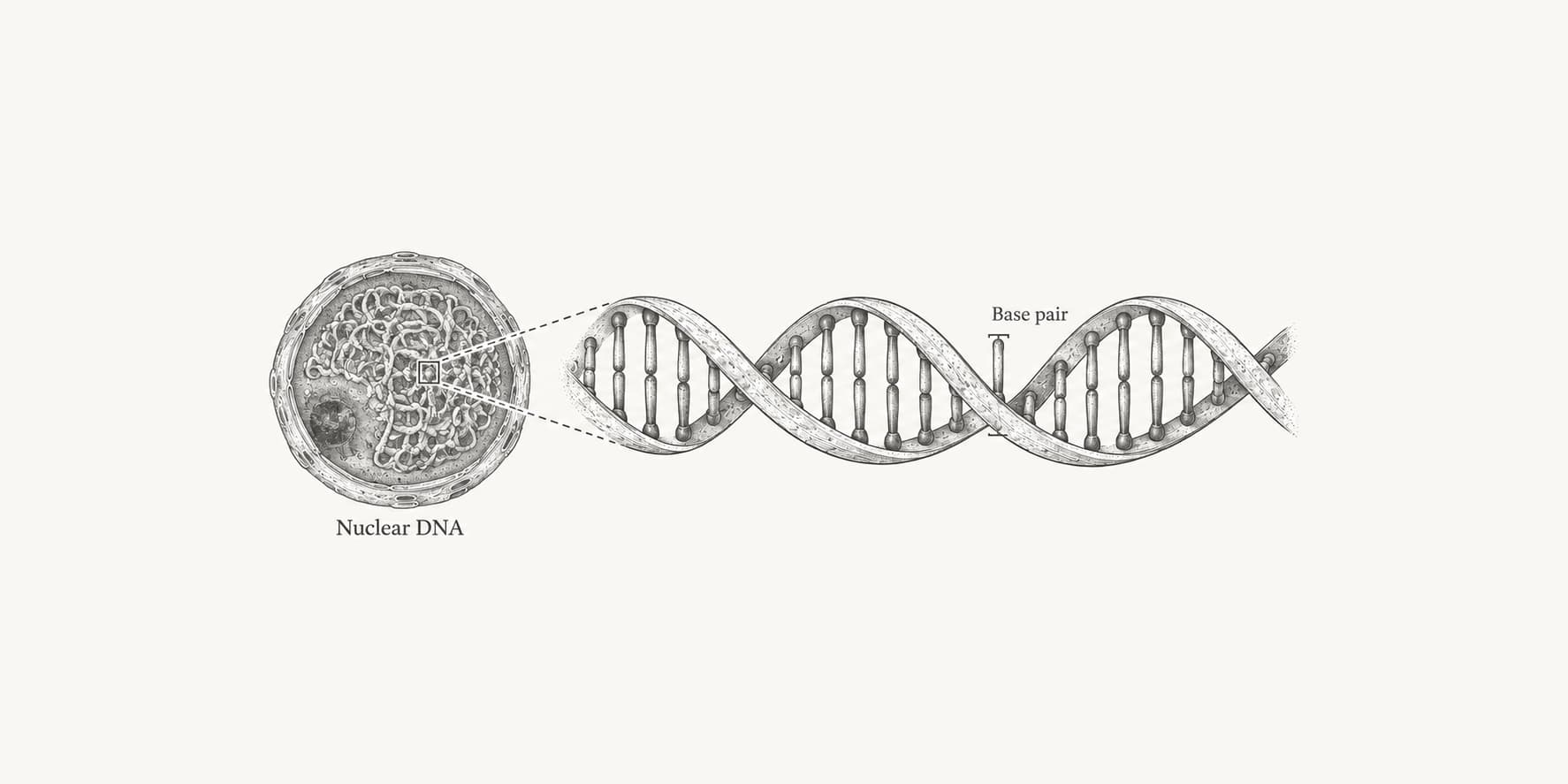
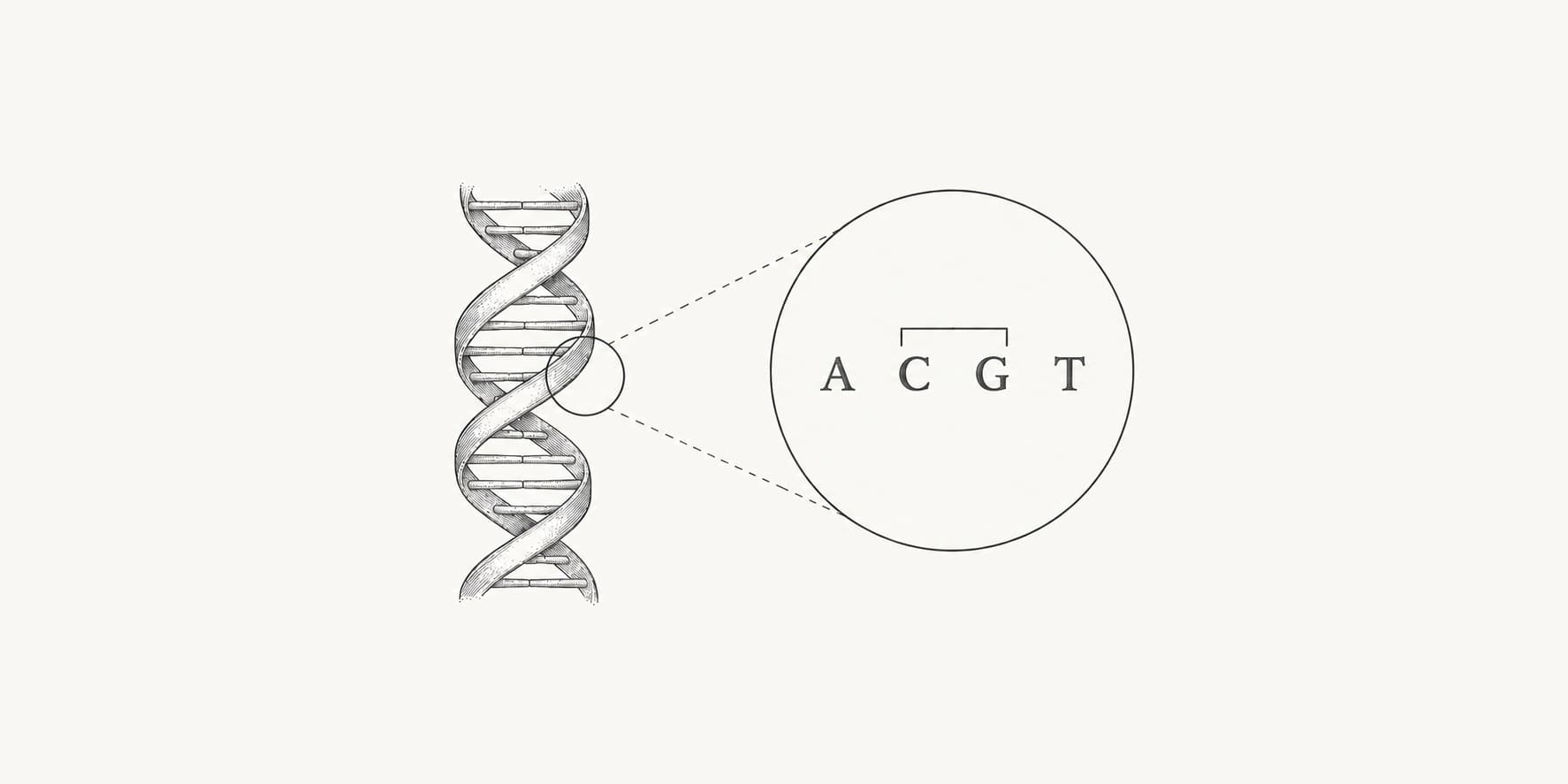
A CpG site is a cytosine followed immediately by guanine along a DNA strand, with the “p” referring to the phosphate bond between them. Because the sequence is symmetric on the two complementary strands, researchers usually count the genomic position once rather than as two separate CpGs.
Dividing 28,217,448 sites by the roughly 3.1 billion base pairs in the human genome gives an average spacing of about 110 base pairs. The real distribution is highly uneven: CpGs are sparse across much of the genome and concentrated in CpG-rich regions.
The count refers to positions in a reference sequence, not the number of methylated cytosines in a person. A diploid cell carries two copies of most CpG positions, and sequence variants can create or remove individual CpGs.
How many CpG islands are in the human genome?
The human genome has roughly 30,000 CpG islands under a widely used repeat-masked sequence definition, but the count rises above 50,000 when CpG-rich repeats are included.
The initial human genome analysis found 28,890 CpG islands after masking repetitive DNA and 50,267 in the full draft sequence.[2] The large difference came mainly from GC-rich repeat elements, especially Alu sequences.
A CpG island is a region, not one CpG site. The classic sequence rule looks for at least 200 base pairs with GC content above 50% and an observed-to-expected CpG ratio of at least 0.6. The CpG Island Finder applies these criteria to a submitted DNA sequence.
Different minimum lengths, CpG-density thresholds, genome assemblies, and repeat-masking rules produce different totals. “About 30,000” is a useful shorthand only when the counting method is clear.
What percentage of CpG sites do methylation arrays measure?
Common methylation arrays measure about 1.6% to 3.3% of the human genome's CpG sites, depending on the platform.
The 450K array covers roughly 450,000 sites, or 1.6% of 28.2 million. The first MethylationEPIC array covers about 860,000, or 3.0%. Illumina's current MethylationEPIC v2.0 kit targets about 930,000 unique methylation sites, or 3.3%.[1][3]
The percentages are calculated against the 28,217,448-site set used by the 2023 atlas. Arrays select CpGs in genes, promoters, enhancers, CpG islands, and other regions of interest, so their coverage is not a random 1.6% to 3.3% sample of the genome.
Whole-genome methods can examine far more sites, but the number with usable measurements in a particular experiment depends on sequencing depth, read mapping, sample quality, and analysis filters.
Why are CpG sites rare in the human genome?
CpG sites occur at only about one-fifth of the frequency expected from the human genome's cytosine and guanine content.
Cytosine and guanine each make up about 21% of the genome, so independent pairing would place CpG near 4.4% of dinucleotide positions. The observed frequency is about 0.9%.[2]
The main reason is mutation over evolutionary time. Cytosines in CpG sites are often methylated. When methylated cytosine loses an amino group, it becomes thymine, creating a C-to-T change that DNA repair can miss. Repeated mutations have depleted CpGs from much of the genome.[2]
CpG islands are the main exception. Their CpGs are often unmethylated, which reduces this mutation pressure and helps preserve dense clusters near many gene promoters.