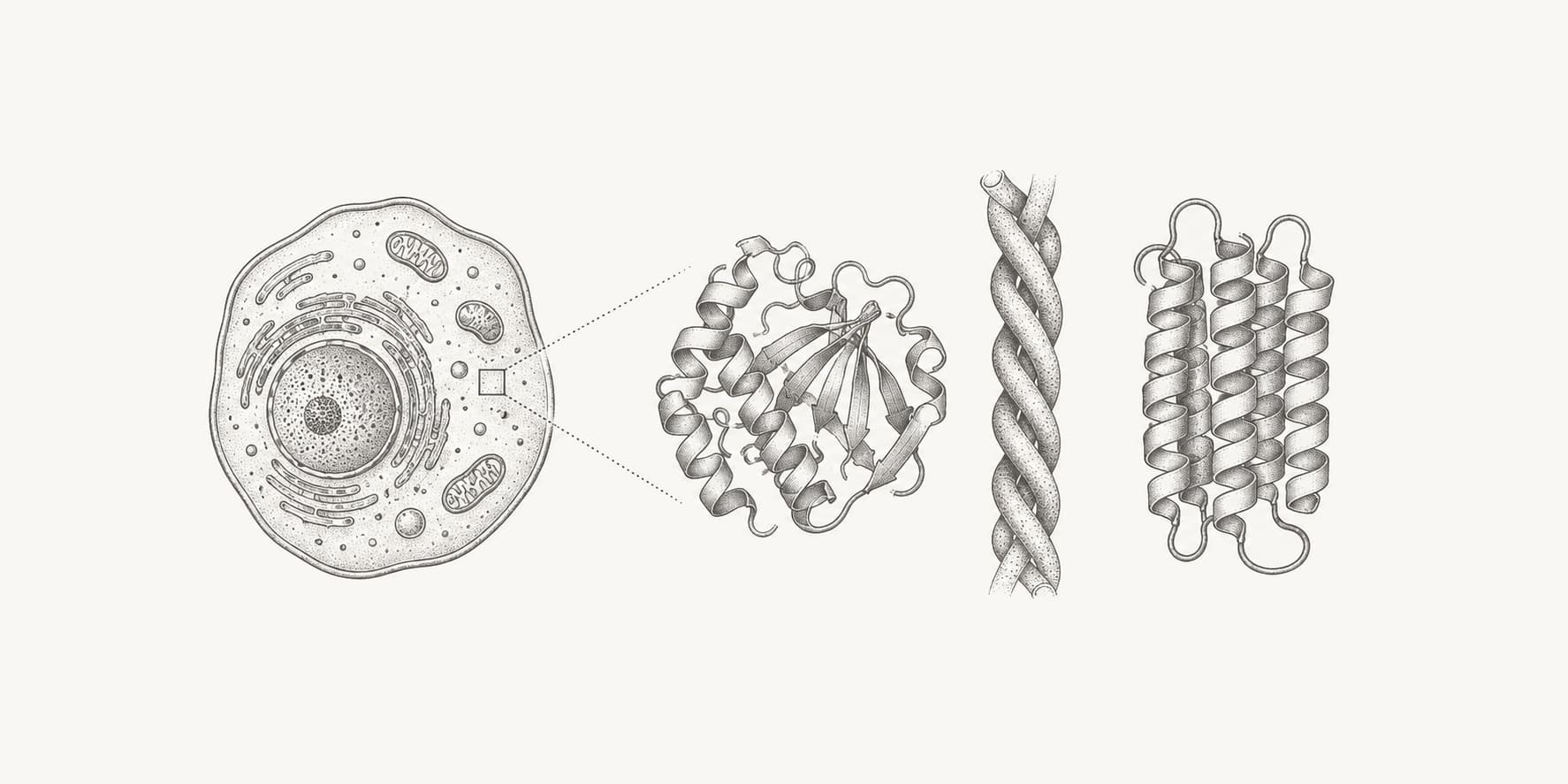
The human body has about 19,400 reference protein types. That is the clearest short answer, but it counts one reference protein for each protein-coding gene, not every protein form or molecule.
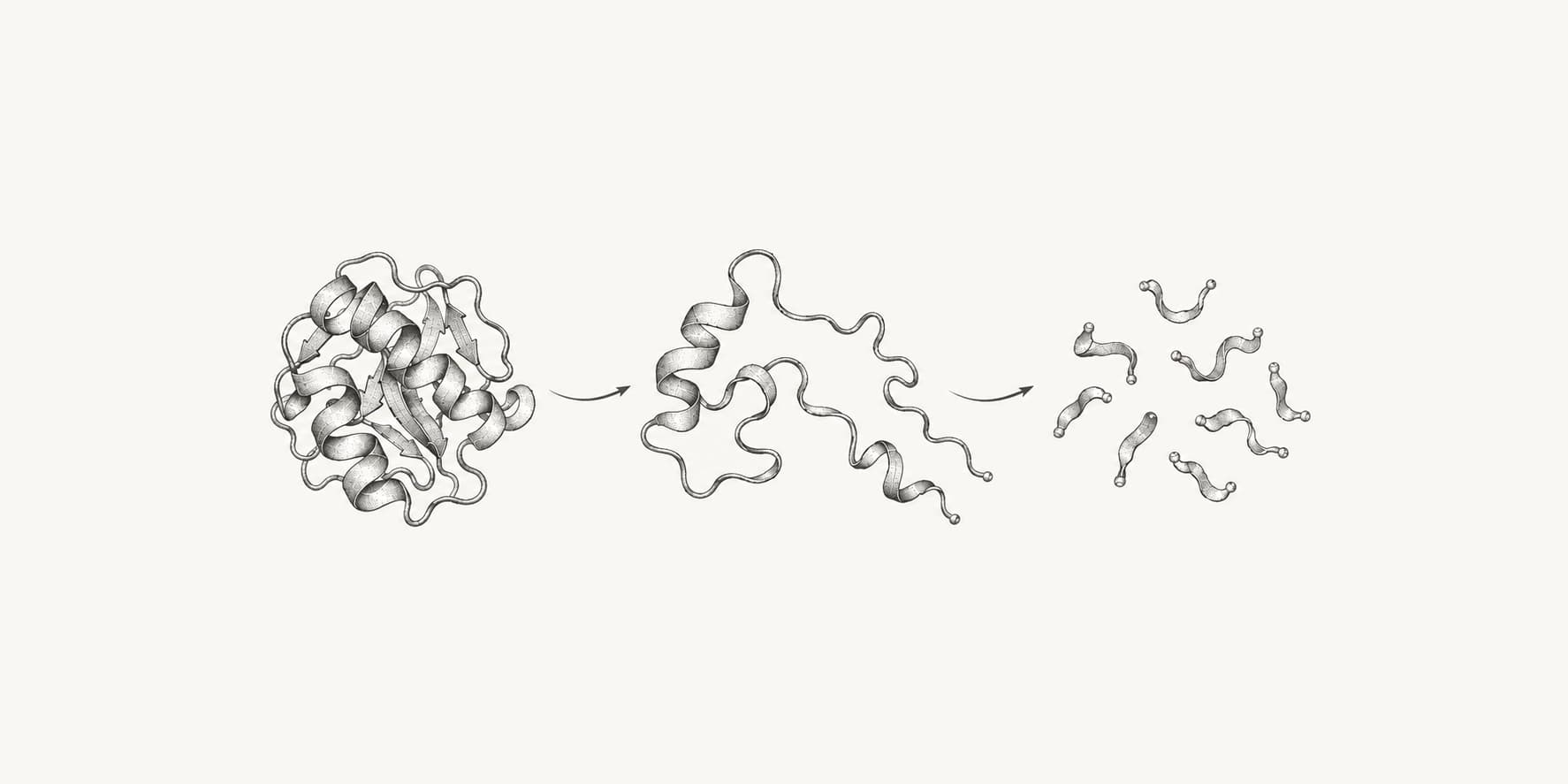
Current annotation contains 172,117 distinct translated products. Proteoforms, the molecular forms created by splicing, sequence variation, cleavage, and chemical modification, probably number in the millions.
How many proteins are in the human body?
The human body has about 19,400 reference protein types, based on the number of protein-coding genes and the reference proteome used by the Human Proteome Project.
GENCODE Release 50 lists 19,442 protein-coding genes. The 2025 Human Proteome Project report uses a closely matched reference proteome of 19,435 proteins and reports protein-level evidence for 93.6% of it.[1][2]
| Count level | Current figure | What it counts |
|---|---|---|
| Protein-coding genes | 19,442 | GENCODE genes annotated as protein-coding |
| Human Proteome Project reference | 19,435 proteins | Reference proteins tracked by the project |
| Reference proteome detected | 93.6% | Reference proteins with protein-level evidence |
| Protein-coding transcripts | 278,455 | Annotated coding transcript isoforms |
| Distinct translations | 172,117 | Distinct translated products in the annotation |
The annotation counts come from GENCODE Release 50. The reference-proteome and detection figures come from the 2025 Human Proteome Project report.[1][2]
The difference between 19,442 genes and 172,117 translations is largely the result of alternative transcripts. GENCODE reports that 16,058 protein-coding genes have more than one distinct translation.[1]
None of these figures counts every protein molecule in the body. Cells continually make and break down proteins, and molecule counts change with tissue, cell type, age, and physiological state. The broader question of how many proteins exist also includes organisms beyond humans and sequence databases beyond the human proteome.
How much of the human proteome is membrane, secreted, disordered, or structured?
About 28% of the Human Protein Atlas coding-gene set is predicted to encode a membrane protein, while about 9% is predicted to encode a secreted protein. Disorder and structure coverage use residues rather than genes, so these figures do not form one pie chart.
| Human proteome subset or coverage measure | Reported figure | Unit and denominator |
|---|---|---|
| Predicted membrane proteins | 5,573 genes, about 28% | Human Protein Atlas set of 20,162 protein-coding genes |
| Predicted secreted proteins | 1,902 genes and 5,042 protein isoforms, about 9% by gene | Human Protein Atlas prediction set |
| Proteins detected in plasma | 4,285 proteins | Human Plasma PeptideAtlas 2025-08 mass-spectrometry build |
| Intrinsically disordered regions | At least one-third of proteome sequence | Residue-level coverage, not a share of fully disordered proteins |
| Experimental structure coverage | 35% of proteins map to a PDB entry; 17% of residues are covered | Whole-proteome baseline reported in 2021 |
| AlphaFold structure coverage | 98.5% of proteins received a full-chain prediction; 58% of residues were predicted confidently | 2021 AlphaFold human reference-proteome dataset |
The membrane and secreted counts come from the Human Protein Atlas, the plasma count from its current display of the Human Plasma PeptideAtlas build, the disorder estimate from a 2026 PNAS study, and the structure figures from the 2021 AlphaFold human-proteome paper.[3][4][5][6][7]
These categories overlap. A gene may produce both membrane-bound and secreted isoforms. The plasma proteome also contains proteins that are actively secreted, released locally, shed from membranes, or leaked from damaged cells, so 4,285 detected plasma proteins is not a count of the human secretome.[3][5]
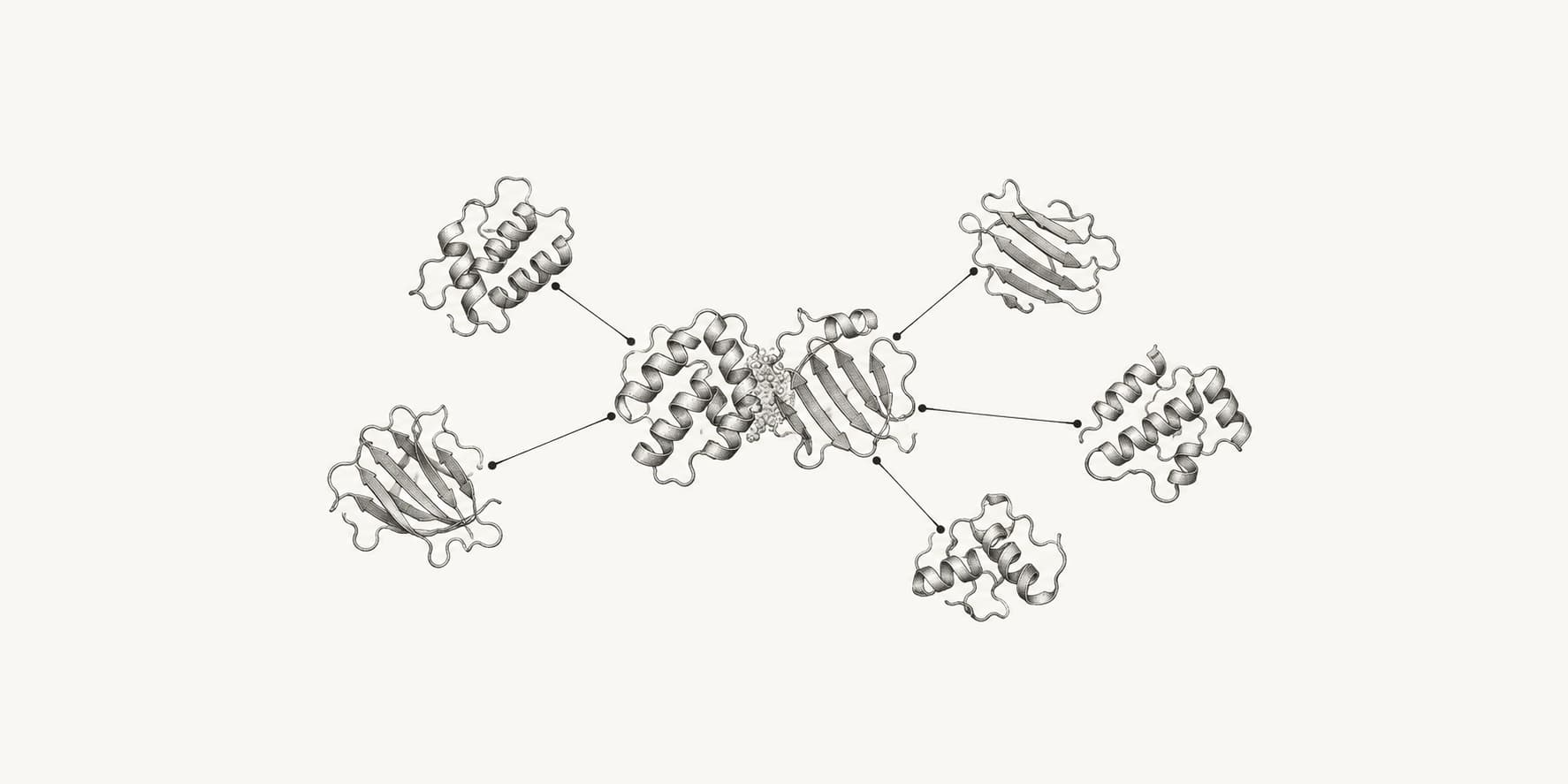
Structural coverage also depends on the question. An experimental structure may cover only part of a protein, while an AlphaFold prediction is a computational model rather than a solved structure. The 2021 analysis found that 35% of human proteins mapped to a Protein Data Bank entry, but those structures covered only 17% of all residues. AlphaFold produced a full-chain model for 98.5% of proteins, with confident predictions for 58% of residues.[7] An AlphaFold 2 model is therefore a different evidence type from an experimentally determined entry in the Protein Data Bank.
How many human proteoforms are there?
There is no fixed count of human proteoforms. The best defensible answer is that the number is likely in the millions, but it changes with cell type, abundance threshold, measurement method, and the definition of a distinct molecular form.
GENCODE's 172,117 distinct translations describe annotated sequence products, not the full proteoform repertoire. Proteoforms also include forms created by cleavage and post-translational modifications such as phosphorylation, acetylation, methylation, glycosylation, and oxidation.[1][8]
A 2018 review illustrated the scale with a cell-type estimate: 10,000 expressed genes multiplied by an average of 100 proteoforms per gene gives about 1 million proteoforms in one cell type. This is a working estimate, not an observed census.[8]
The Human Proteoform Project was proposed to build a reference atlas of expressed proteoforms and to improve the technologies needed to identify intact protein forms. Its target is deeper than a list of one protein per gene because it aims to resolve the chemical forms that are present in particular cells and tissues.[9]
What is the Human Proteome Project?
The Human Proteome Project is HUPO's international effort to detect the proteins encoded by human protein-coding genes and improve evidence for their functions.
Its 2025 report evaluates 19,435 reference proteins and finds protein-level evidence for 93.6% of them. It also places 5,562 proteins in its highest function-evidence category.[2]
The project is close to completing the narrow protein parts list. It does not claim that every isoform, proteoform, abundance pattern, interaction, location, or structure has been measured. The Human Proteoform Project addresses part of that deeper task by focusing on intact molecular forms rather than one representative protein per gene.[9]