Search AlphaFold DB, compare structures, or cluster by 3D similarity Learn more
Input
FoldSeek webserver overview
FoldSeek searches and compares protein structures. The ProteinIQ FoldSeek web server accepts a PDB or mmCIF structure, searches AlphaFold DB, PDB, and selected structural databases, or compares two structures and clusters up to 2,500 structures by 3D similarity. The FoldSeek search server returns ranked hits, alignments, TM-score, LDDT, and downloadable result files.
Everything happens in the browser. Structures can be uploaded or fetched from the Protein Data Bank, database choices and comparison thresholds are set in the web interface, and completed jobs remain available for inspection, download, or reruns. No command-line FoldSeek installation, database download, or local compute setup is required.
Pricing
FoldSeek pricing is not fixed. Jobs start at 50 credits, and larger structure inputs can cost more. Database search quotes each submitted structure separately, while pairwise comparison and clustering quote the selected structures together. The exact credit price is shown before submission and is also available through the API.
FoldSeek API
Enterprise workspaces can run the FoldSeek server from scripts, notebooks, and pipeline services through the ProteinIQ API. Start with GET /api/v1/tools/foldseek to retrieve the active input contract, available modes and settings, and current credit model. The same endpoint keeps integrations aligned with changes to supported inputs or limits.
Submit a job name and PDB or mmCIF structure in input.inputs[], select database_search, pairwise, or cluster with the mode setting, then request a quote through POST /api/v1/jobs/quote or create a job with POST /api/v1/jobs. Jobs return immediately and can be monitored with the status or events endpoints before results and signed file downloads are retrieved. API tools documents tool contracts, and API jobs covers quoting, submission, status, and results.
What is FoldSeek?
FoldSeek is a fast protein structure search tool that can search your structure against 200+ million predicted structures in the AlphaFold Database, compare structures in detail, or cluster multiple structures by similarity.
Traditional structure comparison methods like TM-align are accurate but slow, requiring seconds per comparison. FoldSeek achieves comparable sensitivity while being four to five orders of magnitude faster. This speed comes from a novel encoding approach that converts 3D coordinates into searchable sequences.
For sequence-based clustering, use MMseqs2. For detailed pairwise structure alignment with superposition, use USAlign.
Database search
Upload a single structure to search against massive structure databases. Database search uses the FoldSeek web server API, giving you access to the same search capabilities as search.foldseek.com.
Available databases include AlphaFold DB 50, PDB, AlphaFold Swiss-Prot, CATH 50, BFVD, and AlphaFold Proteome. AlphaFold DB 50 and PDB are selected by default. Database search typically completes in 1-5 minutes depending on server load.
How does FoldSeek work?
The 3Di structural alphabet
FoldSeek's speed comes from the 3Di (3D interaction) alphabet, which encodes protein structure as a sequence of 20 letters. Unlike traditional backbone structural alphabets, 3Di describes the geometric relationship between each residue and its spatially closest neighbor.
For each residue , FoldSeek finds its nearest neighbor residue based on virtual center distance. Seven angles, the distance, and two sequence distance features are extracted from the backbone coordinates of both residues. These 10 features define the 20 3Di states through a neural network trained to maximize evolutionary conservation.
This encoding has three advantages over backbone alphabets: weaker dependency between consecutive letters, more evenly distributed state frequencies, and higher information density in conserved protein cores rather than loop regions.
Search algorithm
FoldSeek converts both query and target structures into 3Di sequences. It then applies the MMseqs2 prefilter to find candidate matches using spaced k-mer matching on diagonals of the alignment matrix. This prefilter reduces the search space by several orders of magnitude while maintaining high sensitivity.
For hits passing the prefilter, FoldSeek performs Smith-Waterman local alignment combining both 3Di and amino acid substitution scores. The final alignment uses structural superposition to calculate TM-score and LDDT.
Inputs
FoldSeek accepts protein structures as uploaded files or RCSB PDB fetches. The selected mode determines how many structures belong in a job.
| Input | Accepted formats | Limits and behavior |
|---|---|---|
| Protein structures | .pdb, .ent, .cif, .mmcif, or an RCSB PDB structure | Files can be up to 50 MB. Database search accepts one structure, pairwise comparison requires exactly two, and clustering accepts 3-2,500 structures. |
| Job name | Text | Optional label used to identify the run. |
Database search creates one independent search job per submitted structure. Pairwise comparison and clustering keep the selected structures together in one job. A structure count that does not match the selected mode is rejected.
Settings
The selected mode controls which settings apply. Database choices only affect database search, while E-value and clustering thresholds apply to pairwise comparison or clustering as noted below.
| Setting | Default or range | Description |
|---|---|---|
Mode | Search databases | Search databases accepts one structure and searches selected databases. Compare two structures requires exactly two structures. Cluster three or more structures accepts 3-2,500 structures and groups them by similarity. |
Databases to search | AlphaFold DB 50 and PDB on | Select AlphaFold DB 50, PDB, AlphaFold Swiss-Prot, CATH 50, BFVD, or AlphaFold Proteome. This setting applies only to database search. |
Alignment type | 3Di + Sequence | 3Di + Sequence combines structural and sequence information and is recommended for most searches. TMalign uses pure structural alignment and can find more distant structural similarities at lower speed. |
E-value threshold | 0.001; 1e-7-10000 | Sets local-comparison stringency for pairwise comparison and clustering. Lower values retain more confident matches; higher values can retain more distant relationships. |
Min sequence identity | 0; 0-1 | Requires a minimum sequence identity for clustering. 0 clusters by structure without a sequence-identity restriction. |
TM-score threshold | 0; 0-1 | Requires a minimum TM-score for clustering. A value of 0.5 is commonly used to retain structures with the same fold. |
LDDT threshold | 0; 0-1 | Requires a minimum local structural similarity for clustering. Higher values require more similar local geometry. |
Coverage threshold | 0; 0-1 | Requires a minimum aligned-residue fraction for clustering. |
Understanding the results
FoldSeek returns different metrics depending on the mode. Database search provides probability scores and E-values, while local comparison provides detailed structural metrics.
Database search results
When searching against AlphaFold DB or PDB, results include:
- Probability: Confidence score from 0 to 1 indicating match quality. Higher values represent more confident structural matches. This is distinct from TM-score and is calculated by the FoldSeek search algorithm.
- E-value: Expectation value representing the number of hits with equal or better scores expected by chance. Lower E-values indicate more significant matches. Values below
0.001are typically considered confident hits. - Identity %: Percentage of aligned residues with identical amino acids. This shows sequence conservation in addition to structural similarity.
- Alignment length: Number of residues aligned between query and target structures.
Local comparison results
When comparing structures locally (pairwise or clustering mode), FoldSeek calculates:
TM-score (Template Modeling score) measures global structural similarity on a scale of 0 to 1:
| TM-score | Interpretation |
|---|---|
| < 0.17 | Random, unrelated structures |
| 0.17 - 0.5 | Some structural similarity |
| > 0.5 | Same fold |
| 1.0 | Identical structures |
A TM-score of 0.5 is the widely accepted threshold for determining whether two proteins share the same fold. Below 0.17, structures are statistically indistinguishable from random pairs.
LDDT (Local Distance Difference Test) evaluates local structural accuracy without requiring superposition. It compares interatomic distances rather than absolute positions, making it robust to domain movements.
| LDDT | Interpretation |
|---|---|
| > 0.9 | Excellent local agreement |
| 0.7 - 0.9 | Good local structure |
| 0.5 - 0.7 | Moderate agreement |
| < 0.5 | Poor local similarity |
LDDT is particularly useful for multi-domain proteins where global superposition may be misleading.
Sequence identity: The fraction of aligned positions with identical amino acids. High sequence identity with low structural similarity may indicate conformational changes. Low sequence identity with high TM-score indicates structural conservation despite sequence divergence.
Use cases
Database search
- Functional annotation: Find proteins with similar folds to infer function
- Evolutionary analysis: Discover distant homologs undetectable by sequence
- Template identification: Find templates for homology modeling
- Novel fold detection: Check if your structure represents a new fold
Local comparison & clustering
- Fold classification: Group structures into families based on 3D similarity
- Redundancy removal: Create non-redundant structure datasets for training ML models
- Quality assessment: Compare predicted structures to known templates
- Conformational analysis: Identify structural changes between states
Limitations
FoldSeek excels at finding structural similarity but has some constraints:
- Requires atomic coordinates (PDB or mmCIF format)
- 3Di encoding may miss some similarities in highly flexible regions
- Clustering is greedy and results depend on representative selection
- Very short structures (< 30 residues) may produce unreliable scores
- Database search depends on the FoldSeek web server and may take 1-5 minutes
Related tools
USAlign
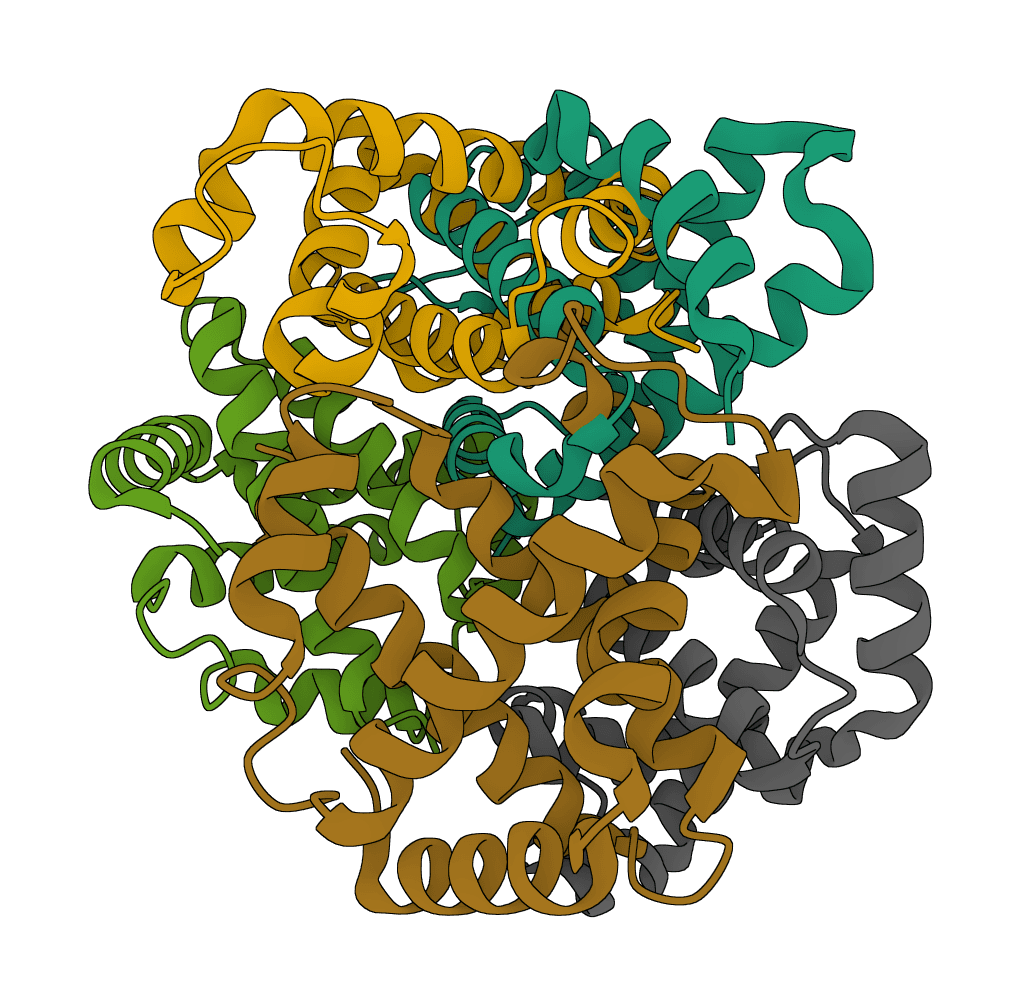
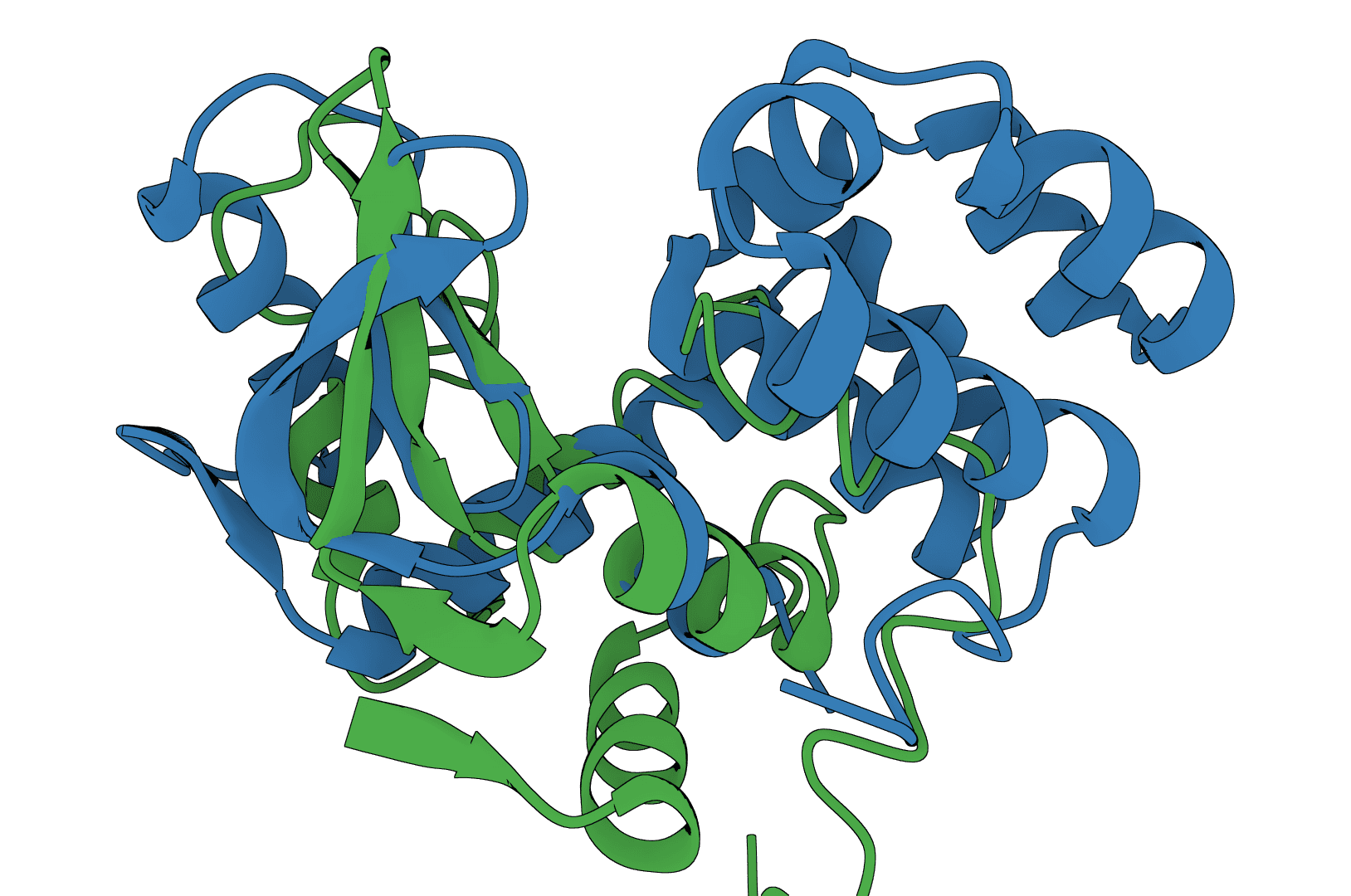
USAlign (Universal Structure Alignment) aligns protein, RNA, and DNA structures to compute TM-scores and generate superposed structures. Compare 3D structures to assess structural similarity.
ANARCI
Number antibody and T cell receptor variable domain sequences using IMGT, Chothia, Kabat, Martin, AHo, or Wolfguy. Reports chain type, the best HMM species match, and optional germline assignments.
IgBLAST
Analyze immunoglobulin (antibody) and T cell receptor variable domain sequences. Identifies V/D/J gene segments, delineates CDR regions, and analyzes rearrangement junctions.
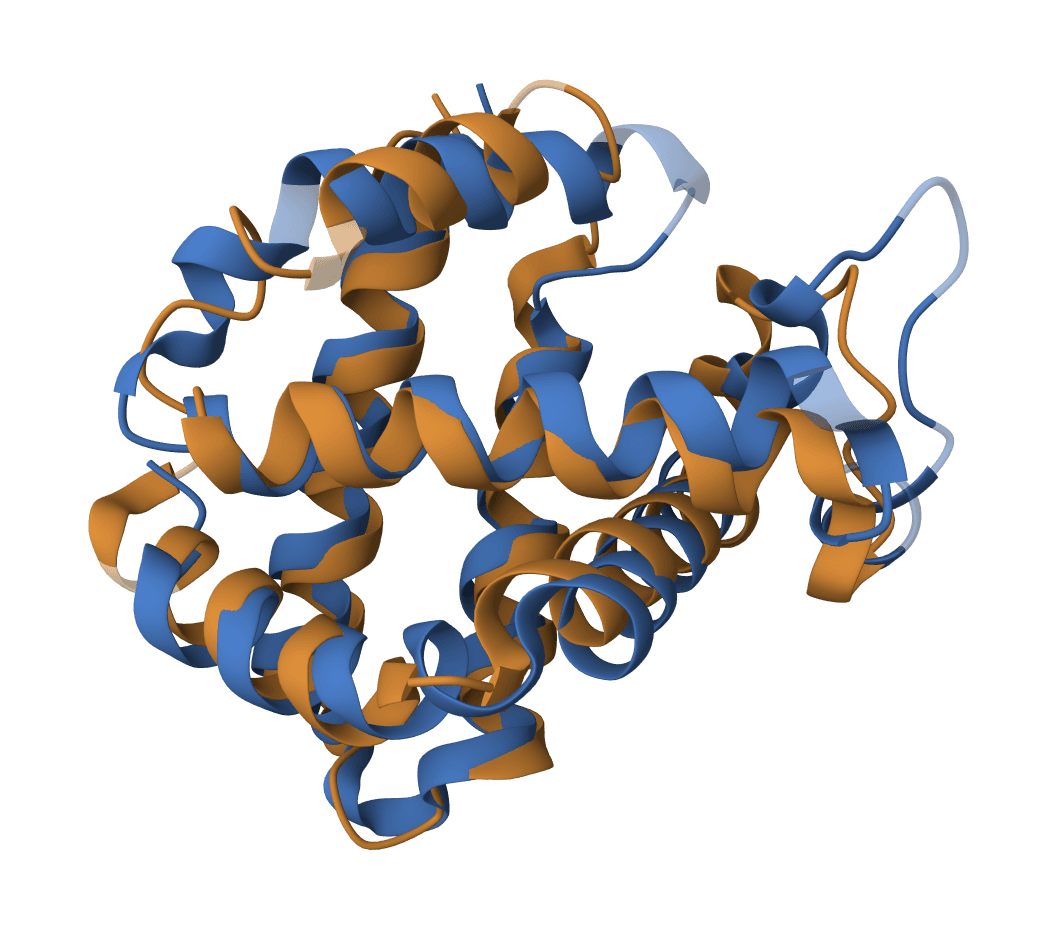
MAFFT
Perform multiple sequence alignment using MAFFT (Multiple Alignment using Fast Fourier Transform). Supports multiple algorithms from fast progressive to highly accurate iterative methods.
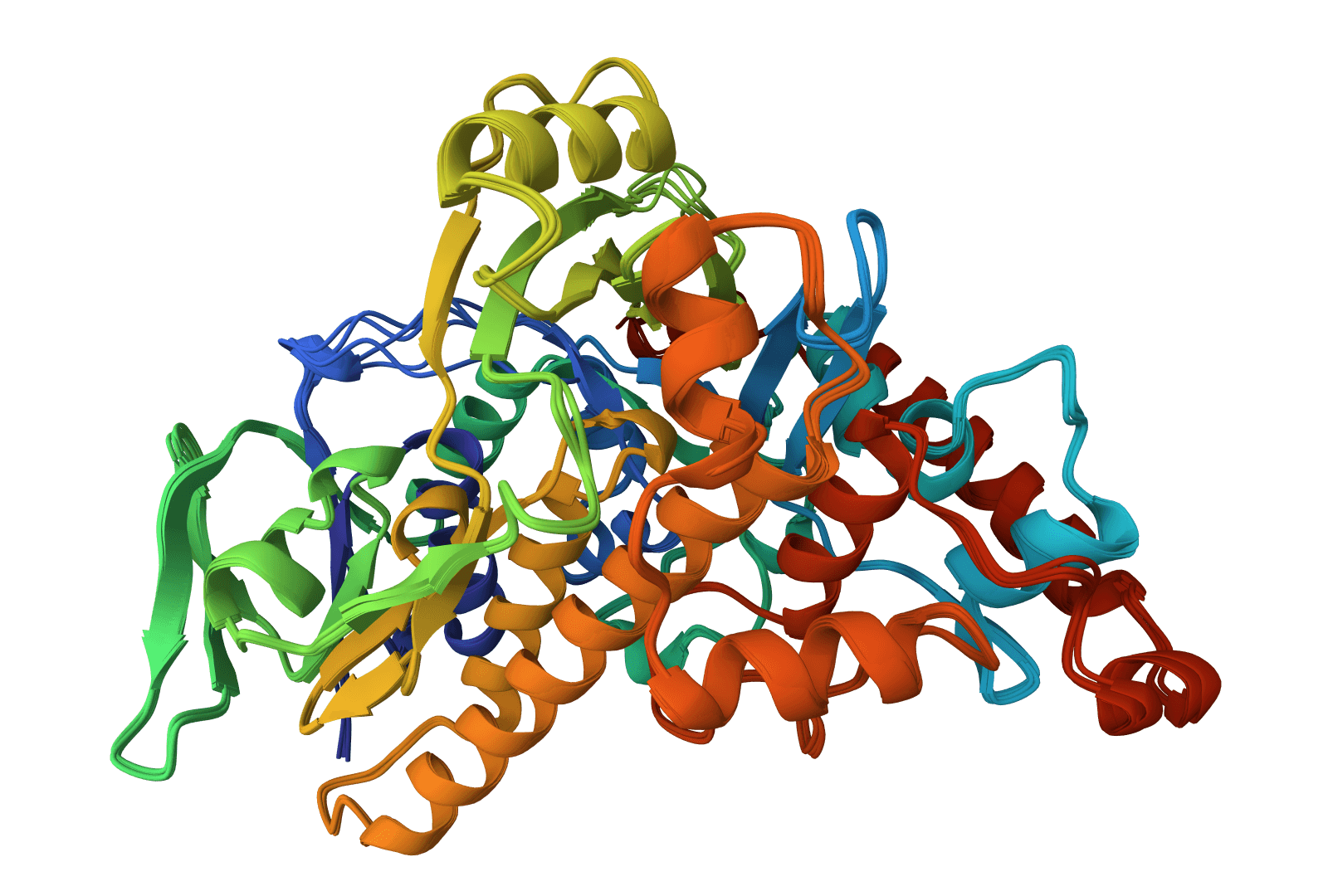
MUSCLE5
Align protein, DNA, or RNA sequences with MUSCLE v5.3 using the native PPP or Super5 algorithm, with optional stratified and diversified ensembles.
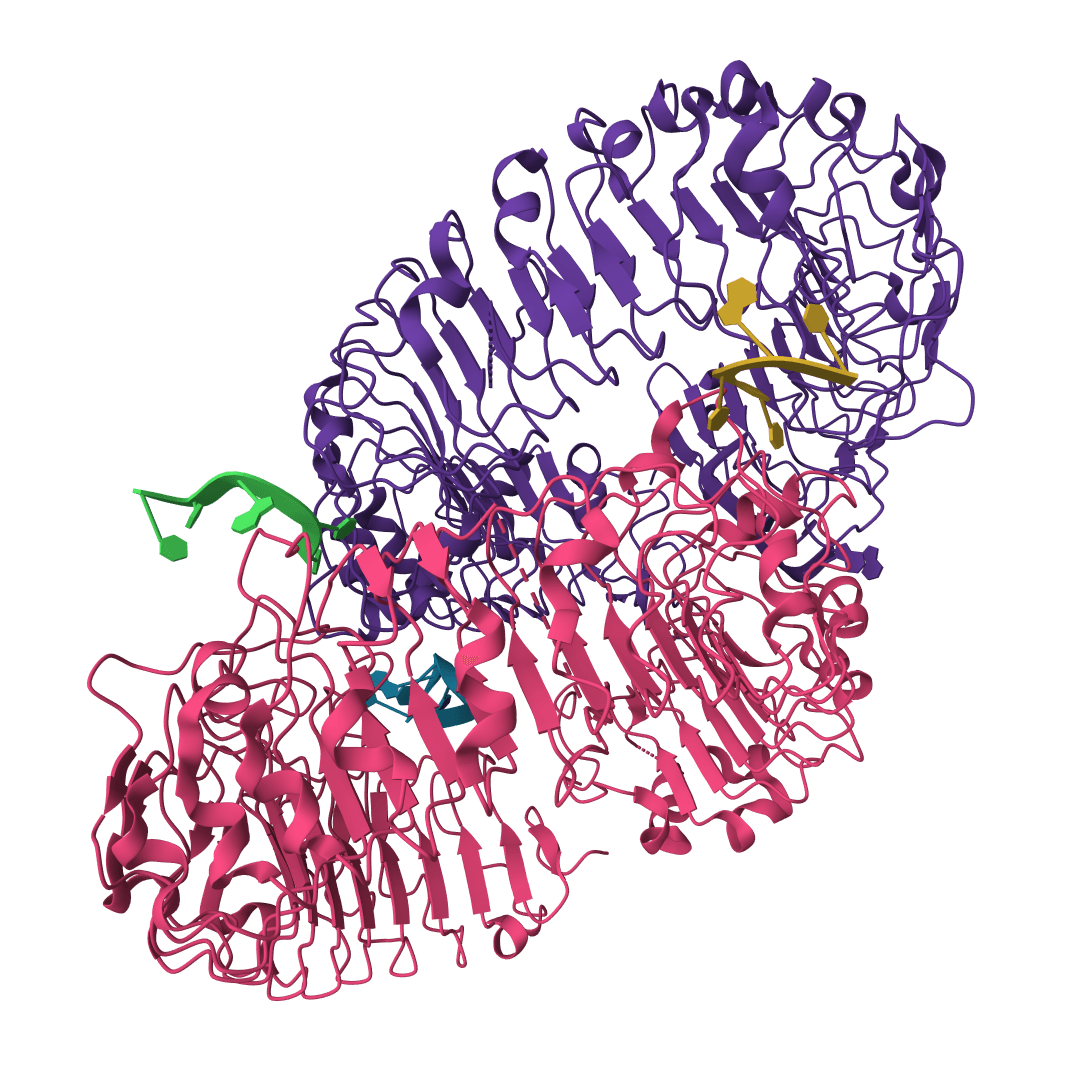
StringZilla v5
Calculate batched Levenshtein distances and Needleman–Wunsch or Smith–Waterman sequence scores with StringZilla v5 CPU acceleration.
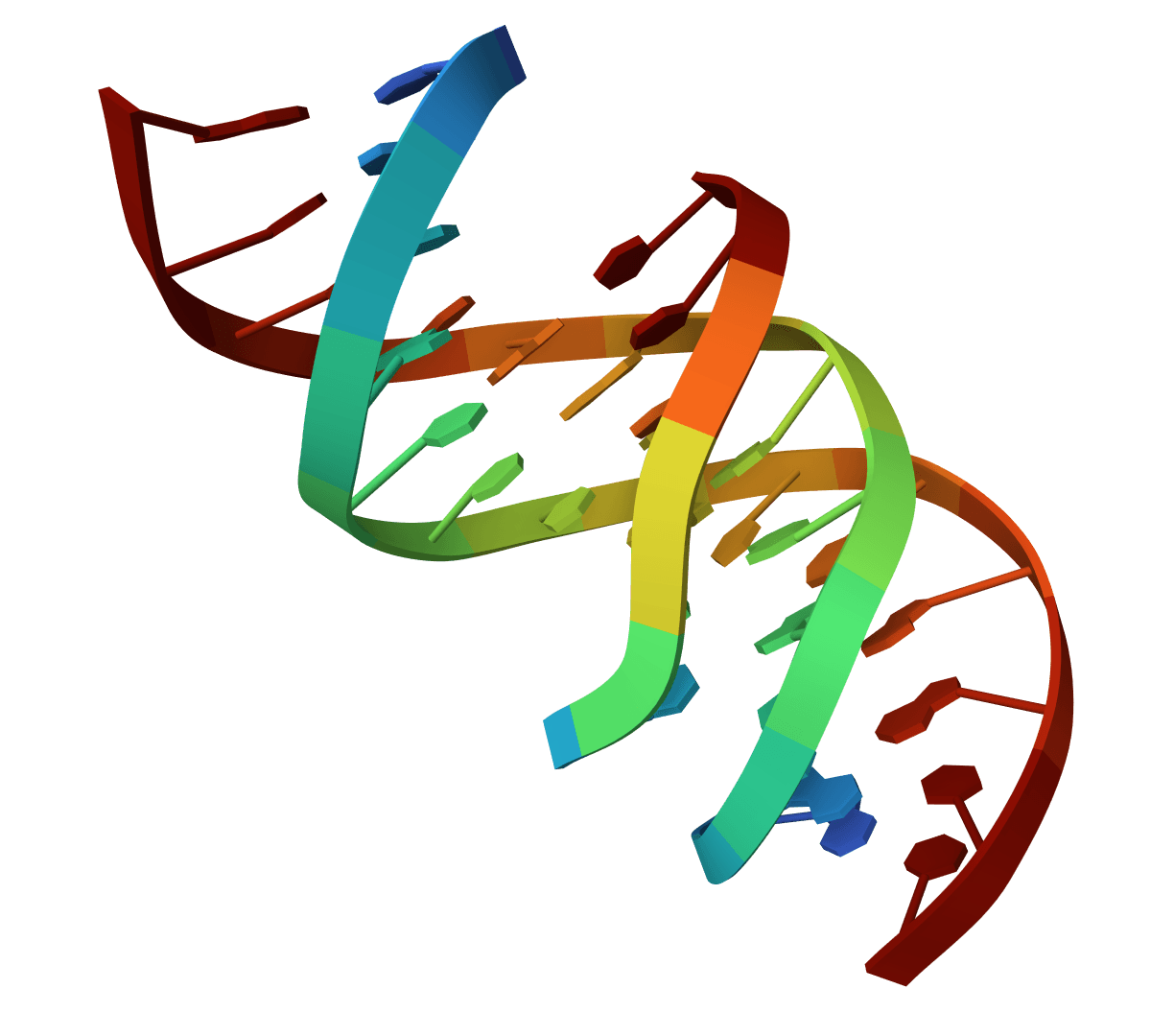
MUMmer4
Rapidly align and compare DNA sequences using MUMmer4 nucmer. Perform pairwise genome comparisons to identify SNPs, indels, and structural variants between reference and query genomes.
Clustal Omega
Perform multiple sequence alignment on protein or nucleotide sequences using the Clustal Omega algorithm.
FastTree
Infer approximately-maximum-likelihood phylogenetic trees from alignments of nucleotide or protein sequences.
HMMER
Sensitive sequence homology search using profile hidden Markov models. More accurate than BLAST for detecting remote homologs, ideal for finding evolutionarily distant protein family members.