Generate protein binder candidates with Proteina-Complexa binder design settings. Learn more
Input
What is Proteina-Complexa?
Proteina-Complexa is an atomistic flow-matching generative model for de novo protein complex and binder design from NVIDIA BioNeMo. It jointly generates a binder backbone, side-chain conformations, and sequence while conditioning on a target structure, then applies inference-time search and structural reward models to prioritize candidates.
The ProteinIQ workflow runs the protein-binder configuration only. It designs a new protein binder against selected residues of one uploaded protein target. Small-molecule ligand binders and antigen-motif epitope scaffolding use different Proteina-Complexa models and are not part of this tool.
Binder design is a candidate-generation problem, not a binding assay. Generated structures and model-based ranking help focus downstream work, but expression, stability, specificity, and affinity still need experimental confirmation.
Why it is used
Structure-conditioned binder design is useful when a target surface or epitope has already been identified. Rather than choosing from a fixed library, Proteina-Complexa samples new proteins in a requested length range and scores the resulting complexes during search. The full workflow then refolds and analyzes the retained candidates, making it useful for building a shortlist before sequence review, experimental design, or a separate protein binder design workflow.
How to use Proteina-Complexa online
ProteinIQ runs Proteina-Complexa from an uploaded target PDB. Select the target chain or residue ranges, optionally name hotspot residues, choose a binder length range and sampling settings, then receive generated protein-target complex structures, source reward and evaluation tables, logs, and downloadable run files. The full pipeline evaluates shortlisted designs; generate-and-filter returns candidates sooner without that evaluation step.
Inputs
| Input | Requirements and use |
|---|---|
Target protein | One PDB file, up to 50 MB, containing protein ATOM records. A structure can also be fetched from RCSB in PDB format. |
Target residues | The target surface supplied to the design model. Use a chain such as A, a contiguous range such as A1-150, or comma-separated selections such as A1-100,B1-50. Every residue in an explicit range must be present in the uploaded PDB. |
Hotspot residues | Optional residues intended to contact the designed binder, for example A35,A57,A91. Separate identifiers with commas or spaces. A residue identifier consists of a chain letter, residue number, and optional insertion code. |
Selecting a whole chain expands to its protein residues. ProteinIQ prepares the selected target from PDB ATOM records before the run, so ligands, ions, glycans, waters, and other HETATM records are not part of the current protein-target design input. Selection should therefore describe the protein epitope, not a co-crystallized ligand or non-protein residue.
Pipeline mode
| Mode | What runs | When it fits |
|---|---|---|
Full design pipeline | Generate, filter, evaluate, and analyze. | Final candidate ranking where folding-based evaluation is needed. |
Generate and filter only | Generate candidates, score them, and retain the filtered set. | Early exploration of a target or parameter set before spending time on evaluation. |
The full design mode is the default. It can take substantially longer because it includes folding-based evaluation of retained designs.
Design and sampling settings
| Setting | Description |
|---|---|
Minimum binder length / Maximum binder length | Inclusive length range for generated binders, from 20 to 400 residues. The default range is 80 to 120 residues. |
Target samples | Number of requested target samples during generation, from 1 to 64. The default is 4. |
Diffusion steps | Number of generation steps, from 50 to 1000. The default 400 follows the source protein-binder configuration. More steps increase sampling work. |
Search algorithm | Single pass generates without search replication, Best of N compares replicated proposals, and Beam search retains a beam while sampling. Best of N is the default. |
Best-of-N replicas | Replicas compared by Best of N, from 1 to 16. The default is 2. This setting matters only with Best of N. |
Beam width | Number of candidates retained by beam search, from 1 to 16. The default is 4. This setting matters only with Beam search. |
Batch size | Maximum generation batch size, from 1 to 64. The default is 16. |
Random seed | Reproducibility seed for the source pipeline. The default is 5; changing it produces a different stochastic sampling trajectory. |
Filtering and evaluation settings
| Setting | Description |
|---|---|
Filter sample limit | Maximum number of generated candidates retained by the filtering stage, from 1 to 5000. The default is 1000. |
Reward threshold | Optional numeric cutoff passed to the source filtering stage. Leave it blank to retain the source configuration's standard behavior. Thresholds are meaningful only for comparable runs using the same model and settings. |
Redesigned sequences | Number of inverse-folded sequences evaluated per retained design, from 0 to 16. The default is 2. Setting it to 0 skips these additional sequence redesigns. |
How Proteina-Complexa works
The model begins with a target structure and samples a binder in all-atom representation. Its flow-based generative prior was pretrained on protein interaction data, including synthetic binder-target pairs, then adapted for binder design. The model does not merely attach a sequence to a fixed scaffold. It proposes the binder geometry and sequence together.
During generation, the selected search strategy uses reward information to rank proposals. In the protein-binder configuration used here, the default reward model is AlphaFold2 Multimer-based and includes an interface predicted-alignment-error term. Best of N searches over replicated proposals, while beam search retains a set of promising partial trajectories. These are in-silico criteria, not measured affinities.
Filtering removes duplicate sequences and keeps the configured number of candidates. Full design then evaluates retained complexes with the source binder evaluation configuration: ColabDesign refolding for binder metrics, SolubleMPNN inverse folding for the requested redesign sequences, ESMFold monomer metrics, designability and co-designability metrics, and secondary-structure proportions. The exact columns written to evaluation tables can vary with the successful stages and source version.
Understanding the results
The Viewer contains the returned PDB structures. Each structure should be inspected as a target-binder complex: check that the intended epitope is contacted, that the binder has a plausible compact fold, and that there are no obvious clashes or disconnected segments. A favourable predicted complex is still a hypothesis, especially when the target structure or selected epitope is uncertain.
| Result | Meaning |
|---|---|
| Generated complex PDB files | Candidate protein-target complex structures from generation, and refolded structures when produced during full evaluation. |
rewards_*.csv | Source scoring values recorded during generation and search. |
all_rewards_*.csv | Filter-stage records for generated candidates. |
top_samples_*.csv | Candidates retained after filtering. This is the most useful starting table for reviewing the generated shortlist. |
| Evaluation and analysis CSV files | Folding, sequence-design, structural, or aggregate metrics emitted by the full pipeline. Their availability depends on which stages completed. |
| Config, target dictionary, logs, and additional files | The generated run configuration, selected target description, command log, and any JSON, NPZ, FASTA, text, or other source artifacts written by the job. |
total_reward is a composite model score, not a physical binding free energy or an experimentally calibrated affinity. Its absolute scale and direction depend on the active reward terms, so it is best used to compare candidates within the same run and configuration. ProteinIQ retains the source scoring semantics and result order.
Evaluation metrics add independent checks, but none should be treated as a universal pass or fail threshold. Designs that remain promising across the structure view, source ranking, refolding results, and sequence-level assessment are stronger candidates for experimental follow-up than candidates selected on a single column alone.
When to use Proteina-Complexa vs alternatives
Proteina-Complexa is a good fit when all-atom, target-conditioned de novo binder generation and inference-time optimization are the main goals. It is less appropriate when the task starts from a known scaffold with a defined redesign mask, or when the primary need is rapid large-scale backbone generation. In those cases, a ProteinMPNN-compatible design workflow or RFdiffusion can be a better starting point, depending on the available structure and constraints.
For candidate validation, refolding the selected sequences with a separate structure-prediction method can provide a useful cross-check. AlphaFold2 is suitable when an MSA-assisted complex prediction is appropriate; agreement between tools increases confidence, while disagreement is a reason to inspect the design rather than average the scores.
Related tools
PepMLM
Design linear peptide binders for target proteins using a target sequence-conditioned masked language model. PepMLM generates peptide sequences optimized to bind specific protein targets based on ESM-2 protein language modeling.
BoltzGen
BoltzGen uses generative diffusion models to design protein, peptide, nanobody, and Fab binders against protein and small-molecule targets.
Genie 3
Generate protein structures and scaffolds with Genie 3, an all-atom SE(3)-equivariant diffusion model. Genie 3 supports unconditional protein generation, motif scaffolding, and hotspot-targeted binder design.
PepMimic
PepMimic designs short peptides that mimic the binding interface of a known protein binder on its target. From a reference protein complex, a latent diffusion model generates peptide candidates constrained to the target interface, and each candidate is scored by interface-mimicry against the reference binder.
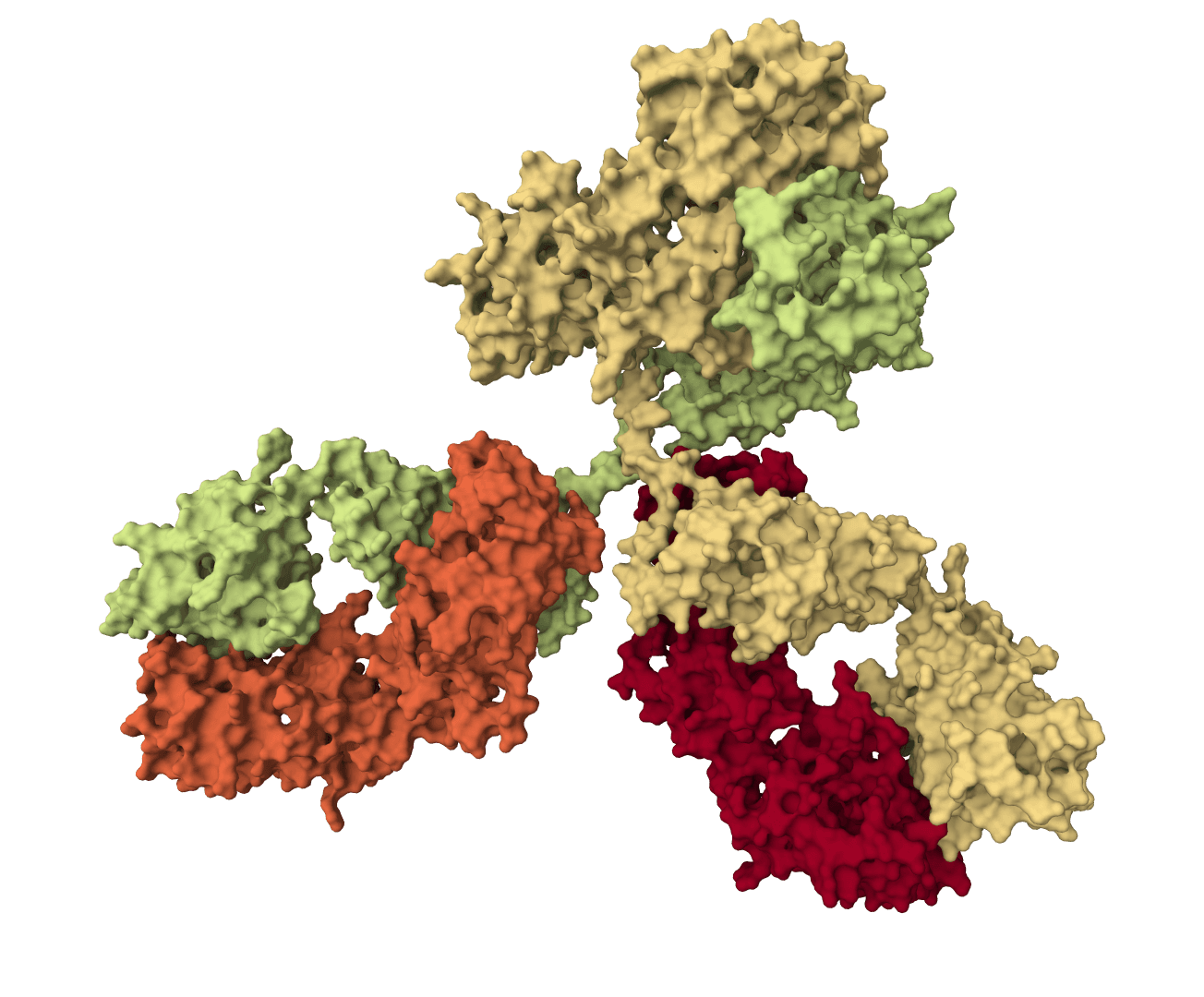
Proteo-R1
Exploratory antibody CDR co-design for antibody-antigen complexes using Proteo-R1 reasoning and raw diffusion. The standard online workflow does not include the framework structure-inpainting assets required for the published-quality target.
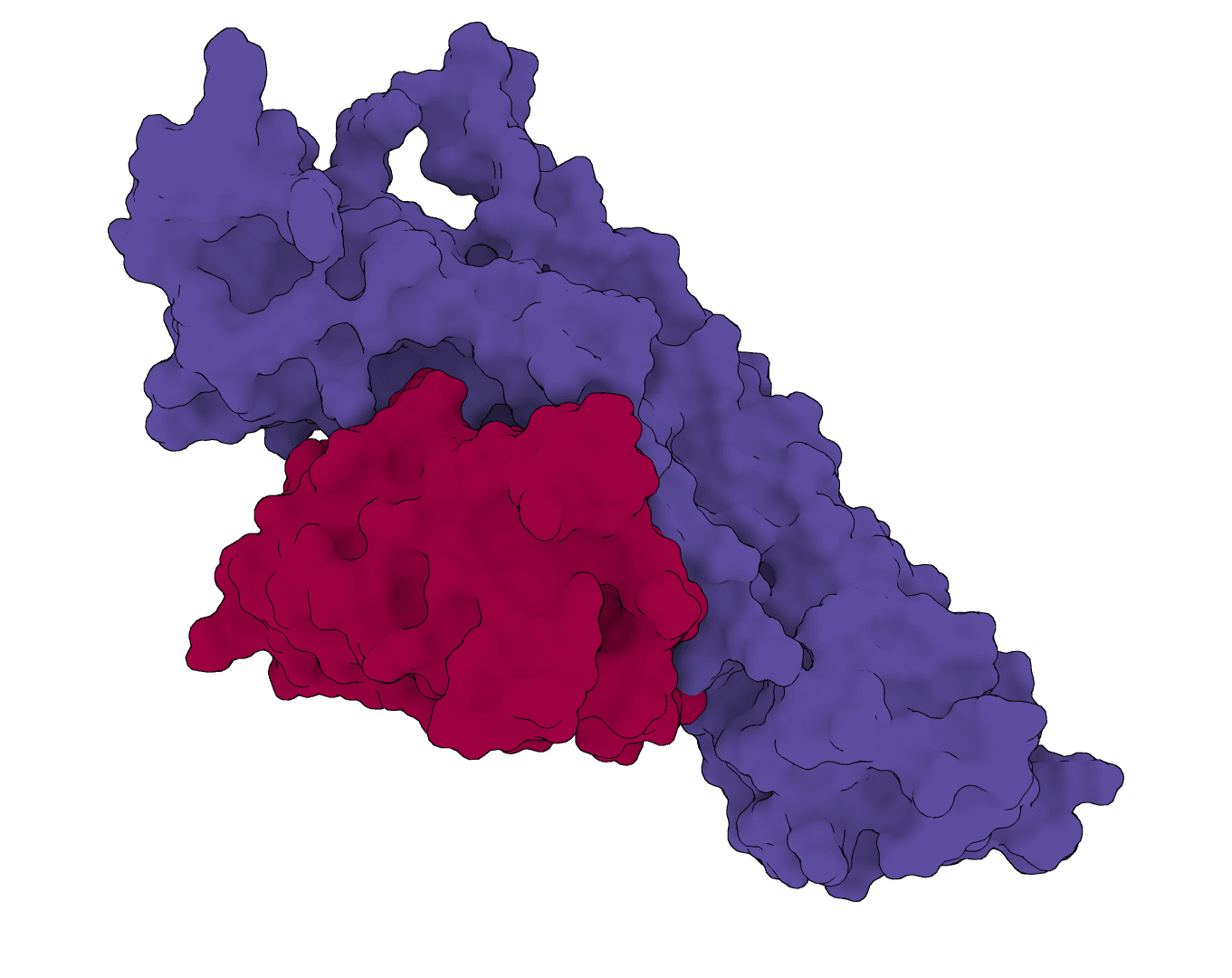
RFantibody
Structure-based de novo antibody and nanobody design pipeline combining antibody-tuned RFdiffusion, ProteinMPNN sequence design, and antibody-tuned RoseTTAFold2 filtering.
ProFam
ProFam-1 is a protein family language model for family-conditioned sequence generation. Provide a protein family in FASTA, A2M, or A3M format and generate new sequences with model likelihood scores for downstream ranking and screening.
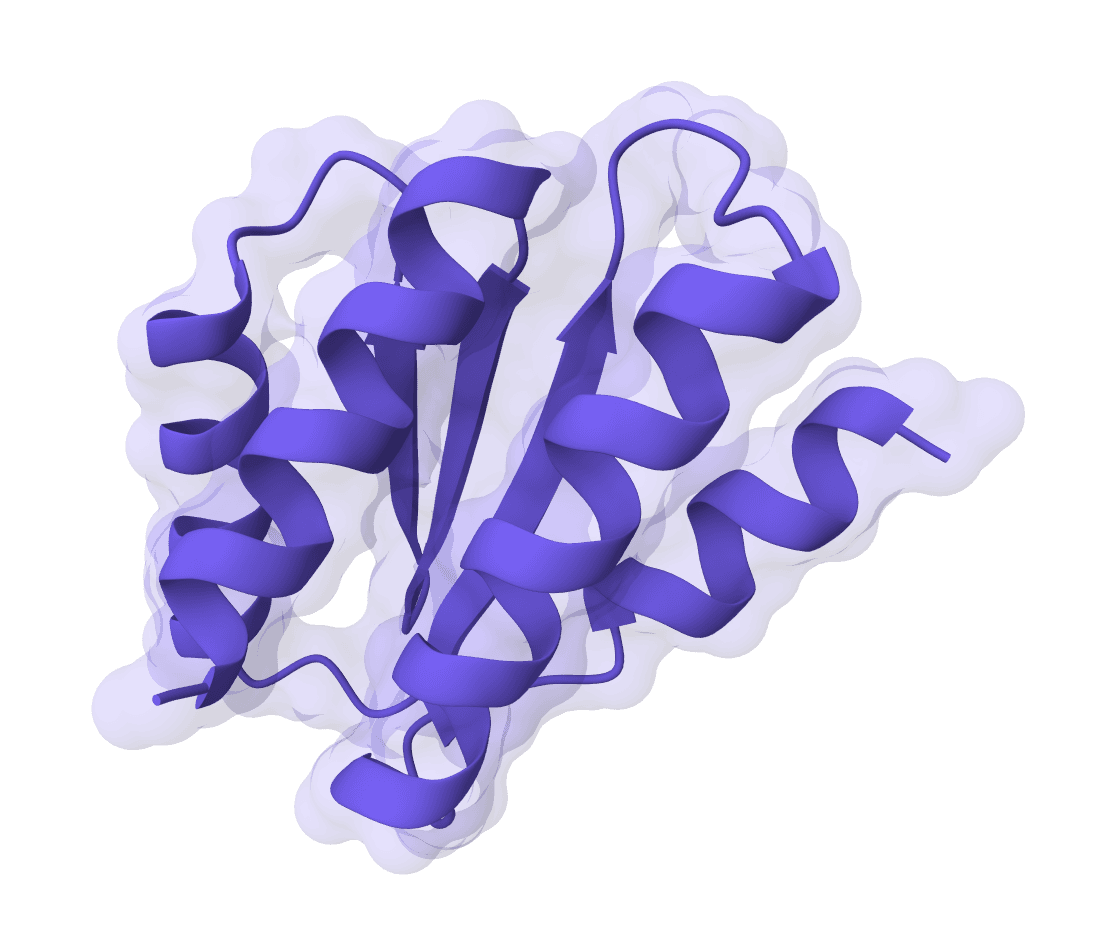
EvoDiff
EvoDiff is a diffusion-based protein sequence generation framework from Microsoft Research. ProteinIQ currently runs the EvoDiff-Seq OA_DM_38M model for unconditional protein generation, motif scaffolding, and user-sequence inpainting.
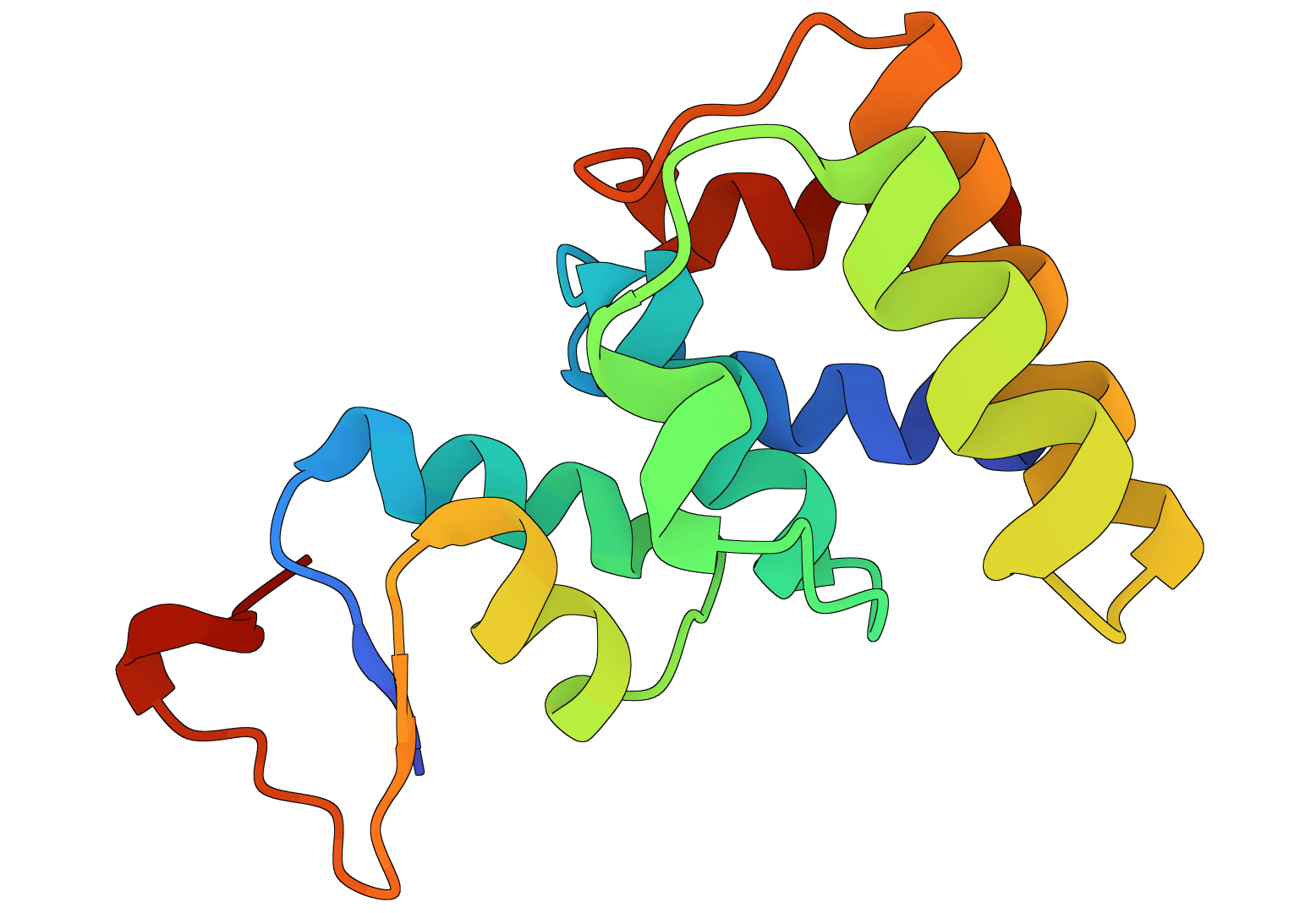
ODesign
All-atom generative AI for designing protein binders. Specify target binding sites and generate diverse binding proteins with fine-grained control over interaction parameters.
PocketFlow
PocketFlow is a structure-based molecular generative model that designs novel drug-like molecules within protein binding pockets. It uses autoregressive flow modeling with chemical knowledge to generate 100% chemically valid, highly drug-like compounds.