Predict quantum-informed molecular properties from 3D structures. Learn more
Input
Upload one or more 3D molecular structures with explicit coordinates.
What is AIMNet2?
AIMNet2 is a neural network potential for quantum-informed molecular property prediction. Given a coordinate-bearing molecular structure, AIMNet2 predicts energies, forces, atomic charges, NSE spin charges, dipole vectors, stress tensors, and Hessians from its trained model families.
AIMNet2 is designed for isolated molecules and molecular clusters rather than protein-scale biomolecular simulation. It is useful when you need rapid energy, force, charge, or second-derivative estimates for supported organic and elemental-organic chemistry.
How to use AIMNet2 online
ProteinIQ runs AIMNet2 on cloud GPU infrastructure with no Python setup. Upload one or more 3D structure files, choose the model family, and submit the job.
Input
| Input | Details |
|---|---|
Molecular structure | One to 20 XYZ, extended XYZ, V2000 SDF, MOL, PDB, CIF, MCIF, or mmCIF files with atomic coordinates. Each file may be up to 10 MB, with at most 10,000 atoms across the submitted structures. Every frame in a multi-frame XYZ file and every molecule in an SDF file is calculated separately and counts toward the 20-structure limit. Convert V3000 records to V2000 or XYZ before submission. |
SMILES strings are not accepted because AIMNet2 operates on explicit 3D coordinates. Generate a conformer first, then upload the coordinate-bearing structure.
Settings
| Setting | Description |
|---|---|
Model | Selects the AIMNet2 model alias. aimnet2 is the general wB97M-D3 model. aimnet2-2025 is the recommended B97-3c model. aimnet2-nse is intended for radicals and open-shell systems. aimnet2-pd supports palladium chemistry. aimnet2-rxn is a reaction model for neutral H/C/N/O systems. |
Charge | Net molecular charge passed to AIMNet2. The reaction model requires charge 0. |
Multiplicity | Spin multiplicity. Use aimnet2-nse for radicals or open-shell systems. |
Per-structure charges | Optional comma-separated integer charges in expanded input order. Use this for batches containing different charge states; leave the whole setting empty to use the global Charge. |
Per-structure multiplicities | Optional comma-separated spin multiplicities in expanded input order. Use this for mixed-state batches; leave the whole setting empty to use the global Multiplicity. |
Calculate forces | Returns per-atom forces in eV/A. Enabled by default. |
Deterministic inference | Enables AIMNet2 deterministic execution for reproducible inference. It can reduce GPU throughput and does not cover the Ewald or PME Coulomb kernels. |
Calculate stress tensor | Requests a stress tensor for periodic inputs. Non-periodic molecules cannot return stress. |
Calculate Hessian | Requests the 3N x 3N Hessian in eV/A^2. Hessians are limited to 100 atoms, non-periodic, and incompatible with DSF, Ewald, or PME Coulomb settings. |
Optimize geometry | Runs an ASE geometry optimization with AIMNet2 forces before final property reporting. |
Geometry optimizer | Selects FIRE or BFGS. FIRE remains the default. |
Optimization steps | Maximum geometry optimization steps. |
Optimization fmax | Force convergence threshold in eV/A. |
Ensemble uncertainty | Runs all four AIMNet2 ensemble members for the selected model family and reports energy mean, variance, and standard deviation. |
Long-range Coulomb | Optional AIMNet2 Coulomb method: default, simple, DSF, Ewald, or PME. The simple method evaluates all atom pairs. DSF uses cutoff 15 A and alpha 0.2 by default. Ewald and PME use accuracy 1e-6 by default. |
D3 cutoff | Dispersion cutoff in Angstrom. The AIMNet2 default is 15 A with smoothing fraction 0.2. |
Outputs
The Results table reports one row per submitted structure:
| Column | Description |
|---|---|
Input | Input file or structure name |
Model | AIMNet2 model alias |
Atoms | Atom count |
Charge | Net molecular charge used for calculation |
Multiplicity | Spin multiplicity used for calculation |
Energy (eV) | Total predicted molecular energy |
Energy (kcal/mol) | Energy converted from eV |
Max force (eV/A) | Largest force-vector norm when forces are requested |
Charge sum (e) | Sum of AIMNet2 atomic charges |
Spin-charge sum (e) | Sum of per-atom spin charges for aimnet2-nse |
Dipole moment (eA) | Norm of the AIMNet2 dipole vector |
Dipole x/y/z (eA) | Cartesian components of the AIMNet2 dipole vector |
Ensemble members | Number of model members used when ensemble uncertainty is enabled |
Ensemble mean energy (eV) | Mean energy across ensemble members |
Ensemble energy SD (eV) | Standard deviation of ensemble-member energies |
Optimization converged | Whether geometry optimization reached the requested force threshold |
Optimization steps | Number of optimization steps completed |
Optimizer | FIRE or BFGS optimizer used |
Optimization trajectory | Downloadable extended XYZ trajectory |
Stress available | Whether stress output was returned |
Hessian available | Whether Hessian output was returned |
Downloadable files include:
| File | Description |
|---|---|
aimnet2_summary.json | Settings, scalar properties, dipole vector, source provenance, and file manifest |
aimnet2_atomic_charges.csv | Atom index, element, coordinates, AIMNet2 charge, and NSE spin charge when available |
aimnet2_forces.csv | Atom index, element, coordinates, and force components when forces are requested |
aimnet2_stress.csv | Labeled 3 x 3 stress-tensor components in eV/A^3 when stress is requested and supported |
aimnet2_hessian.csv | Hessian matrix when requested and supported |
aimnet2_optimized.* | Final optimized coordinates when geometry optimization is enabled |
aimnet2_optimization.log | ASE optimization log when geometry optimization is enabled |
aimnet2_optimization_trajectory.extxyz | Initial and final coordinates plus optimization-step snapshots; large jobs are sampled to keep the file bounded |
aimnet2_ensemble_uncertainty.csv | Per-member ensemble energies when ensemble uncertainty is enabled |
Batch jobs prefix downloadable filenames with each input name so files remain unique.
Model coverage
The standard AIMNet2 models support H, B, C, N, O, F, Si, P, S, Cl, As, Se, Br, and I. The Pd model supports H, B, C, N, O, F, Si, P, S, Cl, Se, Br, Pd, and I. The reaction model supports H, C, N, and O only and requires a neutral net charge.
Use aimnet2-nse for open-shell systems. Use aimnet2-pd for supported palladium chemistry. Use aimnet2-rxn only for neutral H/C/N/O reaction systems.
For charged structures, the dipole vector depends on the coordinate origin. Compare charged-system dipoles only when the structures use a consistent origin.
Limitations
- AIMNet2 is trained for isolated molecules and molecular clusters, not bulk materials, extended surfaces, or metallic systems.
- Alkali and alkaline earth metals are not supported. Transition metals are not supported except Pd in
aimnet2-pd. aimnet2-rxnonly supports neutral H/C/N/O systems.- Standard models do not include implicit solvation. The Pd model includes the training solvation assumptions from its model family.
- Multi-reference chemistry and systems far outside the training chemistry should be interpreted cautiously.
ProteinIQ runs AIMNet source commit 5916fe76c96d2af00f64359b8db6b7ead0b595b5, identified in results as 0.2.0+5916fe7. AIMNet verifies SHA-256 digests for all 24 registered model artifacts before loading them.
Related tools
Molecular descriptors
Compute 200+ RDKit molecular descriptors, drug-likeness rule violations, and structural fingerprints for QSAR, virtual screening, and ML workflows
PLIP
Analyze noncovalent interactions in protein-ligand complex structures with PLIP, including hydrogen bonds, hydrophobic contacts, pi interactions, salt bridges, water bridges, halogen bonds, and metal complexes.
PoseBusters
PoseBusters validates generated or docked molecular poses with chemically and structurally grounded quality checks for molecular geometry, intermolecular interactions, and optional reference-pose agreement.
ProLIF
ProLIF calculates protein-ligand interaction fingerprints from 3D structures, returning residue-level interaction tables, interaction metadata, and native fingerprint files.
AllMetal3D
Predict metal and water binding sites in protein structures using 3D convolutional neural networks (AllMetal3D + Water3D).
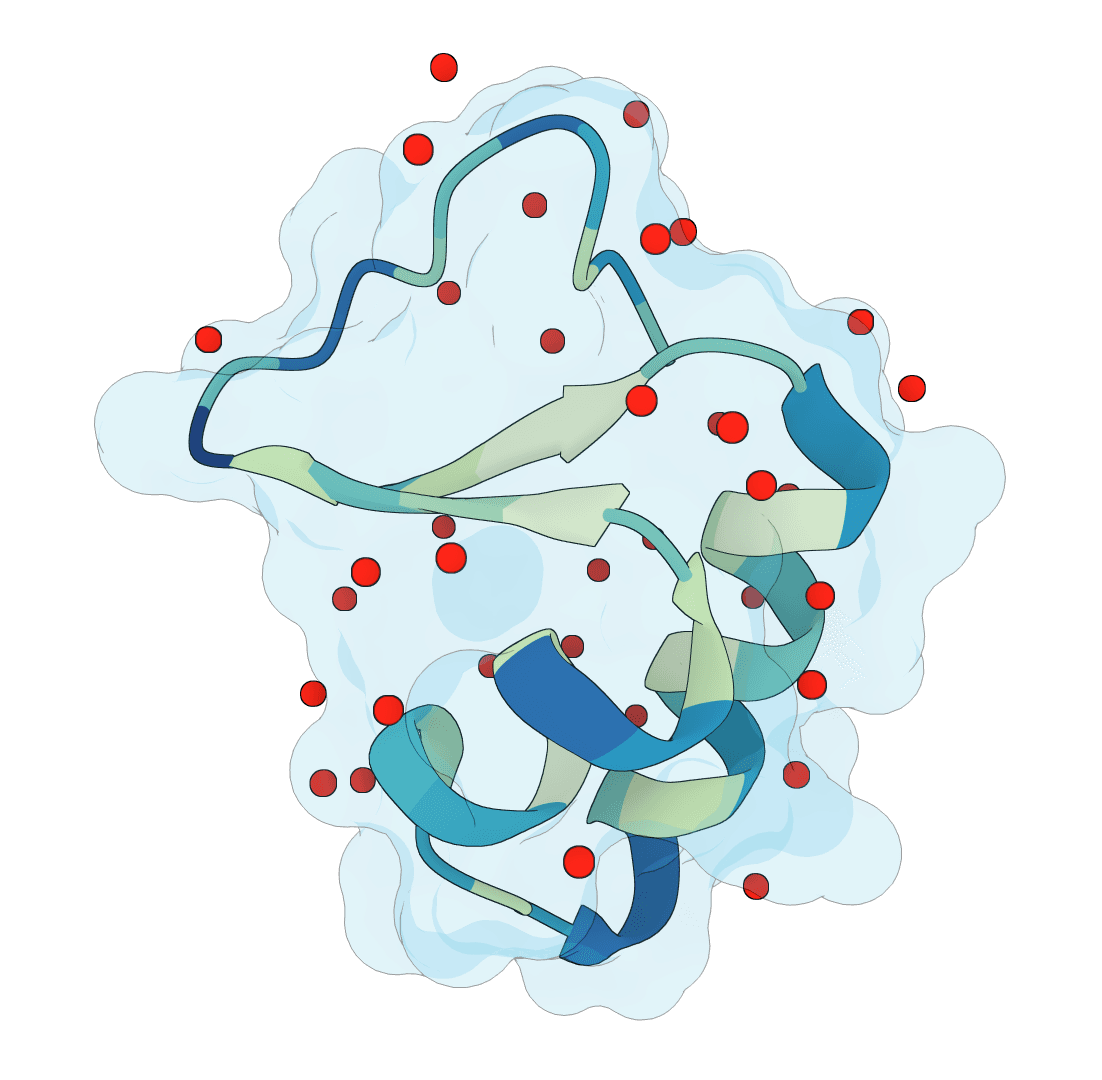
SuperWater
Predict protein hydration sites from a structure using a diffusion model with ESM features and a confidence-filtering head.
CANYA
Predict protein aggregation nucleation propensity from amino acid sequences using the Lehner Lab CANYA neural network.
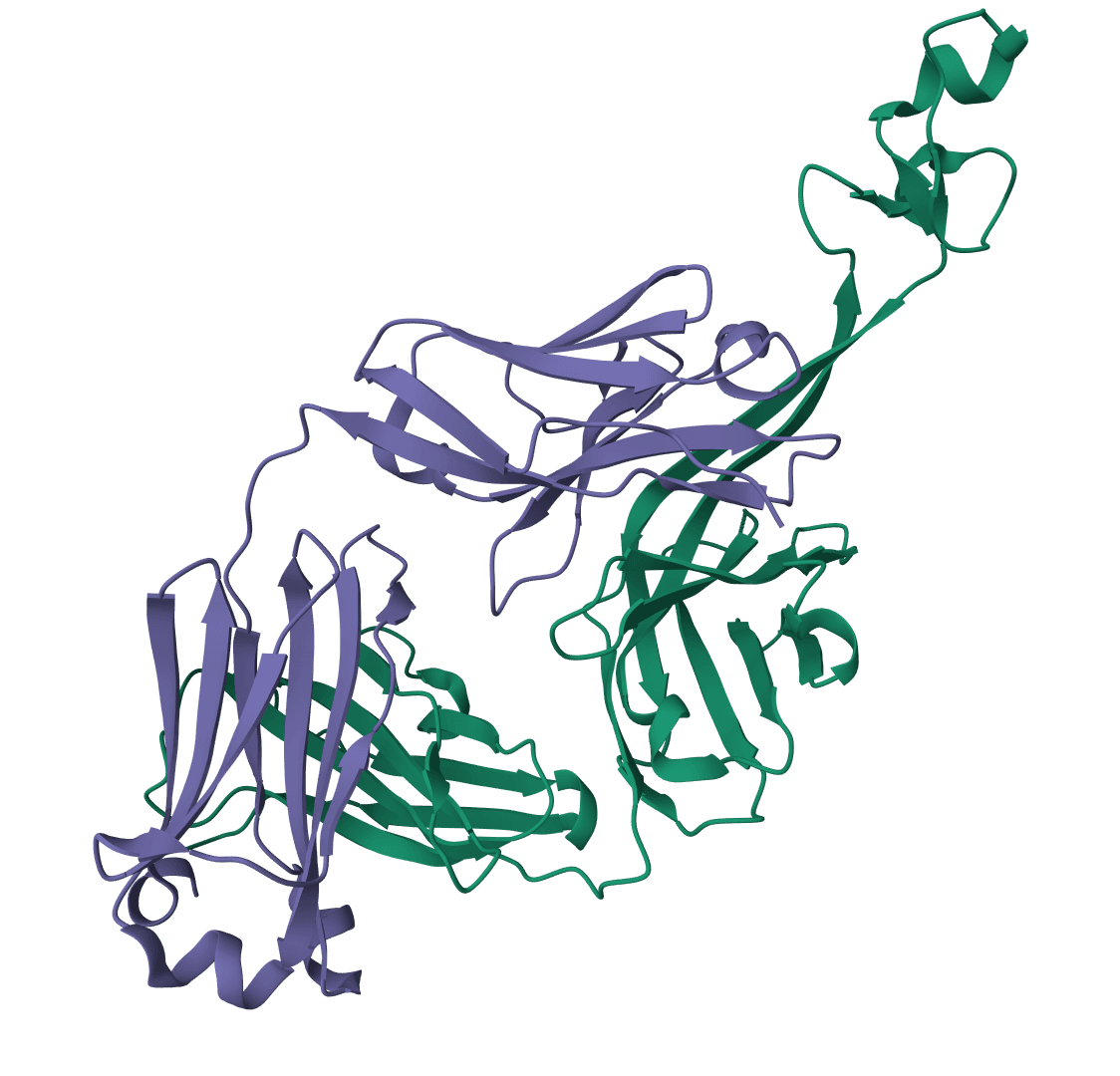
PolyXpert
Predict low or high antibody polyreactivity from paired VH and VL variable-domain sequences with the source PolyXpert ESM-2 classifier.
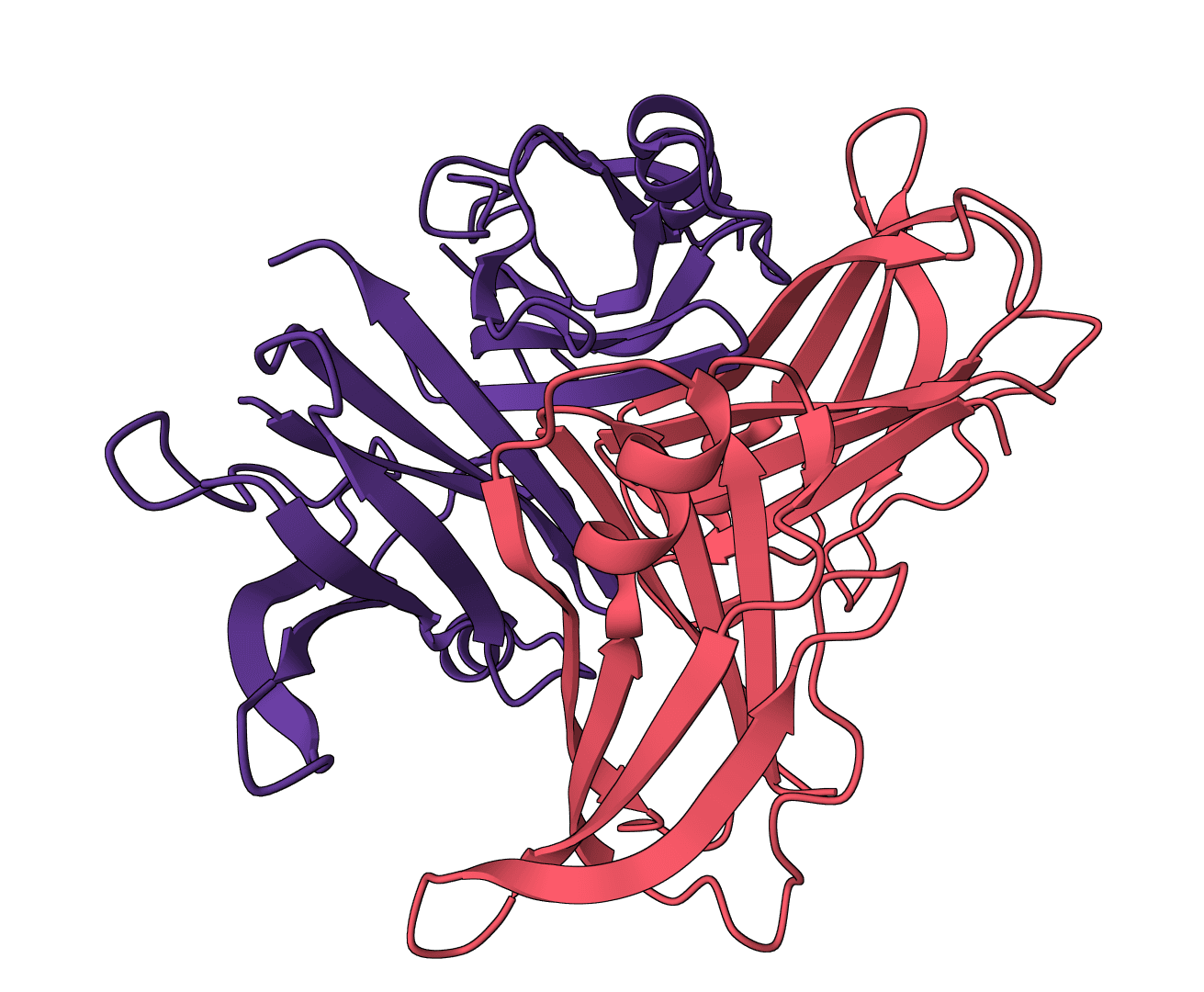
Aggrescan3D
Static-mode Aggrescan3D analysis for per-residue aggregation propensity from a single protein structure.
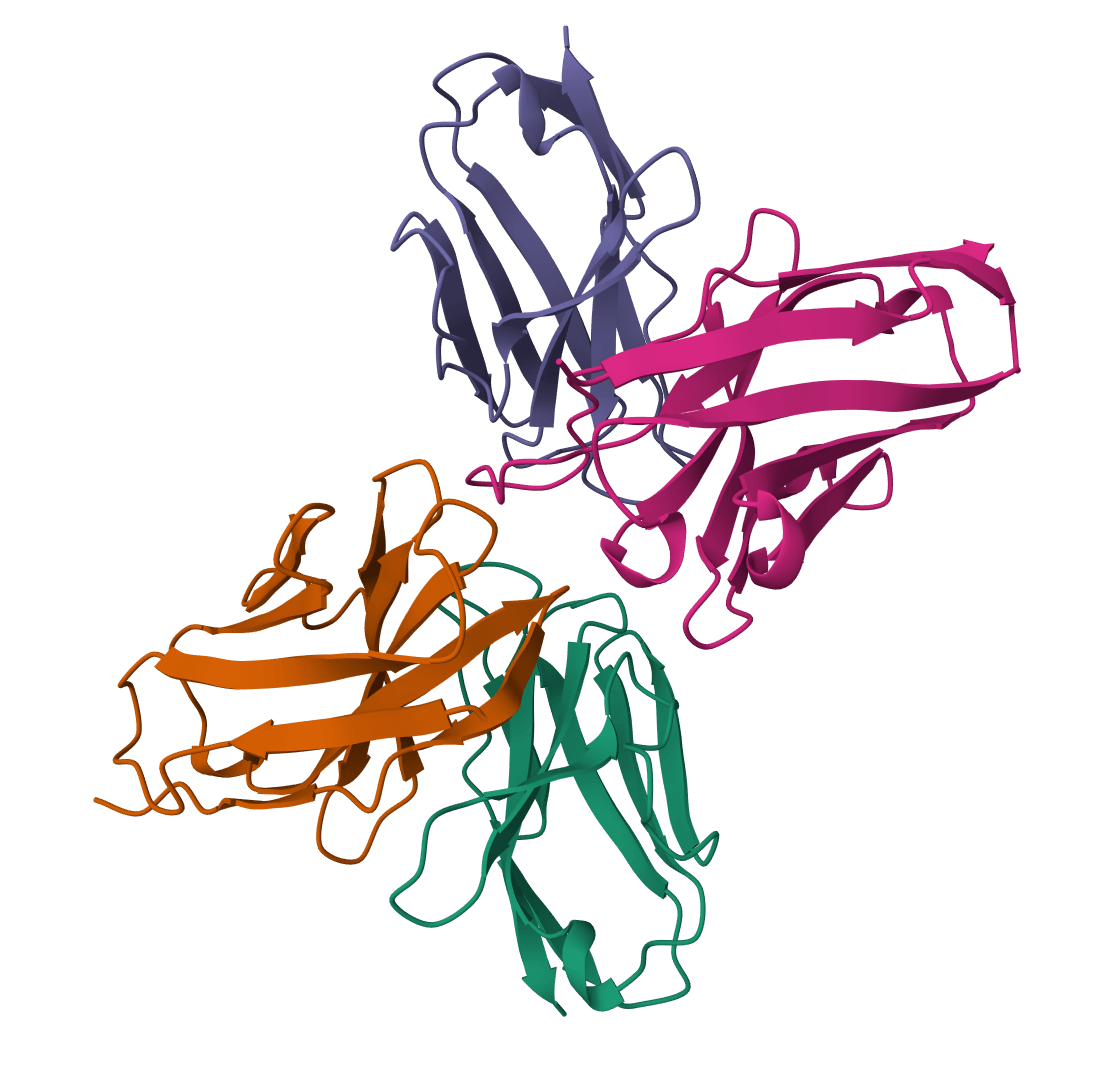
DeepSP
Predict 30 antibody spatial descriptors from paired heavy- and light-chain variable-domain sequences, including SAP-positive and positive/negative SCM values across CDR and variable-domain regions.