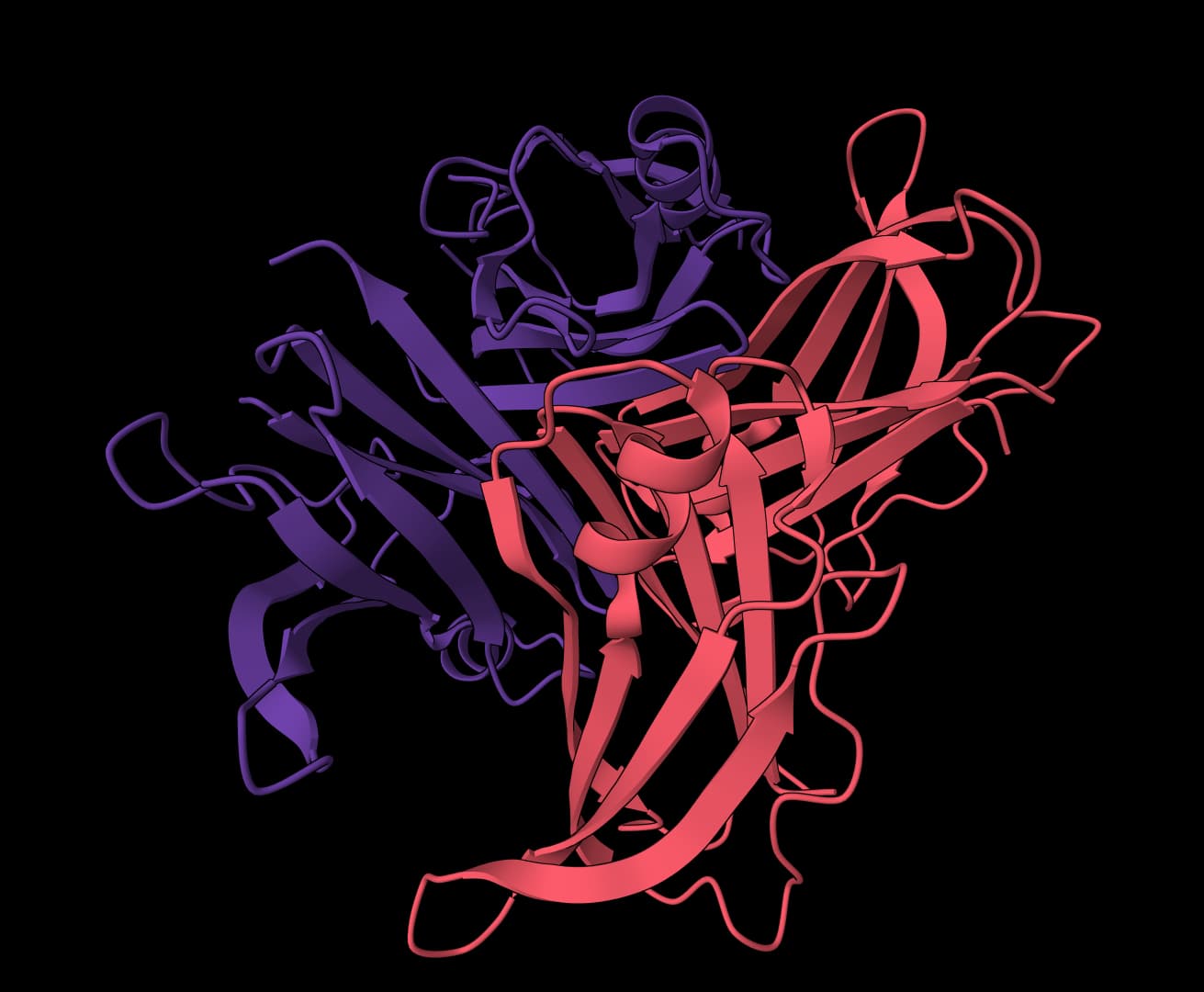
Aggrescan3D
Analyze aggregation-prone regions in a protein structure.
Input
Aggrescan3D webserver overview
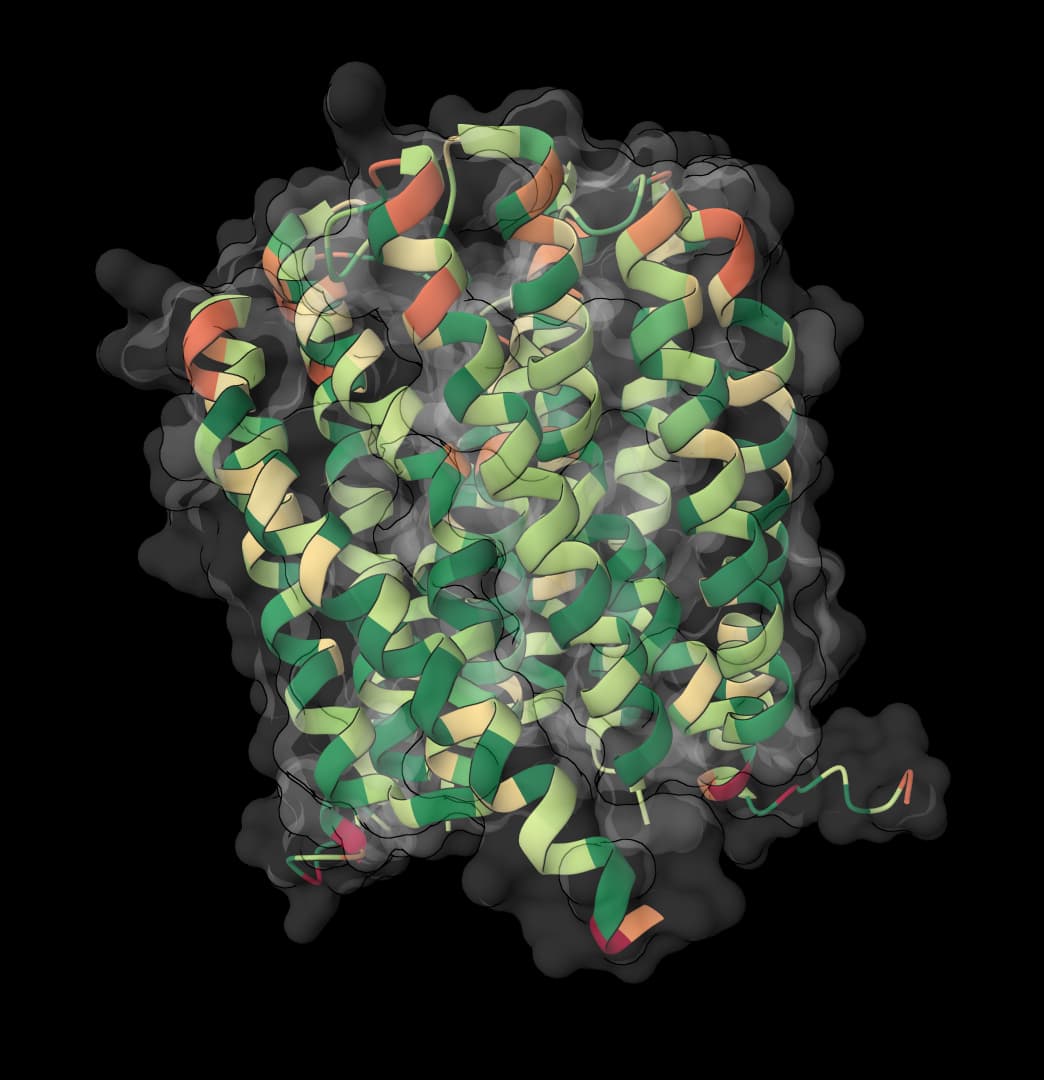
Aggrescan3D (A3D) estimates residue-level aggregation propensity from a protein structure. Unlike sequence-only predictors, it scores each residue in its three-dimensional context by combining the intrinsic AGGRESCAN scale with solvent exposure and neighboring residues in space.
ProteinIQ runs the static Aggrescan3D 1.1.0 workflow on one PDB structure per job. Each run returns a scored structure, a residue score table, per-chain and overall summary statistics, per-chain score plots, and the native run files.
The static pipeline computes solvent accessibility with freeSASA, applies the A3D residue scoring model within the selected distance threshold, and writes the scores into the B-factor column of the output structure.
Pricing
Each Aggrescan3D job costs a flat 5 credits. Structure size, chain selection, distance threshold, and pH do not change the price. The exact quote is shown before submission.
Inputs
| Input | Accepted formats | Limits |
|---|---|---|
Protein Structure | .pdb, .ent, or RCSB PDB ID | One structure per job, up to 50 MB |
The structure must contain protein atoms and at least four residues with standard amino acid names in the analyzed chain or structure. HETATM MSE records also count, because native input preparation rewrites them to MET. ProteinIQ checks these rules before submission.
Settings
| Parameter | Type | Default | Description |
|---|---|---|---|
Distance threshold (Å) | integer | 10 | Spatial radius for neighboring residue contributions. Minimum 1. 5 emphasizes more local contributions. |
Chain ID | string | All chains | One chain letter or number from the uploaded structure. Leave blank to analyze every protein chain. |
pH | number | optional | pH-dependent A3D scale, greater than 0 and at most 14. Leave blank to use the native default scale. |
Outputs
| Tab | Contents |
|---|---|
Structure | Scored output.pdb in the 3D viewer, with A3D scores in the B-factor column |
Residues | One row per analyzed residue from A3D.csv |
Summary | Average, total, minimum, and maximum A3D scores from A3D_summary.json, overall and per chain |
Files | All downloadable native outputs |
| File | Description |
|---|---|
A3D.csv | Residue-level A3D scores |
A3D_summary.json | Summary statistics for the whole run and for each chain |
output.pdb | Input structure with A3D scores written to the B-factor column |
input.pdb | Normalized structure passed to Aggrescan3D |
config.ini | Exact native configuration used for the run |
Plot files (.png, .svg) | Per-chain residue score plots |
Aggrescan.log, aggrescan_stdout.log, aggrescan_stderr.log | Native run diagnostics |
Understanding results
| Field | Description |
|---|---|
Protein | Structure identifier used for the run |
Chain | Chain identifier |
Residue | Residue number |
Residue Name | One-letter residue code |
Score | Native A3D residue score |
Scope | All covers every analyzed residue; other values are chain IDs |
Average A3D score | Mean score across the scope, including residues with a score of zero |
Total A3D score | Sum of residue scores across the scope, so it depends on how many residues were analyzed |
Minimum, Maximum | Lowest and highest residue scores in the scope |
Positive scores mark residues in structural environments that are more aggregation-prone. Negative scores mark residues in environments that favor solubility. Scores are not aggregation percentages or probabilities.
Use the overall average to compare structures, and compare runs only when they share the same pH, distance threshold, and chain scope. When a chain is selected, the All row covers that chain only.
Limitations
- Only the static Aggrescan3D workflow is available.
- Each job accepts one structure.
- Dynamic mode, mutation workflows, FoldX integration, automated mutation, and NACCESS are not included.
Related tools
PROPKA 3
Predict pKa values of ionizable groups in proteins based on 3D structure.
Molecular descriptors
Calculate RDKit physicochemical descriptors, drug-likeness scores, rule violations, and structural fingerprints from SMILES.
AllMetal3D
Predict metal and water binding sites in proteins with 3D CNN models.
Protein charge plot
Plot net charge vs pH to visualize protein charge behavior and identify the isoelectric point.
EvoIF
Score single and multi-site protein mutations with evolutionary and inverse-folding profiles.
FindPept
Match experimental masses to theoretical protein digest fragments for peptide mass fingerprinting.
Hydropathy plot
Generate hydropathy plots to visualize hydrophobic/hydrophilic regions along protein sequences using sliding window analysis.
Hydrophobicity plot
Explore local protein hydrophobicity with 24 amino acid scales, including Eisenberg and Hopp-Woods, and an adjustable sliding window.
Peptide cutter
Map protease and chemical cleavage sites across protein sequences for proteomics experiment planning.
Peptide mass calculator
In-silico proteolytic digestion with peptide mass calculation for mass spectrometry experiment planning.