Build phylogenetic trees from aligned protein or nucleotide sequences using approximate maximum-likelihood methods. Learn more
Input
What is FastTree?
FastTree 2.2 infers approximately maximum-likelihood phylogenetic trees from aligned protein or nucleotide sequences. It is designed for analyses where conventional maximum-likelihood tree searches would be too slow, while still refining the topology and branch lengths with likelihood-based methods.
FastTree requires a multiple sequence alignment. Every sequence must contain the same number of aligned positions. If the sequences are not aligned yet, first run Clustal Omega or MUSCLE5.
How FastTree works
FastTree builds and refines a tree in three stages:
- It constructs an initial topology with a profile-based, heuristic form of neighbor joining.
- It improves that topology with minimum-evolution nearest-neighbor interchange (NNI) and subtree-pruning-regrafting (SPR) moves.
- It performs maximum-likelihood NNI refinement and optimizes branch lengths under the selected substitution model.
The default CAT approximation assigns sites to rate categories during tree inference. Enabling Gamma optimization recalculates the final likelihood and branch lengths with a Gamma20 model, but does not redo the topology search under gamma rates.
Input requirements
Submit one aligned FASTA or PHYLIP file, up to 20 MB. FASTA inputs may use - or . for gaps. Alignments with one or two sequences are accepted because FastTree itself supports them, although meaningful phylogenetic inference usually requires more sequences.
FastTree treats the input as protein by default. Select Nucleotide explicitly for DNA or RNA alignments; sequence type is not inferred automatically.
Sequence names
Without Preserve full sequence names, FastTree ends a sequence name at whitespace or at (, ), ,, or :. Names that become identical after that truncation are rejected before the job starts.
Enable Preserve full sequence names to retain those characters and quote names in the Newick tree. Apostrophes are not supported in quoted names.
Evolutionary models
Protein models
- JTT is the native default.
- WAG and LG provide alternative empirical amino-acid models.
Nucleotide models
- Jukes-Cantor (JC) is the native nucleotide default.
- GTR estimates distinct substitution rates and base frequencies. Enable it when that added model complexity is appropriate for the alignment.
Settings
Gamma optimization
Uses Gamma20 likelihoods to optimize final branch lengths and report a gamma-corrected likelihood. This is slower than the default CAT-only result.
Fast mode
Disables local hill climbing during the initial join search. It can substantially reduce runtime for very large alignments, with a possible loss of tree-search accuracy.
Exhaustive join search
Compares every candidate join during initial tree construction. It is more thorough and substantially slower. Fast mode and exhaustive join search cannot be enabled together.
Distance pseudocounts
Pseudocounts stabilize distance estimates for sequences with little or no overlapping, non-gap data. The default native weight is 1; higher values increase the contribution of the prior distance estimate.
Local support values
FastTree reports SH-like local support values by default. Support resamples controls the number of site-likelihood resamples used to calculate those values; the native default is 1,000. This is not traditional bootstrap analysis because FastTree does not rebuild a complete tree for every resample.
Disable Compute local support values to omit internal-node support calculations. The support seed makes repeated analyses with the same inputs and settings reproducible.
Results
The primary result is a downloadable Newick tree rendered in the interactive tree viewer. Branch lengths represent expected substitutions per site, and internal-node labels contain SH-like support values when support calculation is enabled.
The result also includes:
- sequence, unique-sequence, and alignment-position counts;
- the effective model and sequence type;
- final log-likelihood and total branch length when reported by FastTree;
- the native optimization log with intermediate trees and model details;
- the complete native progress and warning report.
Runtime and limitations
Hosted jobs use an 8 GB compute environment and may run for up to about 58 minutes. Large or diverse alignments can still exceed that envelope; reduce the alignment or enable Fast mode if a job times out. The 20 MB input limit is a service limit, not a limit of the FastTree source program.
FastTree prioritizes speed over an exhaustive maximum-likelihood search. For final analyses where small topology differences are critical, compare the result with a more thorough method such as IQ-TREE or RAxML-NG.
Related tools
Clustal Omega
Perform multiple sequence alignment on protein or nucleotide sequences using the Clustal Omega algorithm.
IQ-TREE
Build phylogenetic trees using maximum likelihood with automatic model selection (ModelFinder) and ultrafast bootstrap support.
MAFFT
Perform multiple sequence alignment using MAFFT (Multiple Alignment using Fast Fourier Transform). Supports multiple algorithms from fast progressive to highly accurate iterative methods.
MUSCLE5
Align protein, DNA, or RNA sequences with MUSCLE v5.3 using the native PPP or Super5 algorithm, with optional stratified and diversified ensembles.
StringZilla v5
Calculate batched Levenshtein distances and Needleman–Wunsch or Smith–Waterman sequence scores with StringZilla v5 CPU acceleration.
USAlign
USAlign (Universal Structure Alignment) aligns protein, RNA, and DNA structures to compute TM-scores and generate superposed structures. Compare 3D structures to assess structural similarity.
MMseqs2
Ultra-fast sequence search and clustering. 10,000x faster than BLAST for database searches, with powerful sequence clustering capabilities for proteins and nucleotides.
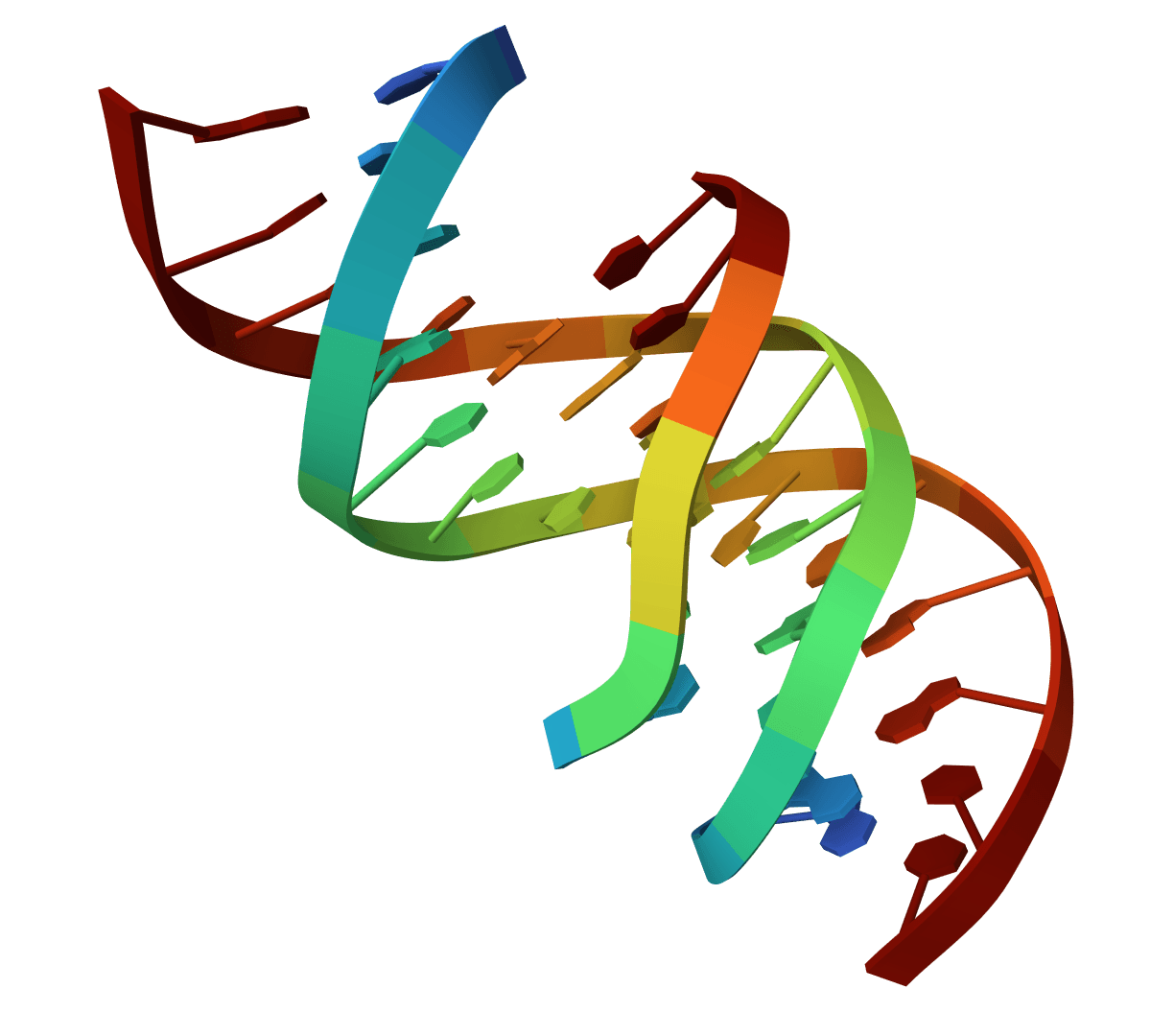
MUMmer4
Rapidly align and compare DNA sequences using MUMmer4 nucmer. Perform pairwise genome comparisons to identify SNPs, indels, and structural variants between reference and query genomes.
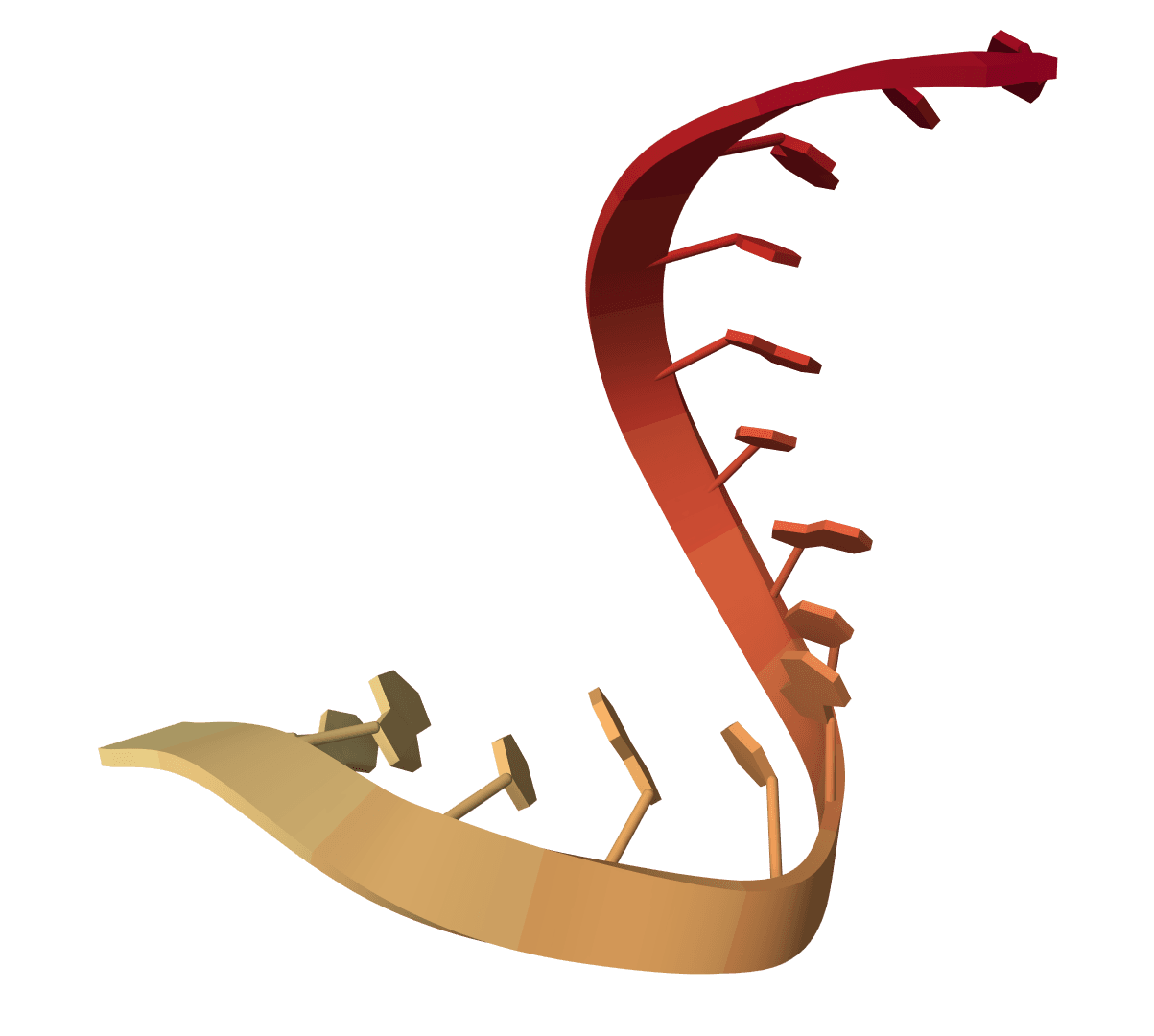
RNAalifold
RNAalifold computes consensus RNA secondary structure from a multiple sequence alignment. Uses covariation information to improve prediction accuracy for evolutionarily conserved structures.
Salmon
Quantify transcript abundance from RNA-seq reads with Salmon selective alignment. Upload a transcript FASTA reference plus single-end or paired-end FASTA/FASTQ reads to produce TPM and estimated read-count tables.