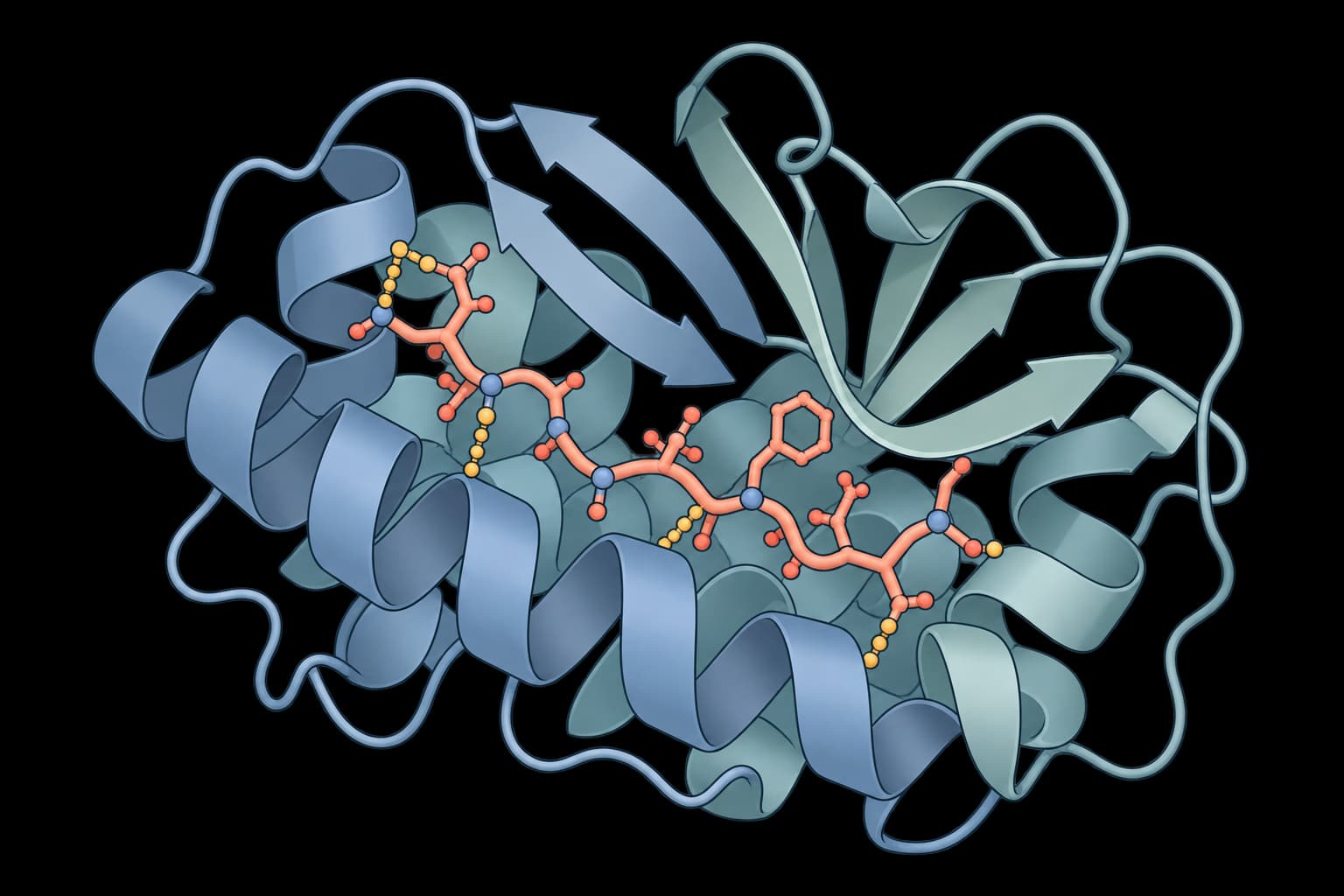
RAPiDock
All-atom protein-peptide docking with unranked samples.
Input
RAPiDock webserver overview
RAPiDock generates all-atom protein-peptide docking poses using local or global docking models. ProteinIQ uses revision 36b2f78 and returns unranked samples without Rosetta scoring or relaxation. A receptor can be supplied as a structure or folded from a sequence with ESMFold before docking.
For the method and its evaluation, see the RAPiDock paper and source repository.
Pricing
Runs cost 23 credits per minute of measured runtime. The minimum reservation is 23 credits, not a minimum final charge. Completed runs are charged in proportion to elapsed time, rounded up to a whole credit; unused reserved credits are returned. Set a spending limit before submission. Each batch job is metered separately.
Inputs
Each job requires one receptor and one peptide. Each sequence input accepts one nonempty sequence or one FASTA record; multiple records require Batch mode.
| Input | Accepted formats | Requirements and limits |
|---|---|---|
| Receptor protein | Plain sequence text, .pdb, .ent, .cif, .mmcif, .txt, .fasta, .fa, or an RCSB PDB ID | Supply a receptor or binding-pocket structure, or one nonempty sequence. Uploaded files have a 50 MiB limit. |
| Peptide | Plain sequence text, .txt, .fasta, .fa, .pdb, or .ent | Supply one peptide sequence or structure. Uploaded files have a 50 MiB limit. Supported noncanonical residues use bracketed names, for example HK[HYP]RL[PTR]QDS. |
CIF/mmCIF receptors are accepted only when conversion to PDB preserves atom identifiers and values, including coordinates. Files that cannot be converted without loss require a suitable PDB input. PDB inputs must contain atom records. Peptide PDBs supply residue and terminal information; their coordinates do not initialize the docked pose.
For multiple peptides, Batch mode supports multiple FASTA records and CSV, TSV or Excel .xlsx imports. Spreadsheet imports have a 5 MiB limit; an Excel worksheet's converted cell data must also fit this limit. Excel date cells are rejected; sequence and identifier cells should use text. The selected worksheet's prepared jobs appear in Preview before submission.
Settings
Job name is an optional label for the saved job and does not change docking settings.
Docking
| Parameter | Type | Default | Description |
|---|---|---|---|
Number of samples (N) | integer | 10 | Number of peptide poses to generate; at least 1. |
Docking model (model) | enum | Local docking (local) | local uses the local model for a known binding pocket; global uses the global model to search a whole receptor. |
Starting conformation mix (conformation_partial) | string | 1:1:1 | Relative proportions of helical, extended and polyproline-II starting conformations, in that order. Use three nonnegative integers with at least one nonzero value, or clear the field to use a single conformation. |
Denoising steps (inference_steps) | integer | 16 | Total steps defining the denoising schedule; at least 1. |
Advanced settings
| Parameter | Type | Default | Description |
|---|---|---|---|
Steps to run (actual_steps) | integer | 16 | Steps actually performed; at least 1 and no greater than Denoising steps. Lower values stop before the full schedule finishes. |
Single starting conformation (conformation_type) | enum | Helical (H) | Used only when Starting conformation mix is empty. Choose Helical (H), Extended (E) or Polyproline II (P). |
Inference batch size (batch_size) | integer | 4 | Samples processed together; at least 1. Lower values reduce GPU memory use. This does not change the requested sample count. |
Skip noise in the final step (no_final_step_noise) | boolean | true | Omit the final step's random noise. Turning this off enables it. |
Save diffusion trajectories (save_visualisation) | boolean | false | Save a multiframe PDB for each sample, including its initialization and each executed denoising step. |
To shorten the full denoising schedule, change both Denoising steps and Steps to run. For example, setting only Denoising steps to 4 while leaving Steps to run at 16 is invalid.
Outputs
Unranked samples lists every sampled peptide. The structure viewer displays peptide poses with the receptor, and Files provides the original structures, inputs and run records.
| Download | Contents |
|---|---|
rank1.pdb, rank2.pdb, and subsequent sample files | Unrelaxed peptide-only poses, in sampling order. The receptor is supplied separately. |
rankN_reverseprocess.pdb | Optional multiframe trajectory for sample N, containing the initialization plus each executed denoising step. |
complex_protein_raw.pdb | Receptor structure used for docking. |
complex_esmfold.pdb | Folded receptor, returned when a receptor sequence is supplied. |
complex_peptide_raw.pdb | Peptide input retained by RAPiDock when a peptide PDB is supplied. |
complex_peptide_Helical.pdb, complex_peptide_Extended.pdb, complex_peptide_Polyproline.pdb | Starting conformations produced for the selected configuration. |
receptor_input.*, peptide_input.* | Original submitted inputs in their submitted formats. |
provenance.json | Software and model identities, settings, command and file hashes for the run. |
run.log | Execution progress and diagnostic messages. |
Workflow outputs are Unranked peptide sample, Receptor and, when enabled, Diffusion trajectory. Files retained after a failed or spending-limited run are marked incomplete and may contain only partial output.
Understanding results
Sample is the position in the sampling order. Ranking reads Unranked; sampling order only. Despite the retained filename, rank1.pdb is not a prediction of the best pose. No Rosetta energy, docking confidence score or quality ranking is returned.
Samples are candidate poses for further assessment. Generating more samples does not select a best pose, and repeated runs can produce different coordinates. A diffusion trajectory records the model's denoising process, not a molecular dynamics simulation.
Related tools
AF2Dock
Structure-based protein-protein docking with AF2Dock flow-matching refinement
ColabDock
Protein-protein docking guided by experimental restraints using AlphaFold2
DFMDock
Dock protein-protein complexes with diffusion-based sampling and confidence ranking.
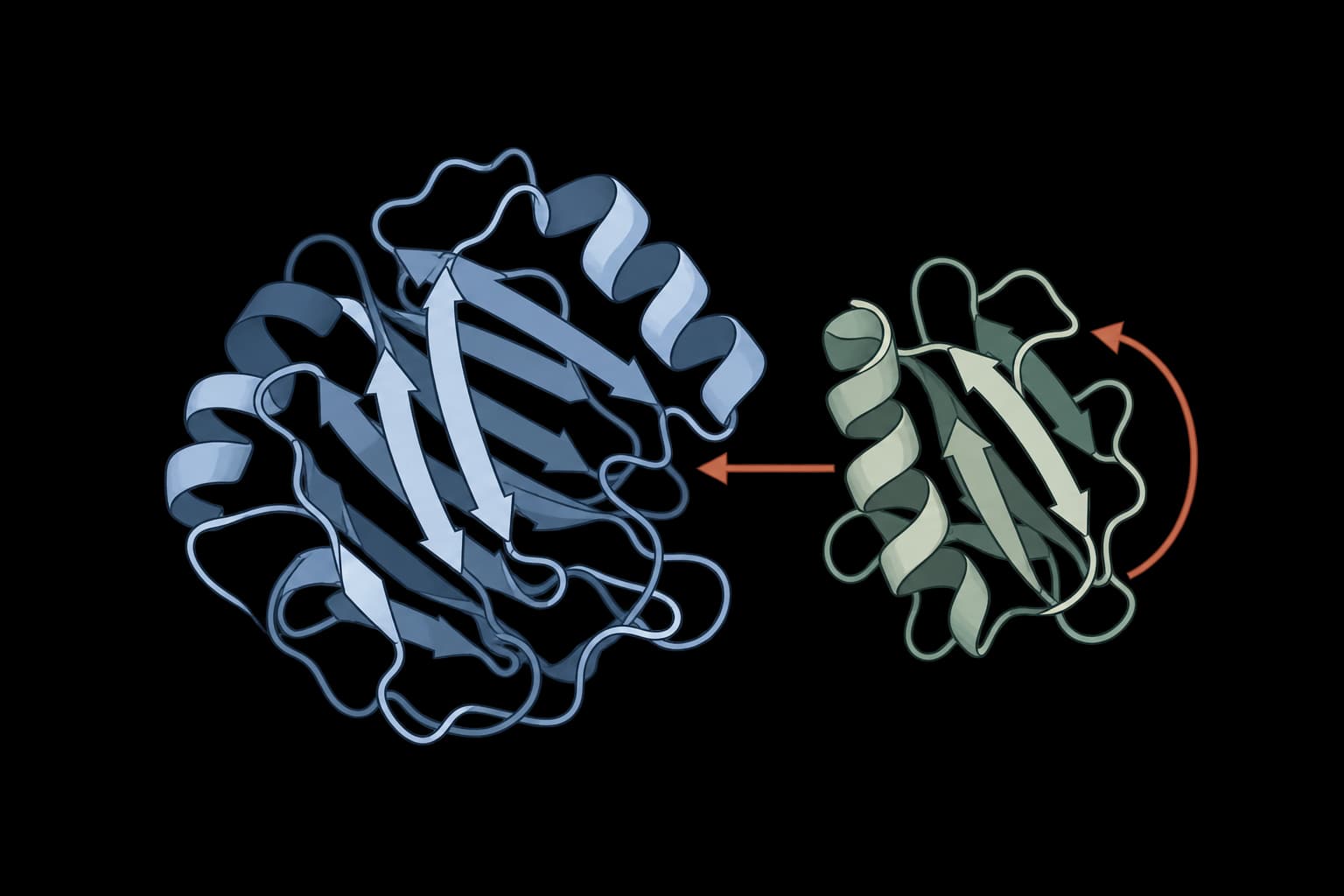
DiffDock-PP
Rigid protein-protein docking with a diffusion model and confidence ranking.
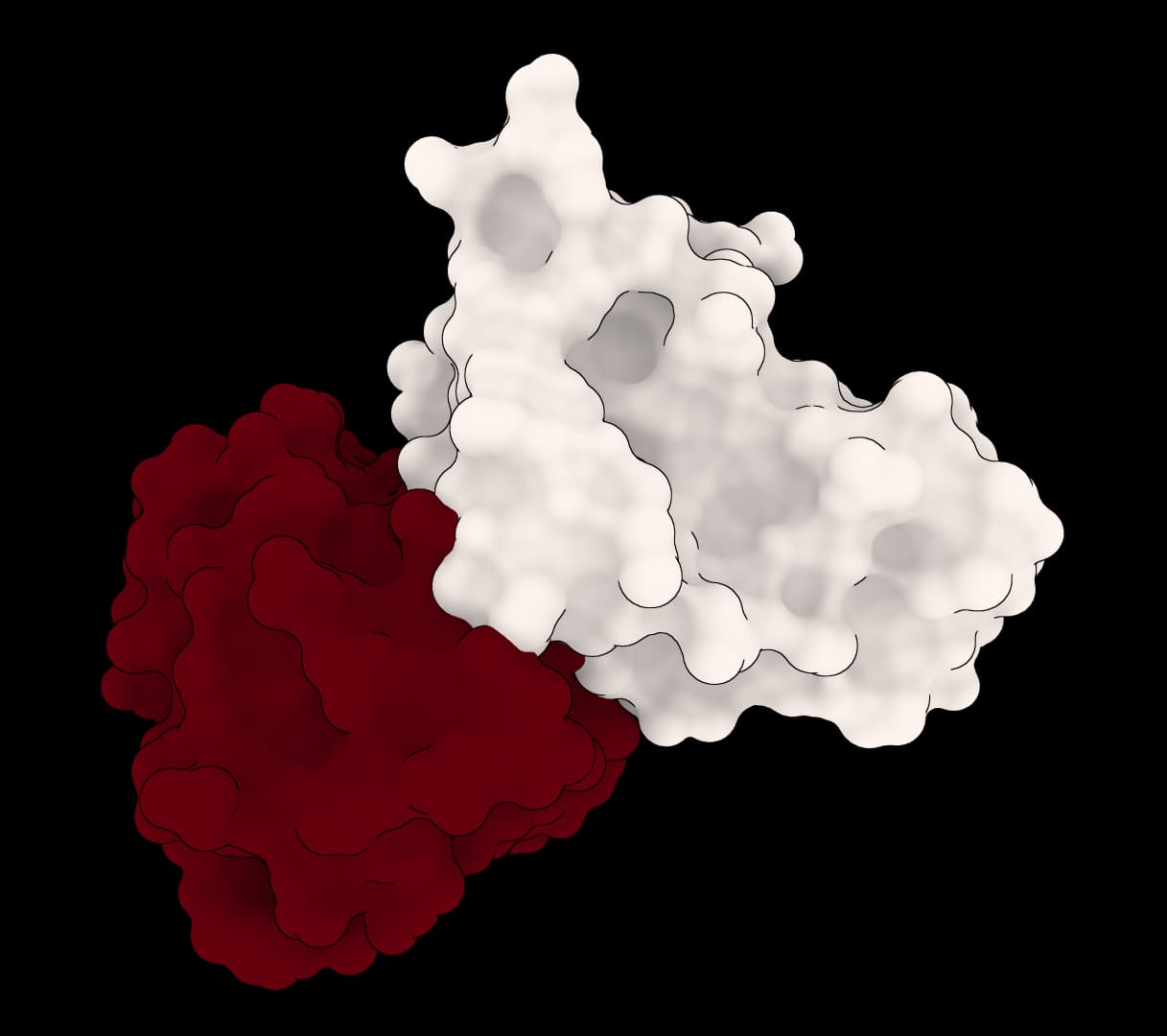
EquiDock
Dock rigid protein-protein complexes using SE(3)-equivariant geometric modeling.
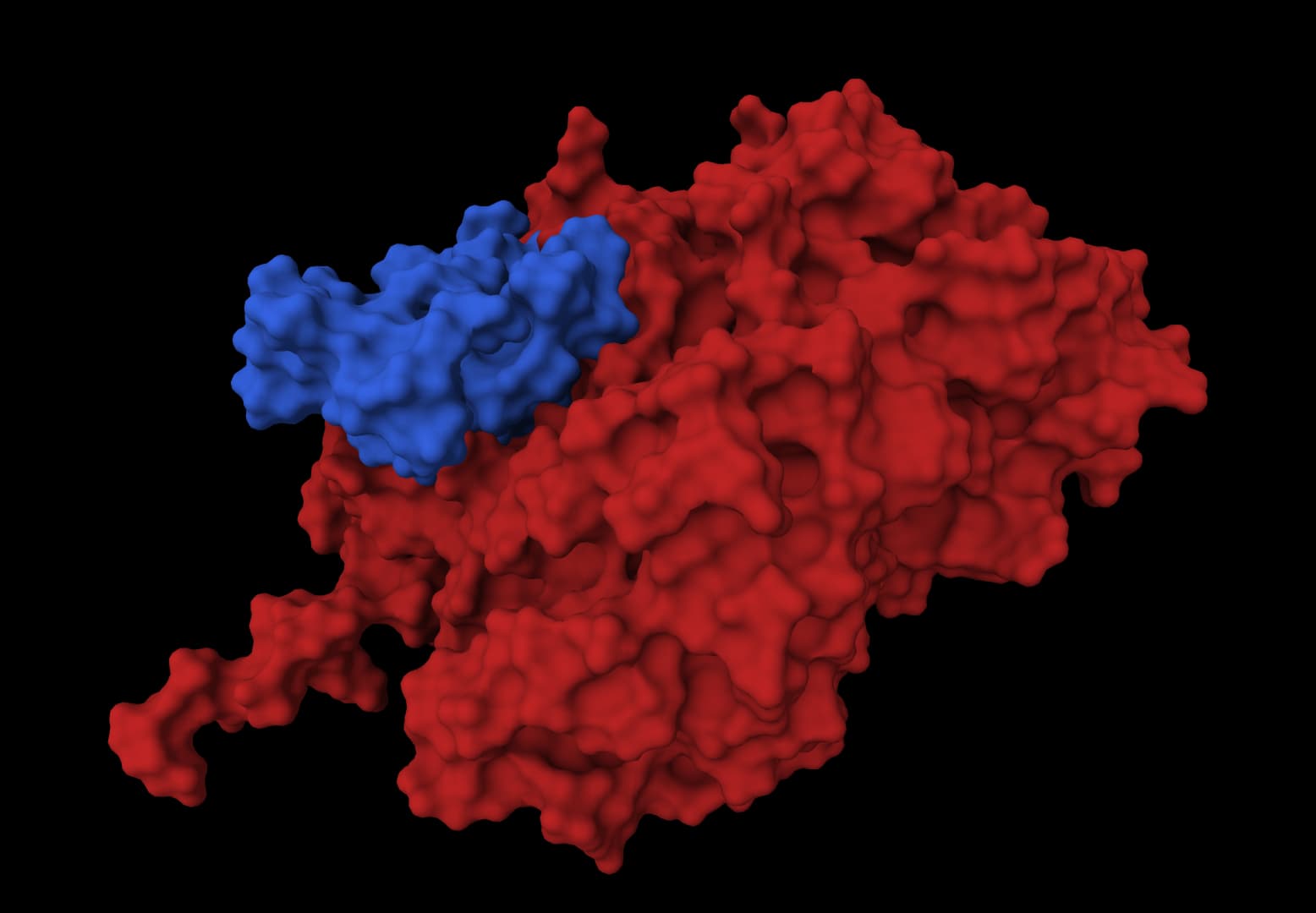
GeoDock
Flexible protein-protein docking with a multi-track iterative transformer.
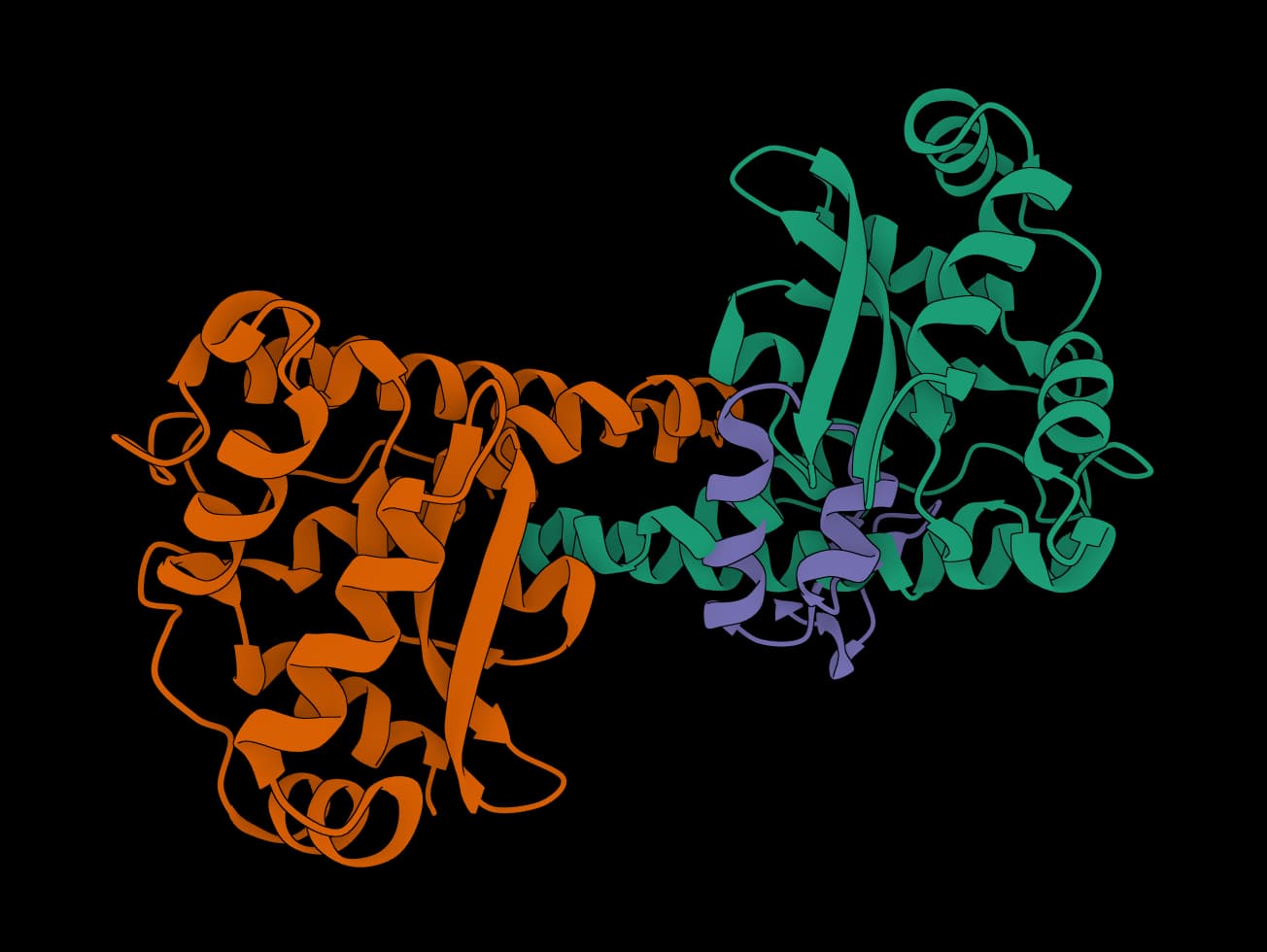
LightDock
Protein-protein, protein-peptide, and protein-DNA docking using Glowworm Swarm Optimization
DiffDock-L
Predict protein-ligand binding poses and confidence scores without a predefined binding site.
DynamicBind
Predict protein-ligand binding poses while modeling ligand-induced conformational changes.
FlowDock
Geometric flow matching for generative protein-ligand docking and affinity prediction.