Protein scale profiler
Plot amino acid property profiles using 42 scales for hydrophobicity, flexibility, secondary structure propensity, antigenicity, and more.
Input
What is protein scale profiler?
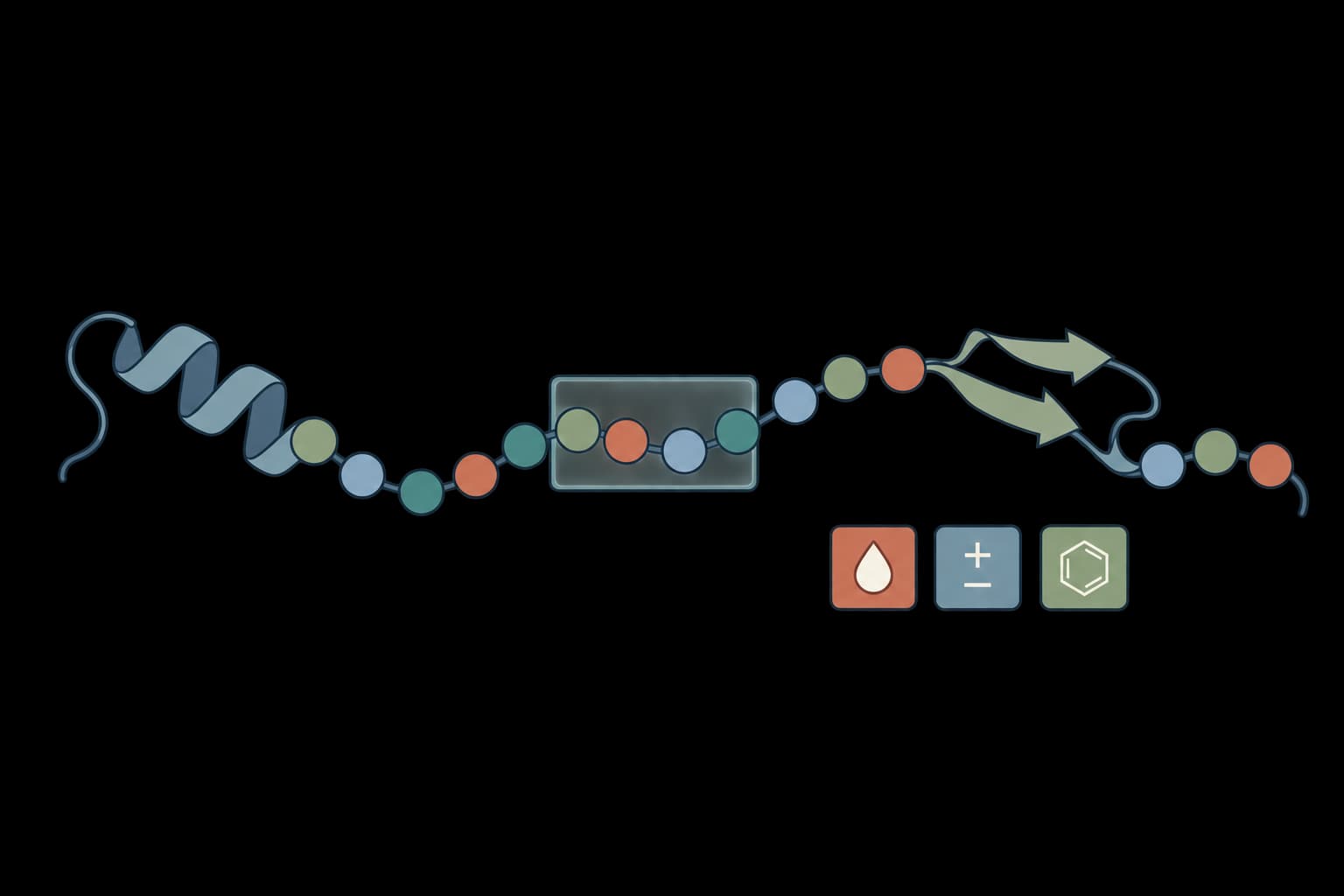
Protein Scale Profiler generates amino acid property profiles along a protein sequence using a sliding window average. It provides 42 different physicochemical scales spanning hydrophobicity, secondary structure propensity, flexibility, polarity, surface accessibility, antigenicity, charge, bulkiness, mutability, and residue composition — making it one of the most comprehensive amino acid scale tools available for sequence analysis.
Unlike single-purpose tools, Protein Scale Profiler unifies all major amino acid property scales in one interface. Scales can be switched instantly to compare different properties for the same sequence without re-entering data.
How does protein scale profiler work?
Each scale assigns a numeric value to every amino acid based on experimentally measured or statistically derived properties. A sliding window moves along the sequence, averaging the values at each position to reveal regional trends.
Sliding window calculation
For a window of size centered at position , the smoothed value is:
where is the scale value for the amino acid at position . Only full windows are plotted, as in ExPASy ProtScale, so the first and last residues have no value. Rare codes follow ProtScale: B is the mean of D and N, Z the mean of E and Q, and X the mean of all 20 values, while U, O, and J are left out of the window average.
Smaller windows (5-7) retain local fluctuations useful for identifying individual residue effects. Larger windows (15-21) emphasize extended domains such as transmembrane helices or disordered regions.
Available scales
Hydrophobicity (24 scales)
The largest category, covering a range of experimental approaches:
- Eisenberg Consensus (1984) — Normalized consensus from five independent measurements. Recommended as a general-purpose default.
- Hopp-Woods (1981) — Inverted convention (positive = hydrophilic) designed for epitope prediction.
- Fauchere-Pliska (1983) — Octanol-water partition coefficients.
- Janin (1979) — Burial frequencies in protein crystal structures.
- Rose (1985) — Based on accessible surface areas.
- Wolfenden (1981) — Water-to-vapor transfer free energies.
- Tanford (1962) — One of the earliest hydrophobicity scales from solubility data.
- Chothia (1976) — Accessible surface area in globular proteins.
- Guy (1985) — Optimized for membrane protein analysis.
- Miyazawa-Jernigan (1985) — Inter-residue contact energies.
- Rao-Argos (1986) — Optimized for transmembrane helix detection.
- Welling Antigenicity (1985) — Amino acid frequencies in antigenic regions.
Additional HPLC and partition-based scales include Wilson, Meek, Parker, Cowan-Whittaker (pH 3.4 and 7.5), Abraham-Leo, Roseman, Bull-Breese, Black-Mould, OMH Sweet-Eisenberg, Aboderin, and Manavalan-Ponnuswamy.
Secondary structure propensity (4 scales)
- Chou-Fasman Helix (1978) — Alpha-helix conformational parameter P(a). Values above 1.0 indicate helix-favoring residues.
- Chou-Fasman Sheet (1978) — Beta-sheet parameter P(b). Branched aliphatic residues (Val, Ile) and aromatic residues score highest.
- Chou-Fasman Turn (1978) — Beta-turn parameter P(t). Pro, Asn, Gly, and Ser are the strongest turn formers.
- Deleage-Roux Coil (1987) — Random coil propensity. Useful for identifying intrinsically disordered segments.
Flexibility (1 scale)
- Karplus-Schulz (1985) — Backbone flexibility derived from crystallographic B-factor analysis. Higher values indicate more flexible backbone segments.
Polarity (2 scales)
- Zimmerman Polarity (1968) — Absolute polarity values with charged residues (Arg, Asp, Glu, His, Lys) scoring highest.
- Grantham Polarity (1974) — Polarity component from the Grantham amino acid distance matrix, commonly used in evolutionary studies.
Surface accessibility (2 scales)
- Janin Surface Accessibility (1979) — Buried residue fraction. Positive values indicate buried residues; negative values indicate surface-exposed residues.
- Emini Surface Accessibility (1985) — Surface probability scale. Values above 1.0 predict surface-exposed positions. Widely used for epitope mapping.
Antigenicity (1 scale)
- Kolaskar-Tongaonkar (1990) — Semi-empirical antigenicity scale. Values above 1.0 indicate potentially antigenic residues. Particularly effective when combined with Emini surface accessibility and Chou-Fasman turn propensity.
Charge and size (3 scales)
- Net Charge at pH 7.0 — Standard amino acid charges at physiological pH. Useful for visualizing charge distribution and identifying charged clusters.
- Molecular Weight per Residue — Residue mass in Daltons (minus water). Highlights regions rich in large or small amino acids.
- Zimmerman Bulkiness (1968) — Side chain volume. Useful for steric analysis and identifying bulky hydrophobic cores.
Mutability and evolution (3 scales)
- Dayhoff Relative Mutability (1978) — Evolutionary substitution rates. Higher values (e.g., Asn, Ser) indicate rapidly mutating positions; lower values (Trp, Cys) indicate conserved positions.
- Average Buried Area (Rose 1985) — Surface area buried upon folding, in square angstroms.
- Fraga Recognition Factors (1982) — Molecular recognition properties of amino acid side chains.
Composition (2 scales)
- Percent Buried (Janin 1979) — Statistical frequency of each residue in buried positions across known structures.
- Percent Accessible (Janin 1979) — Complementary to Percent Buried. Highlights residues commonly found on protein surfaces.
Settings
Sliding window: Controls the number of residues averaged at each position. The default value of 9 works well for most analyses. Use 5-7 for fine-grained local properties. Use 15-21 for detecting extended domains like transmembrane helices. Only odd numbers are accepted.
Property scale: Select the scale that matches your analysis objective. Refer to the scale selection guide below for recommendations.
Understanding the results
The interactive chart plots the smoothed property values against sequence position. Hover over any point to see the exact position, residue identity (three-letter code), and calculated value.
A reference line at zero helps distinguish positive and negative regions. For most hydrophobicity scales, positive peaks indicate hydrophobic segments and negative valleys indicate hydrophilic segments. For inverted scales like Hopp-Woods, the convention is reversed.
The sidebar displays the selected scale name, category, a brief description, the per-amino-acid values sorted from highest to lowest, and the original literature reference.
Exporting data
Download results as CSV for further analysis in spreadsheet software or statistical packages. Export the chart as PNG or SVG for publication-quality figures.
Scale selection guide
| Analysis goal | Recommended scales | Window size |
|---|---|---|
| Transmembrane helix prediction | Eisenberg, Janin, Rao-Argos | 19 |
| Epitope prediction | Hopp-Woods, Kolaskar-Tongaonkar, Emini Surface | 7-9 |
| Surface accessibility | Emini Surface, Janin Surface | 9 |
| Secondary structure tendency | Chou-Fasman Helix/Sheet/Turn, Deleage-Roux Coil | 7-9 |
| Flexible/disordered regions | Karplus-Schulz | 7-9 |
| Charge distribution | Net Charge at pH 7.0 | 5-9 |
| General hydrophobicity | Eisenberg, Fauchere-Pliska | 9 |
| Evolutionary conservation | Dayhoff Relative Mutability | 9-11 |
Limitations
Sliding window profiles assume that local sequence composition determines local properties. They do not account for three-dimensional structure, long-range interactions, post-translational modifications, or the influence of neighboring chains.
For dedicated transmembrane topology prediction, consider specialized tools that incorporate evolutionary profiles and hidden Markov models. For secondary structure prediction beyond Chou-Fasman propensities, tools like DSSP use actual 3D structure assignments.
Related tools
Protein charge plot
Plot net charge vs pH to visualize protein charge behavior and identify the isoelectric point.
Hydropathy plot
Generate hydropathy plots to visualize hydrophobic/hydrophilic regions along protein sequences using sliding window analysis.
Hydrophobicity plot
Explore local protein hydrophobicity with 24 amino acid scales, including Eisenberg and Hopp-Woods, and an adjustable sliding window.
Aggrescan3D
Analyze aggregation-prone regions in a protein structure.
FindPept
Match experimental masses to theoretical protein digest fragments for peptide mass fingerprinting.
Peptide cutter
Map protease and chemical cleavage sites across protein sequences for proteomics experiment planning.
Peptide mass calculator
In-silico proteolytic digestion with peptide mass calculation for mass spectrometry experiment planning.
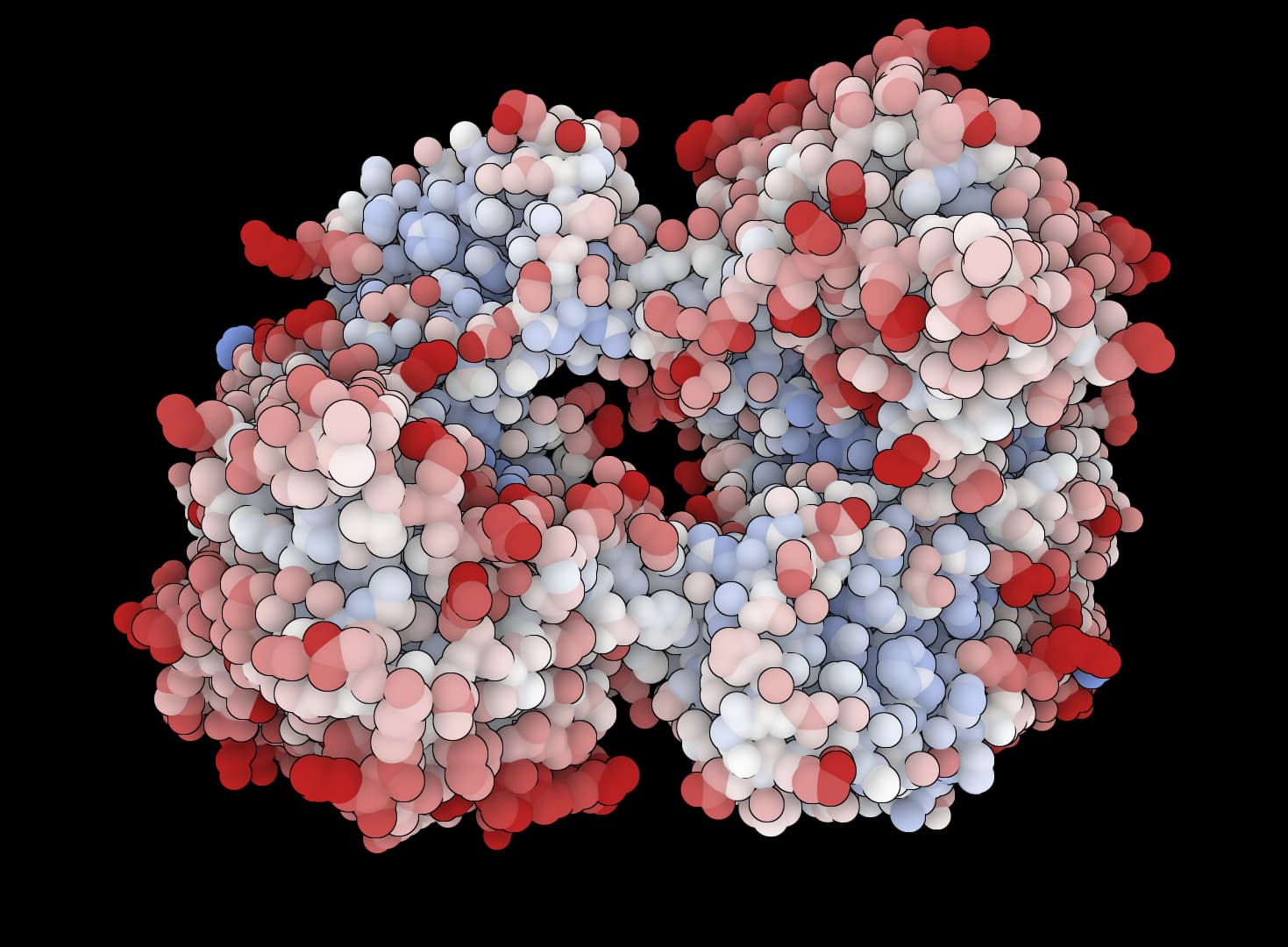
PROPKA 3
Predict pKa values of ionizable groups in proteins based on 3D structure.
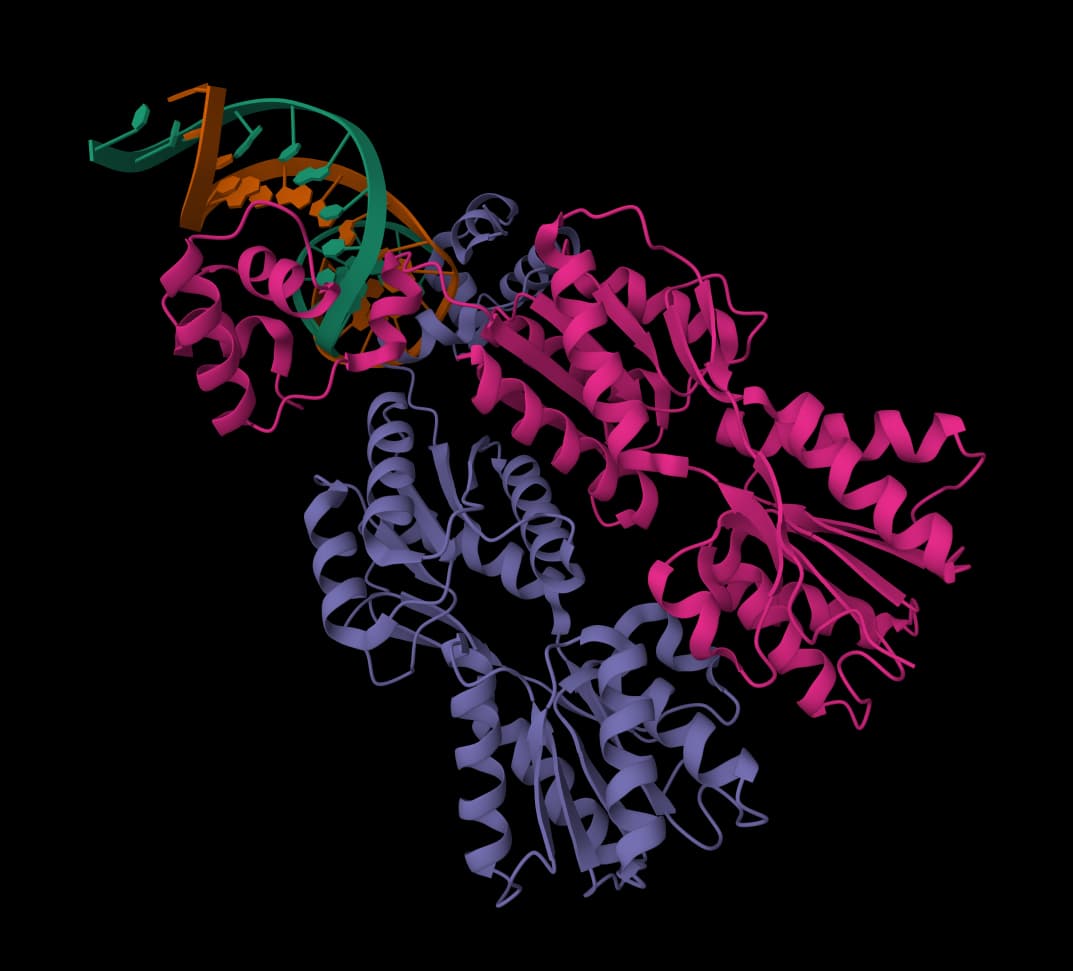
Protein parameters
Calculate molecular weight, pI, extinction coefficients, composition, and sequence indices.
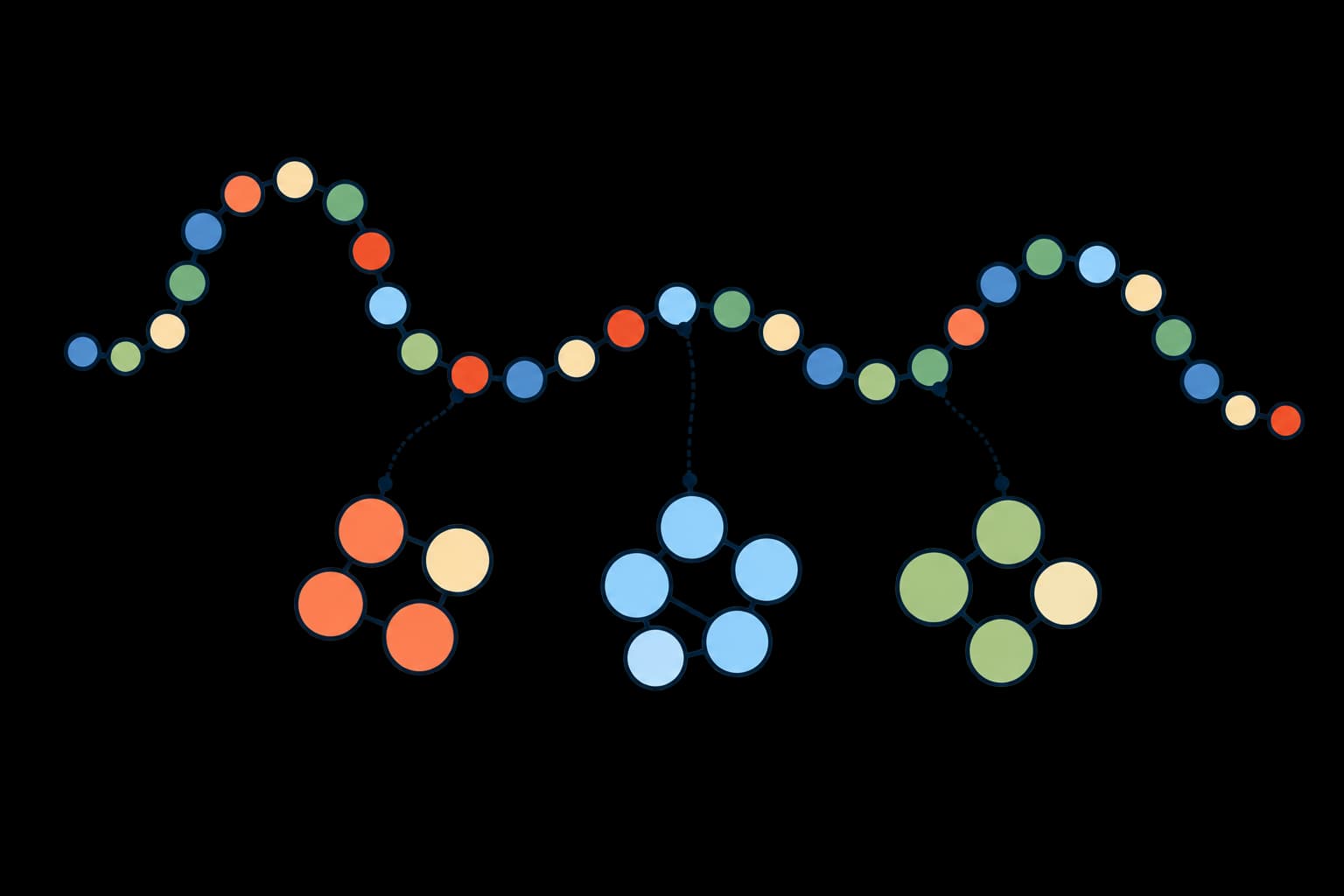
Protein stability prediction
Compare independently interpretable sequence properties related to protein stability.