Protein charge plot
Plot net charge vs pH to visualize protein charge behavior and identify the isoelectric point.
Input
What is protein net charge?
Proteins carry electrical charge that depends on the pH of their environment. At any given pH, the net charge is the sum of all positive and negative charges contributed by ionizable amino acid side chains and the terminal amino and carboxyl groups.
Understanding how charge varies with pH is fundamental to protein biochemistry. Net charge determines protein solubility, electrophoretic mobility, chromatographic behavior, and interactions with other molecules. A protein charge plot visualizes this relationship across the entire pH range from 0 to 14.
How the charge calculation works
The net charge at each pH is calculated using the Henderson-Hasselbalch equation, which relates the ionization state of each titratable group to the surrounding pH and that group's intrinsic pKa value.
Ionizable groups
Proteins contain several types of ionizable groups, each with a characteristic pKa:
Positively charged (protonated at low pH):
- N-terminus (pKa ~8.6)
- Lysine, K (pKa ~10.8)
- Arginine, R (pKa ~12.5)
- Histidine, H (pKa ~6.5)
Negatively charged (deprotonated at high pH):
- C-terminus (pKa ~3.6)
- Aspartate, D (pKa ~3.9)
- Glutamate, E (pKa ~4.1)
- Cysteine, C (pKa ~8.5)
- Tyrosine, Y (pKa ~10.1)
At low pH, most groups are protonated, giving proteins a high positive charge. As pH increases, groups progressively lose protons, reducing the positive charge and increasing the negative charge. The isoelectric point (pI) is the pH where positive and negative charges exactly balance, yielding a net charge of zero.
pKa scales
This tool uses the Bjellqvist pKa scale by default, which is the standard for 2D gel electrophoresis and general protein pI prediction. The pKa values listed above correspond to this scale.
Finding the isoelectric point
The isoelectric point is determined by binary search (bisection method) over the pH range 0 to 14. The algorithm iteratively narrows the pH interval until it finds the point where net charge crosses zero, with a precision of 0.01 pH units.
Interpreting the charge plot
The chart displays net charge (y-axis) as a function of pH (x-axis). A dashed vertical reference line marks the isoelectric point where the curve crosses zero.
Key features to look for
Shape of the curve: The steepness of the curve at different pH values reflects the buffering capacity of the protein. Shallow regions indicate good buffering, where the protein resists charge changes despite pH shifts. Steep transitions occur near the pKa values of abundant ionizable residues.
Isoelectric point (pI): Shown as a dashed vertical line and reported in the stats bar. At this pH, the protein has no net charge and is least soluble. Proteins precipitate most readily at their pI, which is the basis of isoelectric precipitation and isoelectric focusing separations.
Charge at pH 7: Reported in the stats bar as a practical reference. This approximates the charge under physiological conditions. A large positive or negative value suggests good solubility at neutral pH, while a charge near zero may indicate solubility problems.
Positive region (above zero): The protein carries a net positive charge. This occurs at pH values below the pI. Positively charged proteins bind to cation exchange resins and migrate toward the cathode in electrophoresis.
Negative region (below zero): The protein carries a net negative charge. This occurs at pH values above the pI. Negatively charged proteins bind to anion exchange resins and migrate toward the anode.
Applications
- Ion exchange chromatography: Choose a buffer pH where the protein carries sufficient charge to bind the column. Use pH below pI for cation exchange or above pI for anion exchange.
- Isoelectric focusing: Predict where a protein will focus in a pH gradient gel based on its pI.
- Solubility optimization: Avoid formulating proteins at their pI, where solubility is minimal. Select buffer conditions that maintain a net charge.
- Electrophoresis: Predict migration direction and relative mobility in native gel electrophoresis.
- Protein-protein interactions: Assess whether two proteins have complementary charges at a given pH, which may promote complex formation.
Inputs
| Input | Description |
|---|---|
Protein sequence | One or more amino acid sequences in FASTA format, plain text, or PDB file. Sequences can be uploaded as .fasta, .fa, .fas, .txt, or .pdb files. PDB IDs can be fetched directly from RCSB. |
Results
The output is an interactive area chart showing net charge vs pH, with a stats bar summarizing key values.
| Output | Description |
|---|---|
| Chart | Interactive net charge vs pH plot (pH 0-14). Hover over any point to see the exact pH and charge value. A dashed line marks the isoelectric point. |
| Length | Number of amino acid residues in the sequence. |
| pI | Isoelectric point where net charge equals zero. |
| Charge at pH 7 | Net charge at physiological pH. |
When multiple sequences are provided, use the sequence selector dropdown to switch between them.
Exporting data
Results can be exported as CSV (pH and charge values for each data point), PNG, or SVG for publication figures.
Limitations
- Unfolded model: The calculation treats the protein as a fully unfolded polypeptide. In folded proteins, buried ionizable residues can have significantly shifted pKa values due to the local dielectric environment, hydrogen bonding, and electrostatic interactions with nearby charges.
- No post-translational modifications: Phosphorylation, acetylation, glycosylation, and other modifications alter the actual charge profile but are not accounted for.
- Single pKa per residue type: All residues of the same type share the same pKa value. In reality, each individual residue has a unique pKa influenced by its structural context.
- No salt effects: Ionic strength and specific ion effects are not included in the calculation. High salt concentrations can screen charges and shift apparent pKa values.
Related tools
Hydropathy plot
Generate hydropathy plots to visualize hydrophobic/hydrophilic regions along protein sequences using sliding window analysis.
Hydrophobicity plot
Explore local protein hydrophobicity with 24 amino acid scales, including Eisenberg and Hopp-Woods, and an adjustable sliding window.
Protein scale profiler
Plot amino acid property profiles using 42 scales for hydrophobicity, flexibility, secondary structure propensity, antigenicity, and more.
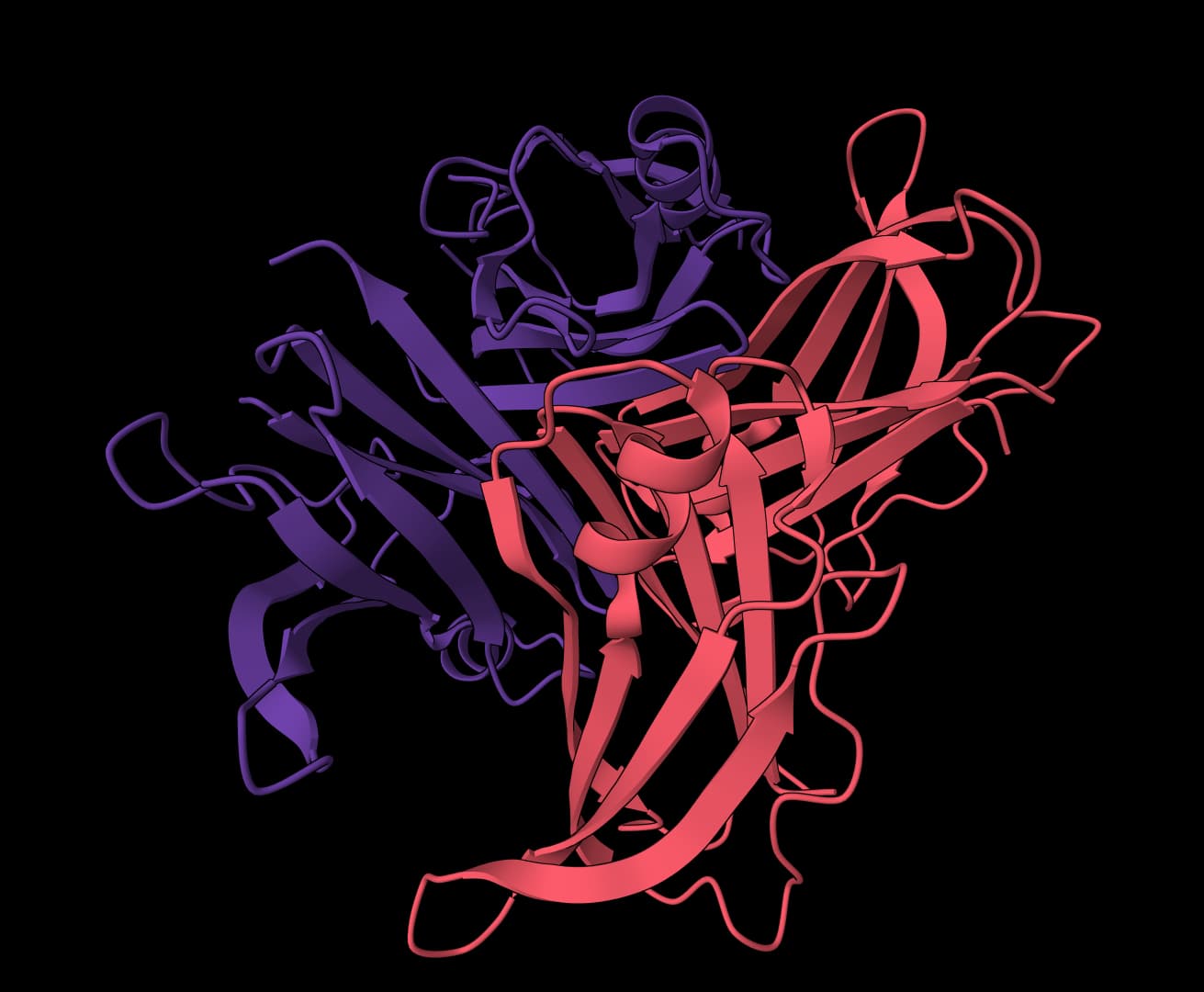
Aggrescan3D
Analyze aggregation-prone regions in a protein structure.
FindPept
Match experimental masses to theoretical protein digest fragments for peptide mass fingerprinting.
Peptide cutter
Map protease and chemical cleavage sites across protein sequences for proteomics experiment planning.
Peptide mass calculator
In-silico proteolytic digestion with peptide mass calculation for mass spectrometry experiment planning.
PROPKA 3
Predict pKa values of ionizable groups in proteins based on 3D structure.
Protein parameters
Calculate molecular weight, pI, extinction coefficients, composition, and sequence indices.
Protein stability prediction
Compare independently interpretable sequence properties related to protein stability.